sabato, gennaio 15, 2022

venerdì, gennaio 14, 2022
The female victims of anti-Christian persecution
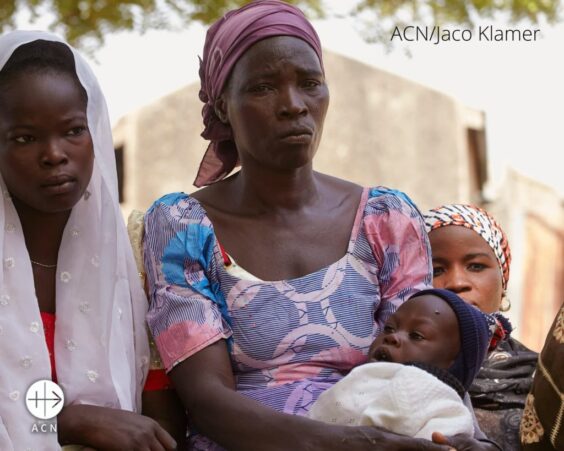
In many countries, Christian women and girls suffer abduction, rape, forced conversion and forced marriage, according to a new report. But social stigma and fear of reprisal from perpetrators keep their stories mostly unheard.
The
“Hear her cries: Kidnapping, forced conversion and sexual victimization
of Christian women and girls” report addresses the appalling problem of
women being targeted for sexual violence because of their religious
belief.
The
document has been produced by Aid to the Church in Need (ACN), a
charity that helps persecuted Christians, and it offers some case
studies from Egypt, Iraq, Syria, Mozambique, Nigeria and Pakistan.
In
countries where they are already a minority, Christian women are
coerced to convert so that their children are claimed for the new faith
too. ISIS fighters, for instance, forced pregnancies and conversions to
secure the next generation of jihadists in Syria.
In
Nigeria, the Boko Haram group uses violence against women to trigger
the mass movement of unwanted Christians from some areas of the country.
Research suggests that Christians make up 95pc of females held by Islamist extremists in Nigeria.
Cases
involving women persecuted for religious reasons are chronically
under-reported for fear of casting shame on the victims and their
families, according to the ACN document
Besides
social stigma, dread of reprisal from perpetrators is another key
factor why those incidents are often kept quiet. Families, chilled by
fear of more violence, tend not to speak about their sufferings.
Another
reason for low reporting level is institutional resistance. In
Pakistan, for instance, the police and the court system are frequently
colluding with the perpetrators, according to the report.
One
of the cases presented is about Farah Shaheen, a Christian girl who was
abducted at the age of 12, forced into marriage and kept in chains as a
slave. When her father reported the kidnap, the police refused to
listen and to register the incident. Medical experts from the court
claimed that the girl was old enough to legally marry, dismissing her
birth certificate that showed she was 12 when abducted.
Research indicates that in Pakistan, Christians could comprise up to 70pc of women and girls forcibly converted and married.
“Perpetrators
know their chances of punishment are reduced if they confine their
attack to minority faith communities”, the report notes.
Institutions
reflect the cultural and religious norms of the majority and even in
countries with secular legislation, other codes of practice informed by
the religious precept of the prevailing faith, trump the official law.
The court and the judicial systems are biased against Christians.
“It
is very difficult being a Christian girl in our country. So often our
girls are abducted and the deprived things they suffer are too awful to
imagine. It is so frightening. Who is there to help us?” says of the
victims interviewed for the report, who asked to remain anonymous. Their
stories need to be heard. We need to hear their cries.
(The “Hear our cries” report can use downloaded here https://acnuk.org/hear-her-cries-report/ A printed version can be requested to Aid to the Church in Need Ireland Aid to the Church in Need Ireland | ACN Ireland )
giovedì, gennaio 13, 2022
The countries requiring vaccine passport to attend worship
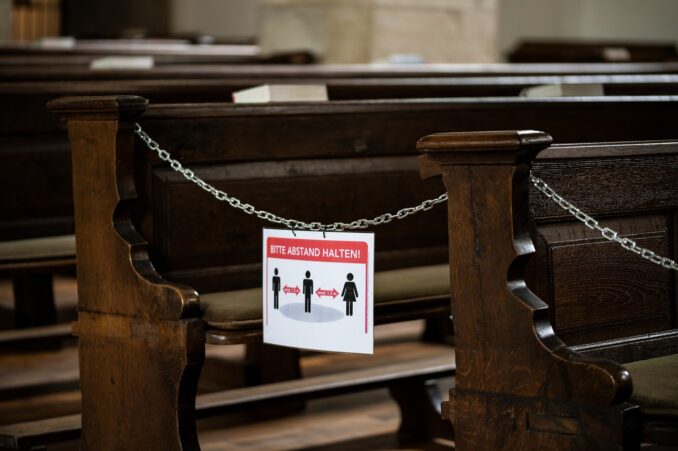
During the pandemic, Ireland prevented worshippers attending religious services longer than any other country in Europe, but at least we haven’t gone so far as to force people to show vaccine passports before attending. Some countries have imposed this requirement, and shockingly, Church authorities are sometimes willing to comply.
In Quebec, for example, the provincial government has enforced a vaccine passport system on all places of worship. Congregants aged 14 to 75 must show proof of vaccination to attend services indoor.
The religious authorities were not consulted before the Government announced its decision.
Some lay faithful organised a prayer vigil to defend religious freedom but the local Catholic bishops, representing the largest Christian denomination in the province, made no objection to the decision.
Cardinal Lacroix, bishop of the archdiocese of Quebec, even voluntarily and unilaterally closed all churches from 23rd December to 10th January as a “strong gesture of solidarity with vulnerable people as well as with the staff of the entire health network and all those who help fight the pandemic.”
This is despite Quebec having a lower number of Covid cases per 100,000 people than Ireland.
From New Year’s Eve the Quebec government has prohibited any indoor social gathering or public worship service, except for funerals. All churches and other religious venues are now closed indefinitely.
The Bishop of Pembroke, Guy Desrochers, wrote a letter just before Christmas, criticising the Quebecois government: “I seriously wonder whether the line between what the State can and cannot dictate to the various religious communities has been crossed with this obligation to present vaccination passports at the entrance to our churches. … Dare to challenge your government representatives to change this latest law which in fact oversteps their role and duty in our society. “ (The diocese of Pembroke is in the province of Ontario, not Quebec).
In Europe, some countries have worship restrictions based on vaccination status.
Luxembourg, for example, requires a vaccination passport when more than 20 are attending an indoor religious gathering. Some priests have protested but Cardinal Hollerich, archbishop of Luxembourg and president of the Commission of the Bishops’ Conferences of the European Union, has defended the government rule.
“During this phase when the pandemic is resurgent, we must save lives, and this green pass should welcome people to Mass, … Some priests have objected, and this isn’t helping the search for a solution”, he said.
Similar measures are in places in other parts of Europe, but the number of people permitted to attend without a pass varies: it is 30 in Slovakia, 50 in Switzerland, 100 in Denmark and Sweden.
In Iceland, for religious events with more than 50 participants a negative rapid antigen is required. A negative test result is also obligatory for weddings and Christenings in Portugal.
In New Zealand, they now have a “traffic light” system – green, orange and red – based on the severity of the infection.
Under the red setting, a maximum of 100 people can gather in place of worship, but they must show a vaccine pass. A maximum of 25 people can worship together without showing a vaccine passport.
There has been no pushback from Catholic bishops, but the system has been criticised by some protestant leaders.
“This is something that would be unacceptable from the perspective of the Church, and indeed it would be a contradiction of the message of the Gospel. The thought that someone would be barred from coming to church to hear the gospel is abhorrent.”, said a spokesman for Christian Voice New Zealand.
The six Catholic bishops have set guidelines asking parishes to organise Masses for the vaccinated only but also, where possible, opportunities for people without a pass. It is a two-tier system that favours those who have a pass but does not exclude the others completely.
Religious leaders tend to not object to civil authorities but it is difficult to find a compelling reason for a system granting access to churches based on vaccination status. Churches have proven very safe places to be so long as social distancing and other measures are properly observed.
Making vaccine passports a condition to attend public worship is an unacceptable breach of Church/State separation and it is something no religious leaders should tolerate.
martedì, gennaio 11, 2022
lunedì, gennaio 10, 2022
Ruth Ferguson 29 January 1963 – 25 December 2021
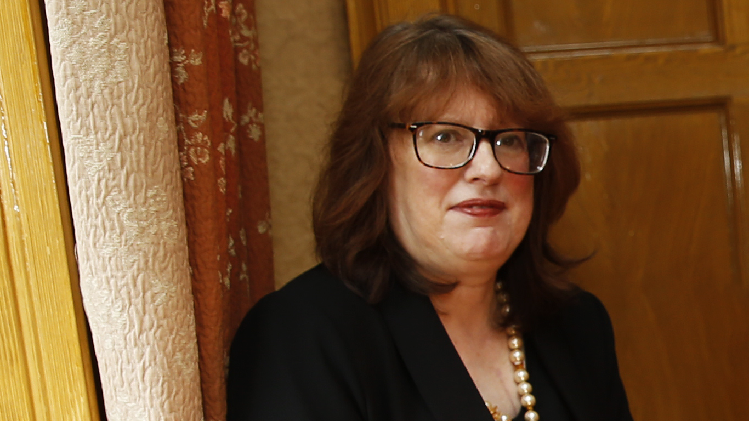
Ruth Ferguson will forever be remembered as the custodian of Newman House, Nos. 85 and 86 St Stephen’s Green where she was curator since 1995.
Originally educated by the Loreto nuns in North Great Georges St, she went to UCD to study History of Art and Archaeology. Her undergraduate studies were interspersed with working as an assistant education and press officer at the National Gallery of Ireland where she demonstrated her talent for exhibitions, events and communication. She moved on to the Royal Hospital Kilmainham where she became head guide and liaison with production companies who used the building as a film location. As exhibitions officer for the RHK she began to select and curate exhibitions. She was appointed assistant curator for the newly established Irish Museum of Modern Art in 1991 and began to stretch her reputation across the world of art, heritage and culture.
In 1995, University College Dublin appointed her curator to the newly restored Newman House. The original home of the Catholic University, the precursor of UCD, Newman House is named in honour of St John Henry, who came to Dublin in 1852 on the invitation of Cardinal Cullen to establish a university for the emerging Catholic middle class.
Although Ruth would regale an audience with stories of Newman, the later Jesuit professors, including poet Gerard Manley Hopkins, and notorious students from James Joyce to Flann O’Brien, it was when she turned to the building itself that her encyclopaedic knowledge and immense enthusiasm poured forth. Indeed, her Masters was in Palladio and Palladianism art and architecture.
No. 85 St Stephens Green, built in 1738, hosts the splendid late baroque stuccowork of the Lafranchini brothers. Designed by Richard Castle, the architect of Leinster House, its saloon is possibly one of the most beautiful rooms in Dublin.
No. 86, was built in 1765 for Richard Whaley, whose own reputation for anti-Catholic fervour alongside that of his disreputable son ‘Buck’ Thomas would seem incongruous to the later occupants of the house. Regardless, the house itself is a rococo marvel, with the plasterwork executed by Dubliner Robert West. Whaley tied the two houses together and the ‘secret’ stairs from the upper hall in 85 to the Bishops’ Room in 86 is one of the treasures Ruth liked to reveal to visitors.
Through her welcome and custodianship, visitors experienced Newman House’s own embracing atmosphere, and Ruth embodied the best of all the lives that have been lived there over the centuries. What a joy it was too to discover those centuries on one of her richly rewarding house tours, the depth and breadth of her knowledge delivered with an exuberance that swept you up in shared excitement and enjoyment.
Though the preservation and promotion of Newman House as a centre of cultural and academic activity was foremost in her mind, this did not deflect Ruth from tackling the practical and daunting demands of maintaining a building of such historic importance. Nothing deterred her, whether it was clambering over the roof of No. 85 to unblock a leaking gutter or investigating rain or animal intrusions within the bowels of the building complex.
In May 2007, when the last medical and engineering students made the journey from Earlsfort Terrace to Belfield, Ruth was one of the team organising the “Farewell to the Terrace” festival marking this historic transition. After a week of reunions, talks and tours, the first garden party in the Iveagh Gardens for 5,000 graduates, debates between the students and the ‘oldies’, and a special performance of Bach’s Mass in B Minor in University Church, Ruth – with her typical elegance and style – hosted a very, very long post-event lunch for the team where we laughed til we cried.
Ruth cherished the past of Newman House but believed that it was a living building that should evolve continuously. So, when plans for the Museum of Literature Ireland (MoLI) began over a decade ago, Ruth was a vital and generous force whose ability to make things elegant with the lightest touch encouraged others to aim for excellence. Many elements of the Museum reveal her distinctive imagination at work; for example, it was she who gave the immersive ‘riverrun of language’ installation its name and creative energy.
As she noted at the time, “MoLI makes the perfect bedfellow to the historic fabric of nos. 85 and 86. The museum gives new life to the vision and tradition of Dr J H Newman, the founding rector of the Catholic University of Ireland, who wrote in The Idea of a University (1852): ‘ The central aim of a university is to give those who pass through it true enlargement of mind’. I know that MoLI will be truly mind expanding!”
In recognition of her deep knowledge of Cardinal Newman and his importance in Irish education, the Oratorian Community extended a personal invitation to Ruth and to her mother Monica, to attend the canonisation of Cardinal Newman at St Peter’s Basilica in October 2019. Much to her delight, she was seated on the dais overlooking St Peter’s Square with the other eminent dignitaries.
In her early years at Newman House, Ruth helped set up the ‘J H Newman Bequest Library’. This scholarly collection grew into a centre for research on Newman and has now evolved into the UCD Newman Centre for the Study of Religions based in the UCD School of Philosophy.
Ruth’s infectious enthusiasm wafted across UCD and onto Belfield campus. She was a founder member of the Visual Arts Committee set up to oversee the position of art in the University and spearheaded the acquisition of the modest but inspiring collection of new works for the halls and corridors of the buildings across the campus. Later, when the emphasis shifted outdoors, she was central to the creation of the UCD Sculpture Trail – which has given particular pleasure during the past two years as people discovered the pleasure of walking outdoors.
Ruth never stopped being enthusiastic. And when her ill health meant she could no longer tear along with her laughter pealing ahead and her auburn hair flowing behind, she was still contributing to ‘Making Belfield’, the publication marking the past fifty years of UCD on Belfield campus. And she was, as always, charming, obliging, efficient and cheerful with a great sense of humour.
Ruth loved colour, especially yellow as portrayed in Van Gogh’s sunflowers at Arles. Her front door was yellow, and the plants and flowers in her garden were yellow. It somehow reflected Ruth’s sunny disposition.
Ruth is survived by her siblings, Susan and Nick, brother-in-law Kevin, sister-in-law Ethna, nieces Sive and Genevieve, and nephew Sonny.
Ar dheis Dé go raibh a hanam dilís
sabato, gennaio 08, 2022
venerdì, gennaio 07, 2022
The deadly inaccuracy of many prenatal tests
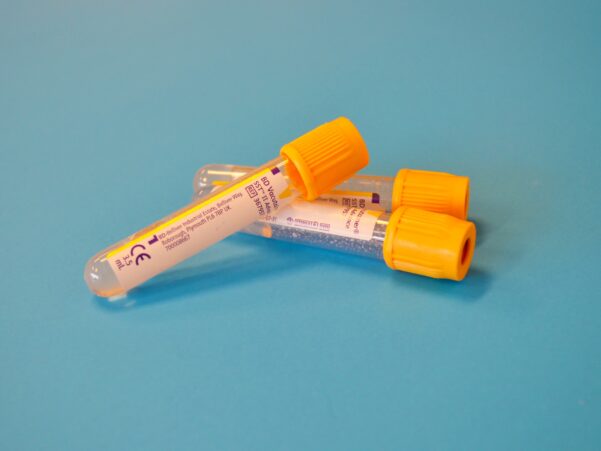
Prenatal tests are a vital part of the thriving eugenics industry whereby unborn children with genetic defects are not considered fit for life and are aborted instead. But a report in The New York Times (not a pro-life paper) confirms that the tests for certain foetal abnormalities are often unreliable as they give too many false positive results.
Even if advertised as highly accurate, for some conditions positive test results were incorrect more than 90pc of the time.
We highlighted the problem of the inaccuracy of foetal tests in a previous blog three years ago.
Non-invasive prenatal testing (NIPT) is used to screen the probability that chromosomal abnormalities, such as Down Syndrome, are present. These tests are now offered for more and more conditions. A positive screening test should be followed by a diagnostic test, to confirm the presence of the abnormal condition. Unfortunately, many do not wait for the follow-up test and abort their babies, not knowing that those screening tests are often wrong, as the New York Times article showed. With rare conditions, the probability of mistakes grows.
In Ireland we saw the tragic case of a baby who was aborted in Holles Street National Maternity Hospital at 19 weeks after his parents were incorrectly told that he suffered from Edwards Syndrome, a condition that is usually fatal.
In 2019, the UK Advertising Standard Authority ruled that the ads promoting prenatal screening tests were misleading. For instance, out of 100 tests indicating the presence of Edwards Syndrome, only 37 were correct. Still, the tests were presented as 99pc accurate because if the condition is present, it is detected 99pc of the times. Accurate does not mean correct because often the test mistakenly says it is present. (For a more detailed account see here: https://ionainstitute.ie/the-inaccurate-accurate-tests-for-foetal-abnormalities/ )
In simple words, those tests are oversensitive as they tend to err on the side of false positives.
Oversensitive NIPT would not be a problem in a society that does not kill those suffering of abnormal conditions. The tests should be used to prepare families and doctors to welcome the newborns and care for them according to their special needs. Moreover, decisions should be made once the diagnosis confirms the screening results.
But oversensitive tests are morally problematic in our society, where abortion is the default outcome of positive testing results. Many do not even wait for the follow-up diagnostic test.
giovedì, gennaio 06, 2022
mercoledì, gennaio 05, 2022
I Re magi
martedì, gennaio 04, 2022
An important voice is raised up against Assisted Suicide
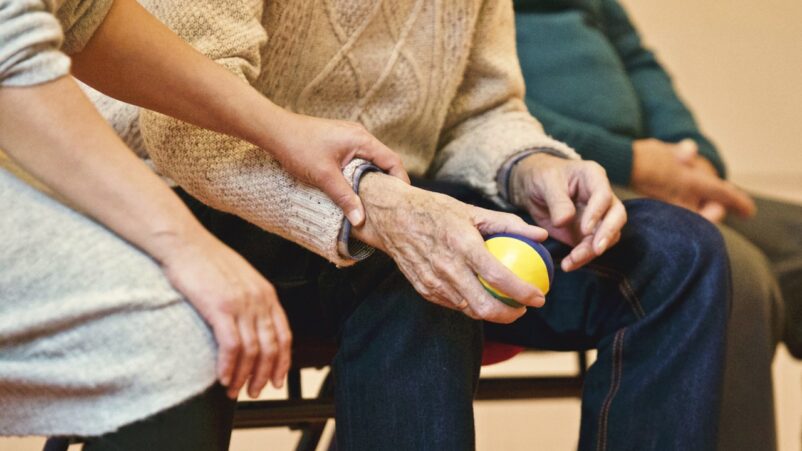
The College of Psychiatrists in Ireland has come out strongly against the proposal to legalise Physician Assisted Suicide and Euthanasia (PAS-E).
Following other medical bodies that have argued along same lines, the Irish psychiatrists state that “the introduction of assisted dying represents a radical change in Irish law and a long-standing tradition of medical practice, as exemplified in the prohibition of deliberate killing in the Irish Medical Council ethics guidelines”.
In a clear and detailed way, the College of Psychiatrists presents a strong case against PAS-E. They refer to specific scientific studies proving that the introduction of medically-induced death has a contagion effect because it normalises suicide and, as a consequence, leads to higher overall suicide rates in the population.
PAS-E weakens suicide prevention initiatives and impacts negatively on those who are psychologically vulnerable, they say.
“At a time where there is public concern regarding mental health and suicide to a greater degree than ever before, the introduction of PAS-E undermines the valuable work done in addressing the causes of suicidality“, they write.
Once the State recognises a “right to die”, which means a “right to be killed”, those who work daily to relieve psychological suffering, on the assumption that suicide is never a solution, will feel that they should not interfere with somebody’s personal autonomy. Their role changes dramatically.
Fear of loss, fear of pain and fear of the unknown are common causes of distress to patients experiencing terminal illness and their families. Psychiatric issues are also common. According to sources cited in the document, depression is the strongest determinant of desire for death in serious or terminally ill patients. “The prevalence of depression among terminally ill patients with a desire for death is eight times higher than in those without a significant desire for death”.
Appropriate treatment is the best way to address depression and fear, but the availability of euthanasia creates the risk that many people will die from treatable psychological distress and mental illness, the document says. There is evidence that in countries where PAS-E is legal, the number of people with psychiatric disorders who request euthanasia has increased. Some jurisdictions already permit PAS-E for personality disorders and other psychiatric conditions.
International evidence shows that euthanasia safeguards and controls are regularly flouted, the position paper highlights. The slippery slope is real. In the Netherlands, for instance, “the grounds for euthanasia are shifting from relief of suffering to autonomous patient choice”. What initially is introduced for exceptional cases soon becomes the norm and the limits expand.
The Irish psychiatrist warn that the expression “death with dignity” is very often used by campaigners to mean the deliberately procured death of an ill or disabled person, and strongly implies that vulnerable people are “dignified” only in death.
“Not only is euthanasia not necessary for a dignified death, but techniques used to bring about death can themselves result in considerable and protracted suffering”, they wrote, noting that while euthanasia is portrayed by its defenders as a peaceful process, there are reports of prolongation of death (up to 7 days), and re‐awakening from coma (up to 4%).
The concerns expressed by the College of Psychiatrists in their position paper echo similar warnings that appeared in recent documents by the Irish Palliative Medicine Consultants’ Association, the Irish Society of Physicians in Geriatric Medicine, the Royal College of Physicians, the Royal College of Surgeons, and many other medical bodies internationally. The all reject any attempt to legalise PAS-E.