Visualizzazione post con etichetta church. Mostra tutti i post

martedì, agosto 31, 2021

The Catholic Church already does plenty to help the homeless


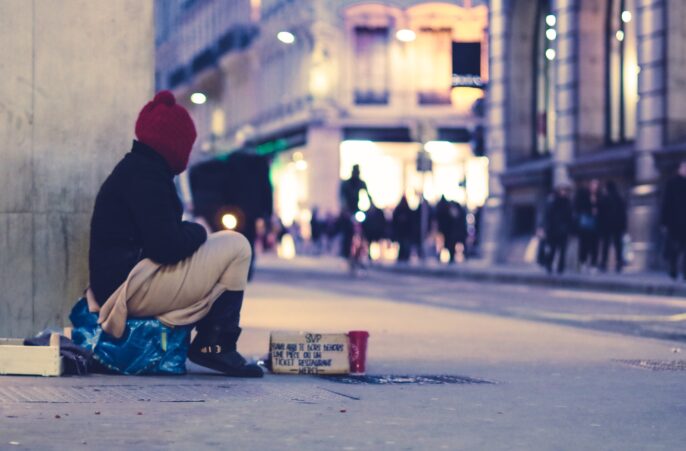
Minister for Housing, Darragh O’Brien, has asked the Catholic Church to consider providing some of its land for the purpose of building new homes and helping to alleviate the housing crisis. But the Catholic Church does lots to help the homeless. A brief trawl through the ìnternet easily establishes this.

For example, some of the most famous charities in the homelessness sector, such as the Peter McVerry Trust or Focus Ireland, were established by priests or religious sisters.

Crosscare, the social support agency of the Dublin archdiocese, provides accommodation offering different solutions to homeless people, according to complexity of their needs.

In 2014, a building previously donated by Cardinal Desmond Connell, the late Catholic archbishop of Dublin, was made available for emergency accommodation and it is now part of the Crosscare homeless services.

In 2017, the Dublin archdiocese leased to Dublin City Corporation for a notional amount 50 mini-apartments for families on the former site of Mater Dei, on Clonliffe Road. The apartments are used for “supported temporary accommodation” with the aim of moving the guests into a home within three months.

Other houses offer longer temporary accommodation, and help equip people who still don’t have a home with the skills to live independently.

Focus Ireland is another organisation tackling homelessness. It was founded by Sr Stanislaus Kennedy, who is a member of the Irish Sisters of Charity. Her congregation have donated “well in excess of £10 million in buildings, sites, and professional expertise” to the charity.

Their former convent in Stanhope Street has been used to house more than 100 people. In 2017, Focus Ireland opened 28 new homes for disabled, homeless and vulnerable people. The houses were built on an acre of land gifted by the Irish Sisters of Charity.

Two more convents, previously owned by the Presentation Sisters (George’s Hill) and the Sisters of Charity (Basin Lane), have been converted to long term supported housing.

In 2001, the Irish Sisters of Charity donated three acres of land to Dublin City Corporation “to provide housing for older people, those with disability, and people in local authority housing whose families are reared and who may be seeking smaller accommodation.”

In 2018, the Irish Jesuits donated three properties in Sherrard Street to the Peter McVerry Trust, to be converted to 16 apartments for the homeless. The charity is named after its founder, who is a member of the Jesuits.

There are many other Catholic organisations, such as the Society of Saint Vincent De Paul, or the Capuchin Centre of Brother Kevin Crowley, that work with homeless people and offer temporary accommodation. This is part of daily life of the Church, in Ireland as in the rest of the world.

It is true that the Catholic Church in Ireland has many properties. There is no single owner that can easily dispose of them. They belong to dioceses, parishes, religious congregations and organisations. Most of them are in use. They are churches, schools, parish halls and offices, hospitals. Some of those that are not in use could be gifted or leased to help those who need accommodation.

More can be done but we should not forget what the Church has done in the past, and continues to do every day, to provide a home to those who need it.

mercoledì, dicembre 09, 2020

The Good the Church Does


Il bene che fa la Chiesa.

martedì, luglio 02, 2019

Funding of Church schools is commonplace across Europe


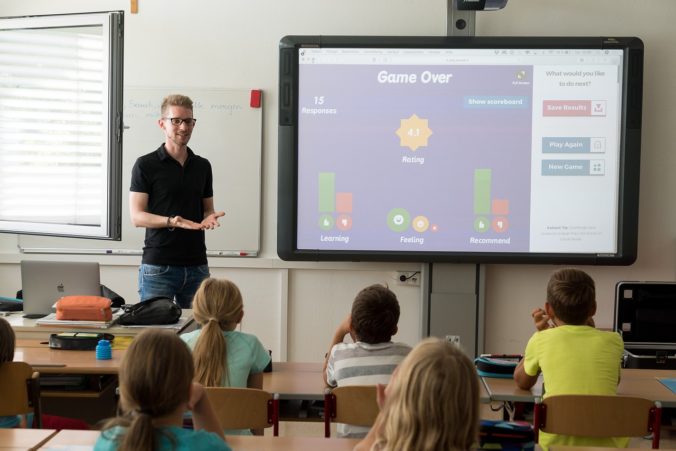
The impression is often given that there is something very and unusual, not to mention undemocratic, about religious schools receiving public funds. In fact, it is absolutely normal. What is unusual is faith schools receiving no public funds.  What is more, the Irish education system is one of the freest in the world, that is, one of the freest from State control.
An article in Studies by Paul Meany, a former principal of Marian College in Dublin, shows that the Irish system is “underpinned by the same principles and philosophies that operate in most of the countries of the world”.
He points out that Cuba, North Korea and Gambia are among the only countries where only State schools are permitted. Even China has some private schools.
Non-State schools are often run by religious institutions. For centuries, the Churches have been a major educational pillar worldwide, before there was ever much of a State to talk about.
Meany highlights a number of international covenants and conventions, including the EU Charter of Fundamental Rights, which affirm the right of parents to how their children educates in line with their values and convictions.
The Charter notes “the freedom to found educational establishments with due respect for democratic principles and the rights of parents to ensure the education and teaching of their children in conformity with their religious, philosophical and pedagogical conviction shall be respected, in accordance with the national laws governing the exercise of such freedom and right” (art. 14).
The OIDEL (Organisation Internationale pour le Droit à l’Education et la Liberté d’Enseignement) is an international organization that was established in 1985 to defend freedom of education.
In 2016 they published a Freedom of Education Index to evaluate how much the State facilitates, through legislation and funding, the exercise of this fundamental right.
Ireland is the highest ranked country in the Freedom of Education Index, followed by the Netherlands, Belgium, Malta, Denmark and the UK. Twenty of the top thirty countries worldwide are in Europe.
The Index looks at a number of indicators such as the percentage of non-governmental schools in primary level, the level of public funding for such schools, etc.
About 30pc of primary and secondary students in Europe are in Catholic schools. Many more are in Protestant-run schools. In Ireland, 73% of the school population attend Catholic institutions.
The only countries where the number of Catholic schools is a significantly low when compared to the size of the Catholic population are Poland, Croatia and Lithuania. This is a legacy of Communism. The State still controls almost all educational institutions and such schools were only established in the last thirty years.
Meany reckons that it is not easy to compare funding for non-governmental schools across Europe as statistics often do not separate staff salaries from grants for running costs and grants for capital costs.
However, only in five European countries does the State provide no funding at all to non-governmental schools. In two countries the State pays for salaries and running costs at the same rate as public schools, and in the remaining twenty-one countries schools receive very substantial funding.
Ireland is not an exception. State funding is so common because without adequate financial support, freedom of education, which include the children’s right to receive an education respecting their family’s beliefs, would be practically restricted.