Visualizzazione post con etichetta family. Mostra tutti i post

venerdì, marzo 21, 2025

How stable families build more prosperous societies


If we want prosperity, one important step is supporting and rebuilding the family. This is the central argument presented by the economist Philip Pilkington in his new booklet “Family Matters: Why Our Choices Determine Our Economic Prosperity”, which is published by the Alliance for Responsible Citizenship (ARC).

The study connects economic growth, and demographic trends to the strength of family structures.

The modern economy often focuses on productivity and investment, but family stability is frequently overlooked as a crucial factor, Pilkington maintains.

Without strong families, societies face declining birth rates, lower labour force participation, and rising welfare costs, all of which hinder long-term prosperity.

Looking ahead, Pilkington warns that declining fertility rates could lead to economic contraction, similar to Japan’s experience. He links issues such as low birth rates, mental health challenges, substance abuse, and crime to family breakdown, suggesting that strengthening family structures could be a key to reversing these trends.

One of the most striking points in Pilkington’s publication is that marital fertility – the number of children born to married couples – is significantly higher than non-marital fertility. Marriage provides both emotional and financial security which makes couples more willing to have more children.

This is crucial because a stable birth rate is essential for sustaining a productive workforce and preventing economic stagnation. Societies that see a decline in marriage also tend to experience overall population decline, something highlighted in a new Iona Institute paper.

In those countries, policies often focus on boosting fertility rates through financial incentives, such as child benefits and tax breaks. However, Pilkington argues that the real issue is not just birth rates but family formation. Simply encouraging people to have more children without strengthening family structures is short-sighted.

Children born into stable, two-parent households generally experience better outcomes in education, health, and future employment. In contrast, births outside marriage often correlate with lower stability, higher poverty rates, and increased reliance on State support. If governments want higher birth rates, they should prioritise policies that encourage marriage and family stability rather than just providing direct financial incentives.

When families break up, the State must step in, but this comes at a significant financial cost to the tax-payer, and the families themselves.

By shifting the focus from individual fertility to family stability and formation, policymakers can create conditions that naturally lead to higher birth rates and a more sustainable economic future.

The consequences of family breakdown extend beyond economics and welfare costs. Pilkington highlights social problems like crime, addiction, and mental illness that are often linked to unstable family environments.

One particularly telling statistic from the British government says that 24pc of adult prisoners had been in the care system at some point of their childhood.

Pilkington’s research makes one thing clear: economic prosperity and social stability are deeply intertwined with family structures. Countries that neglect the importance of marriage and family will face declining birth rates, rising welfare costs, and growing social problems.


lunedì, luglio 29, 2024

Ever more people simply don’t want to have children


Personal choice more than circumstances is the reason why younger generations are not having children, a new study reveals. 

Recent figures from the Central Statistics Office showed that fewer children are being born in Ireland and the fertility rate is well below the replacement level. Understanding the reasons why people choose not to have offspring is crucial for comprehending the shifting demographics and future family structures.

new study from the Pew Research Center on U.S. adults without children offers a detailed examination of the various reasons why this is the case, highlighting significant trends and differences across age groups.

The survey is based on two distinct cohorts: adults aged 18-49 and those aged 50 and older.

Lifestyle choice is a predominant reason for the decision not to have children, especially among younger adults.. Over half (57pc) of childless adults under 50 state they simply do not want to have kids. This figure is notably higher than among older adults (ages 50 and above), where only 31pc cite the same reason. This indicates a generational shift towards valuing personal autonomy and lifestyle choices over traditional expectations of parenthood.

Comparing these findings with past surveys reveals a clear move towards more people opting out of parenthood by choice rather than by circumstance. The share of non-parents under 50 who say they are unlikely to have children has increased by seven percentage points since 2018.

Thirty-nine percent of older adults report that having children "just never happened," indicating that circumstances and timing played a certain role for them. This contrasts with younger adults, where the primary reason is a deliberate personal choice. Additionally, 33pc of older adults cite not finding the right partner as a major reason, whereas younger adults are more likely to mention wanting to focus on other aspects of life, such as their careers or personal interests.

Infertility and other medical reasons also play a role for both age groups, but they are more significant among older adults compared to younger ones.

Financial concerns are another major factor. About 36pc of adults under 50 indicate that they cannot afford to raise a child, compared to just 12pc of older adults who give this reason. 

Among adults under 50, women (64pc) are more likely than men (50pc) to say they do not want children as the reason for not being a parent.  Additionally, women are more likely to mention negative experiences with their own families as a factor in their decision, highlighting the personal and emotional dimensions influencing their choice.

Among the older age cohort, women (42pc) more than men (27pc) felt pressure from society to be parents.

Men, on the other hand, are more likely than women to cite financial concerns (14pc vs 9pc) and the state of the world (15pc vs 10pc) as major reasons for not having children. This reflects a broader societal expectation on men to be financial providers.

Education also impacts these decisions. Among older adults, those with higher educational attainment are more likely to cite career focus and personal choice as reasons for not having children. In contrast, those with less education are more likely to point to financial concerns and the state of the world.

This research reveals that the decline in fertility rates is driven not just by economic factors but also by significant cultural shifts. Especially among younger adults, the preference for personal autonomy and lifestyle choice is a predominant factor. This reflects a broader societal shift towards individualism and self-fulfilment, often without considering the consequences for the common good.

A similar shift in values is probably happening here in Ireland as well. It is not just economic factors that have driven down our fertility rate to just 1.5.


Image by DianaZG from Pixabay

mercoledì, agosto 02, 2023

Relationship breakdown is the main reason for families becoming homeless


Relationship breakdowns and family circumstances, rather than evictions, are the most common reasons for families entering emergency accommodation.

The number of people homeless has reached a new record high, according to recent data from the Department of Housing. As a response, politicians and activists are asking the Government to provide new social and affordable housing but the problem cannot be solved ignoring a major factor, i.e. family breakdown.

According to the Homeless Quarterly Progress Report, between April and June this year, the most common reason for family households seeking emergency accommodation is breakdown in relationships or changes in family circumstances.

Surprisingly, evictions or financial problems did not top the list of family cases leading to homelessness.

Family breakdown and change in circumstances, instead, were the leading reasons for homelessness in family households, accounting for 282 instances out of 972 total cases. These findings underscore the critical importance of addressing underlying family issues to prevent homelessness in the first place.

As local authorities now report the reasons for presentation in emergency accommodation, the true extent of the crisis has become more apparent, revealing a 24.5% increase in family presentations and a 32.5% surge in new families entering emergency accommodation.

While the report does not provide historical comparisons, it is clear that family-related issues play a significant role in driving people to homelessness.

In April this year, the ban on eviction came to an end, affecting both single and family households. The notice of termination has emerged as the leading reason for homelessness among single households. However, for family households, it is the second most cited reason. This suggests that the lifting of the eviction ban has disproportionately impacted individuals living alone, potentially pushing them into homelessness at a higher rate.

The figures presented in the report also underscore the crucial role of functional families in preventing homelessness, after eviction. When families remain intact and supportive, they act as a vital safety net for their members during difficult circumstances. Functional families provide emotional support, financial assistance, and even alternative accommodation options, reducing the likelihood of their members falling into homelessness.

Contrary to common beliefs, the report reveals that insufficient funds, affordability, or no income are not the most significant factors leading to homelessness among families. While financial issues undoubtedly contribute to homelessness, it is clear that relationship breakdowns and family circumstances play a more prominent role in pushing families into emergency accommodation.

A staggering 56% of families entering emergency accommodation are single-parent families, according to the report. This statistic highlights the vulnerability of single parents in the face of housing instability and homelessness.

Moreover, even if not the most significant factor, family breakdown still contributes to an increased demand for accommodation and put pressure on the system.

The latest data on family homelessness in Ireland unequivocally points to the urgent need for comprehensive solutions. Addressing the root causes, such as relationship breakdowns, family crises, together with the lack of affordable housing, is essential to prevent families from slipping into home emergencies.

The figures provided in the report call for a reevaluation of the homelessness debate. Family breakdowns should be given more prominent attention as a key factor contributing to homelessness. Policies and interventions aimed at preventing and addressing homelessness must consider the complex dynamics of family units and provide adequate support to families facing crises.

giovedì, settembre 22, 2022

Exploring the link between family breakdown and anti-social behaviour


When we see reports about anti-social behaviour and criminality – for example, the ramming of a garda car in Dublin this week – no-one ever explores whether there might be a link with family breakdown. It would be surprising if this was not sometimes the case. Plenty of studies overseas have established such a link, but here the question seems to be taboo.

Former American president, Barack Obama, was willing to make the connection. When running for the presidency in 2008, he spoke about the issue.

On Father’s Day that year, in an address to a church in Chicago, he said: “We know the statistics — that children who grow up without a father are five times more likely to live in poverty and commit crime; nine times more likely to drop out of schools and 20 times more likely to end up in prison. They are more likely to have behavioural problems, or run away from home or become teenage parents themselves. And the foundations of our community are weaker because of it.”

Was he wrong? Might the same thing be happening here? Is what he described playing out on our streets?

In August 2011, there were riots in London that ignited concern about family breakdown and the number of children growing up without a father.

David Lammy, the Labour MP for Tottenham, said in response: “In areas like mine, there is none of the basic starting presumption of two adults who want to start a family, raise children together, love them, nourish them and lead them to full independence. The parents are not married and the child has come, frankly, out of casual sex; the father isn’t present, and isn’t expected to be. There aren’t the networks of extended families to make up for it. We are seeing huge consequences of the lack of male role models in young men’s lives.”

Would a politician from any of the main parties say something similar here?

Studies confirm what Obama and Lammy had to say. For example, this comparative review of the scientific literature on the family describes the conclusion that broken homes cause crime as “sturdy”.

It said: “Meta-analyses consistently find that children who are raised in homes in which at least one biological parent is absent face a higher prevalence of adolescent delinquency.”

The authors of the study explored juvenile delinquency and found that “those who experience high levels of family instability (three or more transitions) are not only more likely to be arrested, but are also significantly more likely to experience incarceration in adulthood.”

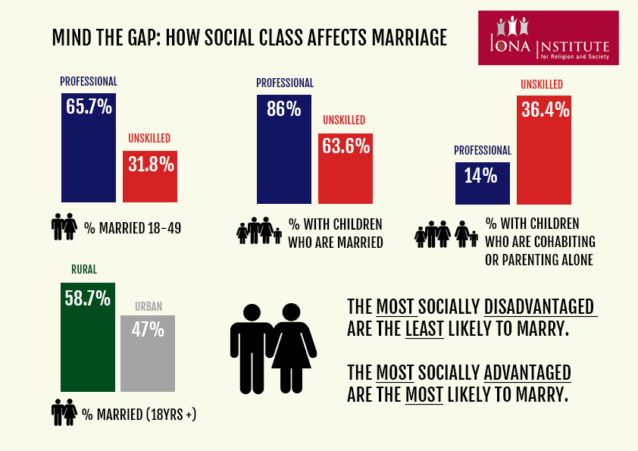
A report from The Iona Institute, called “Mind the Gap: how marriage and family differ by social class”, found that in Ireland the most socially disadvantaged are the least likely to marry and the most likely to divorce.

The report, based on CSO data, shows that adults in professional occupations are more than twice as likely to be married as unskilled workers (65.7pc vs 31.8pc). Does this really have no social consequences whatsoever?

In 2011, David Lammy set up set up an all-party group on fatherhood, because he was worried the subject was not getting enough attention. In Ireland, it receives almost none. It’s time to make amends.


PS. This article sets out very well some of the issues raised here.

giovedì, settembre 15, 2022

Why Governments should pay more attention to family stability


Almost half of children born in the UK in 2000 did not grow up with both of their biological parents throughout their childhood, according to a new report by the Children’s Commissioner, Rachel de Souza. This is because so many are born to lone parents, or else see their parents (married or cohabiting) separate.  This matters, because children benefit from being raised by their two birth parents in a stable, loving relationship.

The report, commissioned by the UK Government, is called ‘Family and its Protective Effects’.  It finds that while 44pc of those born in 2000 didn’t live with both their biological parents throughout their entire childhood, the figure for those born in 1970 was 21pc.

It says that 23pc of families in the UK are headed by a lone parent, compared with the EU average of one in 8.

Since 2001, the percentage of families headed by a married couple has declined from 65pc to 63pc, while the percentage headed by a cohabiting couple has risen from 11pc to 14pc.

Some children might start life with married or cohabiting parents, who then split up, but then later the mother or the father finds a new partner or marries again so the child is back in a two-adult household.

The 2011 census shows that 10pc of couple families with dependent children involve ‘step’ relationships.

Lone parent families, which are led by women in 90pc of cases, are more likely to be experiencing financial difficulties, according to the report. “In 2020, 49pc of children living in lone parent families were in relative poverty after housing costs compared to 25pc of children living in married or cohabiting families.” (p. 17)

Married couple families are larger. Fifty-two percent of lone parents and 50pc of cohabiting parents have only one dependent child, compared to only 3pc of married couples.

Marriage is particularly strong in families of Asian descent, who also have low cohabitation rates, but 57pc of ‘Black Caribbean’ and 44pc of ‘Black African’ families are headed by a lone parent and also have lower marriage rates, compared to the rest of the population.

There are many factors influencing those rates. For example, the report finds that if the mother is from a lower socio-economic group, she is more likely to be a lone parent, but significantly, “religion explains more of the variation in marriage rates than mother’s age, ethnicity, socio-economic status, education, or region” (p. 20). In other words, religious people are more likely to be married.

If we consider families with dependent children, 55pc of non-religious households are headed by married parents, compared with 91pc of those who are Hindu, and 64pc who are Christians.

Twelve percent of Christian couples with children are cohabiting, but only 1pc of Hindu couples and 2pc of Muslims. Among with those no religion, 23pc of families with children are cohabiting.

The report highlights the protective effect of the family in terms of the well-being of its members and long-term positive outcomes for children.

It acknowledges that children who suffer the separation of their parents are more likely to be disadvantaged across a range of outcomes including emotional well-being and education. It also notes that the impact of the parental separation depends on the level of conflict between parents. Referring to the studies of sociologist, Paul Amato, it says that when parental conflict is high, young adults have better outcomes if their parents separated, but when parental conflict is low, the reverse is true.

(We have covered those studies here and here).

This newly published report offers a comprehensive picture of family life in contemporary UK.

Its greatest limit is that, while it stresses the importance of the quality of the relationships within the family, it does not give sufficient relevance to marriage itself.

“The quality of relationships between family members is more important for well-being than family structure.”, it says. Yes, but good outcomes for children are consistently associated with having married parents, so perhaps the study is going out of its way to appear non-judgemental.

Regardless of that fact, it would be good if the Government here had the wit to commission a similar study because a growing number of children in this country as well do not grow up with both of their parents throughout their childhood.

martedì, luglio 20, 2021

If we want a future, we must promote ‘familism’ not ‘workism’


In many countries, including Ireland, not enough babies are being born to prevent the population ageing and declining. Many factors are at work, including the cost of living. But another, linked factor, is that increasingly we prioritise work over family, that is ‘workism’ supplants ‘familism’.

Different strategies have been implemented by governments to tackle low fertility among couples, including subsidised day-care but a new report by the Institute for Family Study suggests this kind of approach can backfire because it still promotes the idea that work, and the workplace, are more important than family and the home.

A common assumption in modern societies is that if men and women share household chores equally, and women can be facilitated to do as many hours paid work as men via affordable day-care, then the number of births will go up.

But the IFS’s new report, “More work, fewer babies” challenges this assumption and says that the more a society values the workplace and careers (‘workism’), the more the fertility rate will drop.

The report finds that in wealthy countries work is not simply a necessity but also an important source of value and meaning. Providing more benefits aimed at workers (universal child-care, parental leave programs, etc.) enforces what the authors of the report call a “workist” attitude. Government policies that promote more time at work can reduce fertility rates further.

The report focuses on the Nordic countries because they introduced affordable day-care and generous parental leave programmes a long time ago. For a while it seemed to some that this encouraged more child-bearing, but in fact all of the Nordic countries have below replacement fertility levels.

The report claims that Nordic policies are too focused on the division of labour between men and women and focus “not enough attention on the value that individuals and society directly place on work and family”. (p. 5) The policies reinforce the idea that work is the centre of meaning in life, and so, fully egalitarian couples express their mutual commitment by supporting each other’s success at work, rather than spending more time as a family. “Workism is associated with suppressed fertility at high level of socioeconomic development” (p. 8)

Instead “familism”, the valued placed on family, supports having children. Evidence from international databases shows that those couples who value family more than work have more children. Negative fertility effects are concentrated among those individuals – both men and women – who rate work more highly than family. This pattern can be observed in all countries, but it is more pronounced in wealthiest countries, with robust social welfare, where individuals work more for the accomplishment of personally motivated projects, rather than simply for their material well-being.

This confirms that “familism”, more than gender equality, is associated with more procreation.

This is true also on a country level. When “workism” declines, as it has happened for instance in Poland between 2012 and 2017, fertility increases.

The report concludes that “workism is a clearly identifiable social phenomenon significantly associated with fertility outcomes”. (p. 17) When couples regard their home, rather than the workplace, as the primary value of their live, their fertility will be higher. If we want a future as a society we have to promote ‘familism’ over ‘workism’.