Visualizzazione post con etichetta bioethics. Mostra tutti i post

venerdì, agosto 01, 2025

Healthy three-parent babies: but does the end justify the means?


Recently, British media celebrated the birth of eight babies using a groundbreaking genetic technique designed to prevent the transmission of certain hereditary conditions. Headlines hailed it as an unqualified success: eight healthy children, spared the prospect of devastating illness. But this achievement comes at a profound moral cost, one that has been almost entirely absent from the public conversation: the new technique involves the destruction of human life.

The method, known as mitochondrial replacement therapy (MRT), uses genetic material from three people. In 2015, the UK became the first country to legalise it, with the stated aim of preventing maternal mitochondrial diseases, rare but potentially fatal disorders caused by faulty mitochondria.

Mitochondria are tiny structures in our cells that we inherit from our mothers. In MRT, scientists use two fertilised human eggs: one from the intending parents, which carries defective mitochondria, and one from a donor woman with healthy mitochondria. The nuclear DNA, which determines personal traits like appearance, personality, and height, is removed from the parents’ fertilised egg and transferred into the donor’s fertilised egg, after the donor egg’s own nucleus has been removed and destroyed. The resulting embryo has nuclear DNA from the mother and father, and a small amount (less than 1%) of mitochondrial DNA from the donor.

Although this might appear to be a compassionate use of science to prevent suffering, it involves practices that are gravely unethical.

First and foremost, the process requires the creation and destruction of multiple human embryos. Each embryo is a human being with inherent dignity and the right to life from the moment of conception. Discarding or experimenting upon embryos is, therefore, morally unacceptable.

Secondly, the technique entails altering the DNA in such a way that changes will be passed on to future generations (germline genetic modification). This raises profound moral questions. Once we begin to manipulate the genetic makeup of human beings at the embryonic level, where do we draw the line?

For this reason, mitochondrial replacement therapy is banned in countries such as the US, Germany, France, Italy. In Ireland, the Assisted Human Reproduction Act 2024 includes a clear ban on mitochondrial replacement, but the Act is not yet commenced.

Although the term “three-parent baby” is often used in the media, it is a bit inaccurate. Personal genetic characteristics like appearance, personality, height, eye colour, or intelligence are not passed on through mitochondria. Yet mitochondrial replacement therapy still introduces a third genetic contributor, raising complicated ethical and legal questions about parenthood.

Medical science must always serve the integral good of the human person, respecting both physical life and moral law. While the desire to prevent illness is good and understandable, not every technologically possible solution is morally permissible. The ends do not justify the means, especially when those means involve the destruction of human lives, however early in development.

Moreover, these new techniques reflect a worrying trend in modern biotechnology: reducing human beings to a set of biological components to be manipulated, optimised, or discarded. Such a view undermines the sanctity of life and the unique, irreplaceable value of each person.


Analysis Stock photo by Vecteezy


venerdì, agosto 12, 2022

Archie Battersbee case was not black or white


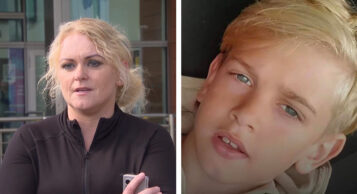
The recent case of Archie Battersbee, who had his life support machine turned off after a long legal battle and against the wishes of his parents, raises questions on whether and when it is morally permissible to do this, and who should decide.

The 12-year-old boy suffered brain injury while at home in London, in April, and he was soon declared “brain-dead”. The family contested this diagnosis but after six hearings in different UK courts, a decision of the European Court of Human Rights and even the intervention of a UN Committee, last week the judges ordered the ventilation to be withdrawn.

The main difficulty in Archie’s case was to establish whether he was already dead. The very concept of “brain stem death”, which is not defined in the UK common law or statutes, was disputed in court. (The Christian Legal Centre, which helped Archie’s family, explain well the technical difficulties of such definition here)

There are cases when it is morally permissible, in certain circumstances, to switch a person’s life-support machine off. Each case should be addressed in its individual merits but there are some general ethical principles to take into consideration.

The first principle is that death should be never intentionally procured. It is always wrong to kill patients or facilitate their suicide, and this is the reason why euthanasia and assisted suicide are always morally wrong.

On the other side, it is morally permitted, and sometimes even required, to withdraw or withhold a treatment when it is futile or harmful, even if the unintended consequence is the acceleration of the death of the patient. A treatment should always be proportionate and foremost in the interest of the patient.

In other words, there is no moral duty to artificially prolong the life of a terminal patient whose cerebral functions are irreversibly lost.

The final decision should involve the medical professionals, the family, and also the patients if they are in the condition to express their opinion or have given instructions in advance.

Even when death is inevitable, the interest of others involved, particularly parents and siblings, has to be taken into consideration as they also need time to come to terms with their tragic loss.

In the case of Archie Battersbee, the judges acknowledged that he was not in pain and he had previously expressed a wish to be kept on life support if found in such circumstances, but they still deemed that this was not in his best interest. This ruling led to a harsh dispute between the courts and his family, which wished for their child what they considered a more dignified death, “in God’s time, in God’s way”.

Archie’s case is the latest in a long list of similar situations where health authorities have come into conflict with the wishes of a child’s parents, and the courts have ruled against the parents.

The Anscombe Bioethics Centre denounced “a systematic lack of respect in English law for the role and responsibilities of parents in such cases”. 

They have accused the British medical and judicial establishment of a peculiar form of paternalism, which is not seen in other countries, for not taking expressions of a wish to receive treatment and live with the same seriousness as they take expressions of a wish not to receive treatment.

The Anscombe Bioethics Centre has called for changes in the law and a government review to avoid further conflicts between the parents and hospital authorities.

martedì, aprile 12, 2022

Oireachtas Committee told harsh facts of life about commercial surrogacy


Officials from three Government Departments have expressed great doubt about the possibility of legislating for the recognition of international commercial surrogacy contracts in Ireland. Besides practical difficulties, it would create a double standard if commercial surrogacy, which is banned here in Ireland, is tolerated when it happens abroad.

The Joint Oireachtas Committee on international commercial surrogacy, which had its first hearing last week, is addressing two main issues: the retrospective recognition of parentage for children who have already been born abroad from a surrogate mother, and the legal status of future arrangements.

The Committee wondered whether something should be added to the Assisted Human Reproduction (AHR) Bill that is currently under scrutiny in the Oireachtas, or if a separate piece of legislation is needed instead. Bar Senator Sharon Keogan, no-one on the Committee appears to be against commercial surrogacy in principle despite that the fact in Europe only Ukraine, Belarus and Russia permit it. Other countries regard it as womb-renting.

Officials from the three Departments (Justice, Health and Children) which appeared before the Committee reminded members of these facts. They said that no other country regulates surrogacy abroad as the State has no control and cannot legislate on what happens outside its jurisdiction. 

A representative from the Department of Children also told the politicians that he was “not aware of any EU Member State which has legislated specifically for their own citizens engaging in surrogacy in another jurisdiction. Rather, the norm appears to be that existing family law is utilised and adapted to deal with specific cases.”

This is also what currently happens in Ireland, but the Committee wants to create an easy pathway for surrogacy abroad.

The same representative warned that “international commercial surrogacy does raise concerns about the commodification of children, exploitation of women in poorer countries, the risk of child trafficking and the child’s right to know their identity.”

The Department of Health representatives said that they are “primarily concerned to ensure that any proposals that may emerge do not undermine the principles of the policy in respect of domestic surrogacy as reflected in the Assisted Human Reproduction Bill, or create a conflicting policy landscape”, whereby we ban commercial surrogacy here, but recognise it overseas.

The same safeguards to prevent the exploitation of women and children, and even of the commissioning couples, should be in place abroad as domestically but this is almost impossible to achieve. "How do you get assurance that standards are being applied?", asked Andrew Munro from the Department of Justice.

Some members of the Committee suggested a solution along the lines of international adoptions, where Irish couples can adopt children only from countries that guarantee good practice. But, unlike with adoption, there is no international convention on surrogacy, there is no international framework to rely on.

Speaking about surrogacy, Andrew Munro from the Department of Justice told the Committee: “We have seen some very difficult examples in the past where … a lot of people got exploited by bad actors, where the egg that was purportedly supplied by a purported donor was not the egg. The child given to the intending parents had no genetic link”.

He added there had been cases where the surrogate mother was “spirited away over a border immediately after birth,” or a birth certificate provided by local authorities falsely "named the intending father as father despite the child having none of his genetic material”.

Conor O’Mahony, Special Rapporteur on Child Protection, also spoke to the Committee, but he came down more on the side of facilitating commercial surrogacy.  He criticised the Government for ignoring his report on children’s rights in the context of surrogacy. If enacted without considerable amendments, he claimed, the Bill will be against the best interest of children in many ways.

Unlike the officials from the various Government Departments, Professor O’Mahony believes that international surrogacy can be regulated in the AHR Bill. He proposes that intending parents should “apply to the High Court for parentage and parental responsibility, as well as a grant of nationality and citizenship to the child, subject to satisfying a range of prescribed criteria.” He didn't clarified if the prescribed criteria should be the same as for domestic surrogacy.

This is probably what the Committee will recommend but it will create tension with the Government as it will delay the Assisted Human Reproduction Bill and its implementation, aside from the many inherent and unavoidable ethical problems created by commercial surrogacy.

lunedì, ottobre 18, 2021

New genetic selection techniques will facilitate eugenics


The genetic selection of human embryos is reaching new levels of sophistication  and depravity with the development of a technique called ‘polygenic screening’, based on statistical scores. Eugenics, which is breeding out the ‘defective’, is deepening its grip on our societies.

The new method is a step above current screening processes that can detect conditions like Down Syndrome.

Last year, the embryo of baby girl Aurea was chosen over other embryos who had more chance of developing certain medical conditions in the future, using a “polygenic risk score”.

The screening of human embryos artificially created in laboratory through IVF is quite common

Tests are offered for genetic or chromosomal abnormalities, such as Down Syndrome, and only the unaffected embryos are implanted in the womb, while the other are destroyed

When similar screening tests are performed during pregnancies, they generally lead to abortion. 

This is a clear form of human selection on the basis of health characteristics, also known as eugenics. 

So far, those tests were focusing on diseases caused by a single gene, but some conditions are triggered by the interaction of many genes. 

A new technique based on “polygenic risk scores” (PRS), which has been employed for the first time with success, tests the presence of many genes. 

In simple words, the new test analyses the gene-sequency of an individual and estimates the probability that some conditions will develop later in life. 

As the link between some genes and certain medical conditions is only probabilistic, these new techniques are based on statistical data and they have only become possible in very recent years with the development of large databases of genetic information.

As it develops, preimplantation genetic testing is likely to be able to predict not only health, but also other characteristics related to our genes, such as intelligence, psychological traits, personality types, learning disabilities, height, etc.

Commissioning couples, but also single individuals, will be able to pick any physical or psychological trait linked to genetic and to ‘order’ their ideal child. In a society where choice is everything, who will stop them?

This is one further step down an extremely unethical path that aims at eliminating imperfect human beings. It is immoral not only because it destroys humans at embryonic stage, but also because it perpetuates the false assumption that some lives are not worth living when they have certain unwanted characteristics.

The defenders of these techniques are quite honest about the eugenicist nature of genetic selection.

Oxford university philosopher Julian Savulescu proposes a “welfarist model” of polygenic scores that select for traits associated with well-being.

He writes: “[Tests] to select against genetic conditions … such as Down Syndrome, are common and are even publicly funded, implying not only assent, but active support for allowing prospective parents to select against these conditions. Selection on the basis of polygenetic scores, if it is well correlated and causally linked to a welfare threshold with important bearing on the future’s child well-being is ethically equivalent to these. Indeed, allowing selection on the basis of only some genetic conditions may be discriminatory. It would be consistent with an anti-eugenic stance to reject all form of selection.”

Savulescu has no problem with eugenics, as long as “there is no broad social goal or coercion employed”.

Do we really need to wait until it becomes imposed by the state before we realise how immoral eugenic?

---

(A shorter version of this article was published here)

martedì, marzo 02, 2021

How Belgium’s euthanasia law has been consistently abused


Pro-euthanasia advocates in Ireland, as elsewhere, insist that properly drawn legislation permitting assisted suicide and euthanasia will ensure that such a law will never be abused.  Numerous safeguards, they assure us, can be put in place. A new academic study from Belgium very much indicates the opposite is the case.

The three authors, who are based at the University of Ghent, are not against euthanasia in principle but they admit that “several legal requirements that are intended to operate as safeguards and procedural guarantees in reality often fail to operate as such. We believe this is ethically and legally problematic and should be of concern to everyone, regardless of their stance on the ethical justifiability of euthanasia in general.” (p. 82)

Euthanasia was introduced in Belgium in 2002. Initially it was offered only to adult patients with a medical condition without prospect of improvement. Later, the law was amended to allow euthanasia for minors but, with time, its interpretation and application has become more and more liberal. And while the number of cases continuously rise, it now includes psychiatric conditions or simply being “tired of life”.

When the law was first introduced in 2002, 24 cases of euthanasia were performed. By 2019 this had risen to 2,655.

What has happened in Belgium is typical.

The authors of the Belgian study found shortcomings in the legislation, in its application and in the monitoring of the practice. With regard to the legislation, they claim that the scope of the law “has been stretched from being used for serious and incurable illnesses to being used to cover tiredness of life.”

For instance, it is required that the patient experiences “constant and unbearable physical or psychological suffering that cannot be alleviated”. But the interpretation of this requirement is problematic as it is not clear “whether the incurability criterion refers to the mere existence of possibly effective treatments or to the existence of possible effective treatments acceptable to the patient.” (p. 87). What happens if the suffering cannot alleviated precisely because the patient refuses a treatment that is otherwise available?

The standards are completely subjective as only the patient can determine what suffering is unbearable or not. This changes and alters the role of doctors, who are “reduced to merely meeting patients’ demands”. (p. 87)

The study refers to empirical evidence and reports that in Belgium “euthanasia is performed increasingly frequently in cases of psychological suffering” (p. 87) Also, the Monitoring Commission admitted that cases of “tiredness of life” have been reported.

The opinion of a second physician, beside the one who kills the patient, is required by the law but it is nonbinding. If legal criteria are not met, the physician has no legal means to report this or to prevent the euthanasia from occurring. This makes the second opinion totally irrelevant.

“The obligatory consultation of one or two independent physicians may fail to provide a real safeguard. Their tasks are quite limited, and, more importantly, their advice is not binding anyway. The final authority to perform euthanasia lies with the attending physician who can perform it even against the (negative) advice of the consulted physicians”, the study says (p. 102).

The Belgian law also established a Monitoring Commission with the task of checking reports on euthanasia cases and, if the legal criteria are not met, it must refer the case to the Public Prosecutor. This has happened only once since the law entered into force in 2002.

The study found that “the Commission is unable to check the fulfillment of various legal criteria, and it has substantial authority to (re)interpret the Euthanasia Law as it sees fit.” (p. 102)

Its functioning is undermined by the underreporting of the euthanasia cases. Recent research suggests that one third of cases are not reported. Moreover, the advice of the second consultant does not have to be included, making the report “overly concise”, according to the article.

“Several commentators have observed that the Commission does not seem to act as a filter between physicians who perform euthanasia and the Public Prosecutor, but instead as a shield that prevents potentially problematic cases from being referred”, the study claims.

For instance, a member of the Commission resigned in September 2017 after a case involving a patient suffering from advanced dementia and Parkinson disease was not reported to the Public Prosecution. Not a single criteria was met and euthanasia had not even been requested by the patient.

Other cases where the legal criteria were not met emerged through the years. (Here is an example)

The authors of the study note: “Our concern is that the Commission’s current level of discretion in assessing the legitimacy of euthanasia cases in practice leaves it with considerable powers that would normally be the prerogative of the legislature or the judiciary.” (p. 101)

This academic article confirms what the anti-euthanasia campaigners have always claimed: initial safeguards are removed with time, through a change in the legislation but also through more liberal interpretations of the law by courts, medical committees or monitoring commissions.

“Several of these shortcomings are structural and thus require more than simply increased oversight”, conclude the authors of the study.

The Belgian examples shows that once euthanasia is introduced, it becomes almost impossible to limit its scope or to avoid abuses.

sabato, febbraio 06, 2021

Assisted suicide submission sows confusion about passive euthanasia


As mentioned in the previous blog, a document in support of euthanasia and assisted suicide has been submitted the Oireachtas Committee on Justice by a small group of Irish doctors. That blog examined how the document’s reasoning illustrates the existence of a slippery slope even while denying it. This blog will look at its ambiguous and confusing use of the term “passive euthanasia”, because based on the document’s definition, it seems non-controversial, which is far from the case.

Here is how the authors of the document define passive and active euthanasia: “All forms of euthanasia involve the intention to hasten death in the patient’s interests. Passive euthanasia involves intentionally letting a patient die by withholding a treatment, such as artificial life support from a ventilator or a feeding tube. Active euthanasia involves the intention to hasten the death of a patient through an active means e.g. injection of an agent.” (p. 32)

This definition (“intentionally letting a patient die by withholding a treatment”) is correct but in the same document the authors describe a different situation and call it incorrectly “passive euthanasia” as well. They says:

“When it comes to end of life care the burden of any treatment needs to be balanced with the benefit of that treatment. In some instances, the benefit of treatment is less than the possible burden and treatment is either withheld or withdrawn. Examples of this include, stopping antibiotics or stopping intravenous fluids in frail elderly patients who are unlikely to live and who are suffering. This hastening of death by withholding treatment and allowing the illness to take its course is a form of passive euthanasia.” (p. 5)

No, it is not.

In Ireland, a treatment is withheld or withdrawn when it is considered futile and non-beneficial or on request of the patient, as no treatment can be forced. In those cases, the intention of the doctor is not to hasten or procure death and it is important to highlight this point, to avoid ambiguity and confusion.

This is not passive euthanasia, as the document incorrectly claims, because the intention of the doctor is not to let the patient die.

Death will occur naturally as an unintended and inevitable consequence. It is foreseen but not procured and the difference is critically significant, from a moral and also from a legal point of view.

This course of action is morally and legally acceptable according to the principle of the double effect. Sometimes our actions have a good and a bad effect. A surgery, for instance, is beneficial but also causes pain. When we aim at a good action (necessary surgery), the secondary bad effect (causing pain) is morally acceptable if it is not intended but also not avoidable and proportionate.

Likewise, giving a person morphine to reduce pain even if the person’s life might end a little earlier as a result, comes under the principle of double effect because the intention is to kill the pain, not the patient.

In their documents, the doctors ask: “how can active euthanasia be universally wrong while the practice of passive euthanasia has widespread support?” (p. 5)

But if passive euthanasia means, as they say, “intentionally letting a patient die by withholding a treatment”, where is the evidence that it has widespread support?

What is universally accepted is not passive euthanasia, which is killing, but the doctrine of double effect that in appropriate circumstances justifies the suspension of non-beneficial treatments.

Passive euthanasia intentionally ends a life while, instead, withholding or withdrawing futile or overly-burdensome treatment lets a life follow its natural course until the end, when medical intervention is not considered appropriate.

In the first case, the doctor kills, in the second one, illness kills. The role of the doctors is completely distinct and this is why healthcare professionals who oppose active and passive euthanasia, have no problem in stopping a treatment when it is not beneficial anymore, even if the patient will inevitably die. They are not responsible for that death as they have not caused it.

This is a fundamental distinction that the document fails to make, rendering the whole submission confused and void.


—-

Photo by Online Marketingon Unsplash

martedì, febbraio 02, 2021

Pro-euthanasia submissions show the slippery slope is real


A new group called ‘Irish Doctors supporting Medical Assistance in Dying (IDsMAiD)’ has made a submission to the Oireachtas Justice Committee that is examining Deputy Gino Kenny’s ‘Dying with Dignity Bill’. The submission denies that a slippery slope exists once you legalise the measure, while at the same time confirming its existence by opening the door to assisted suicide on wider grounds than the Kenny Bill envisages.

The document was signed by about 100 doctors, some of whom were involved in the campaign to repeal the 8th amendment. (A document opposing the Kenny Bill has been supported by 2,500 healthcare professionals.)

Having denied the existence of a slippery slope, the IDsMAiD doctors then open the door to the possibility of expanding the criteria for eligibility in the future. For instance, they are open to allowing euthanasia for patients with dementia who have made advanced requests. “With more research and experience from other jurisdictions, relating to informed consent for MAiD in patients with dementia, this is something which could be dealt with on a legislative basis in the future.” (p. 27)

On the face of it they are against allowing assisted suicide on the grounds of mental illness, but then they say: “Further research and studies are required before it should be considered.” (p. 25).

What about ‘assistance in dying’ for those with serious, but non-terminal physical illnesses or disabilities? One of the authors of the submission is Dr Brendan O’Shea, former head of the  Irish College of the General Practitioners. On Twitter, The Iona Institute’s David Quinn asked him if he was open to the idea of offering euthanasia to patients with non-terminal illnesses if they have ‘unbearable suffering’. He replied: “For those with unbearable pain and non-terminal illness, we need a debate. Speaking for myself, I would like the choice.”

The term “unbearable pain” is, as the document admits, highly subjective. It could mean mental anguish rather than actual physical pain. What is “unbearable” for one person might be bearable for another.

As we know from the experience of other countries, once assisted suicide and euthanasia are introduced the grounds always expand with timeOur own submission makes this clear.

The IDsMAiD document says that “any future changes in criteria or safeguards will also require further legislation”, meaning any progression down the slippery slope would have to be passed by the Oireachtas.

But this is not necessarily the case. In other countries, more permissive interpretations of the law have been allowed by the courts or by review committees and professional bodies.

In the US, for instance, the Oregon Health Authority took an expansive interpretation of what constitutes terminal illness and new conditions were included, without change in the legislation.

It is actually difficult to avoid slipping down all the way and eventually accepting what organisations such as ‘Exit International’ wants, which is assisted suicide for anyone capable to making a ‘rational’ decision, but they do not have to be sick at all, just sick of life.

Again, the document admits that “the concept of suffering is entirely subjective and cannot be removed through medical advances from all patients” (p. 6). Once this attitude is accepted, it will be easy to extend the intentional killing of a patient to minors or to those who are unable to decide for themselves (particularly if they have signed advanced directives), or to those who suffer from non-terminal conditions. This is precisely what happened in the Netherlands and in Belgium.

Even if this document is only the expression of a minority, it is frightening to see doctors supporting the legalisation of euthanasia. They use the ambiguous expression Medical Assistance in Dying, as if patients are not assisted medically when they die in Irish hospitals or as if someone would oppose this.

The group totally supports the Kenny Bill in principle, and they recommend no further restrictions, apart from asking that any doctor participating in an act of assisted suicide should be on the specialist register of the Irish Medical Council.

More needs to be said about their document, but this can wait until my next blog.


Photo by Bermix Studio on Unsplash

venerdì, gennaio 08, 2021

The morality of Covid vaccines


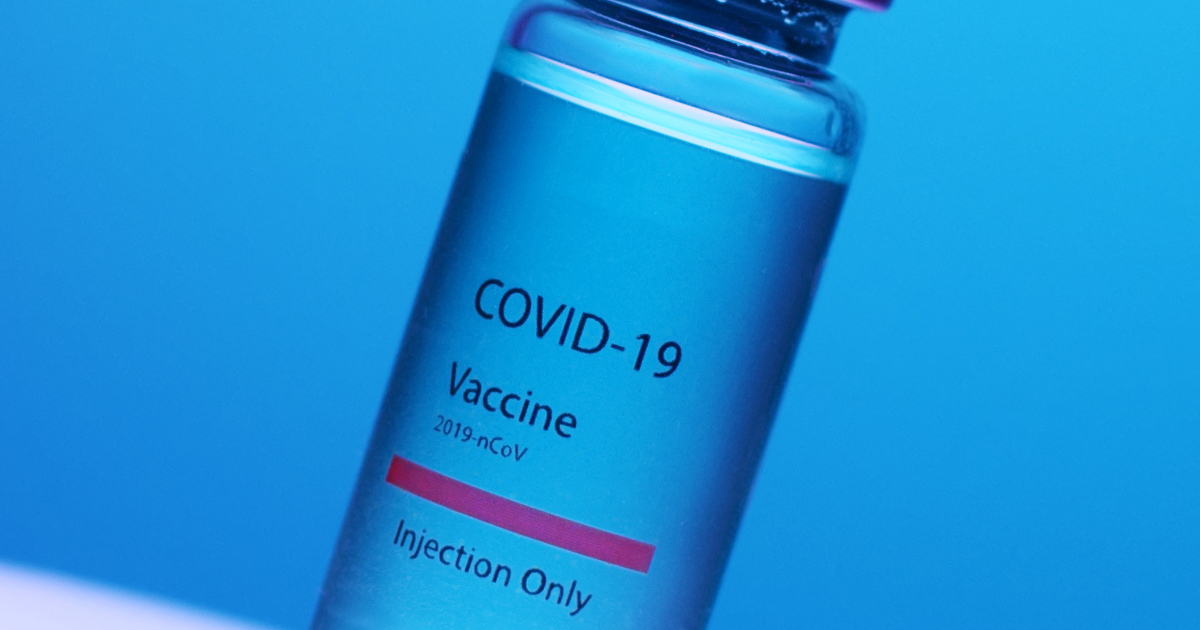
 A number of vaccines are being produced to fight Covid-19 but some of them are creating problems of conscience, as it is well documented that some cell lines used in the development, production or testing of vaccines are derived from aborted foetuses. 

Does this mean that those vaccines should always be rejected? Is their use always ethically unacceptable? There is no simple answer to these questions, as we will see. We need to distinguish the process from the product, even if it is not an easy task. 

There is no doubt that the harvesting of foetal tissue is deeply immoral. It is always morally wrong to participate, at any stage, in the experimentation and production of vaccines that involve cell lines derived from abortions, as this would be a direct cooperation with an evil practice. No good intention, such as saving lives through vaccination, can justify what is intrinsically (always and per se) evil. But what should we do once the product exists? If we use it, to what extend are we responsible for its unethical production? 

While the process is intrinsically wrong, the product, in itself, is not. I will use an analogy to clarify my argument. It is not unethical to cross a bridge that was built by slaves 2,000 years ago. The building process was morally wrong but the product, i.e. the bridge itself, is not. But imagine there is a construction company that nowadays uses forced labour to build bridges. Not only it would be immoral to employ this company for public works, but we also have a duty to publicly denounce this awful practice and do our best to stop it. 

Suppose the bridge exists and it was built only recently by a company that it is still active and it charges a fee for its use, making profit. Is it wrong to make use of it and pay the toll if there is no alternative available and the bridge is necessary to save lives? To what extend are we accomplices with the unethical builders? Here is where the difficulty lies. 

We need to bear in mind that the purchase of a product fosters its production. Using vaccines obtained from unethical practices does contribute to their public legitimisation and encourages the perpetuation of those immoral practices. On the other side, we need to consider that there is a duty to save lives with legitimate means, and there are degrees of responsibility. Those who are at the end of a long chain that goes from the production to the intake, are the least responsible. 

Ethical alternatives always have to be preferred. When this is not reasonably possible, there could be grave reasons to accept morally contentious vaccines, in order to save lives, but only as the last resource and until a more ethically acceptable alternative becomes available. 

At the same time, moral objections should be clearly made public so that the use of an ethically contentious product should in no way appear as a form of endorsement or condoning of a wicked form of production. 

On December 21 the Congregation for the Doctrine of Faith produced a document stating: 

When ethically irreproachable Covid-19 vaccines are not available (e.g. in countries where vaccines without ethical problems are not made available to physicians and patients, or where their distribution is more difficult due to special storage and transport conditions, or when various types of vaccines are distributed in the same country but health authorities do not allow citizens to choose the vaccine with which to be inoculated) it is morally acceptable to receive Covid-19 vaccines that have used cell lines from aborted foetuses in their research and production process … the licit use of such vaccines does not and should not in any way imply that there is a moral endorsement of the use of cell lines proceeding from aborted foetuses.

Some bioethicists and religious leaders have argued along these same lines. The Irish Catholic Bishops’ Conference, for instance, has recently stated: 

If a more ethically acceptable alternative is not readily available to them, it is morally permissible for Catholics to accept a vaccine which involves the use of foetal cell-lines, especially if the potential risk to life or health is significant, as in the case of a pandemic. Refusal to accept a vaccine could contribute to significant loss of life in the community and especially among those who are most vulnerable. This reality must inform any judgement of conscience. We reaffirm the consistent teaching of the Church that abortion is always gravely immoral. The Church has always made a distinction, however, between formal (deliberate) involvement in an immoral act and material involvement, which may be incidental and remote. The decision of those who decide to accept vaccines which have had some link with foetal cell-lines in the past does not imply any consent on their part to abortion.

The Bishops’ Conference of England and Wales explained the distinction between deliberate and accidental involvement, making reference to the questionable history of vaccination: 

The Church distinguishes between the present unethical sourcing of vaccines and the use of historical cell-lines which were derived from aborted foetuses in the 1970s. Human society has often benefited from the wrongs done in the past for which we must repent. We live with the benefits of very questionable medical experimentation. For example, Edward Jenner, who invented vaccination, conducted research by injecting an 8-year-old boy with cowpox followed by smallpox. While today such experimentation would be unethical by any standards, we wouldn’t deny life-saving vaccination because of its dubious historic provenance. 

Bioethicists Jeffrey Barrows and Jonathan Imbody tackle the same issue. In a recent Public Discourse piece they write: “Several mitigating principles can help assuage the concerns of conscientious end users of drugs that have some connection to abortion: the distance in time from the original abortion to the present use of the drug and the lack of availability of any ethical alternatives.” 

Peter A Comensoli, Archbishop of Melbourne and Chair of the Australian Bishops Commission for Life, Family and Public Engagement, on behalf of Australia’s Catholic bishops, says that “the use of an ethically compromised vaccine is acceptable if no other option is available, in order to protect lives.” 

The US Catholic Medical Association agrees and quotes from a Vatican document on the licit use of vaccines dating back to June 2005, during the early days of the Benedict XVI pontificate. The Association states: “When no alternative vaccines are available, it must be reaffirmed that the use of vaccines whose production is connected with acts of procured abortion is lawful ‘on a temporary basis’ and ‘insomuch as is necessary’ to avoid significant risk to the health of an individual or the community.” However, they add: “When no alternative vaccines are available, there is a ‘moral duty to continue to fight and to employ every lawful means’ to pressure the pharmaceutical industry, government authorities and national health systems to make ethical alternatives available.” (The document of the Pontifical Academy for Life quoted is called Moral Reflections on Vaccines Prepared from Cells Derived from Aborted Human Foetuses.) 

Totally ethical vaccines always have to be preferred over morally questionable ones but, when they are not available, there can still be good reasons to use morally contentious vaccines that have already been created, as outlined by the various authorities quoted above. Hopefully in due course, vaccines that protect against Covid and have no connection to abortion, even a very remote and distant one, will become available for use.
mercoledì, dicembre 30, 2020

The use of vaccines and material cooperation


The Holy See has recently released an official document stating that, “when ethically irreproachable vaccines are not available, … it is morally acceptable to receive Covid-19 vaccines that have used cell lines from aborted fetuses in their research and production process.” This is a reference to the fact that some of the vaccines have in some way used cell lines derived from an aborted foetus in 1972. It uses an argument similar to that made in documents dating back to the Benedict XVI papacy.

The document, approved by Pope Francis, says that “the fundamental reason for considering the use of these vaccines morally licit is that the kind of cooperation in evil (passive material cooperation) in the procured abortion from which these cell lines originate is, on the part of those making use of the resulting vaccines, remote. The moral duty to avoid such passive material cooperation is not obligatory if there is a grave danger, such as the otherwise uncontainable spread of a serious pathological agent. … It must therefore be considered that, in such a case, all vaccinations recognized as clinically safe and effective can be used in good conscience with the certain knowledge that the use of such vaccines does not constitute formal cooperation with the abortion from which the cells used in production of the vaccines derive.”

The Church has thus made it clear to Catholics that they are morally allowed to use the presently available vaccines for Covid-19.

This document employs technical language such as “material and formal cooperation” which mean little to many Catholics. This is one of the reasons why some faithful find it difficult to understand the position of the Church on this matter. How can we use vaccines that are somehow associated with abortion?

In this blog, I will try to explain the meaning of those technical expressions, using some more common examples.

There are many ways to cooperate in an immoral act and they don’t carry the same degree of responsibility.

Let’s consider the example of stealing a car. Different scenarios are possible.  The worst case is when I convince someone else to steal it with me or for me. It is the worst case because that person wouldn’t have done it without my solicitation and so am I twice responsible.

The second scenario is when I join someone else in a theft that would have occurred anyhow. My help makes me equally responsible.

In both cases, I fully participate with the intention of stealing and this is what is called “formal cooperation”. (The reason why it is called “formal” has to do with a tradition in moral philosophy that goes back to Aristotle. A scholarly explanation can be found here.)

The third scenario is when I am not directly involved in the evil action but, being aware of it, I do nothing to prevent it or to report it even if I could. Although there is no direct participation, a certain degree of responsibility is still present.

A final scenario is when I do not approve someone else stealing a car but, still, I am forced to be somehow involved because of the circumstances. By threat of violence, for instance, of by some urgent necessity.

Assisting in another’s wrong-doing without approving is called “material cooperation”. I am materially involved but without consenting to the act.

Imagine someone who desperately needs a car to go to the hospital and only a stolen one is available. In other circumstances we would not make use of that car but, if nothing else is at hand and the car is needed to save a life, most of us would use it. The connection with original theft is remote and passive, as I am not actively soliciting someone to steal for me.

Traditional moral theology tells us that in this case the evil is not intended and there are sufficient reasons to tolerate it.

These examples help us understand the recent document from Rome.

It says: “As regards the preparation, distribution and marketing of vaccines produced as a result of the use of biological material whose origin is connected with cells coming from foetuses voluntarily aborted, such a process is stated, as a matter of principle, morally illicit, because it could contribute in encouraging the performance of other voluntary abortions, with the purpose of the production of such vaccines. Nevertheless, it should be recognized that, within the chain of production-distribution-marketing, the various cooperating agents can have different moral responsibilities. However, there is another aspect to be considered, and that is the form of passive material cooperation which would be carried out by the producers of these vaccines, if they do not denounce and reject publicly the original immoral act (the voluntary abortion), and if they do not dedicate themselves together to research and promote alternative ways, exempt from moral evil, for the production of vaccines for the same infections. Such passive material cooperation, if it should occur, is equally illicit.”

Fully morally acceptable alternatives always have to be preferred but, as we have seen, when they are not available, some remote unintended connection (material cooperation) to an evil act can be morally tolerated if, on balance, it is necessary for the common good. This is the Catholic moral tradition, as promoted by the Holy See, in any case.

venerdì, dicembre 04, 2020

Euthanasia in Belgium and Netherlands: How the slippery slope is turning into reality


This is a talk given on the 1st December by Dr Léopold Vanbellingen of the European Institute of Bioethics (IEB) in Brussels.


Léopold Vanbellingen works as Research officer at the European Institute of Bioethics (IEB) in Brussels. Founded in 2001, the IEB has set itself the goal of contributing to the elaboration of bioethics based on the respect for and protection of each human being, from conception until natural death. The IEB seeks to inform, enlighten and raise the awareness of the general public and political decision makers on bioethical risks and related social issues. It focuses on the situation on Belgium and, more broadly, in Europe, regarding abortion, assisted reproduction, end of life, biomedical research and freedom of conscience.Léopold Vanbellingen is also currently completing a PhD thesis in Law and Religion at the Université catholique de Louvain. His thesis focuses on religious diversity in the workplace, including the issue of conscientious objection by employees.

giovedì, ottobre 08, 2020

Once euthanasia is introduced, the grounds always expand


Last night the Dáil voted in favour of moving Gino Kenny’s assisted suicide bill to past second stage of the legislation process, and to committee stage. Several senior Government figures voted in favour of it including Leo Varadkar, Helen McEntee, Stephen Donnelly and Simon Harris.

Supporters of the bill claim it will be introduced with strict limits and safeguards. But the experience of other countries tells us that once the absolute prohibition of killing patients is lifted, it becomes impossible to keep the initial restrictions.

Laws allowing the direct (euthanasia) or indirect (assisted suicide) killing of a patient by doctors are rare in the world. They only exist in six countries, in one Australian state and in nine US states.

Nonetheless, in all those places we see a common pattern: legislation is initially introduced on certain limited grounds and with time those grounds continuously expand. Moreover, once a “right to die” is established, courts will find limitations discriminatory and will remove them.

Let’s see some examples.

In the Netherlands euthanasia was introduced for terminally ill adults who were mentally competent. Then, step by step, it was extended to those with chronic condition, with disabilities, mental health problems and even to non-mentally competent children.

This happened not through a modification of the legislation but with changing the interpretation of the law in courts or by medical professionals.

Last April, the Dutch Supreme Court cleared a doctor who administered euthanasia to a woman in the advanced stages of dementia who resisted death when the time came to give her a legal substance. Her family helped to hold her down. She had previously said she wished to be killed when she was no longer mentally competent.

The Dutch parliament currently has before it a private members bill that proposes to offer euthanasia to anyone over 75, even healthy people. If this passes, the next step will be to lower the age limit or to remove it completely.

In Colombia, the Constitutional Court decriminalised euthanasia in 1997. In 2014, it established the “right to die with dignity” as a fundamental right and therefore subject to special legal protection. In 2017, this ‘right’ was extended to minors, who can avail of euthanasia even without consent from their parents. While parents can request euthanasia for their children if they are not able to express themselves.

In Canada, assisted suicide was introduced in 2016 for those who are in pain and for whom death is “reasonably foreseeable”, even if the condition is not terminal. But in 2019 the Supreme Court in Quebec deemed this requirement unconstitutional and ruled in favour of two people for whom death was not foreseeable but, nonetheless, they desired to die. The court decided it was discrimination not to extend the same right to the chronically ill who might be suffering.

In Oregon, in the US, the limits were expanded without even changing the law. With time, the Oregon Health Authority took an expansive interpretation of what constitutes a terminal illness, including conditions that if treated would be not terminal. Moreover, in 2019 they removed the 15-day waiting period.

In Belgium, euthanasia was legalized in 2002 for those with incurable conditions (not necessarily terminal) and in 2014 they allowed minors to access it.

Other examples of this “slippery slope” could be mentioned.

There is a logic in all those developments. If choosing when and how to die is a right, why should it be limited and restricted? If killing is a solution to ‘unbearable suffering’, there is no compelling reason to limit its availability to one category of patients. Why only those with terminal illness? Why only to those experiencing physical pain? Why only adults? Why only mentally competent?

Medicine is based on the principle of doing no harm. The introduction of the direct or indirect killing of a patient transforms and betrays profoundly the purpose of the health system and the role of doctors.

Lifting the absolute prohibition of killing is not a small step, it is a fundamental cultural shift. Everything else follows from such move and this is why it has to be rejected without compromise.

Once the threshold is passed, it is only a matter of time before the next restriction is removed and it becomes hard, if not impossible, to go back.

venerdì, settembre 11, 2020

Why leading doctors oppose assisted suicide


A Private Members’ Bill seeking to permit assisted suicide will be debated in the Dáil next week. It is proposed by Socialist TD, Gino Kenny. The last time when this issue was discussed in Leinster House, three years ago, some of the strongest opposition came from the members of the medical profession and disability advocacy groups. It’s worth recalling what they said because it is still completely relevant.

The Joint Committee on Justice and Equality heard from two doctors, Regina Mc Quillan, speaking on behalf of the Irish Association of Palliative Care, and Des O’Neill, professor of Medical Gerontology at Trinity College Dublin. (Here is the final report of the Committee).

Dr Mc Quillan made five main points: “1. A change in the law would put vulnerable people at risk. 2. It is not possible to put adequate safeguards in place. 3. The drive to improve the care of people with life-limiting illnesses by education, service development and research may be compromised. 4. Personal autonomy is not absolute and we are part of a society. 5. Allowing assisted suicide or euthanasia for some populations for example the terminally ill or the disabled, devalues the lives of those compared to those targeted in suicide prevention campaigns.”

Dr Mc Quillan cited research by The National Safeguarding Committee revealing that half of the population has witnessed abuse of an adult, and so she maintained that it is “not prudent to assume vulnerable people can be protected in the context of assisted suicide and euthanasia.“

People are already at risk, even with laws and regulations, and “changing the law to allow assisted suicide and euthanasia will endanger the lives of many”, despite suggestions that abuses of this type of legislation can be prevented.

She referred to research showing failures in the countries where medically assisted killing has been introduced. Even where restrictions were in places, there is evidence that euthanasia was offered to those who were not terminally ill or were suffering from psychiatric problems.

Dr Mc Quillan explained which areas within palliative care need development. She said: “the acceptance of assisted suicide and euthanasia could lead to an underinvestment in palliative care research and service delivery, as assisted suicide and euthanasia may be promoted as cheaper options than appropriate health care provision.”

Doctors who everyday deal with suffering and end of life decisions are rarely heard in public debates on these issues, which tend to concentrate on dramatic, high-profile cases. The experience and the concerns of those who offer palliative care are particularly meaningful as they offer a view that is an alternative to common emotional appeals.

“We do not currently have equitable access to palliative care, disability services, psychiatric or psychological support services and my concern and that of many working in health care is that to move in the direction of euthanasia would be to move away from investment in the appropriate services.”, Dr Mc Quillan said.

She also highlighted that, as women are more likely to live longer with greater disability and more likely to have less social support, they will suffer more if euthanasia or assisted suicide is introduced. Women, she claimed, “are more likely to be a victim of ‘mercy killing’ by a male family member in cases which have come to the criminal courts in different countries.”

Professor Des O’Neill was another firm opponent of medically assisted killing. He told the Oireachtas Committee: “That there might be two forms of suicide – one which is clearly upsetting and worthy of strenuous societal efforts to prevent, and one which might be tolerated and given the support and protection of law – is a deeply challenging and contradictory premise. … The decriminalisation of suicide was a humane initiative, aimed at avoiding stigma and further hurt in terms of both completed suicide and attempted suicide, and emphasising the need for help and support for people in this situation, an impulse that holds true for those seeking assisted suicide as well. It was certainly never seen to be an expression of a societal desire to extend access to suicide as a human right, or to position suicide as an act that equality legislation might facilitate”.

Prof. O’Neill criticised the idea of unlimited choice, based on the assumption “that all patients are independent and autonomous, even at moments of high vulnerability”. Instead, we should remember that decisions are often led by the “potency of prejudice against ageing and disability.”

He said that all the major UK advocacy groups for disability have rejected assisted suicide.

To those proposing ‘death with dignity’ he replied: “Human dignity is not a thing that can be lost through disability, disease, dependency, or suffering, although insensitive treatment or attitudes to those so affected can constitute undignified care.”

The promotion of dignified care, instead, is the best way to contrast assisted suicide. In this respect, health care professionals play a pivotal role. Their opposition to deliberately killing, or facilitating self-killing, is something rarely appreciated and highlighted in the current public debates about the end of life decisions.

Prof. O’Neill expresses this perspective clearly: “Public and private discussion with regard to assisted suicide should be seen to represent concerns over adequacy of treatment and support as well as existential concerns relating to the future: these need to be proactively addressed.

“To ask doctors to run counter to this by killing patients short-circuits and undermines our impetus to care, comfort and support and damages our framework of care. Current and future patients need to be reassured that the response of the healthcare professions to distress and pain is one of compassion and care, addressing the needs at a range of levels – biological, psychological, social and spiritual – while respecting wishes to the greatest extent possible.”

(Many of Prof. O’Neill’s points were reiterated in this recent radio interview: https://tinyurl.com/yymzstb3 )