Visualizzazione post con etichetta Netherlands. Mostra tutti i post

sabato, febbraio 08, 2025

The coming trend: couples euthanasia

The number of couples requesting euthanasia together is on the rise in the Netherlands, according to official reports. In 2024, there were 54 such cases, compared to just nine in 2018. A notable case involving a former Dutch prime minister and his wife last year appears to have contributed to the growing demand.

In the Netherlands, assisted suicide or euthanasia can be requested by individuals experiencing ‘unbearable psychological suffering’, even if they are not physically ill. The prospect of losing a lifelong partner is often considered a cause of unbearable suffering and therefore can be sufficient to qualify for euthanasia or assisted suicide. Although requests from couples are treated separately, it is unlikely that only one would be denied if both individuals are deemed mentally competent.

Couple euthanasia is not only becoming more common but is also increasingly romanticised. In February last year, media outlets framed the deaths by euthanasia of the former Dutch prime minister and his wife —and similar cases also —as part of a “love story,” a poetic ending to a long life shared together.

Influenced by this high-profile case, the number of Dutch couples euthanised together rose from 34 in 2023 to 54 in 2024, a significant increase in just one year. While the law requires explicit consent from both individuals, a type of pressure can often be masked by formal agreement. Many spouses dread the prospect of living without each other. The idea of being left alone may, even unconsciously, pressure someone to make the same decision as their partner.

The risk of a contagion effect is really high. It is difficult to ignore the possibility that one partner’s decision could influence the other, even without direct coercion. Moreover, cases of joint euthanasia are not limited to romantic couples. In the Netherlands there have also been instances involving siblings or a mother and her child. In such cases, the reasoning is similar: the surviving individual may consider life unbearable without their loved one.

A recent poll conducted among Dutch citizens with partners found that 75pc were open to the idea of couple euthanasia. However, 60pc expressed concerns about the potential pressure involved, while 40pc believed it would be difficult to determine whether the desire to die was entirely independent.

Commenting on these findings, Philip Nitschke, the inventor of the controversial “Sarco” suicide pod, tweeted: “The Sarco Duo is currently in production”.

Where others are concerned, or scandalised, by the idea of couples killing themselves together, pro-euthanasia activists see it as another opportunity to promote their ideology.

Nitschke is the founder and director of Exit International, an organisation advocating for assisted suicide to be available on demand to any adult, regardless of their reason.

The growing acceptance of couple euthanasia in the Netherlands is part of the broader normalisation that inevitably follows the legalisation of such procedures. Over time, initial restrictions tend to be relaxed, and more individuals may feel influenced, if not explicitly coerced, into choosing to die alongside their loved ones.

martedì, ottobre 03, 2023

Insurance companies could easily offer euthanasia in the future


The Oireachtas Committee on ‘assisted dying’ continues to hear expert testimony on the matter. Last week it heard from a Dutch academic who was once a supporter but has now turned into a critic. He spoke of how insurance companies in his country are already funding the procedure for one provider, which is a chilling possible glimpse of the future.

The Dutch expert, Theo Boer, who is a professor of healthcare ethics, said the legalisation of euthanasia in the Netherlands has turned our view of suffering, ageing and taking care upside down. The numbers are speeding up and the biggest increase is now in illnesses that are not terminal.

He was initially supportive of euthanasia legislation and now, having reviewed 4,000 cases on behalf of the Dutch government, has become critical of it.

He told the committee that in 20 years the numbers availing of it in his country have quadrupled and, in some neighbourhoods, medically assisted euthanasia account for 15pc to 20pc of all deaths. These figures are underestimated, he said, as a governmental evaluation has found that between 10pc and 15pc of doctors do not report their participation in the programme.

He noted that there has been an expansion in the reasons for euthanasia — from those at the end of a terminal illness, to people today fearing loneliness, alienation and care dependency. Once euthanasia is introduced, why should it be provided only for terminally-ill patients, or for those suffering from physical illness and pain, he asked. Sometimes it is the absence of hope that provokes the suffering, he said.

“That is why we have now a law in parliament that legalises euthanasia for all people over 74 years, with or without an illness. Their age is the only reason they can have assisted dying. That in turn is why we now have a regulation that allows parents to request euthanasia for their young children aged from zero to 11 years old. I am convinced it is only a matter of time before we take the next hurdle, namely, allowing children of dementia patients to request euthanasia for their demented parents”, he told the committee.

The second expert who spoke was Silvan Luley, representing Dignitas, a group that facilitates assisted suicide in Switzerland, where it has been legal since 1942. Currently, about 1,700 per year avail of it. He claimed that Dignitas has almost 100 Irish members and 12 people from Ireland have been helped to kill themselves by his organisation.

Dignitas offers assisted suicide not only to those who are terminally ill but also to anyone who has an “endurable incapacitating disability” or suffers ‘unbearable pain’. Mr. Luley told the committee that fewer than 50pc of those who avail of their assistance are terminal. He explained that they offer a professional alternative to violent suicides.

“It is about having an emergency exit door that provides emotional relief and can prevent people from using rough, violent do-it-yourself suicide methods. The people in Ireland should have what everyone deserves: a legal way to exercise the human right of freedom of choice on all options of professional care to soothe suffering and end life at their home” he said.

Luley was challenged by Prof Boer who referred to new studies presented at a congress of 250 psychiatrists he attended recently. One study found that since the Netherlands allowed euthanasia for reasons of psychiatry, dementia and long-term chronic illnesses, the number of violent suicides has risen against expectations by 35pc, while it went down by 10pc in neighbouring Germany.

Moreover, another new study showed that “in places where there is more euthanasia, there is also a slightly higher suicide rate. … It cannot be proven that if one provides euthanasia, it will bring the suicide numbers down”, according to Prof Boer.

(Previous research from the Anscombe Bioethics Centre found similar results https://ionainstitute.ie/assisted-suicide-does-not-reduce-overall-suicide-rate-says-new-study/)

Prof Boer said that there is a general societal pressure that makes feel the patients a burden to their families and to their country.

He also pointed out that in the Netherlands, one organisation, funded by insurance companies, offers euthanasia. The cost is €3,300, of which the performing physician receives €2,000. “For some of these physicians it is kind of a profit thing. I have heard several of them say that they need this money for several reasons, even though most of them are retired. However, it is officially not for profit. … they only offer euthanasia. They do not offer any other help. They do not offer psychiatric or social help. They can only refer the patient back to where they came from.”

The Swiss group Dignitas, which is also not-for-profit, charges the equivalent of about €11,500, plus VAT, for the complete service, which includes funeral and administrative costs.

As the population ages, and healthcare costs mount, it is easy to envisage insurance companies offering to pat their customers for euthanasia. Think of all the money they would save.

mercoledì, aprile 07, 2021

Dutch euthanasia law is deciding some lives are more worthy than others


The practice of euthanasia in the Netherlands bares a disturbing comparison with the Nazi era in Germany because it is recreating the category of life ‘deemed unworthy of life’. This is a opinion of a writer in a leading medical journal, especially as the Netherlands allows people who are not dying to avail of assisted suicide and euthanasia.

Writing for the JAMAL Internal Medicine journal in the US, geriatrician Dr Diane E. Meier, says that the extension of ‘Physician-Assisted-Death’ (PAD) to those who are sick, but are not terminally ill, carries definite echoes of the past because it ‘socially validates’ the idea that some lives are more worthy of the investment required to preserve them than others.

Dr Meier was commenting on a study about patients with multiple geriatric conditions in the Netherlands, published in December last year in the same Journal. The study found that their suffering wasn’t simply physical, but that these elderly patients feared further decline and didn’t want to become dependent or lose control over their situation. None of the patients suffered life-threatening conditions but they all requested, and obtained, death by assisted suicide or euthanasia.

In the Netherlands, there has been an increase in euthanasia performed on patients with dementia, psychiatric disorders or multiple geriatric conditions in recent years.

This should cause alarm, according to Dr Meier. She writes: “Once access to PAD becomes legal, when does a right becomes an obligation, especially when families are strained and society denies patients and families the resources needed to receive safe and reliable care?”

She warns that access to euthanasia comes close to “social validation, supported by policy, that some lives are no longer worth the investment required to preserve them – the implicit belief that both the individual and society would be better off if the patient were dead”

Predictably enough, her comparison with the Nazi era has been criticised as inappropriate by two letters to the journal signed by a number of Dutch doctors, but Dr Meier replied that history teaches us that acting on the belief that some lives are unworthy of life is not a one-time-only event. “Extreme caution is necessary when we empower physicians to take life”.

In addition, while we must be very slow to compare any situation with Nazi Germany, there cannot be a complete bar on comparisons except when the situation is exactly as bad as in the Nazi era.

The fact is that we are back to deciding that some lives are less worthy of life than others, even when that is a self-evaluation.

Dr Meier highlighted that in the Netherlands doctors must follow only vague criteria before administering euthanasia and only 75% of cases are reported, as non-reporting is rarely punished. Moreover, euthanasia in “children, people with mental illness, and dementia further illustrates the impossibility of limiting the practice and safeguarding vulnerable patients once it is permissible”

The Netherlands is often presented as a model for public policies but evidence proves instead that we should not repeat their mistakes.

This is the case not only for euthanasia but also for abortion.

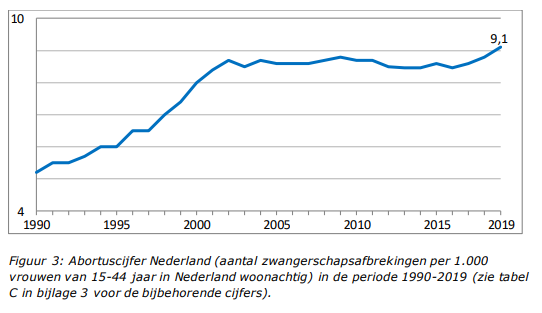
Abortion rates there are still low by comparison with Sweden and the UK, but they continue to grow, according to a new report. The abortion rate (number of abortions per woman) and ratio (number per pregnancy) have never been so high.


The report also showed that 17 Irish women had an abortion in the Netherlands in 2019. There were 18 in 2018. This means that there was no significant difference in numbers after the referendum and the introduction of abortion in Ireland.

venerdì, dicembre 04, 2020

Euthanasia in Belgium and Netherlands: How the slippery slope is turning into reality


This is a talk given on the 1st December by Dr Léopold Vanbellingen of the European Institute of Bioethics (IEB) in Brussels.


Léopold Vanbellingen works as Research officer at the European Institute of Bioethics (IEB) in Brussels. Founded in 2001, the IEB has set itself the goal of contributing to the elaboration of bioethics based on the respect for and protection of each human being, from conception until natural death. The IEB seeks to inform, enlighten and raise the awareness of the general public and political decision makers on bioethical risks and related social issues. It focuses on the situation on Belgium and, more broadly, in Europe, regarding abortion, assisted reproduction, end of life, biomedical research and freedom of conscience.Léopold Vanbellingen is also currently completing a PhD thesis in Law and Religion at the Université catholique de Louvain. His thesis focuses on religious diversity in the workplace, including the issue of conscientious objection by employees.

martedì, marzo 03, 2020

In two countries with liberal regimes, abortion rates have increased

Two national reports on abortion, one from the Netherlands and one from England and Wales, have confirmed that abortion rates do not decline with more liberal laws, as the pro-choice incorrectly repeated during the referendum campaign.
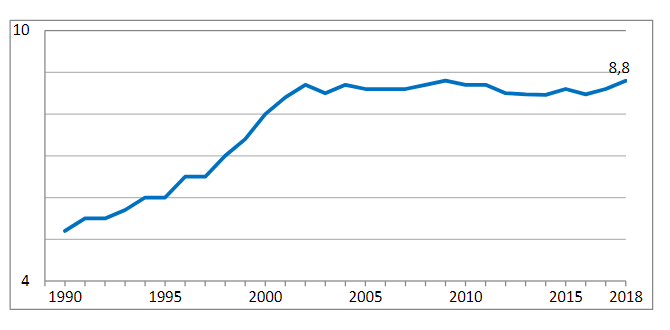
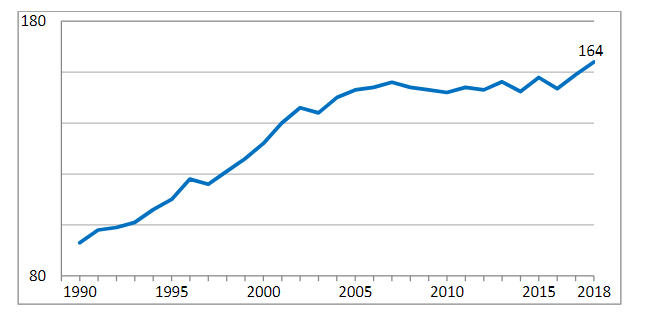
The recently published official report from the Netherlands, which refers to the year 2018, shows that both the number of abortions per women aged 15-44 (abortion rate) and per pregnancy (abortion ratio) are at their highest historical peak.
In 2018, in the Netherlands there were 8.8 abortions per 1,000 women aged 15-44, which is equivalent to 164 per 1,000 pregnancies.
During the debates before the referendum, the Netherlands were often presented as an inspiring model because of their long tradition in teaching sexual education and offering access to contraception. (In fact, sex education is done in various ways in the Netherlands and it is by no means all liberal in character). One of the experts told the Joint Oireachtas Committee that the Netherlands is one of the countries were “abortion rates have fallen”.
But, as the graphics show, both the abortion rate and the abortion ratio have increased with time, and they are now at their top levels. They have, in fact, doubled since 1990.
(Abortions per 1,000 of women aged 15-44 in the Netherlands)

(Abortions per 1,000 pregnancies in the Netherlands)

This week the UK Office for National Statistics presented the 2018 conceptions data for England and Wales.
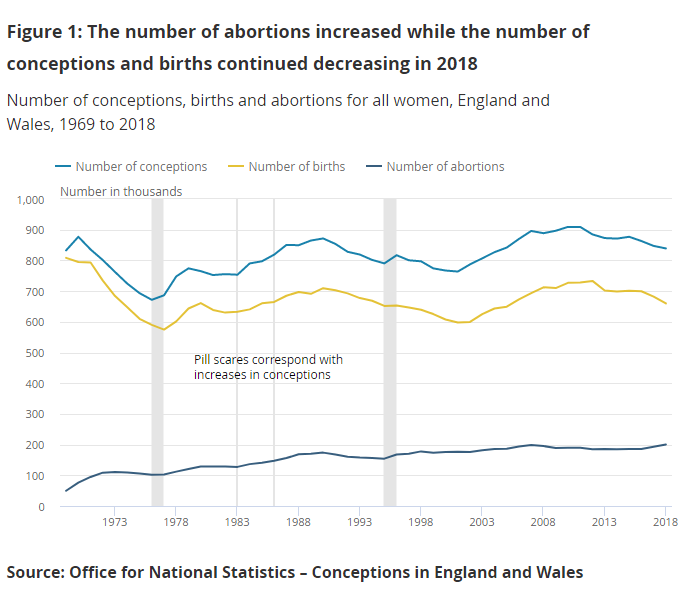
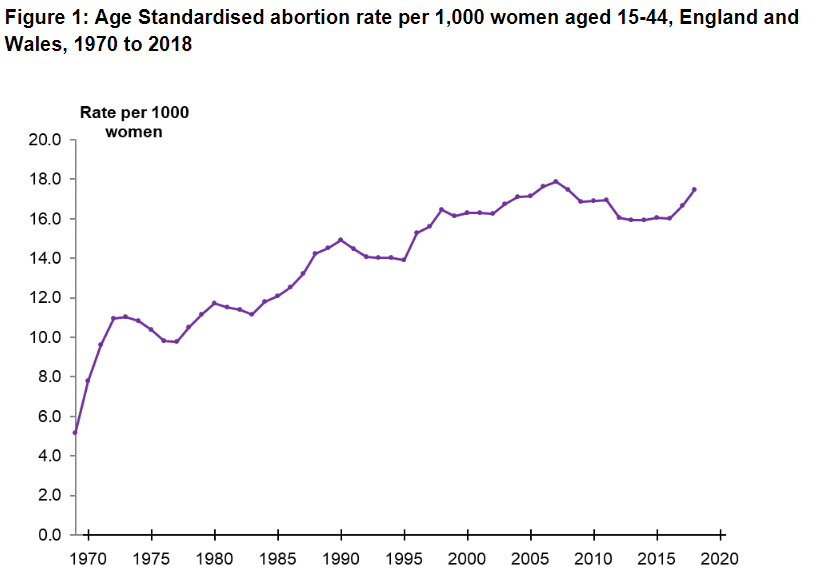
The report claims that “the percentage of conceptions leading to a legal abortion among all women resident in England and Wales increased from 22.7% in 2017 to 24.0% in 2018, the highest percentage since records began in 1990.” This is despite the fact that the conception rate among teenagers has continuously declined in the last 20 years and it is now at its lowest level (partially due to teenagers spending far more time at home, socialising online).

During the referendum campaign the pro-life side often said that in England 1 in 5 babies are aborted, meaning there is one abortion for every five recorded pregnancies. Unfortunately, after only two years the figure is now almost 1 in 4, which means that there is one abortion for every 3 live births.
It would be interesting to know what those “obvious reasons” are but, in any case, the two recent official reports have just proved the opposite of what Dr Boylan and other experts said.