Visualizzazione post con etichetta religious freedom. Mostra tutti i post

venerdì, novembre 21, 2025

The extent of anti-religious persecution laid bare


The latest Religious Freedom in the World Report from Aid to the Church in Need (ACN) reveals that almost two-thirds of humanity, about 5.4 billion people, live in places where serious violations of religious freedom religious, up to and including martyrdom in all too many cases, occur. The most widely persecuted group is Christians.

The Irish launch of the report took place in Dublin yesterday at the offices of the European Parliament. This year marks the 25th edition of the global survey which covers almost 200 countries.

ACN identifies 62 countries where religious believers face either persecution (24) or discrimination (38), ranging from systematic violence and imprisonment to subtler forms of repression and social exclusion. These violations are not confined to any one region or religion; rather, they reveal a global erosion of freedom of belief and practice.

The ACN report names authoritarianism as the greatest threat to religious freedom worldwide. Repressive regimes, both communist and extreme nationalist, are tightening their grip through mass surveillance, censorship, and legal restrictions on faith groups. In places such as China, North Korea, and Eritrea, religion is treated as a potential rival to state ideology, leading to harsh control or persecution.

ACN analysts warn that governments are increasingly using digital technology to monitor and suppress believers. The result is a growing atmosphere of fear that stifles social trust and undermines civil society itself.

The report also focuses on the Cuban model of controlling religion, marked by state supervision rather than outright prohibition. This has become a template increasingly replicated in parts of Latin America, notably in Venezuela and Nicaragua. In Cuba, religious practice is formally permitted, yet every aspect of faith life is closely regulated through registration, surveillance, and administrative controls.

Churches must obtain official approval for gatherings, building work, or charitable activities, and those who criticise the government risk harassment or travel restrictions. The ACN 2025 report notes that Venezuela and Nicaragua have adopted similar authoritarian tactics, using bureaucratic pressure, propaganda, and intimidation to silence religious leaders who denounce corruption or human rights abuses. In Nicaragua, for instance, clergy have faced imprisonment and the expulsion of religious orders, while in Venezuela, Church voices calling for justice are routinely vilified in state media.

Another major trend highlighted in the ACN document is the escalation and evolution of jihadist violence. The report describes a “network of networks” of Islamist extremist groups spreading across Africa’s Sahel region, Mozambique, and the Democratic Republic of Congo, while maintaining a deadly presence in Asia, particularly Pakistan and the Philippines. These groups exploit weak governance and poverty to recruit followers and sow instability, often targeting Christian and Muslim communities alike.

ACN warns that religiously motivated terrorism has become more mobile, fragmented, and unpredictable. The human cost is immense: mass displacement, destruction of places of worship, and the silencing of faith leaders who advocate peace.

Despite these grave realities, the report ends on a note of hope. Regina Lynch, ACN’s Executive President, emphasises the resilience of religious communities who continue to promote reconciliation, education, and social cohesion in the face of oppression. She calls on governments and citizens to “defend the right to believe, or not to believe, for every person, everywhere.”

venerdì, gennaio 03, 2025

Curbs on religious freedom remain high in much of the world


What is the current state of religious freedom in the world? The latest report from the prestigious Pew Research Centre finds, not good. The report covers 2022, and finds that curbs on religious practices and beliefs remained at high levels worldwide.

The study, which assesses government-imposed restrictions and societal hostilities towards religion across 198 countries and territories, found that restrictions remain widespread, with notable regional and national variations.

The study uses measures called the ‘Government Restrictions Index ‘(GRI) and the ‘Social Hostilities Index’ (SHI) to quantify restrictions. The GRI examines twenty forms of government action, such as banning religious groups or restricting preaching, while the SHI assesses thirteen indicators of societal hostility, including religious conflict and harassment, for example, when a mob attacks a church. The research draws on sources such as the US State Department’s annual religious freedom reports and other data from the Council of Europe and the United Nations.

The report showed no significant improvement from 2021. The GRI remained at 3.0 out of 10, its highest recorded level. Similarly, the SHI, which evaluates religion-related societal hostilities, held steady at 1.6. These may not sound high, because they are average figures, but there is huge variation by country. In China, for example, there are very extensive government restrictions on religion. In India, attacks by Hindu militants on Christians are commonplace.

Although the average global scores have not changed, the number of countries experiencing high or very high levels of government restrictions rose to 59 in 2022, up from 55 the previous year. This marks the highest figure since the study began in 2007.

The report found harassment of religious groups by governments or groups in society in 192 of the 198 countries surveyed.

This represents a record high, surpassing the 190 countries reported in 2021. Government harassment occurred in 186 countries, an increase from 183 in the prior year, while societal harassment affected 164 countries, a consistent figure from 2021.

Physical harassment, including assaults, property damage, and displacement, also rose. Incidents were reported in 145 countries, up from 137 the previous year. Both government actors and private individuals were equally likely to engage in such harassment, with incidents involving either group occurring in 111 countries.

The Middle East and North Africa remained the regions with the highest levels of government restrictions, with their median GRI score rising from 5.9 to 6.1. While the Americas reported the lowest levels, with a median GRI score falling from 2.1 to 1.8. Europe also saw a slight decrease, with its score dropping from 3.1 to 2.9.

Mind you, the score for Europe of almost 3 (the world average for government restrictions on religious freedom) throws up certain questions about the methodology. It makes it appear that Europe is quite a bad place for religious freedom in global terms, which is clearly not the case in general terms, unless having an Established Church, as in say, Britain, Greece or Norway, counts as something bad. Moreover, severe Government restrictions on religious freedom in places like Russia and Ukraine does drag up the score.

There is also growing societal hostility in some European countries towards certain religious groups, not least Jews. But in France (say), Christian churches are sometimes attacked.

Among the world’s 25 most populous nations, notable trends include China’s “very high” levels of government restrictions paired with “low” social hostilities. Vietnam and Turkey exhibited “very high” government restrictions and “moderate” levels of societal hostility.

While global averages remain steady, the record number of countries with severe government restrictions underscores the persistent challenges facing religious freedom worldwide. The steady rise in harassment, both by governments and groups, signals the need for continued vigilance and advocacy.

Regional disparities highlight the varying dynamics of religious restrictions. As the Middle East-North Africa region continues to experience the highest levels of government restrictions, countries like the United States and Canada maintain relatively low levels. However, global stability in these indices shows no significant progress.

This annual report offers a reminder of the ongoing struggles faced by religious communities globally and the critical need for international cooperation to uphold the principles of religious freedom.

venerdì, novembre 22, 2024

New report shows anti-Christian persecution is getting worse

Persecution of Christians around the world has increased further over the past two years from already high levels, according to a new report from Aid to the Church in Need (ACN).

The problem has worsened not only in individual countries but across continents and is one of the most under-reported forms of persecution in the world today despite being so vast in scope.

The “Persecuted and Forgotten? Report 2024” provides an extensive overview of the persecution of Christians globally, analysing conditions in 18 countries from August 2022 to June 2024.

More than 60pc of the countries surveyed have witnessed deteriorating conditions for Christians, with significant threats identified in parts of Africa, the Middle East, Asia, and Latin America.

The report notes that the epicentre of Islamist militant aggression has moved from the Middle East to Africa. Countries like Burkina Faso, M
ozambique, and Nigeria have faced severe attacks on Christians, including mass killings, abductions, and forced displacement.

“Over a hundred thousand Christians were among the many who fled for their lives 10 years ago when ISIS seized vast swathes of Iraq’s Nineveh Plains. For years since they have lived like refugees in their own country, helped only by their fellow believers around the world – including substantial help from Aid to the Church in Need”, says the Chaldean Archbishop of Erbil in Iraq, Bashar Warda, in the foreword to the report.

He adds: “Christians in other countries are today facing jihadist extremism, whether in Burkina Faso or Mozambique – and equally bitter is the oppression of believers by authoritarian regimes like China or Nicaragua”.

In Burkina Faso, jihadist groups control 40pc of the territory, targeting Christian women with sexual violence. Similar patterns were noted in Mozambique and Nigeria, where Boko Haram and Fulani militants orchestrated massacres during Christian holidays.

Totalitarian regimes such as China, Iran, and North Korea have intensified crackdowns on religious practices. China enforces “sinicisation”, compelling Christian leaders to align with Communist ideology, while Iran has escalated arrests and harassment of Christian converts. In North Korea, Christians face brutal punishments, including imprisonment and torture.

The report highlights Nicaragua as an alarming example of rising authoritarianism attacking religious freedom in Latin America. The Ortega-Murillo leftist regime has targeted the Catholic Church with severe measures, including the expulsion of clergy; the closure of Church-run institutions, such as schools and charities; the confiscation of Church property and the restrictions on religious activities, including public celebrations like processions during Holy Week.

The government has increased surveillance of Catholic parishes, harassing and intimidating clergy and laypeople. It has also closed the Vatican’s embassy and suspended diplomatic ties with the Holy See.

In India and Pakistan, the report reports heightened attacks under the guise of anti-conversion laws and blasphemy accusations. Hindu nationalism in India has led to over 700 attacks on Christians in 2023 alone, with churches destroyed and believers forcibly displaced. In Pakistan, abductions and forced conversions of Christian women remain prevalent.

Archbishop Warda emphasises the urgency of global intervention to prevent further attacks on Christians.

“Our prayer is that those reading this report, whether governments or others with influence, will do more than just pay lip service to reports of Christian persecution; they must match their words with action – clear and decisive policy commitment – to help those whose only crime is the Faith they profess”, he says.

Here is a link to an interview with Michael Kelly from ACN about the report.


mercoledì, luglio 24, 2024

New report highlights extent of anti-Christian persecution worldwide


More than half of the world’s population lives in countries where religious believers experience persecution, according to a new report by Aid to the Church in Need (ACN). Christians are the most persecuted religious group globally.

The ACN report sheds light on the dire situation faced by many religious believers.

The period under review (January 2021 – December 2022) was dominated by Covid-19 and it was “especially catastrophic for a number of religious minorities who were targeted with impunity while international attention was elsewhere”, according to the report editor, Marcela Szymanski.

The report found that in 61 countries, citizens faced severe violations of religious freedom. The two most populous countries in the world, China and India, are among the worst religious freedom violators.

Christians, partly because they are numerous and widespread, are the most persecuted religious group globally. In many countries, they face systematic oppression, violent attacks, and severe restrictions on their religious freedoms. This persecution is driven by various factors, including authoritarian regimes, extremist groups, and socio-political conflicts.

Reported aggressions against Jews also increased in the West in the period under review (2021-22).

In the Middle East, Christians continue to suffer immensely. Iraq and Syria, once home to vibrant Christian communities, have seen dramatic declines in their Christian populations due to ongoing conflict and targeted attacks by extremist groups like ISIS. Many Christians in these regions are internally displaced or have fled to other countries as refugees.

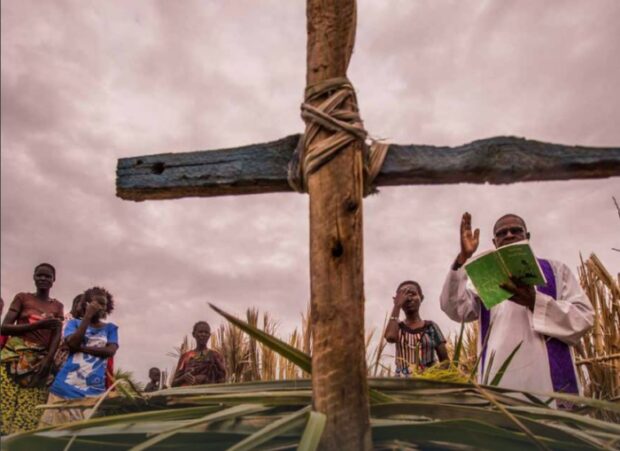
Africa is another hotspot for anti-Christian violence. In large countries like Nigeria, Christians are frequently targeted by Boko Haram and other Islamist militant groups. The report highlights numerous incidents of churches being attacked, clergy being kidnapped or killed, and Christian communities living in constant fear.

In Asia, Christians face persecution in several countries, including China, India, and Pakistan. In China, the government’s stringent control over religious practices and crackdown on house churches have severely restricted Christians’ ability to worship freely. India has seen a rise in Hindu nationalist violence against Christians, with increasing reports of forced conversions, church demolitions, and physical assaults. In Pakistan, blasphemy laws continue to be a significant threat to Christians, with accusations often leading to mob violence and lengthy imprisonments.

“No Western nation can truthfully claim they do not know about the abuses occurring in the Arabian Peninsula, China, Pakistan and Nigeria,” the report says. “With the West looking the other way, often motivated by the need to guarantee the provision of natural and energy resources, the perpetrators become more assertive and make local legislation more restrictive. In this way, impunity is tacitly granted to perpetrators by the ‘international community’.”

Despite these challenges, the resilience of Christian communities is remarkable. Many continue to practice their faith courageously, even in the face of persecution. One example is Sr Gloria Cecilia Narváez Argoty, a Franciscan sister who wrote the Foreword of the ACN report. Sr Gloria worked specially with women in a Muslim-majority region in southern Mali and was kidnapped for almost five years. In the report, she gives a moving account of her experience.

The report calls for increased international attention and action to protect religious freedoms. It urges governments and international organisations to hold perpetrators accountable and to support initiatives that promote religious tolerance and coexistence.

ACN emphasises the importance of solidarity with persecuted Christians. It encourages advocacy efforts, humanitarian aid, and interfaith dialogue as crucial steps toward alleviating the plight of persecuted religious communities.

sabato, gennaio 13, 2024

The growing problem of anti-Christian persecution in Europe


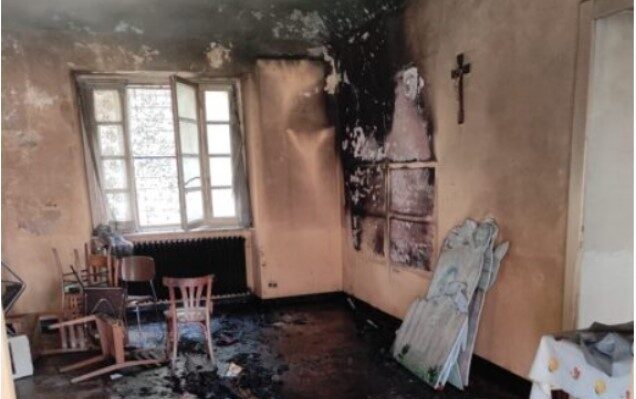
Anti-Christian crimes in Europe are increasing, according to a recent report by the Observatory on Intolerance and Discrimination against Christians in Europe (OIDAC). For example, it says that arson attacks on churches increased by 75pc in 2022 compared with 2021.

In 2022, OIDAC recorded 749 anti-Christian hate crimes across 30 European countries. Notably, there were 38 physical assaults and three murders. Religious services were disrupted at least 19 times.

These numbers might be just the tip of the iceberg due to underreporting and lack of media attention.

Between 2021 and 2022, there has been a worrying increase in these crimes, especially arson attacks, which rose from 60 to 105. Many of these incidents are linked to radicalised groups, sometimes Islamist in nature, with anti-Christian sentiments.

The report highlights the ongoing debate about freedom of speech. New laws are emerging that regulate and limit speech, sometimes even extending to private conversations.

Ireland’s hate speech Bill was presented as a case in the report. The Bill is quite extreme as it criminalises possessing material deemed ‘hateful’ against certain groups, but ‘hate’ is not defined.

Another example is the creation of “buffer zones” around abortion clinics in the UK and Ireland, leading to the criminalisation of Christians for activities like silent prayer in public areas.

There are moves to eliminate conscience clauses from medical laws. This puts Christian medical professionals who refuse to participate in certain practices, like abortions, due to their religious beliefs, in difficult positions.

The report mentions concerns about vaguely formulated and expansive laws that could criminalise parents, pastors, and teachers for expressing dissenting opinions on certain controversial topics.

For instance, the UK government voted to introduce a new mandatory curriculum on sex education in Northern Ireland, which includes lessons in how to access abortion. The legislation will put pro-life parents, or schools in a very difficult position.

The reports says: “The right of parents to educate their children in accordance with their religious beliefs has continuously been threatened through legal provisions, criminalising ‘non affirmative’ communication between parents and children in regard to identity-related issues as well as through obligatory school education on ideological issues contradicting religious or moral beliefs”.

Indeed, there is also worry about potential legal repercussions for parents who, based on their religious beliefs, advise their children against undergoing hormone therapies or other similar interventions​​ in order to ‘transition’ from one ‘gender’ to another.

The OIDAC report also found that the conflict between Russia and Ukraine has significantly affected religious freedom. Russian authorities and troops have violated Christian religious freedoms by closing churches and detaining religious leaders.

The report also sheds light on the severe persecution of Christians in other parts of the world, like Nigeria, Armenia, India, and Pakistan.

The organisation calls for greater attention and action from European institutions to these issues of Christian persecution, which are often ignored by the media. But given that governments can sometimes be behind moves to crackdown on dissent from certain liberal orthodoxies, on abortion and gender ideology for instance, this might be a vain hope.

lunedì, novembre 28, 2022

New report highlights worsening persecution of Christians


Numerically speaking, Christians are the most persecuted religious group in the world and a new report by Aid to the Church in Need (ACN), says things are getting worse.

The document, titled “Persecuted and Forgotten? A Report on Christians oppressed for their Faith 2020–22”, was presented last week on Red Wednesday, the annual day when ACN raises awareness of the plight of persecuted Christians.

The persecution comes in two forms. One is inflicted by Governments, and another is by local communities or organisations. Attacks vary from legal, to physical, to outright murder.

In almost all of the countries surveyed, levels of oppression have increased in the two years since the last report. Part of the problem, according to the ACN document, is a “cultural misperception in the West that continues to deny that Christians remain the most widely persecuted faith group.” Religious discrimination, which is widespread in many countries, is generally ignored.

For instance, Qatar is currently hosting the football World Cup and we have heard much criticism of their lack respect for women or minorities. But almost nothing is heard about the lack of religious freedom in that country.

The ACN report says: “Despite improvements, including removing some anti-Christian references in school text-books, there has been a sharp rise in reports of intolerance.”

Turning to Saudi Arabia, another country that has strong business connections with the Western world, it says, there are “ongoing bans on Christian places of worship and public display of crosses, Bibles, etc.”

Nigeria, the largest country in Africa, “teeters on the brink of becoming a failed state, with kidnappings, priests killed and deadly attacks on churches becoming increasingly regular”, says the report. This is due particularly to the presence of Jihadism in the region. Between January 2021 and June 2022, more than 7,600 Christians were killed in Nigeria.

If in Africa, oppression comes mostly from militant groups, often inspired by the jihadist ideology, in Asia it is often the State that restrains the freedom of Christians.

“In varying degrees, from tightening constraints in Vietnam to an almost total ban in North Korea, State authoritarianism restricts – or even strangulates – believers’ ability to worship freely in Asia”, the report comments.

Cardinal Zen’s arrest in Hong Kong is presented as a significant case. He was involved in an organisation that helps pro-democracy protesters. For this, the Cardinal has been unjustly accused of ‘colluding’ with foreign forces and threatening China’s national security. “In China and North Korea, totalitarian governments crush the faithful underfoot, monitoring their every move”, the document notes.

Christians are harassed in more countries that any other faith group. In the period covered by the report, October 2020 – September 2022, the situation has worsened in the 24 countries under scrutiny.

In the Middle East, the situation in territories that were under Daesh (ISIS) occupation has not improved since they were liberated. Iran is the only one of the seven Middle East countries reviewed that has seen some improvement.

ACN is active in Iraq with a comprehensive post-Daesh stabilisation programme that involves the rebuilding of Christian towns and villages, homes, schools, churches and other public facilities.

This is only one example of the many activities promoted by Aid to the Church in Need in support of Christians. They are present in 140 countries, particularly where believers are persecuted or oppressed. The Irish branch of ACN can be accessed here: https://www.acnireland.org

giovedì, ottobre 27, 2022

Persecution of Christians denuonced at UN Human Rights Council meeting

The persecution of Christians in the world has been denounced at the meeting of the UN Human Rights Council.

The European Centre for Law and Justice (ECLJ) has presented some examples from Pakistan, India and Afghanistan during the 51th session of the Human Right Council that took place in Geneva at the beginning of October.

In Pakistan, Christians are often accused of blasphemy and attacked by Muslim mobs. “Every year, about 40-50 cases of blasphemy are registered, and the courts continue to make unjust decisions due to increasing social pressure from Islamists.”, said ECLJ research fellow, Louis-Marie Bonnea.

Allegations of blasphemy, which could lead to the death penalty, are often spurious.

The ECLJ representative called the Pakistani government to stop the abuse of blasphemy laws and to punish the violent attackers.

In India, Christians are persecuted by Hindu extremists and also by the Government. “Police frequently arrest Christians under false charges disguised as fraudulent or forcible conversion. The charges arise from the misuse of anti-conversion laws, which have been established to ensure that people from lower castes, most of whom are Christians, remain socially and economically low.”, the ECLJ told to the UN Human Rights Commission.

In Afghanistan, after the Taliban took back control of the country, Christians and other religious groups are at extreme risk. “Under the Taliban’s rule, converting from Islam to Christianity is against the law and punishable by death. The Taliban has been utilizing tactics to uncover Christians by confiscating suspected Christians’ phones and looking through messages and contacts. The Taliban has even used direct correspondence and social media to deliver threats of imprisonment and execution to every Christian in Afghanistan”, denounced Jordan Sekulow on behalf of the ECLJ.

The European Centre for Law and Justice has also published a report on the challenges faced by ex-Muslims who convert to Christianity in Europe. The publication is based on direct interviews and highlights how, even if there are no laws banning conversions in Europe, Muslims converts still face exclusion and also violent assault from their former communities.

martedì, aprile 05, 2022

Europe’s growing anti-Christian intolerance problem


Violence against Christians in Europe is both unrecognised and underestimated, says a major new report. Secular intolerance and Islamist physical violence are two main threats to religious freedom, but they often downplayed by media.

The Observatory on Intolerance and Discrimination against Christians in Europe (OIDAC) looks at five European countries where the rights of Christians are under most pressure, namely France, Germany, Spain, Sweden and the United Kingdom.

The Vienna-based organisation found that in 2019-20 anti-Christian incidents, including murder, have increased in frequency. In France, three Christians were killed by Islamists and many more were injured in 2019-20.

According to the report, the strongest secular trend threatening the exercise of religious freedom aims at marginalising Christians from the public sphere. Even in countries that have a reputation for being tolerant, such as Sweden, Christians are practically excluded from some professions because of the lack of the right to conscientious objection. Doctors and nurses, for instance, are forced to participate to abortion.

All five countries covered by the report were found to have problems with the protection of freedom of speech. Self-censorship is becoming more frequent in the public square, because of the fear of negative consequences.  This problem is exacerbated by sensationalist and religious-illiterate media that distort or misrepresent the history and the views of Christians, who are frequently mocked or disproportionally criticised.

The United Kingdom is the country with the most cases of legal prosecutions for “hate speech”. Workers have been sanctioned or dismissed for defending the traditional Christian teaching on marriage or on sexuality. Even Biblical quotes have been seen as hateful on social media and reported to the police. (We saw a particularly drastic case of this in Finland recently. Fortunately, the accused person, a former Government Minister, was acquitted.)

The introduction of “censorship zones” around abortion clinics by some local authorities in the UK and Spain has also limited the possibility of prayer and offering help. The same is now set to happen in Northern Ireland, and it appears to be on the cards in the South as well.

Parental rights in education have been limited, particularly in the area of teaching sex education. Students are refused the possibility of opting out of classes that contravene their religious and moral convictions. This is in contrast to the approach towards religious education, where opt-outs are strongly protected, and rightly so. In France, students and teachers are prevented any public display of religious sentiments or symbols but in all countries Christians feel they cannot freely express their views without negative consequences.

The persecution of former Muslims was a main concern in France and Germany. Those who convert to Christianity face hostility by their families and communities of origin, in the form of rejection, threats, physical violence. This happens in hotspot areas, particularly in neighbourhoods under the influence of radical Islam.

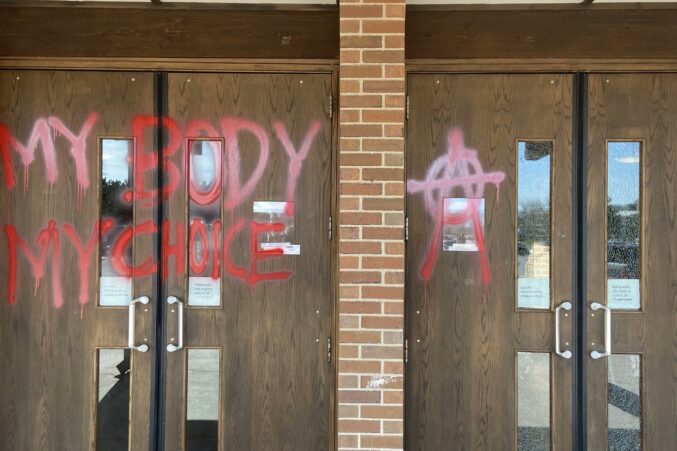
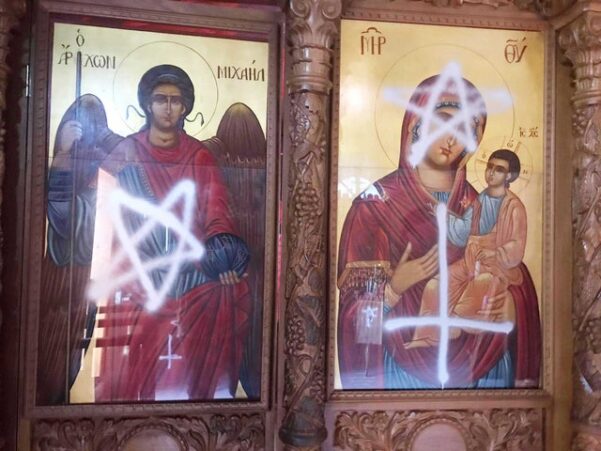
Even in areas where Christians are a majority, more and more frequently churches are been attacked, sometimes burned, and celebrations are been interrupted. Vandalism against religious building is also common.

Unlike other parts of the world, intolerance against Christian is a new phenomenon in Western Europe and no proper substantial research has been conducted so far.

The report formulates a number of recommendations to the governments but also to the human rights institutions and to members of society. Firstly, discrimination against Christian should be recognised and properly monitored. Legislation should not limit the rights of Christians, particularly in the public square. Converts should be protected. Negative stereotyping should be avoided and the public representation of the history and beliefs of Christians should be more balanced and truthful, also through the promotion of religious literacy.

venerdì, gennaio 14, 2022

The female victims of anti-Christian persecution

In many countries, Christian women and girls suffer abduction, rape, forced conversion and forced marriage, according to a new report. But social stigma and fear of reprisal from perpetrators keep their stories mostly unheard.

The “Hear her cries: Kidnapping, forced conversion and sexual victimization of Christian women and girls” report addresses the appalling problem of women being targeted for sexual violence because of their religious belief.

The document has been produced by Aid to the Church in Need (ACN), a charity that helps persecuted Christians, and it offers some case studies from Egypt, Iraq, Syria, Mozambique, Nigeria and Pakistan.

In countries where they are already a minority, Christian women are coerced to convert so that their children are claimed for the new faith too. ISIS fighters, for instance, forced pregnancies and conversions to secure the next generation of jihadists in Syria.

In Nigeria, the Boko Haram group uses violence against women to trigger the mass movement of unwanted Christians from some areas of the country.

Research suggests that Christians make up 95pc of females held by Islamist extremists in Nigeria.

Cases involving women persecuted for religious reasons are chronically under-reported for fear of casting shame on the victims and their families, according to the ACN document

Besides social stigma, dread of reprisal from perpetrators is another key factor why those incidents are often kept quiet. Families, chilled by fear of more violence, tend not to speak about their sufferings.

Another reason for low reporting level is institutional resistance. In Pakistan, for instance, the police and the court system are frequently colluding with the perpetrators, according to the report.

One of the cases presented is about Farah Shaheen, a Christian girl who was abducted at the age of 12, forced into marriage and kept in chains as a slave. When her father reported the kidnap, the police refused to listen and to register the incident. Medical experts from the court claimed that the girl was old enough to legally marry, dismissing her birth certificate that showed she was 12 when abducted.

Research indicates that in Pakistan, Christians could comprise up to 70pc of women and girls forcibly converted and married.

“Perpetrators know their chances of punishment are reduced if they confine their attack to minority faith communities”, the report notes.

Institutions reflect the cultural and religious norms of the majority and even in countries with secular legislation, other codes of practice informed by the religious precept of the prevailing faith, trump the official law. The court and the judicial systems are biased against Christians.

“It is very difficult being a Christian girl in our country. So often our girls are abducted and the deprived things they suffer are too awful to imagine. It is so frightening. Who is there to help us?” says of the victims interviewed for the report, who asked to remain anonymous. Their stories need to be heard. We need to hear their cries.

 (The “Hear our cries” report can use downloaded here https://acnuk.org/hear-her-cries-report/ A printed version can be requested to Aid to the Church in Need Ireland Aid to the Church in Need Ireland | ACN Ireland )

martedì, novembre 23, 2021

Hate crimes against Christians on the rise in Europe


Hate crimes against Christians have risen dramatically in recent years, according to a newly published report from the Organization for Security and Cooperation in Europe (OCSE). These include violent attacks on individual Christians, on churches and on holy objects.

To mark “International Day for Tolerance”, last Tuesday the OCSE presented its annual report on hate crimes in Europe. (By ‘hate crime’ is meant a criminal offence motivated by bias against a particular group.)

Each year the OCSE collects data from 42 participant States, 136 civil society groups and also from international organisations.

The recent 2020 report documented 7,181 hate incidents. Christians were the victims of more than 980 of those violent and threatening incidents. This represent a significant increase compared to the previous year, when 595 cases against Christians were reported.

Last year, 56 known cases were violent attacks against people, 55 involved threats and 871 of those incidents were attacks against property, include arson attacks against churches, desecration, robbery of holy communion hosts, vandalisation, etc.

Three churches were vandalised in Ireland last year.

The highest number of reported cases (250) happened in Poland. Churches and groups of faithful have been attacked for their pro-life views, particularly after the government and the Polish Constitutional Court took put restrictions to the current abortion laws.

In France, according to official police numbers, almost 25pc of all hate crimes are against Christians. In the last few years, there have been a growing number of arsons against churches. In October 2020, three people were fatally stabbed in the Basilica of Notre Dame of Nice.

In Spain, four churches and a monastery were vandalised on International Women’s Day by feminist activists. Masses were also interrupted on the same day.

The OCSE list is not comprehensive as only 11 States reported on hate crimes against Christians, so their possible number is much higher, aside from unreported incidents.

“Medially and politically, hatred of Christians is hardly noticed as an increasingly obvious social problem. The OSCE report reflects only part of this trend, which we have been documenting for years, and yet it is a loud wake-up call against indifference and fashionable Christian-bashing,” said Madeleine Enzlberger, head of “Observatory of Intolerance and Discrimination against Christians”.

Attacks on Christians is a world-wide phenomenon. Eighty percent of all acts of religious persecution are committed against Christians, according to Aid to the Church in Need, an organisation assisting Christian communities that face hostility and discrimination.

From today until November 26th, Aid to the Church in Need in Ireland and elsewhere will celebrate the “Week of Witness for suffering and persecuted Christians”. This initiative will involve talks and exhibition to highlight the persecution of Christian believers. On Wednesday, prayer vigils will be held around Ireland in spiritual union with those who suffer because of their faith in Christ.

You can find more details here: https://www.acnireland.org/witness

venerdì, aprile 02, 2021

An update on public worship restrictions around Europe


Public worship is currently banned in Ireland. For the second year, there will be no Easter celebrations due to the ban imposed by the Government. This is exceptional in Europe, where public worship is allowed in almost every country, albeit with various safety measures. (See details below)

Since the beginning of the Covid-19 crisis last March, public worship in Ireland has been banned for 37 weeks (39 weeks in Dublin and Donegal).  No other country in Europe, and probably in the world, has kept this ban for such a long time.

All other European countries closed their churches for a much shorter period, mostly during the first lockdown last year: England 14 weeks, France 9, Germany and Belgium 6, Italy 5.

Slovakia has had a 31 week ban and Slovenia, 24 weeks. But Ireland beats even them.

Here is an updated list of what is happening in a range of European countries, based on the official EU website Re-open EU.

Public indoor worship restrictions 

Banned: Ireland, Slovakia and Slovenia. In Estonia, religious ceremonies are permitted only outdoor, with a limit of 10 participants.

No specific limits on numbers but worshippers must be socially distanced: Austria, Croatia, Finland, France, Germany, Hungary, Italy, Latvia, Liechtenstein, Lithuania, Luxembourg, Malta, Netherlands, Norway, Poland, Romania, Switzerland.

Limits vary by region:  Greece, Spain and Portugal.

Max 500 participants depending on size of building: Denmark.

Max 50 participants: Cyprus, Iceland.

Max 15 participants: Belgium, Bulgaria, Czechia.

Max 8 participants: Sweden.

lunedì, marzo 08, 2021

Bringing hope to the persecuted Christians of Iraq


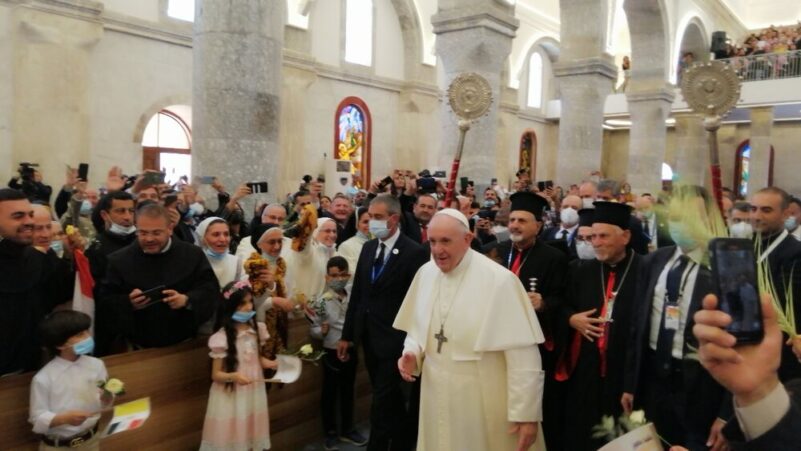
Pope Francis has just returned from an historic visit to Iraq where Christians have been savagely persecuted and driven from their homes. His trip was a very necessary act of solidarity. He will have also seen the work done by organisations like Aid to the Church in Need in helping Christians to rebuild their lives there.

Before the US invasion of 2003 and the fall of Saddam Hussein, there were about 1.4 million Christians in Iraq, corresponding to 6pc of the overall population. This is now estimated to be just 250,000. Among all Christians, Chaldean Catholics are the biggest denomination (67%). They have been there since almost the earliest days of Christianity. They are the descendants of the pre-Arab peoples of the area.

Under Saddam Hussein, a brutal dictator otherwise, Christians were tolerated so long as they didn’t get in his way. One of them, Tariq Aziz, was his deputy and Foreign Minister.

It is almost impossible to list all the attacks that Iraqi Christians have suffered in recent times.

In August 2004, six churches in Baghdad and Mosul were bombed simultaneously by Sunni militants. Thirty more churches were attacked later. Sayidat al-Nejat Syriac Catholic Cathedral in Baghdad, one of the churches bombed, was visited by Pope Francis on the day of his arrival in Iraq.

In 2007, Ragheed Aziz Ganni, a Chaldean Catholic priest who had studied at the Irish seminary in Rome, and three deacons, were killed in Mosul after the celebration of Mass.

In June 2014, Mosul, the second biggest city in Iraq, was taken by ISIS, which also announced a new Caliphate. Christians were forced to convert to Islam or to leave the city.

Mosul had previously been the city in Iraq with the largest number of Christians but currently only 70 Christian families are still there, down from 2,000 pre-ISIS, with the majority too scared to return. When Pope Francis visited the destroyed cityhe was welcomed by the last remaining priest in Mosul, Fr Raid Adel Kallo of the Syriac Catholic Church.

In August 2014, ISIS invaded the Nineveh Plains in northern Iraq and about 120,000 Christians fled to areas controlled by the Kurds. With the end of ISIS in 2017, some have returned to their original cities but, still nowadays, most of the remaining Iraqi Christians are in Kurdish-controlled areas, which are considered safer. An estimated 330,000 went to Syria.

Aid to the Church in Need (ACN) is an organisation that has helped the local populations to go back to their homes. ACN had been working in Iraq since 1972 and between 2011-2020, ACN provided 49.5 million euro in aid to the Church there. 

ACN donated €48.23 million to reestablish the Christian presence in Iraq, helping particularly the three main Christian denominations (Chaldean, Syriac Catholic and Syriac Orthodox) to create the Nineveh Reconstruction Committee with the purpose of assisting them to return to their original communities.

The symbol of this reconstruction is the Syriac Catholic Cathedral of the Immaculate Conception in the city of Qaraqosh, near Mosul, that Pope Francis visited on Sunday. The church had been severely damaged by members of ISIS. When they left in 2016, they burnt all the furniture, plus the ancient prayer books and manuscripts. They blasted the watch tower and damaged the ceiling of the cathedral.

ACN helped with the reconstruction not only of the church but also of the houses of the local Christians, to support them in recreating the local community.

ACN also decided to invest in the future of young Iraqi Christians, pledging 1.5 million euro in a new programme for the Catholic University of Erbil.

Erbil is the capital of the autonomous Kurdish region of Iraq, where much of the remaining Iraqi Christian population now live.

ACN’s new programme is hoped to offer 150 scholarships to the Catholic University of Erbil over the next four years. The Catholic University of Erbil serves the whole community, not only Catholics. 72pc of the students are Christians, of different denominations, but 18pc are Yazidis, a religious minority from the North of Iraq that was particularly targeted by ISIS.

Head of Projects for ACN is Irish-born Regina Lynch who traveled with the Pope. She reported the scenes of celebration: “The joy of the people was catching. Thousands lined the streets to see the pope as he drove past. I saw religious sisters dancing. These were people who had come back after being forced to leave their homes because of ISIS. What the pope saw here were truly the living stones of the Church in Iraq.”

The visit of the Pope in these troubled areas has brought hope to those who are working to re-establish the Christian presence in Iraq after so much suffering.

martedì, febbraio 23, 2021

Ireland one of only two EU countries banning public worship


Ireland is currently one of only two countries in the whole of the European Union where the Government has put a complete stop to public worship.  The other member-state is Slovenia. Restrictions on worship vary from country to country, from mild in Austria, to strict in Belgium.

In Belgium, dozens of Catholics gathered on Sunday in Brussels to protest the current rule that allows only 15 people to attend religious ceremonies.  The protest took place in front of the Keokelberg national basilica, the fifth biggest church in the world that could contain more than 8,000 worshippers, with the purpose of showing the absurdity of some of the current regulations.

The protesters, together with members of other faith groups, are asking the Belgian Government to allow a number of participants in proportion to the size of the building, as it is the case in other countries. In the Netherlands, their neighbour, there is no limit in number. In France it is 30, while it is 50pc of the capacity in Italy.

Last year, Belgium had one of the strongest restrictions in Europe and public religious ceremonies were banned until the Jewish community appealed to the Council of State, which found the rules excessive. In December, the Government was obliged to ease the restrictions and it allowed 15 people per service, not including the celebrant and children under 12. The decision has left the larger faith communities unhappy and they are now hoping for further relaxation at a Government meeting on Friday.

As mentioned, at present Ireland is the one of the only countries in Europe where the State is banning public worship. A similar situation exists in Scotland. In Northern Ireland, public worship is allowed by the Government, but the main Christian denominations have decided to keep their churches closed until March 5th at least.

Scotland’s ban has been attacked by father Tom White, Dean of the City East St Alphonsus Church in Glasgow, who has filed a pre-action letter with the Scottish government

“I speak for many in the church when I say that it’s very important to keep people safe and well during this pandemic,” the priest said. “But this can and should be done while also allowing people to fulfil their need to draw close to God and worship in community at the church. With appropriate safety measures, we can accommodate both of these outcomes, as is shown in England, Northern Ireland and Wales”, he said.

In other countries in Europe there are restrictions in terms of number of worshippers allowed to attend, or local and temporary bans, but no other state has prevented public religious celebrations for so long periods as in Ireland. This has happened for many months in 2020 and then, again, since January 2021.

Many voices have expressed criticism for the excessive measures.

Last November, businessman Declan Ganley sought leave to bring judicial review proceedings against the Minister for Health but the hearing of the case has been postponed several times now and when the ruling will eventually arrive it will be too late.

Ireland's four Catholic archbishops have also recently expressed to the Government their desire to return to worship soon, particularly during Lent and the Holy Week. Moreover, the archbishops have asked the number of mourners allowed to attend funerals to be increased. Taoiseach Martin replied that the concerns raised at the meeting would be given consideration.

Meanwhile, a group of independent Protestant churches called 'Christian Voice Ireland' has launched a video “A Call to Reopen Churches in Ireland” featuring pastors and faithful. The group represents more than 80 Christian churches and ministries and they are asking for the Irish Government to reopen churches in Ireland with immediate effect.

Here is a list of what is happening in various EU countries, based on the official EU website Re-open EU.


Public worship restrictions in selected EU countries

Banned: Ireland and Slovenia.

No specific limits but worshippers must be socially distanced etc: Austria, Croatia,  Finland, France, Netherlands, Romania, Slovakia.

Limits vary by region: Germany, Greece, Spain and Portugal.

50pc of church capacity: Italy and Estonia.

20pc of church capacity: Latvia.

Max 500 participants depending on size of building: Denmark.

Max 50 participants: Iceland.

Max 15 participants: Belgium, Bulgaria.

Max 8 participants: Sweden.

Poland:  one person per 15 m2. 

Malta: one person per 4 m2.

Czechia: no more than 10pc of the venue’s seated capacity.


venerdì, novembre 06, 2020

Ban on public worship challenged in court


The ban on public worship in Ireland has been challenged in court. Today, businessman Declan Ganley initiated proceedings against the Minister of Health, claiming that the current restrictions breach the constitutional right to religious freedom. This morning the judge postponed the matter until December 8.

Under the current restrictions, passed on October 22, attending a religious public act of worship could attract penal sanction because it would not be seen as a ‘reasonable excuse’ to leave home. The penal sanctions may be lifted by December 8 because Ireland may be out of Level 5 by then but if we go back to Level 3, public worship will still be against public health advice, meaning it could be months because it resumes.

This is a unique and unprecedented situation. Archbishop Eamon Martin, Catholic Primate of All Ireland, has encouraged all Catholics to make contact with their TDs to express their pain at being separated from mass and the sacraments.

In the vast majority of European countries, religious services are still permitted, with some restrictions. This includes Northern Ireland. Besides the Republic of Ireland, in Western Europe, only France, Belgium and England and Wales have completely halted public worship.

In France public worship has been suspended from November 2 to December 1. This is a relatively short period when compared to Ireland, where the ban started October 7 under level 3. (In Dublin it began in September). Still, the French Bishops’ Conference announced that it will file an urgent appeal with the Council of State, the highest administrative court, as they believe that the Government’s ban on public masses is out of proportion and “violates the freedom of worship which is one of the fundamental freedoms in our country.”

In Belgium, which is in lockdown, there will be no religious celebrations from the November 1 until December 13.

In England and Wales, public worship will cease for four weeks. Religious leaders there have asked the Government to offer the evidence to justify the decision to ban religious ceremonies during the lockdown. Numerous MPs have voiced opposition to the measures and former Prime Minister, Theresa May said it set a dangerous precedent which could be misused by a future Government. Following the debate in the House of Commons, Health Secretary Matt Hancock has hinted that the current ban on public worship would be reviewed.

In Austria, after the Government met religious leaders to discuss new restrictions, the Minister for Culture, Susanne Raab, said that: “It is important that joint practice of religion in the form of public church services will continue to be possible”.

In Germany, Chancellor Angela Merkel and the Prime Ministers of the different federal states underlined that religious liberty is a fundamental human right. Public worship will continue.

In Italy, new restrictions began today but there is been no change regarding church attendance.

Religious services are permitted in the Scandinavian countries, in Poland, Portugal, Hungary, Greece, as well as in countries currently in lockdown such as Slovenia, certain regions of Spain, Switzerland, and Ukraine.

It should be noted that in other countries, the ban on public worship was introduced with the highest level of restrictions, and for a shorter period, while in Ireland this has happened at level 3, which is the middle level. No evidence has ever been produced either by NPHET or the Government to justify this wholly disproportionate measure.