Visualizzazione post con etichetta eugenics. Mostra tutti i post

sabato, settembre 23, 2023

The European Parliament launches a new attack on the right to life


 Last week the European Parliament paved the way for the commercialisation of human embryos and foetuses when, by an overwhelming majority, it passed a regulation of “Substance of Human Origin” intended for human use. This text has far-reaching implications as it regards not only blood, tissues or cells but also embryos and foetuses. Moreover, the regulation imposes genetic selection and the destruction of embryos with genetic anomalies, such as Down Syndrome.

The Catholic Bishops in the EU and also the European Federation of Catholics Families have expressed serious ethical concerns about this proposal.

All in all, the proposal, which now goes before the European Council and the European Commission, is a terrible piece of work that thoroughly disrespects human life at its earliest stages. The regulation was better before it reached the amendment stage.

While the purpose of the “Substance of Human Origin” (SoHO) regulation is to set standards for new forms of processing and use of human organic material, as we can see, it makes no proper distinction between human blood, cells and tissue on the one hand, and human beings themselves on the other, in this case embryos and foetuses, , as well as non-viable prenatal life. They are all regarded as products for scientific and medical use with an embryo put on the same moral plane as a blood cell.

If the proposal becomes law, it will allow human embryos created in laboratories specifically for research purposes, or ‘spare’ embryos left over by the IVF process, to be used for commercial scientific research. In other words, they will be for sale. It might even include naturally conceived unborn children.

This broad categorisation reduces unborn human life to the status of a mere substance, equivalent to saliva, skin cells or blood plasma, which disregards its inherent dignity.

The Catholic bishops’ office in Brussels (COMECE) has expressed concern that the regulation equation could extend to other areas of law, undermining the protection of unborn life in the EU Member States, which is already weak in most cases.

The EU Parliament vote also raised allegations of promoting genetic selection and eugenics.

The SoHO regulation establishes that clinics should “achieve a high level of assurance that genetic conditions are not transmitted to recipients or offspring from medical assisted reproduction” (art. 58) The Bishops’ document questioned how this would be possible without testing embryos or foetuses for such conditions for the purpose of selection. This means that embryos with some genetic anomalies, including Down Syndrome, for instance, have to be destroyed. Genetic selection is a violation of human dignity.

“Does the European Parliament want to promote eugenics?”, asked Vincenzo Bassi, the president of the European Federation of Catholic Family Associations.

The COMECE document highlights the indivisibility of human life, emphasising that an embryo is a human being continually developing without qualitative breaks. “Already with the fusion of the nucleus, an individual human being with own unique DNA comes into being”, it says.

The draft regulation reduces fertilised human eggs and embryos to “mere raw materials without human quality”, potentially compromising their consideration in ethical and legal assessments.

The value and dignity of human life remains unchanged, regardless of whether it is created within a laboratory, through medical intervention or naturally. Human life has inherent value and needs protection, especially in contexts involving research and pharmaceutical production.

The COMECE document emphasises the need to respect the ethical decisions of EU Member States regarding the use or restriction of certain types of ‘substances of human origin’. Additionally, it advocates for Member States’ rights to refuse recognition of authorisations granted by other Member States when they conflict with national regulations.

The regulation approved by the EU Parliament is not final yet, but it will represent the position of the European Parliament in the upcoming negotiations with the EU Commission and the EU Council. To address the aforementioned concerns, the negotiations should produce a new text that will scratch unborn human life from the definition of “substance of human origin” and respect its dignity.

domenica, marzo 26, 2023

A record of how eugenics has taken hold in Ireland


Eugenics is a philosophy that decides who is ‘fit’ to live and who is not. In the past, it could be State-imposed and coercive. Today, it is much more likely to be chosen by parents who screen their babies in the womb for disabilities like Down Syndrome and then frequently opt for abortion when such a diagnosis is given. Ireland is by no mean immune to this. The Iona Institute has been researching the rise of eugenics in Ireland and elsewhere over the years and writing about it regularly through our blog. Below, we present a selection of those writings. What it catalogues is chilling. We look at the history of eugenics, and in particular the progressive elimination of children with Down Syndrome from our societies. This should prompt national soul-searching but has not done so to date. Nonetheless, it must be recorded, and this is what we do here.


Ireland

Screening out Down Syndrome shows true nature of modern Ireland

More Irish opting for eugenic abortion

In practice most people are as pro-eugenics as Richard Dawkins

How the 8th amendment saved hundreds of babies with Down Syndrome

What Dr Peter McParland told the Citizens’ Assembly


The history

Mother and Baby Homes report highlights how eugenics targeted unmarried mothers

How eugenics took a hold of social democratic Denmark

How science was used to victimise unmarried mothers

The abortion movement and its root to eugenics


A world without Down Syndrome

How social disapproval of Down Syndrome affects my child

Down Syndrome: a response to Fintan O’Toole

Official figures badly underestimate number of Down Syndrome abortions

Screening for defective children reaches a new level of sophistication

Big money to be made from pre-natal testing


venerdì, gennaio 07, 2022

The deadly inaccuracy of many prenatal tests

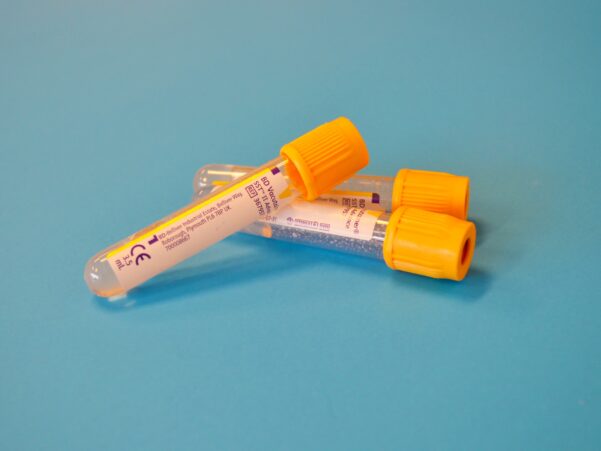
Prenatal tests are a vital part of the thriving eugenics industry whereby unborn children with genetic defects are not considered fit for life and are aborted instead. But a report in The New York Times (not a pro-life paper) confirms that the tests for certain foetal abnormalities are often unreliable as they give too many false positive results.

Even if advertised as highly accurate, for some conditions positive test results were incorrect more than 90pc of the time.

We highlighted the problem of the inaccuracy of foetal tests in a previous blog three years ago.

Non-invasive prenatal testing (NIPT) is used to screen the probability that chromosomal abnormalities, such as Down Syndrome, are present. These tests are now offered for more and more conditions. A positive screening test should be followed by a diagnostic test, to confirm the presence of the abnormal condition. Unfortunately, many do not wait for the follow-up test and abort their babies, not knowing that those screening tests are often wrong, as the New York Times article showed. With rare conditions, the probability of mistakes grows.

In Ireland we saw the tragic case of a baby who was aborted in Holles Street National Maternity Hospital at 19 weeks after his parents were incorrectly told that he suffered from Edwards Syndrome, a condition that is usually fatal. 

But this is not a one-off case. It is likely that many healthy babies are aborted on the false presumption that they are disabled or will not live long after birth.
 
Ten of the 17 brochures given to parents by prenatal tests services and reviewed by the New York Times never mention that a false positive can occur and only one mentioned how often positive results are wrong.
 
The newspaper looked at five conditions, namely DiGeorge Syndrome, 1p36 Deletion, Cri-du-chat Syndrome, Wolf Hirschhorn Syndrome and Prader-Willie and Angelman Syndromes, and found the prenatal tests are wrong almost all the time (81pc, 89pc, 80pc, 86pc and 93pc respectively). This is appalling.

In 2019, the UK Advertising Standard Authority ruled that the ads promoting prenatal screening tests were misleading. For instance, out of 100 tests indicating the presence of Edwards Syndrome, only 37 were correct. Still, the tests were presented as 99pc accurate because if the condition is present, it is detected 99pc of the times. Accurate does not mean correct because often the test mistakenly says it is present. (For a more detailed account see here: https://ionainstitute.ie/the-inaccurate-accurate-tests-for-foetal-abnormalities/ )

In simple words, those tests are oversensitive as they tend to err on the side of false positives.

Oversensitive NIPT would not be a problem in a society that does not kill those suffering of abnormal conditions. The tests should be used to prepare families and doctors to welcome the newborns and care for them according to their special needs. Moreover, decisions should be made once the diagnosis confirms the screening results.

But oversensitive tests are morally problematic in our society, where abortion is the default outcome of positive testing results. Many do not even wait for the follow-up diagnostic test.

In Ireland, there is no gestational time limit for abortions when the baby is not expected to live longer than 28 days and now campaigners want to extend this possibility also to non-fatal abnormalities. This would only increase the probability that healthy babies are aborted.
 
Even the most ardent pro-choice campaigners should want everyone told about the literally deadly inaccuracy of many of these tests. 
—-
Photo by Testalize.me on Unsplash

lunedì, ottobre 18, 2021

New genetic selection techniques will facilitate eugenics


The genetic selection of human embryos is reaching new levels of sophistication  and depravity with the development of a technique called ‘polygenic screening’, based on statistical scores. Eugenics, which is breeding out the ‘defective’, is deepening its grip on our societies.

The new method is a step above current screening processes that can detect conditions like Down Syndrome.

Last year, the embryo of baby girl Aurea was chosen over other embryos who had more chance of developing certain medical conditions in the future, using a “polygenic risk score”.

The screening of human embryos artificially created in laboratory through IVF is quite common

Tests are offered for genetic or chromosomal abnormalities, such as Down Syndrome, and only the unaffected embryos are implanted in the womb, while the other are destroyed

When similar screening tests are performed during pregnancies, they generally lead to abortion. 

This is a clear form of human selection on the basis of health characteristics, also known as eugenics. 

So far, those tests were focusing on diseases caused by a single gene, but some conditions are triggered by the interaction of many genes. 

A new technique based on “polygenic risk scores” (PRS), which has been employed for the first time with success, tests the presence of many genes. 

In simple words, the new test analyses the gene-sequency of an individual and estimates the probability that some conditions will develop later in life. 

As the link between some genes and certain medical conditions is only probabilistic, these new techniques are based on statistical data and they have only become possible in very recent years with the development of large databases of genetic information.

As it develops, preimplantation genetic testing is likely to be able to predict not only health, but also other characteristics related to our genes, such as intelligence, psychological traits, personality types, learning disabilities, height, etc.

Commissioning couples, but also single individuals, will be able to pick any physical or psychological trait linked to genetic and to ‘order’ their ideal child. In a society where choice is everything, who will stop them?

This is one further step down an extremely unethical path that aims at eliminating imperfect human beings. It is immoral not only because it destroys humans at embryonic stage, but also because it perpetuates the false assumption that some lives are not worth living when they have certain unwanted characteristics.

The defenders of these techniques are quite honest about the eugenicist nature of genetic selection.

Oxford university philosopher Julian Savulescu proposes a “welfarist model” of polygenic scores that select for traits associated with well-being.

He writes: “[Tests] to select against genetic conditions … such as Down Syndrome, are common and are even publicly funded, implying not only assent, but active support for allowing prospective parents to select against these conditions. Selection on the basis of polygenetic scores, if it is well correlated and causally linked to a welfare threshold with important bearing on the future’s child well-being is ethically equivalent to these. Indeed, allowing selection on the basis of only some genetic conditions may be discriminatory. It would be consistent with an anti-eugenic stance to reject all form of selection.”

Savulescu has no problem with eugenics, as long as “there is no broad social goal or coercion employed”.

Do we really need to wait until it becomes imposed by the state before we realise how immoral eugenic?

---

(A shorter version of this article was published here)

venerdì, settembre 24, 2021

Court rules in favour of England’s pro-eugenics abortion law

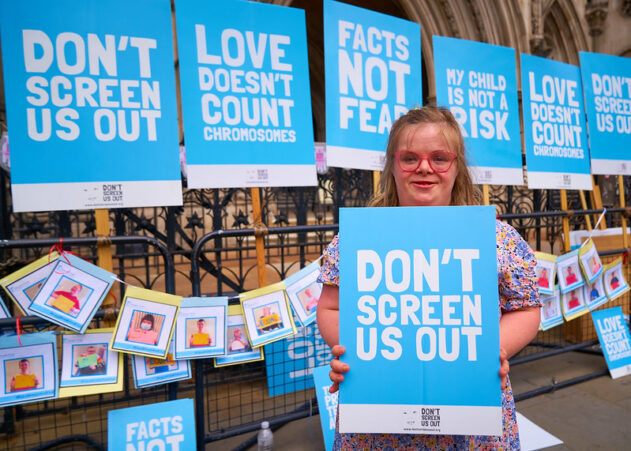
The High Court of Justice in London has rejected a legal challenge against the law that allows babies with Down Syndrome or other disabilities to be aborted up to birth. The applicants will take the case onto the Court of Appeal.

Twenty-six-year-old Heidi Crowter (pictured), an advocate for people with Down Syndrome like herself, and Máire Lea-Wilson, whose son Aidan has the same condition, claim that the 1968 Abortion Act promotes inequality and perpetuates outdated negative stereotypes as it puts no gestational limits to abortion when the baby has a disability.  A legal limit of 6 months applies only to babies with no disability.

The judges dismissed the claim and found that the legislation strikes a “balance between the interests of the foetus and the rights of women”.

One of the two judges in this case has a long record of legally representing abortions providers before becoming a judge. 

“This is a very sad day but I will keep fighting”, commented campaigner Heidi Crowter after the ruling. She said she will take the case to the Court of Appeal.

 With non-invasive prenatal tests it is now increasingly easy to detect chromosomal abnormalities and the number of abortions on disability grounds is increasing. A study covering the period 2013-2017 showed that the number of babies born with Down Syndrome has fallen by 30pc in NHS hospitals that have introduced this new form of screening.

In Ireland, it is possible to discover if a fetus has a chromosomal anomaly before the legal limit of 12 weeks, using such tests. Nonetheless, the window of time to request and obtain such terminations is quite restricted and many women go to the UK once the limit has passed. We don’t know how many babies with Down Syndrome have been aborted in Ireland under the new law but the number of Irish babies with Down Syndrome aborted in England went from 17 in 2018 to 27 in 2019, reaching 35 last year.

If the Court of Appeal will find the Abortion Act discriminatory against children with disabilities (a form of eugenics), this will have a positive impact on Irish children as well.

recent study across Europe showed that Ireland had the highest prevalence of live Down Syndrome births in Europe: 27.8 per 10,000 against the European average of 10 per 10,000.

This was one of the positive effects of the 8th amendment but with the new legislation, abortion is becoming more socially acceptable and there are already calls to allow terminations for non-fatal anomalies after the legal limit of 12 weeks.

When the new abortion law was introduced in Ireland, an amendment put down by pro-life politicians that attempted to ban abortion on disability ground was defeated.

A review of the existing legislation is due before the end of the year. The pressure is on to make it even more permissive.

In Northern Ireland, like in the rest of the UK, there is now no time limit to abortion on the disability ground. In March this year, a bill outlawing abortions in case of non-fatal disabilities was introduced by MLA Paul Givan. The Bill passed its second stage and it is still under consideration by the Stormont Assembly. Paul Givan has become Northern Ireland First Minister in the meanwhile but his Private Member’s Bill was transferred to another member and has been allowed to proceed.

venerdì, gennaio 22, 2021

Mother and Baby Homes report highlights how eugenics targeted unmarried mothers


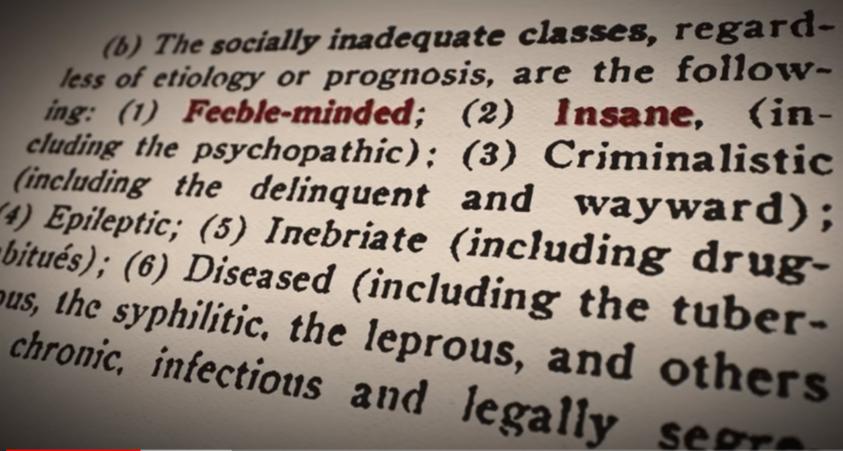
Among the many other things it examines, the report on the Mother and Baby Homes published last week looks at how other countries in the past treated unmarried mothers. It throws a spotlight on how various countries in the first part of the last century promoted eugenics, which frequently targeted unmarried mothers, labelling them ‘feeble-minded’, often incarcerating them, or even sterilising them. This was done in the name of ‘science, not religion’.

This is an issue The Iona Institute has previously highlighted. The report presents examples of countries that introduced policies and legislation inspired by eugenic ideology, which seeks to ensure only the ‘fit’ are born.

It says: “In the early-twentieth century a number of countries legalised the non-consensual sterilisation of women who were believed to be ‘feeble-minded’ or behaved immorally, including unmarried mothers.”

The countries it lists include the US, Canada, Switzerland, Denmark and Sweden.

It points out that in the US as late as 1968, a “total of 27 US states had compulsory sterilisation laws.”

It quotes a study which says: “The more recent application of eugenic legislation [in the US] was punitive or economically motivated as in the case of women with illegitimate children supported by welfare payments”.

About Switzerland, Denmark, and Scandinavia in general, it states: “In the aftermath of World War I, in order to protect society against ‘a visible dissolution of sexual morals among women’, the Danish authorities opened an institution on an island, close to Copenhagen, where ‘slightly imbecile, erotic girls’ were confined and sterilised. It was widely believed throughout Scandinavia that ‘the “degenerate” were more promiscuous, had more children and threatened social order’. In Switzerland, where compulsory sterilisations were carried out on the basis of agreements between local authorities and doctors, most sterilisations were carried out on ‘unmarried, socially deprived women with children born out of wedlock who were categorised as “maladjusted”, ‘sexually promiscuous’, ‘mentally disabled’ or ‘feebleminded’”.

In the UK, in 1913 the Mental Deficiency Act created the category or “feeble-minded person” that was used to incarcerate or put in institutions women who had children outside of marriage and could become pregnant again. (See more here)

After World War 2 in Britain, out-of-wedlock births were taken as “a prime example of something which interrupted the proper functioning of social processes, and revealed a failure of social control, the control of individual behaviour by family and kin, by political and education authority, by all the influences which persuade most people to obey the established order. The conditions which were associated with high illegitimacy levels in any one locality tended to be thought of as pathological, and the individuals who engendered bastards as in some way victimized, disordered, even mentally abnormal.” (The report is quoting here a writing by Martine Spensky).

About the Netherlands, the report says: “From the mid-1950s the moral-religious discourse was replaced with a psychiatric discourse in which the single mother was no longer represented as a sinner who had to do penance, but as a woman suffering from psychiatric illness.”

What was the main voice of opposition to eugenics and sterilisation in this period? It was the Catholic Church.

The 1930 papal encyclical Casti Connubii reiterated Church teaching against divorce and artificial contraception, but it was also one of the most important documents of its times condemning eugenics which was becoming more and more popular across the political spectrum.

If the Catholic Church did not exist, would Ireland in the 1930s have embraced eugenics and compulsory sterilisation of anyone considered ‘feeble-minded’ as countries such as Sweden did? It’s a question worth contemplating.

lunedì, novembre 02, 2020

How ‘science’ was used to victimise unmarried mothers


In Ireland in the past, unmarried mothers and their children were harshly treated as a result of a potent brew of Victorian values and a strict application of Catholic morality. But as we will see, in other countries such as Britain and Sweden, the ‘science’ of eugenics was often applied instead, with fearsome results.

This emerges, for instance, when we consider the debate around the Mental Deficiency Act that in 1913 created the legal categories of “feeble-minded person” and “moral imbecile” in the UK. Those categories related more to the ability to behave according to social expectations, particularly with regard to sexuality, than to abnormal psychological traits. This law was not repealed until 1959.

Alfred Frank Tredgold was the most influential ‘mental deficiency’ specialist of the time. A leading member of the Eugenics Society, he wrote the ‘Text-book of Mental Deficiency (Amentia)’, the “generally accepted standard work”, according to the British Medical Journal.

In this book Tredgold presents a number of working-class young women as case studies for the diagnosis of mental deficiency. This diagnosis is clearly related, in most of the case studies, to sex and pregnancy outside marriage.

Under the Mental Deficiency Act, thousands of young women who had children outside marriage were incarcerated or put in institutions because of fears that they would otherwise become pregnant again.

As Carolyn Oldfield explains in her PhD thesis entitled, ‘Growing up Good? Medical, Social Hygiene and Youth Work Perspectives on Young Women, 1918-1939’: “While this incarceration could extend throughout women’s fertile years and after, authorities directed their efforts towards identifying and segregating adolescent and young adult women, in order to prevent what was expected to be a cycle of repeated pregnancies and short-term recourse to the workhouse”.

Josiah Wedgwood, the main opponent of the Act in the British Parliament, maintained that the legislation purposely targeted women who went into workhouses to have children. (The workhouses were often the alternative to mother and baby homes in Britain as well as Ireland).

Outside the Parliament, one of the few opponents was G. K. Chesterton, who also fought eugenics (human selection) throughout his life. He seized on the subjectivity and almost infinite elasticity of terms like ‘defective’ or ‘lunacy’.

He called the Bill “a scheme to impose all the segregation, ‘control,’ and loss of citizenship which are the tragic consequences of lunacy on a very large class of people who are not lunatics.  … the new Bill will enable officials to treat as defective infants a vast and vague multitude of grown-up people who have suffered from any one of a million unnamed accidents of daily life; a number not only indefinite but infinite. They can be seized upon any excuse or none.”

In early twentieth century, proponents of eugenics were particularly focused in identifying the “defectives” as they believed that mental deficiency could be passed from one generation to another, and consequently deteriorate the quality of the overall population.

In the UK, the eugenicists failed to secure the sterilisation of mental defectives – which Winston Churchill had advocated – due to the opposition coming from sectors of the medical profession, the Catholic Church, and the labour movement.

They succeeded instead in the Nordic countries, particularly in Sweden, and in some American states. About 170,000 forced sterilisations were performed between the 1920s and the late 1970s in Scandinavian countries. For this purpose, the Swedish Institute for Racial Biology was set up at Uppsala University in 1922. Together with sterilisation, the Nordic governments enacted marriage limitation, castration and abortion laws.

Cambridge historian Professor Véronique Mottier writes that among the victims of these policies were “socially deviant groups such as unmarried mothers”.

Tellingly, she says that while “feminists were to be found on both sides of the debate – supporting and opposing eugenics – most opposition came from liberals, who rejected state intervention in private life, and Churches, particularly the Catholic Church.”

She points out: “Social democrat reformers were amongst the pioneers of eugenic ‘science’ as well as policy practices in Europe. A number of eugenic policies such as forced sterilisation of ‘degenerates’ were strongly promoted by the Left and were first applied in countries such as Switzerland and Sweden.”

Eugenic policies also included “education programmes, non-voluntary incarceration in psychiatric clinics, removal of children from parental homes, prohibition to marry, as well as measures that specifically targeted vagrants, ‘gypsies’, and, more generally, socially deviant groups such as unmarried mothers, ‘sexual deviants’, or people with physical or mental impairments”, Prof. Mottier says.

In Canada, in 1928 the province of Alberta created a Eugenic Board that approved more than 5,000 procedures of involuntary sterilisations on people classified as “mentally deficient”, mostly women. This happened with the participation of leading scientists of the time.

In the United States, compulsory sterilisation laws were adopted by over 30 states and affected more than 60,000 individuals who were mentally disabled or belonged to socially disadvantaged groups. (See here for a comprehensive account.)

The most famous of them was Carrie Buck, a teenager who became a test case for Virginia’s new eugenics legislation, in 1924. Carrie was raped by a member of her foster family, then declared feebleminded and “probable potential parent of socially inadequate offspring”. The request for her sterilization went up to the Supreme Court of the US. Justice Oliver Holmes famously said that “three generations of imbeciles are enough”, and Buck’s case opened the floodgates of eugenics and led to involuntary sterilization of thousands of people.
 

As mentioned, sterilisation was never legislated for in the UK. Following the Mental Deficiency Act, detention in institutions was the chosen road.

Once a clear association between young women’s sexual activity and their identification as ‘mentally defective’ was established, they would be practically incarcerated without any trial or recourse to the adult penal system.

The marriage of pregnant ‘mentally defective’ girls was also discouraged because it would make them more likely to bring up their children themselves, rather than giving them for adoption. But also because the stability of marriage would encourage them to have more children and, in this way, to pass on them their “defective genes”.

The fact that those practices were common at the time does not justifies them. Nonetheless, the consideration of the broader international context helps us understanding that the institutionalisations of young unmarried mothers took place not only in Ireland and not only where the Catholic Church had influence. 

We imagine that once religion was removed from the picture, unmarried mothers would be treated humanely but when ‘science’ was applied instead, we got eugenics and huge levels of cruelty.