
Visualizzazione post con etichetta SCOTUS. Mostra tutti i post

venerdì, novembre 11, 2022

Extreme pro-abortion measures passed in three US states

The US midterm elections took place on Tuesday. What has attracted little attention on this side of the Atlantic is the fact that voters in three US states backed extreme, pro-choice amendments to their constitutions. Pro-life proposals went before two other states, and they were rejected. Perhaps part of the reason is that the Democrats spent half a billion dollars on pro-abortion ads, a truly stunning amount.

The US Supreme Court overturned Roe vs Wade last summer in a ruling called Dobbs vs Jackson. The Roe vs Wade ruling in 1973 imposed a liberal abortion-law nationwide. The Dobbs decision handed the power to decide abortion laws back to the individual states, through legislation, court rulings, or ballots initiatives.

The Democrats are now pushing for laws which go even further than Roe vs Wade

In California they put a constitutional amendment before voters that allows abortion up to birth, without exceptions, even for minors. Sixty-five percent voted in favour. The current law already allowed abortion for any reason before viability but now access to terminations is explicitly protected in the state constitution.

Seventy-seven percent of voters in Vermont approved a constitutional change that recognises a “right to personal reproductive autonomy”. Among other things, this will exclude parental involvement when minors seek an abortion.

While the results in ultra-liberal California and Vermont were not surprising, the vote in more middle-of-the-road Michigan was a particular disappointment for the pro-life side.

Fifty-seven percent of Michigan voters opted to recognise an unlimited right to abortion, including for minors. The amendment has wide consequences, such as repealing the state’s ban on tax-funded abortions and removing parental consent not only for abortion but also for contraception and sterilisation. This radical change goes beyond the Roe v Wade abortion rights regime.

Kentucky rejected by a small margin (52pc vs 48pc) a pro-life amendment that would have declared: “nothing in this Constitution shall be construed to secure or protect a right to abortion or require the funding of abortion.”

The consequences of this vote are not as radical as the referendums in California or Michigan, because there is still no positive right to abortion in the Kentucky constitution and its regulation is a matter for the state General Assembly. The current law is quite restrictive as it allows abortion only when necessary to prevent possible death or risk or permanent injury to the mother. If passed, the amendment would have put an end to legal challenges to overturn the law in courts.

Montana rejected a law requiring health care providers to make reasonable efforts to save the life of a baby born alive after an abortion. A total of 52.6pc voted against the proposal. Unlike the other ballot initiatives, this law did not set limits to abortion and, in theory, could have been supported even by people with pro-choice views. Still, it was rejected.

AdImpact, an ad-tracking firm, has estimated that the Democrats have spent nearly half a billion dollars on ads mentioning abortion. Adimpact also found that abortion was mentioned in 654 ads of 3,295 total commercials run in races for governor, Senate and House. Inflation was mentioned in 575 of those total ads.

Not everything went badly on Tuesday from a pro-life point of view. In spite of the gigantic sums spent, abortion activists did poorly at state level.

In states that have enforced abortion limits since Roe vs Wade was overturned, no pro-choice governor or attorney general was elected.

Pro-life Governors were re-elected in four states with early gestational prohibitions (Georgia, Iowa, Ohio and Tennessee).

Governors that have signed moderately pro-life laws have been re-elected with significant margins also in Florida and Texas, where they were running against well-funded candidates.

In Nebraska, the pro-life side now has a strong majority in the state legislature, and they can easily pass legislation to protect unborn children.

In Ohio, pro-lifers have won three Supreme Court seats, giving them a majority in the court which bodes well for pro-life laws there.

mercoledì, giugno 29, 2022

Why Roe vs Wade was overturned


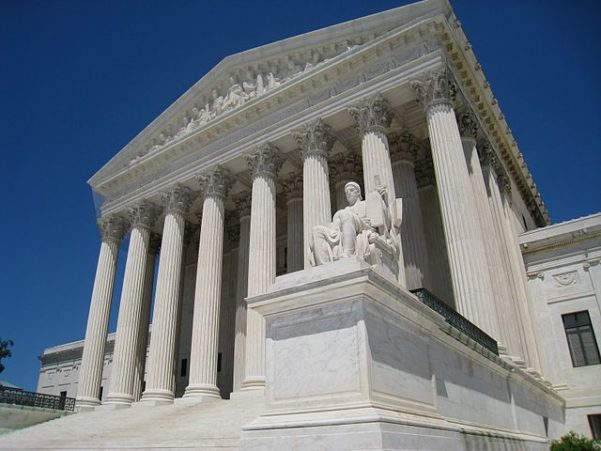
The Supreme Court of the United States has overturned Roe vs Wade, the 1973 ruling that a woman has an untrammelled right to abortion up to viability. Why did it do so? The simple answer is that the 1973 ruling had no real constitutional basis.

The new ruling does not ban abortion. It simply gives the elected politicians, and by extension, voters, the freedom to legislate for or against it. This is the same situation as in Ireland, after the 2018 referendum, and in other European countries.

The Roe vs Wade ruling in favour of abortion was built on an earlier ruling that found a ‘right to privacy’ in the Constitution, although that ‘discovery’ was also highly suspect.

“The right to privacy … is broad enough to encompass a woman’s decision whether to terminate her pregnancy.”, said the Supreme Court in its Roe vs Wade decision.

In its new ruling in Dobbs vs Jackson, the Supreme Court has decided by 5 to 4 majority that: “We hold that Roe and Casey must be overruled. The Constitution makes no reference to abortion, and no such right is implicitly protected by any constitutional provision.”  (The Casey ruling dates from 1992 and confirmed that original 1973 decision.)

What Justice Alito was saying is that the US Constitution enshrines abortion neither explicitly nor implicitly.

In 1975, Justice Byron White, in his dissenting opinion in Roe vs Wade called that ruling an “exercise of raw judicial power”, meaning the judges essentially created the right out of thin air because they wanted to.

His words were vindicated by the current Supreme Court when they declared that a right to abortion has no support in history or relevant precedent, and Roe vs Wade was “egregiously wrong. Its reasoning was exceptionally weak, and the decision has had damaging consequences.“

The most damaging consequence of Roe vs Wade was allowing abortion for any reason up to viability, which would be considered extreme even by the liberal standards which are now common in the West. Most European countries permit abortion after 12 weeks only in (theoretically) limited circumstances.

Another consequence of Roe vs Wade was that any democratic attempt to limit abortion was potentially deemed unconstitutional.

Justice Alito wrote that the 1973 Supreme Court “short-circuited the democratic process by closing it to the large number of Americans who dissented in any respect from Roe.”

The new ruling leaves the question of abortion up to the people and their elected representatives.

Terminations will, in fact, continue to take place in most states, and there will be no immediate change, but possible limitations can be introduced with time. In some states, pre-1973 bans can now be enforced, while in other states, more recently passed laws will go into effect, banning or restricting access to abortion.

Overturning Roe vs Wade was probably the main political goal of the pro-life movement in the US, and it has to be abundantly celebrated. This victory, which many considered impossible, proves that pro-life activism has a future even when circumstances appear hopeless. It is an encouragement for the whole world, Ireland included.

The pro-life battles will continue in the U.S. at the state level, trying to change current liberal laws or to prevent their introduction, but also promoting policies and offering services that help pregnant women in difficult circumstances. The pro-choice movement will fight back, but that is how normal politics works.

sabato, luglio 18, 2020

Two wins for religious freedom at US Supreme Court

Does a religious school have the right to employ only staff who will uphold the school’s ethos? Should a religious employer be forced to pay for contraception and the ‘morning-after pill’? In two separate rulings last week considering these matters, the US Supreme Court has ruled in favour of religious freedom.

The first case concerned two employees who were dismissed from Catholic elementary (primary) schools. One claimed to have been let go because she had a disability and the other because of her age. They appealed to anti-discrimination legislation but the school claimed that employees who have a ministerial role are excluded from such protection. A doctrine known as the “ministerial exception,” bars ministers from suing churches and other religious institutions for employment discrimination.

The question for the Supreme Court was to determine who qualifies as a minister, i.e. who has a ministerial role.

In a 7-2 decision the judges clarified that although the teacher were not ordained ministers, the “ministerial exemption” applies to all teachers in a school, not simply to those who are ordained or those who teach religious subjects. Schools are “communities of mutual witness” and ultimately, it is the Church rather than the state that has the last word on who can teach. 

Judge Alito observed that the First Amendment bars the government from interfering in the right of religious institutions to decide issues relating to their faith and doctrine. Consequently, religious institutions are autonomous and independent from the state and make their own decisions about how they are run, including the selection of teachers. He wrote that there must be “a recognition that educating young people in their faith, inculcating its teachings, and training them to live their faith are responsibilities that lie at the very core of the mission of a private religious school.”

The second ruling addressed more a procedural than a substantive point, but it is still a significant victory for religious freedom.

The Affordable Care Act, also known as ‘Obamacare’, had an exemption for certain religious institutions that did not want to offer their employees insurance coverage for what they consider against their religious ethos. For instance, churches are not obliged to offer an insurance plan that includes contraception or the morning-after-pill, which may cause abortion.

The Trump Administration expanded this exemption, including not only religious but also moral reasons.  The States of Pennsylvania and New Jersey challenged the administration’s ability to overturn the Obamacare mandate in this regard and, consequently, the Supreme Court was asked if the Trump Administration followed the right procedures for permitting this new exemption.

The litigants claimed that the Trump administration did not have the right to apply religious freedom law to this exemption.

The Supreme Court (by 7-2), upheld the right of employers with a religious or moral objection to deny coverage as part of their workers’ health care plans.

Justice Thomas, who wrote the majority opinion, said that that the government "had the statutory authority to craft that exemption, as well as the contemporaneously issued moral exemption."

This is a big victory for freedom of conscience and of religion but the battle is not finished as two of the judges suggested a possible further challenge. 

The Court left the door open for further litigation on other grounds. The Administrative Procedure Act (APA) instructs court to invalidate any state agency action that is found to be “arbitrary and capricious”. In other words, the exemptions to the Obamacare have to be reasonable.

The Court did not address this specific point but two of the Supreme Judges in their opinions suggested a possible challenge in this direction. Litigants could claim that those exemptions were not reasonable and there is no guarantee that they will be fully upheld in the future. These issues remain open for the lower courts to address. The fight for religious freedom never ends.