domenica, settembre 12, 2021

Padre Giovanni Scalese, superiore della missione cattolica in Afghanistan. “Nessuno di noi si aspettava una fine così repentina”

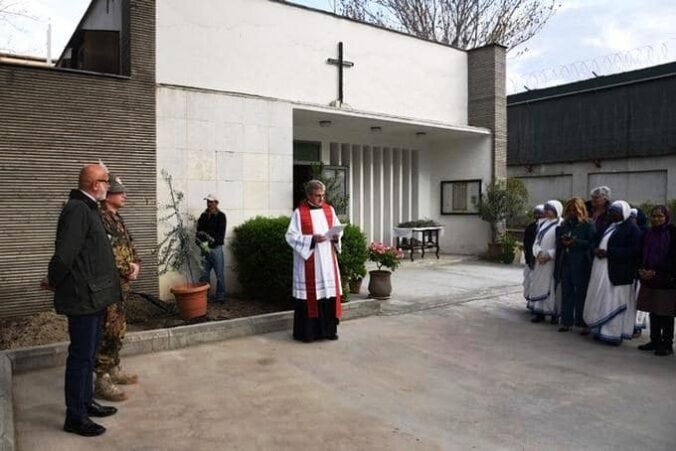
Una testimonianza preziosa direttamente da Kabul. Padre Giovanni Scalese, sacerdote Barnabita, è stato fino al 25 agosto scorso superiore della missione cattolica Missio sui iuris dell’Afghanistan istituita da Giovanni Paolo II nel 2002. È stato tra gli ultimi a lasciar la sede dell’ambasciata italiana nella capitale afghana, dove era rimasto per tutelare e raccogliere la piccola comunità di 5 suore missionarie della Carità con 14 bambini disabili loro affidati. Un gesto coraggioso degno di un vero sacerdote, che è stato notato e apprezzato ovunque. 

Padre Scalese è peraltro un personaggio noto, stimato e anche rimpianto a Firenze: è stato infatti docente di storia e filosofia nel prestigiosissimo e storico “Collegio alla Querce”, di cui è stato anche rettore dal 1994 al 1999, poco prima della sua chiusura dopo circa un secolo e mezzo di gloriosa e benemerita attività. Un’istituzione che ha formato intere generazioni di fiorentini e parte della classe dirigente della città, con un bellissimo motto Ingentes tendat ramos et tempora cingat, di origine parzialmente virgiliana. Dopo la sua partenza da Firenze, è stato dal 2000 al 2006 assistente generale del suo ordine e dal 2003 al 2009 missionario nelle Filippine e in India. Negli ultimi sette anni è rimasto invece a Kabul, superiore della missione; un incarico certo non tra i più “tranquilli”. 

Qui l'intervista: https://www.leomagazineofficial.it/2021/09/11/le-interviste-del-leo-45-padre-giovanni-scalese-superiore-della-missione-cattolica-in-afghanistan-nessuno-di-noi-si-aspettava-una-fine-cosi-repentina/


sabato, settembre 11, 2021

Aggiornamento

Torno ad aggiornare questo blog dopo mesi.  Pian piano, verranno pubblicati i tanti articoli che ho scritto quest'anno. 

giovedì, settembre 09, 2021

Religion had a positive effect on mental health during lockdown


The benefits of religion to mental health are well documented and its positive impact during the pandemic has been confirmed by a number of recent studies.

Covid-19 has had a profound effect on our lives. Significant moments such as baptisms, first communions, weddings, were postponed due to the restrictions imposed by the government. Many could not the attend the funerals of friends and relatives.

Even if we consider it from a merely human point of view, without looking at its supernatural dimension, religion is beneficial to individuals and society as religious practice generally takes place in a community and it creates bonds among the faithful.

Spirituality -not necessarily in an organised form – also plays a key role during important experiences such as illness and bereavement.

Academic articles are now emerging about the impact of Covid-19 on religious practice and its consequences for psychological well-being.

The positive impact of religion and spirituality, in spite of the restrictions, has been confirmed by these studies.

A survey conducted in Brazil and published in the International Journal of Social Psychiatry, found that “most participants (73.4%) reported that religiosity and spirituality was helping them to cope with the social isolation, 57.3% have experienced a spiritual growth and 33.8% believed that the social isolation has improved their religious activities.”

Those who could not attend religious ceremonies, found help in private prayer or in online worship.

study assessing the impact of the pandemic on the America’s Orthodox Jewish population discovered that “positive religious coping, intrinsic religiosity and trust in God strongly correlated with less stress and more positive impact, while negative religious coping and mistrust in God correlated with the inverse. “

study carried out in Italy during the first lockdown confirmed that “spirituality and religious practices are a protective factor connected not only with psychological and mental but also physical health.”

survey conducted among the Irish prisoners abroad identified prayer and spirituality as the most helpful to manage stress and anxiety.

The Iona Institute has commissioned a number of polls during the pandemic to track what happened to religious practice during the lockdowns and then when restrictions eased.

There is a risk associated with public religious events if they are not properly managed, but this has to be balanced with the benefits that religious practice brings to those who do attend, and to society in general as a consequence. For most of the pandemic this was overlooked by the Government and NPHET and hence we had the longest overall ban on public worship in Europe.

The above-mentioned studies have confirmed the positive impact that religion and spirituality have on us, particularly in difficult times. Thus, any future decision about further limiting religious ceremonies (churches are still allowed only to fill to 50pc capacity) should also consider the negative consequences that those restrictions will have on our psychological health.

venerdì, settembre 03, 2021

Some good news on the pro-life front in the US


Some good news from the US; a new law in Texas bans abortion from six weeks of pregnancy.  This is a so-called ‘heartbeat law’ because it is at six weeks or so that the foetal heart starts developing and beating.

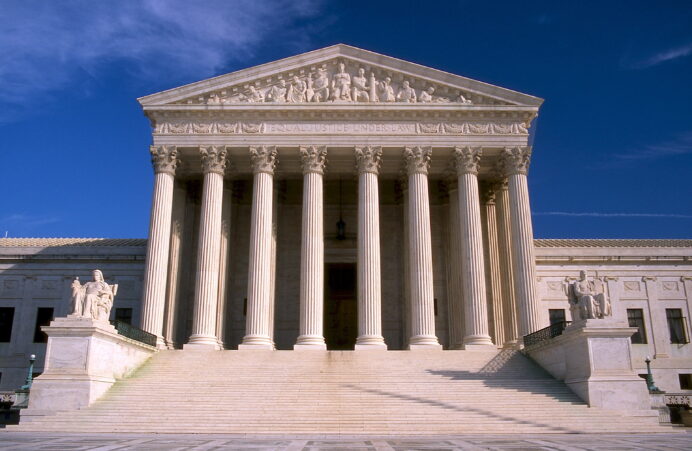
The law, which will still allow terminations in case of medical emergencies, was signed in May and took effect this week after the Supreme Court in Washington rejected an emergency petition from abortion clinics to put the legislation on hold.

Twelve other US states have passed similar legislation protecting life from the initial heartbeat – North Dakota being the first in 2013 – but those laws were struck down by the courts and are not in effect. Texas is the first state successfully implement this measure.

This is significant not only because Texas is the second largest state in America, with a population of more than 29 million, but also because their original and successful legal approach will inspire other states to follow a similar route.

Here is what makes this legislation different from other ‘heart-beat’ laws: it will allow any private citizen, from anywhere in the US, to sue anyone who carries out or helps facilitate abortion in Texas after the six-week limit. The pregnant woman cannot be sued.

This is a novel approach as citizens, rather than state officials, will enforce the ban. In the past, pro-choice groups have stopped foetal heartbeat bills by suing the state but as there is no state official enforcing the Texas law, this time there is no one to sue.

To prevent potential court cases, state officials are barred from enforcing the law. As a consequence of this new approach, many abortion clinics are likely to close, rather than risking being inundated by lawsuits.

The pro-life movement in the US is gaining significant achievements. The pro-choice Guttmacher Institute said that 2021 is “already the worst legislative year ever for US abortion rights”.

Almost one hundred pro-life measures have been enacted since the beginning of the year, although they are often not in effect because of legal challenges. A new South Dakota law, that is in  effect, makes it illegal to terminate the lives of babies with Down Syndrome.  Arizona outlawed abortion of disabled children suffering from a foetal anomaly. This is also in effect.

Four states – Texas being one of them – have adopted bans at six weeks of pregnancy. Only the one in Texas was able to survive a blocking move in the courts. The one in Oklahoma, which is due to take effect in November, has been just challenged by pro-abortion organisations.

This autumn, the Supreme Court will consider a key case involving Mississippi’s 15-week abortion ban. The Court will decide if it is constitutional to ban abortion before viability, when the child can survive outside the womb. The decision could have a profound impact on future pro-life legislation.

The decision by the Supreme Court not to block the Texas law isn’t the end of the matter. The substance of the law is being challenged by pro-choice groups and by President Biden. It will probably make its way back to the Supreme Court eventually and then we will see what happens, but for now, it’s good news, and we will take that. The Irish pro-life movement should take inspiration.

martedì, agosto 31, 2021

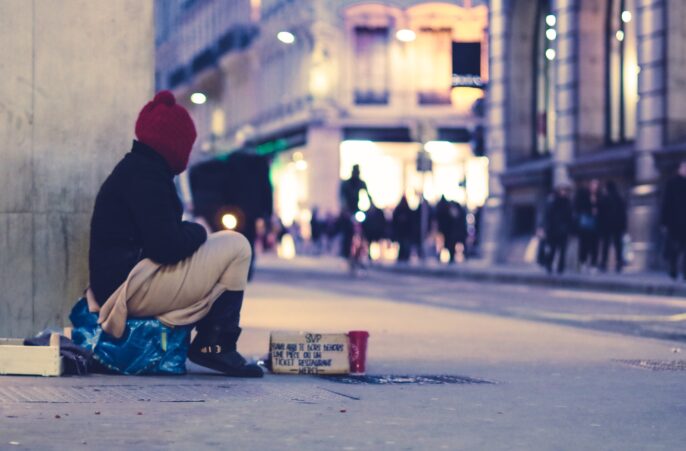
The Catholic Church already does plenty to help the homeless


Minister for Housing, Darragh O’Brien, has asked the Catholic Church to consider providing some of its land for the purpose of building new homes and helping to alleviate the housing crisis. But the Catholic Church does lots to help the homeless. A brief trawl through the ìnternet easily establishes this.

For example, some of the most famous charities in the homelessness sector, such as the Peter McVerry Trust or Focus Ireland, were established by priests or religious sisters.

Crosscare, the social support agency of the Dublin archdiocese, provides accommodation offering different solutions to homeless people, according to complexity of their needs.

In 2014, a building previously donated by Cardinal Desmond Connell, the late Catholic archbishop of Dublin, was made available for emergency accommodation and it is now part of the Crosscare homeless services.

In 2017, the Dublin archdiocese leased to Dublin City Corporation for a notional amount 50 mini-apartments for families on the former site of Mater Dei, on Clonliffe Road. The apartments are used for “supported temporary accommodation” with the aim of moving the guests into a home within three months.

Other houses offer longer temporary accommodation, and help equip people who still don’t have a home with the skills to live independently.

Focus Ireland is another organisation tackling homelessness. It was founded by Sr Stanislaus Kennedy, who is a member of the Irish Sisters of Charity. Her congregation have donated “well in excess of £10 million in buildings, sites, and professional expertise” to the charity.

Their former convent in Stanhope Street has been used to house more than 100 people. In 2017, Focus Ireland opened 28 new homes for disabled, homeless and vulnerable people. The houses were built on an acre of land gifted by the Irish Sisters of Charity.

Two more convents, previously owned by the Presentation Sisters (George’s Hill) and the Sisters of Charity (Basin Lane), have been converted to long term supported housing.

In 2001, the Irish Sisters of Charity donated three acres of land to Dublin City Corporation “to provide housing for older people, those with disability, and people in local authority housing whose families are reared and who may be seeking smaller accommodation.”

In 2018, the Irish Jesuits donated three properties in Sherrard Street to the Peter McVerry Trust, to be converted to 16 apartments for the homeless. The charity is named after its founder, who is a member of the Jesuits.

There are many other Catholic organisations, such as the Society of Saint Vincent De Paul, or the Capuchin Centre of Brother Kevin Crowley, that work with homeless people and offer temporary accommodation. This is part of daily life of the Church, in Ireland as in the rest of the world.

It is true that the Catholic Church in Ireland has many properties. There is no single owner that can easily dispose of them. They belong to dioceses, parishes, religious congregations and organisations. Most of them are in use. They are churches, schools, parish halls and offices, hospitals. Some of those that are not in use could be gifted or leased to help those who need accommodation.

More can be done but we should not forget what the Church has done in the past, and continues to do every day, to provide a home to those who need it.

martedì, agosto 24, 2021

Afghan Christians were in a very difficult situation even before the Taliban


Now that the Taliban are back in power Afghanistan, Christians and other religious minorities can expect to be treated appallingly. But even before the Taliban marched into Kabul again, the country was already a very hostile place for Christians, which is one reason for the tiny number there.

Afghanistan has always been among the countries that most severely persecutes religious minorities, says Dr. Thomas Heine-Geldern, Executive President of Aid to the Church in Need (ACN), an organisation that assisted persecuted Christians all over the world.

ACN produces a biannual report on religious freedom worldwide. The last was produced in April of this year.

Commenting on the report, Dr Heine-Geldern says: “Especially in the last three years, the report highlights the repeated and egregious attacks against places of worship, religious leaders, and worshippers [in Afghanistan]. Our analysis, unfortunately, does not leave much room for hope. All those who do not espouse the extreme Islamist views of the Taliban are at risk, even moderate Sunni. The Shia (10%), the small Christian community, and all other religious minorities, already under threat, will suffer even greater oppression. This is a huge setback for all human rights and especially for religious freedom in the country.”

There is only one Catholic church in the whole of the country, and it is in the Italian Embassy. Italy was the first Western country to recognise the new Afghan state in 1919 and, as a sign of gratitude, it was given permission to build a small church. Only in 1931 did the first chaplain arrive and since then the Italian Barnabites (a religious order) take care of the small group of faithful, made up of mostly of non-nationals who worship in the church. Crucially, seeking converts was explicitly banned under Afghan law even before the return of the Taliban.

Even without legal restrictions, it would be extremely hard for any Afghan to convert to Christianity because of the enormous social pressure, and even violence, to which they could be subjected.

Up to last week, there were three Catholic religious congregations operating in Afghanistan. The Jesuits, ran a number of schools in four provinces since 2004. But they have now have suspended all activities and left the country.

Four Missionaries of Charity nuns – the order founded by Mother Theresa of Kolkata – who run an orphanage and help families in need. They left Afghanistan last week, together with disabled children.

A third Catholic organisation is PBK – Bambini pro Kabul (Children for Kabul), established by members of a number of religious congregations from Italy, helps children with learning disabilities. But the organisation’s future is uncertain.

Other Christian organisations are also present, doing humanitarian work or assisting the very few faithful, but these are leaving the country in fear of being targeted because of their religion.

Many converts have moved abroad over the years. There only a few thousand Christians estimated to be living in Afghanistan.

“They move from area to area. They want to leave the country but have no one to help them. I am looking for a humanitarian channel that can help them,” say Ali Eshani, a Christian who fled Afghanistan in the 1990s after he saw his parents killed and their home razed to the ground.

They can expected even more treatment now.

venerdì, agosto 13, 2021

New study finds Catholic pupils and teachers being subjected to bullying


Practising Catholic students and staff members are sometimes targeted for bullying in Irish schools, according to a major new report. Teachers see evidence of pressure on students to hide their religion.

A survey of 214 Religious Education teachers, conducted by the National Anti-Bullying Research and Resource Centre in Dublin City University, found that students of faith, particularly Catholic, are a vulnerable group. “Holding a religious worldview can be a lonely experience in modern Ireland”, said one of the respondents.

According to the “Religious Inclusive Education” report, authored by Dr. Amalee Meehan and Derek A. Laffan MSc, students who are open about their faith can experience hostility from other students and even from staff.

“Expressing religious based convictions can lead to low level bullying by staff members … e.g. expressing anti-abortion views”, noted one of the participants.

The report refers to secondary school students. Those who identify as Catholic are the group most likely to be associated to negative stereotypes, while those who identify as atheist are at the opposite end of the spectrum.

Respondents voiced concern about anti-religious views such as ‘the lazy way that Muslims can be categorised as terrorists, and Catholics as paedophiles or supportive of such behaviour’. (p. 22)

According to the study, these findings are consistent with international research showing that in societies which experience a rapid change from high religious practice to wide secularisation, those who continue to practise are more vulnerable to bullying. This is happening in Ireland now.

“It is socially acceptable in Ireland to insult and belittle Catholics and Catholicism”, noted one of the teachers. It is seen as archaic to hold Catholic values, said another.

Religiously committed students feel vulnerable as they are a minority in Irish schools now. A different study mentioned in the report claims that when religious students are forced to conceal or deny their identity, both their personal and the school’s well-being are compromised. “This has particular implications for Irish schools, where it seems that some young people are religious at some level, but may not want to appear so”, noted the authors of the report. (p. 25)

Even religious education teachers experienced hostility. “They spoke of ‘having to apologise for being Catholic’ and ‘having to justify a Catholic ethos.’“ (p. 23)

The teachers complained about how faith schools are inaccurately portrayed in the Irish media and depicted in Irish society, noting that a secular agenda can often be promoted, instead of a fully inclusive one which respect all faiths.

The study was mentioned in June at the Oireacthas Committee on Education by Prof. James O’Higgins Norman, the head of the anti-bullying unit at DCU who spoke about bullying in school and the impact on mental health.

The report acknowledges the importance of religious education in preparing young people to live in a global society. “Further attention needs to be given to creating inclusive classrooms in which the beliefs and sensibilities of every child is respected.”, it says.

Obviously, this cannot be achieved without recognising the problem that this study raises, i.e. practicing Catholics are being bullied because of their faith.

It would also be good to know what is happening in other education settings. We saw what happened to Katie Ascough when she was elected head of the Students’ Union at UCD in 2017. She was subjected to appalling vitriol because of her Catholic and pro-life beliefs.

When society in general is becoming more hostile to religious believers, and especially the Catholic faith, the findings of this valuable new study shouldn’t come as much of a surprise.

mercoledì, agosto 11, 2021

Let’s celebrate Ireland, where euthanasia has been stopped

 Good news from Ireland, at least for once. The Dublin Parliament’s Committee on Justice rejected a bill that would have introduced assisted suicide and euthanasia. It was definitely a result that could not be taken for granted, thanks both to the hard work of pro-life groups as well as to clear and decisive opposition from the medical profession.

The bill was put forward by an MP from People Before Profit, a small far-left formation. Last year, to some surprise, it won the initial support of some representatives of the governing coalition, including former Prime Minister Leo Varadkar and the Ministers of Health and Justice. A similar proposal had already been rejected in 2015.

However, after public consultation, the Committee on Justice decided not to proceed with the evaluation of the text and recommended that Parliament set up a special commission dedicated specifically to the issues of euthanasia and assisted suicide.

Of course, this is not a complete rejection. But, given the fact that parliamentary time has been slowed down by COVID-19, it will be difficult for a future special commission to complete this task before the end of the legislature; even less so if general elections are brought forward, which is expected.

There were two elements that produced this important decision: the strong opposition expressed by the interventions presented during the public consultationw–with doctors and professionals in the field in the lead–and the critical opinion of the Legal Office of the Parliament, which noted that the text of the bill had serious gaps and was possibly incompatible with the Constitution.

There were 1,400 contributions from citizens and organized groups throughout the public consultation process. The pro-life world, in all its different articulations, found support in professional medical organizations and associations fighting for the rights of disabled people.

All professional medical organizations have spoken out against the bill, given that it would have distorted the doctor-patient relationship and the very purpose of medicine, which is not to kill, but to care for the sick. The intervention of professionals in charge of palliative care, who face “borderline” situations on a daily basis, is significant.

While the pro-euthanasia front is boasts of apparent public support, this was not at all reflected in the responses given during the consultation. This is a sign that the pro-life world, despite the severe defeat it suffered in the 2018 abortion referendum, is still managing to organize effectively and have actual influence.

In recent years, Ireland has been moving in an opposite direction. Two popular referendums were held: redefining the concept of family, extending “marriage” to same-sex couples, and cancelling the article of the Constitution that defended prenatal life, thus liberalizing abortion. Moreover, when it comes to crucial issues such as assisted reproduction, surrogacy or gender ideology, the Irish political class of all colors has lately consistently expressed very liberal positions.

This “big little” victory of the pro-life front therefore marks a change of pace that gives some hope. Whether it is momentary, or more than that, remains to be seen. Some will say that the governing parties simply wanted to avoid division in advance of an election; perhaps to present a sweetened version of a similar law. Needless to say, we’ll see. But, at least for now, it’s good to celebrate.

martedì, agosto 10, 2021

Violent persecution of Christians continues unabated and underreported


The Covid pandemic has obscured almost all other news, but even before the outbreak one story garnered far less attention than it deserves, namely the violent persecution of Christians in many parts of the world, not least in countries like Nigeria, and increasingly in the Tigray region of Ethiopia where a war is raging.

Over the past 12 year, an estimated 43,000 Christians have been killed in Nigeria, often by Islamist militants, with 3,500 believed to have been murdered since the beginning of this year. Massacres of Christians are taking place also in the Tigray region of Ethiopia.

Aid to the Church in Need catalogues how bad the situation is.

Attack by radical Islamist groups, which usually associated with the North and the ‘Middle Belt’ of Nigeria, are now becoming more common in the South where the majority of the Christian population lives.

Nigeria has an estimated population of 210 million – making it Africa’s most populous country – and almost half of them, about 95 million, are Christians of different denominations, mainly protestant (75pc). The rest of the population is chiefly Muslim.

The United States Department of State has designated Nigeria as a Country of Particular Concern (CPC) for engaging or tolerating “systematic, ongoing, egregious violations of religious freedom,”

An estimated 2,000 Christian schools and 300 churches have been attacked this year, according to the International Society for Civil Liberties and Rule of Law (Intersociety), which is based in Nigeria.

Meanwhile, massacres of Christians are taking place in the Tigray region of Ethiopia, at the border of Eritrea and Sudan.

At the beginning of the year the killing of up to 750 people sheltering in the Orthodox cathedral of Axum was reported.

Ethiopia is one of the most ancient Christian countries in the world and in the 4th century Christianity was declared as the official religion of the Kingdom of Axum, in modern Tigray. The Orthodox cathedral of Axum reputedly houses the Ark of the Covenant.

At present, 90pc of the Tigray population is displaced, after the Ethiopian government has sent federal troops to fight the Tigray People’s Liberation Front, which is accused of holding ‘illegitimate elections’.

Aid to the Church in Need says that young people, particularly Tigrayan women, have been targeted by indiscriminate killing and widespread sexual violence, including the rape of nuns.

“This is clearly genocide against the people of Tigray. This is not just fighting, they are killing everybody – that is a sign of genocide.”, a source told ACN.

The organisation, which has worked in Ethiopia since 1993, has launched an appeal to support victims of the war.

venerdì, agosto 06, 2021

Ireland’s rising number of divorces will harm children


There was a huge increase of applications for divorce last year. It was the highest number since divorce was introduced in 1997. There are many reasons why we should be worried about it, not least because children affected by parental divorce have a higher risk of developing a variety of difficulties.

The 29pc increase in divorce applications in 2020 is probably mainly due to the effects of the 2019 referendum that significantly halved the waiting time for divorce. Nonetheless, the number of broken marriages in the country keeps increasing. By the time of the last census in 2016, almost 150,000 couples had gone their separate ways.

It is true that Ireland still has one of the lowest divorce rates in Europe, but the marriage rate is also declining and for every four couples who marry in Ireland each year, roughly one couple breaks up.

All those trends should raise public concern about the negative long-term effects of breakdowns, particularly on children.

recent article published in the Journal of Psychiatric Research found that children of divorcees have a higher risk of mental health problems.

The article is a meta-analysis aggregating the results of other studies and it takes into consideration a total sample of more than half a million people.  It is the first for many years to consider a great variety of mental health aspects.

The authors observed “a consistent negative association between parental divorce on all observed dimensions [among children]: depression, anxiety, distress, suicide (attempts and ideation), alcohol and drug consumption, as well as smoking”. (p. 112)

Different affective and behavioural dimensions are negatively affected by divorce.

“Parental divorce may be consistently connected to detrimental long-term effects, whereby their sizes vary across samples and measures, but with a clear and marked but unspecific disadvantage for those who had experienced it”, the article claims. (p. 112)

These results are consistent with similar studies carried in the past which outlined the long-term negative effects of breakdown on the mental health of children of divorcees.

Paul Amato, possibly the leading sociologist of marriage, found that over half of couples who divorce are in low conflict as distinct from high conflict marriages.

He claims that, at least in low-conflict relationships, parents should try and stay together as in those cases, children have experienced a generally positive family life and are not prepared for the break-up of their family.

On the other hand, he believes that when a marriage is high-distress, then it probably is better for the children if their parents separate.

In Ireland, we don’t know how many marriages that end in separation or divorce are low-conflict or high-conflict. If we have the welfare of children in mind, we should find out.