venerdì, maggio 28, 2021

Push on to make Ireland’s abortion law even more permissive


This week saw the third anniversary of the abortion referendum. A review of the abortion law at the three-year stage was promised by the Government and to mark the occasion, the National Women’s Council in Ireland (NWCI) has released a major report that seeks to make Ireland’s already very liberal abortion regime even more permissive. Among other things, they want to remove the three-day waiting period and totally decriminalise abortion.

At present, abortion can be obtained for any reason up to 12 weeks, which is when the vast majority of terminations take place. The NWCI want to extend this limit into the second trimester of pregnancy – up to 24 weeks – which means abortion-on-demand even when the baby could survive outside the womb.

As mentioned, they want the complete removal of the three-day waiting period. A cooling-off period between asking for, and receiving an abortion, is quite common in other countries. For instance, it is seven days in Italy, six days in Belgium, five days in the Netherlands, and it gives the mother some time to consider an irreversible choice.

The current legislation allows abortion up to birth if the foetus is expected to die within 28 day of birth due to a potentially fatal condition.

The NWCI want a complete removal of any time limit. It means that a baby which could live for months, or even years after birth, could be killed in the womb, or else delivered alive and left to die.

Moreover, they want the State to cover all the medical and travel costs for those who have abortion abroad. This would include “claim expenses around the repatriation of remains and funeral arrangement”. No such provision exists for similar abortions carried out in the country.

The NWCI want to ban prayers or protests outside abortion facilities. No other European country has similar bans and Garda Commissioner Drew Harris has said that exclusion zones outside abortion facilities are not needed.

The document also says: “Conscientious objection should not be permitted to obstruct access to abortion care”. It is not clear what this implies but the NWCI think that the State should be collecting data about conscientious objections. This could have a chilling effect on the right.

Currently, in nine of the 19 Irish maternity hospitals abortions are not offered because of conscientious objectors. The NWCI want abortions in every maternity hospital and are demanding fast-tracked medical appointments to fill the gaps. As a consequence, doctors would be recruited only if they are not conscientious objectors. What will happen to them if they change their mind? This would undermine the basic principle of freedom of conscience.

The NWCI document also requests maternity hospitals to offer priority ultrasound access to women seeking abortions, over any other expecting mother. They want all “abortion services” to be free for all, including illegal immigrants, and they are asking to remove the requirement for an Irish address.

In addition, they want the definition of ‘health’ broadened to the greatest possible extent so that, in practical terms, abortion is available on-demand at any point in the pregnancy.

As we can see, the abortion lobby in Ireland is not satisfied with the huge victory they achieved three years ago. They are now seeking to extinguish the right-to-life of the unborn even more. It is more urgent than ever that the pro-life movement keep the humanity of the unborn before the public and never let it be lost sight of.


lunedì, maggio 24, 2021

Pain-relief must be compulsory for late-term abortions

A group of pro-life TDs has presented a Bill that would require doctors to give pain-relief medication to a foetus before it is aborted.

There is scientific evidence that babies in the womb can feel pain. In fact, it would be stunning if beyond a certain stage of development, a foetus, being a living human being, could not feel pain. Recent studies suggest that this can happen as early as 13 weeks.

Pain-relief medication is routinely administered as standard medical practice by foetal surgeons who operate on unborn babies but there is no such requirement for abortions.

The Bill, presented by the Life and Dignity Group and other pro-life TDs, requires the administration of anaesthetic or analgesic to a foetus that has reached or exceeds 20 weeks of pregnancy, or when it is likely that it will suffer pain.

This is similar to an amendment proposed when the current abortion legislation was debated in the Oireachtas in 2018. At the time, Minister for Health, Simon Harris rejected the proposal on the basis that such provisions should not be in primary legislation but rather in the medical guidelines.

Minister Harris said: “I cannot write the clinical guidelines, … our clinicians know how to carry out procedures and operate in an ethical manner in accordance with the Medical Council. I have absolutely no doubt about that. Our doctors go into hospitals every day to ease pain and I have no doubt that all these issues will be considered when the clinical guidelines are being drawn up. What we cannot do in this House is don the white coats and the stethoscopes and become obstetricians and gynaecologists. We are policymakers. Pain relief and care pathways come from doctors, not politicians.”

But Minister Harris is wrong for two reasons. Firstly, the onus on veterinary doctors to administer pain relief to animals when performing procedures is covered in primary legislation and so there is no reason why similar provisions cannot be put in place with regard to human pain. Animals are treated better than unborn children.

Moreover, three years after the abortion referendum, no guidelines appear to have been issued by any hospital or professional medical body in Ireland that prescribe foetal pain relief in case of abortions. This is why this Bill is necessary.

The guidelines issued in January 2020 by the Institute of Obstetricians and Gynaecologists in Ireland do not mention pain relief to the baby when presenting the various types of abortion procedures.

Things are different in other countries. The French College of Obstetricians and Gynaecologists, for instance, recommends that doctors administer pain relief to unborn babies before late-term abortions. And close to 20 states in the US also have laws ensuring that babies are given pain-relief before late-term abortion.

When presenting the Bill to the Dáil, Deputy Carol Nolan said: “The infliction of unnecessary or avoidable pain on human beings, especially those with no capacity to resist, is something that all compassionate societies should seek to avoid. Thankfully, in most areas of modern medicine, this principle is routinely adopted in practice. This is why medical ethics require that surgical procedures, both routine and major, are carried out with the use of anaesthetics and analgesics, except in extreme circumstances where this is not possible.”

After being introduced on the 12th May, the Pain Relief Bill is now before Dáil Éireann and it will be debated after the Summer recess at the earliest. 

martedì, maggio 11, 2021

Why vaccine passports must not be compulsory


‘Vaccine passports’, if they are introduced, are documents which would certify that someone has been vaccinated against Covid-19. Without them, you might not be able to access certain places or services. There is even concern churches might insist on them for access to worship. But they are morally problematic for a number of reasons.

Of course, authorities have a right, and also a duty, to protect public health, but the necessary measures have to be proportionate and should not infringe basic rights.

Personally speaking, I believe I have a moral duty to be vaccinated. But I also believe that this must be voluntary, and the State (and private organisations as a general rule) have no right to impose a Covid-19 vaccine on citizens.

Every medical treatment should be based on consent. If excessive burdens are imposed on those who do not want, or cannot get vaccinated, this becomes de facto a form of coercion.

A refusal to be vaccinated should be respected. Some people might have moral or philosophical reasons to object to vaccines and, unless they become dangerous to others, it is their right to follow their conscience.

Requiring people to prove they have received the Covid vaccination to access certain places or services is equivalent to punishing those who have not received it. It creates two classes of citizens, and one has more rights than others.

An alternative to insisting that someone who boards a flight (say), has been vaccinated, is to ensure they test negatively for the virus before they embark.

Another negative effect of requiring vaccine passports is the possibility of diminishing public confidence in health authorities. Hesitant citizens will become even more suspicious if public health measures are enforced with a punitive attitude.

Vaccine passports are not per se immoral. Restrictions can be introduced when the circumstances require them, but only on a limited basis and they must be proportionate to the actual threat that unvaccinated people pose to the rest of society.

It is also important to distinguish common or essential activities from non-necessary ones. People should not be prevented accessing necessary services.

The use of vaccine passports instead would be more acceptable, for instance, to restrict those travelling from countries with a high level of infection, as they are more at risk, but it should not be the norm for the general population. Again, passengers could be tested for the virus before boarding.

Concerns similar to the ones outlined above have been expressed by a letter signed by more than 1,200 church leaders in the UK, warning that introducing vaccine passport would create a “medical apartheid”.

“This scheme has the potential to bring about the end of liberal democracy as we know it and to create a surveillance state in which the government uses technology to control certain aspects of citizens’ lives,” the letter said.

The Anscombe Bioethics Centre, a Catholic institute based in Oxford, has produced a detailed document in response to the UK government call for consultation on vaccine passports. They claim that “if applied widely, [vaccine passports] would undermine the voluntariness of vaccination and constitute unethical coercion. They would also very likely be socially divisive and raise questions in relation to equality law.”


martedì, maggio 04, 2021

Covid-19 caused a bigger decline in Catholic weddings than civil ones. Why?


 What effect did Covid-19 have on the number of weddings that took place in Ireland last year compared with 2019? As you can imagine, a very big effect. In fact, the figure halved, but the reduction in the amount of Catholic weddings was bigger than in the number of civil weddings. Why might that have been?

2020 has been an exceptional year because of the pandemic, and it would be pointless to compare the 2020 statistics with the previous year to infer some sort of trend, but it is interesting to analyse in details what has happened to avoid rush conclusions.

There were 9,209 opposite-sex marriages in Ireland in 2020, about half the number for 2019 (19,673) and 2018 (20,389), according to the recently released figures from the CSO 53pc less, to be more precise.

Same-sex marriages also halved from 640 in 2019 to 314 in 2020, which represents a 51pc decline.

The 2020 opposite-sex marriage rate for 1,000 population was a mere 1.9. This figure was 4.7 in 2015 and 4.0 in 2019, and it means that less people are getting married. The rate has been constantly declining since the 1980s, particularly so in recent years, and it has now reached approximately the same level as in the UK.

While a general drop in the number of weddings was easily predictable, the fact that the number of civil weddings surpassed Catholic weddings for the first time certainly stood out.

While religious marriages overall were still slightly more frequent (50.2pc) than non-religious ones (49.8pc), civil ceremonies (3,779) were more popular than Catholic weddings (3,295) in the year of the pandemic.

Atheist Ireland claimed that these figures show that Ireland is no longer a Catholic country, but I am afraid they may be disappointed to discover that most likely not the case.

The reason for this temporary decline seems quite simple: of all weddings, civil ones are the least likely to be postponed. A closer look at the statistics will prove my point.

When we compare the distribution of marriages through the year, we see a sharp decline in April, May and June 2020, and another decline in November. December, instead of the traditional August, was the month with most weddings in 2020.

Many marriages were postponed last year but, if we look at the statistics, it is clear that civil marriages were postponed less than other marriages. For instance, compared to the previous year, civil marriages saw a 43pc decline, while all marriages went down 53pc and Catholic marriages dropped 63pc. This is not because Ireland has suddenly become far less Catholic but because the couples who marry in a church are more likely to want a big day and so they are more likely to be postponed in a period of uncertainty, while civil ceremonies in a registry office are likely to be smaller affairs.

If we look, for instance, at same-sex marriages we discover that in 2020 civil ceremonies represented 72.6pc of the overall number, while they were 62.2pc the previous years. Humanist and Spiritualist ceremonies for same-sex marriages went from 29.7pc combined in 2019 to 20.7pc in 2020.

If we look at non-religious ceremonies, civil weddings went up from 31.6pc in 2019 to 42.1pc in 2020 while Humanist ceremonies went down from 9.4pc to 7.8 pc. The explanation is the same as above: civil marriages are the least likely to be postponed.

Spiritualist marriages also went down from 8pc of the total in 2019, to 6.7pc last year. These often take place in hotels and involve couples who don’t marry in a church but want a religious element to their wedding.

There is another important factor to consider.

First marriages went down 55.4pc in 2020, compared to the previous year. But marriages involving at least one divorced person went down by ‘only’ 41.8pc. This shows that those who are marrying for the first time were more likely to postpone their big day compared to those who were remarrying. And given that Catholic marriages generally do not involve someone who is divorced, this factor also contributed to the temporary decline of Catholic ceremonies in 2020.

In 2020 marriages were postponed for very practical reasons and, the more complex the ceremony, the more likely this happened.

This is not to say religious marriages are not declining in number anyway overall, but last year was unique for the reasons given above. 2021 is still an exceptional year but, as we will be back to normality, some anomalies that we saw in the 2020 figures will likely also disappear.

giovedì, aprile 29, 2021

Lanciata la prima istanza invidious italiana: tubo.peertube.uno

 Lanciata la prima istanza italiana di invidious, ecco a voi “il tubo”:

https://tubo.peertube.uno

invidious è un servizio utilissimo, è un frontend alternativo a youtube, che permette di vedere, condividere e scaricare tutti i video di youtube senza il fastidio dei cookies, pubblicità,o script di profilazione che possono insinuarsi anche su altri siti se il video è “embedded”, queste sono le sue caratteristiche principali:

  • Software libero con copyleft (licenza AGPLv3+)
  • Leggero (la homepage è ~4 KB compressa)
  • Nessuna pubblicità
  • Nessun tracciamento
  • Javascript è 100% opzionale
  • Strumenti per gestire le sottoscrizioni:
    • Mostra solo i video non visti
    • Mostra solo gli ultimi video (o gli ultimi non visti) di ogni canale
    • Invia notifiche da tutti i canali sottoscritti
    • Reindirizza automaticamente la homepage al feed
    • Importa le sottoscrizioni da YouTube
  • Modalità solo audio e nessuna necessità di tenere la finestra aperta su smartphone!
  • Modalità scura
  • Supporto embed
  • Impostazione delle opzioni predefinite del lettore (velocità, qualità, autoplay, loop)
  • Supporto per i commenti di Reddit al posto di quelli di YouTube
  • Importazione/esportazione di abbonamenti, cronologia, preferenze
  • API per sviluppatori
  • Non usa nessuna delle API ufficiali di YouTube
  • Non è necessario creare un account Google per salvare le sottoscrizioni
  • Nessun codice di condotta
  • Nessun accordo di licenza del collaboratore
  • Disponibile in molte lingue, grazie a Weblate

Purtroppo le istanze invidious sono spesso sovraccariche e inutilizzabili, questa è la prima istanza che viene lanciata in italia sui server devol ed attualmente sta girando molto veloce e senza problemi!

L’utilizzo di invidious è essenziale per evitare che script spioni si infilino anche all’interno di social etici come mastodon.

Con peertube abbiamo iniziato un progetto per creare un hub con tutti i servizi video etici, ad esempio c’è già https://alltubedownload.peertube.uno/ per poter scaricare nel proprio PC o Smartphone i video da quasi tutte le piattaforme online.

in realtà tubo.peertube.uno semplifica di molto le operazioni di download, è possibile cercare il video senza andare su youtube e scaricarlo direttamente senza uscire dal sito. Il video scaricato lo si può quindi modificare e caricare sul proprio canale peertube.

lunedì, aprile 26, 2021

Irish abortion doctors reporting little disapproval from colleagues


It is now more than one year since a very liberal abortion law was introduced in Ireland. Only a minority of GPs are willing to prescribe the abortion pill, and in hospitals, a much smaller number perform abortions. But what kind of reaction do they get from other health workers? According to a new paper some experience ‘stigma’, but it is not at the level doctors encounter in the US, on average.

The  paper is published in the journal, ‘Contraception’, and reveals that the 156 abortion providers, mostly GPs (66.7pc), who were surveyed for it seem to encounter the levels of social disapproval they might expect to find in a very liberal American State like Massachusetts. But overall, they reported fewer issues talking about their involvement in carrying out abortions, and fewer experiences of judgement and ‘discrimination’. Only 15pc experienced a verbal threat or attack related to their abortion work.

The level of disapproval was measured using a proper scale called APSS.  Those working in hospitals scored higher on the APSS scale than the GPs (they encountered more disapproval). Those doctors carrying out only surgical abortions scored higher than those who offer the abortion pills, or a combination of both (pills and surgical).

The higher score for those working in hospital, and for those performing surgical abortions, is probably due to the level of direct involvement in the procedure. GPs in Ireland offer abortion pills at an earlier stage of the pregnancy and they are not directly physically killing the baby, as the procedure is completed at home. Instead, hospital staff are actively participating in the procedure and, as the study euphemistically says, “must encounter the fetal remains. This increases the moral and physical taint ascribed to abortion work, which in turn increase stigma”.

The study also revealed that, even if the termination method of dilation and evacuation is not offered in Ireland, “senior trainees are undergoing international training in the procedure with a view of offering it in the future”. This is quite concerning. Dilation and evacuation is a procedure used in late-term abortions and, the study acknowledges, it is “highly stigmatising”. It is a horrific method that removes the baby, who is fully developed, piece by piece from the mother’s body.

At present what appears to be happening in cases of late-term abortions is that the babies are delivered alive and then left to die.

The study is significant as it is the first one addressing the specific issue of the reaction abortion-providers attract from their colleagues. Moreover, the study is based on voluntary self-reporting and the sample is quite small: 156 respondents, 67pc of which were GPs and 18pc Obstetricians/Gynecologists.

What are to make of the findings? It is actually disappointing that the doctors do not encounter more disapproval from their colleagues. Direct abortion, like euthanasia, is the antithesis of real medicine. It kills a patient, when doctors should only ever offer care. Doctors above all should defend the true purpose and nature of medicine. Those who provide abortion should encounter disapproval.

mercoledì, aprile 14, 2021

Eutanasia, il Quarto Reich dei Paesi Bassi


La pratica odierna dell’eutanasia nei Paesi Bassi è paragonabile a quanto avveniva nella Germania nazista: si sta infatti ricreando la categoria degli “indegni di vivere”. Così la pensa la dott.ssa Diane E. Meier, geriatra nella Icahn School of Medicine di New York, che lo scrive sul prestigioso periodico JAMA Internal Medicine dell’American Medical Association.

Per la Meier, sia l’aumento nel novero delle categorie di persone che possono accedere all’eutanasia, avvenuto nel corso degli anni, sia il fallimento dei limiti posti inizialmente a tale pratica per contenerla a un numero ridotto di casi, mostrano i danni sociali causati dalla legge. La legge evoca del resto l’eco del passato, perché consolida a livello sociale l’idea che alcune vite meritino più cura e investimenti di altre.

La specialista lo scrive commentando uno studio, pubblicato in dicembre sul medesimo periodico, che riguarda i pazienti neerlandesi con difficoltà geriatriche multiple che hanno fatto richiesta di eutanasia. Ora, dall’analisi è emerso che la sofferenza di quelle persone non era semplicemente fisica, bensì incentrata sul timore di subire un declino delle proprie condizioni di salute tale da costringerli a dipendere da altri o comunque a perdere il pieno controllo di sé. Nessuno dei pazienti si trovava del resto di condizioni potenzialmente letali, eppure hanno tutti richiesto e tutti ottenuto la morte indotta.

Nei Paesi Bassi i casi di eutanasia performata su pazienti affetti da demenza, malattie psichiatriche, o comunque in difficoltà geriatriche multiple sono aumentati, e questo, secondo la Meier, dovrebbe allarmare tutti. «Una volta legalizzata la morte assistita», scrive la dottoressa, «quand’è che un diritto diventa un obbligo, specialmente se le famiglie sono poste sotto pressione e la società nega ai pazienti e alle loro famiglie le risorse necessarie per cure sicure e affidabili?».

Se poi l’eutanasia diventa «la conferma sociale, supportata da scelte politiche, dell’idea che alcune vite non valgono più dell’investimento necessario per preservarle», «l’affermazione implicita è che sia l’individuo sia la società starebbero meglio se il paziente fosse morto». È qui che per la Meier scatta il paragone con le leggi naziste su eutanasia, eugenica e sterilizzazione forzata di quanti venivano considerati inadatti a procreare.

Com’era prevedibile, il paragone è stato giudicato inappropriato da due lettere firmate da alcuni medici neerlandesi, che il periodico ha subito pubblicato. Ma la geriatra ha replicato che la storia insegna che agire partendo dal presupposto che alcune vite non siano degne di essere vissute non è un evento unico ed irripetibile. «Occorre cautela estrema quando si dà ai medici il potere di uccidere».

lunedì, aprile 12, 2021

Yet another report downgrades the natural ties


In a new report for the Government, the Special Rapporteur on Child Protection has recommended legal recognition of domestic surrogacy arrangements even where the commissioning couple have no genetic connection the child. This gives the natural ties short shrift indeed.

The recommendation would allow a given couple to use the sperm of one donor, the egg of another, and then place the resultant child in the womb of the surrogate mother. At the end of all this, they would then take possession of the child. Incredibly, this proposal is defended and promoted under the general heading of the child’s ‘best interests’.

The recommendation is to be found in a new document commissioned by the Government and written by Professor Conor O’Mahony, who is Special Rapporteur on Child Protection. It is among 27 recommendations he makes in relation to future legislation regarding surrogacy, artificial reproduction using so-called donors, and recognition of parentage.

The overall philosophy of the report makes ‘intentional parents’ more important than biological parents, which is already very much the general thrust of Irish law. Some of O’Mahony’s recommendations would reinforce this trend, in particular the one mentioned above.

‘intentional parents’ are individuals who wish to use the sperm and/or eggs of other people to have children of their own. The biological parent in these scenarios is more or less excised from the picture. Intent, or choice, trumps the natural ties. It is another manifestation of pro-choice ideology in its broader sense.

A general scheme of a “Assisted Human Reproduction Bill regulating those issues was drafted by Simon Harris in 2017 when he was still Health Minister, but it remains under scrutiny due to the legal and moral complexity of these matters.

The document by Prof. O’Mahony is often critical of the 2017 Bill and offers alternatives to some of the problems but, as with the Bill, the recommendations continue to downgrade the importance of natural ties and fails to properly protect children’s true best interests, despite its intentions.

This is ironic given that the intention of the report is to defend a child’s ‘best interests’.

How is it in the best interests of children to be deliberately separated from their genetic mother and father, but also from possible siblings, and other significant relations? The painful experience of adopted people who try to reconnect with their genetic parents proves that the natural ties matter, even when children are brought up in loving families.

Professor O’Mahony urges us to “accept the reality of surrogacy as an international phenomenon” (p. 6) and regulate it rather than reject it, otherwise the commissioning couples, or even singles, would rely on the black market.

Accepting the reality of surrogacy, and then regulating it as effectively we can, is how we can defend a child’s ‘best interests’, seems to be his general line of reasoning.

But, in footnote (n. 3), the Report acknowledges that surrogacy arrangements are permitted only in nine out of 43 European countries while it is prohibited in 24. In another nine it is unregulated.

Clearly, most of Europe views a child’s ‘best interests’ differently than Professor O’Mahony and they are not as defeatist about existence an Assisted Human Reproduction black market.

A debate on what form of legal recognition is more appropriate for children who are already born as a result of surrogacy arrangements is necessary, but it should only happen after we have clearly prohibited such arrangements, as it is the case in most of Europe. Prohibition, even if imperfect, is a form of deterrence.

However, in one respect at least, the report does point in the right directions. Recommendations 14-20 mirror those listed by the Iona Institute in its submission to the Oireachtas on the 2017 Bill.

In the Bill, those conceived through donation would only have access to information about their donor mother or father when they turn 18. The Report recommends lowering this to 12 years, and it also recommends some arrangements that would make easier for the parents to access details about the donor, soon after the birth of the child.

This, at least, gives the natural ties some bit of due, even if the report overall does not.

giovedì, aprile 08, 2021

Londra impone l’aborto a Stormont Il governo Conservatore viola accordi e devolution per instaurare un nuovo regime abortista


Il governo Conservatore viola accordi e devolution per instaurare un nuovo regime abortista

Il governo Conservatore britannico ha imposto l’aborto nell’Irlanda del Nord, sorpassando sia l’assemblea legislativa sia l’esecutivo locali. Lo ha fatto concedendo il potere al ministro per l’Irlanda del Nord, Brandon Lewis, di imporre alle autorità sanitarie nordirlandesi un regime abortivo estremamente permissivo.

Nel 2016 una chiara maggioranza nell’Assemblea dell’Irlanda del Nord aveva confermato la legge allora esistente, che consentiva l’aborto solo nel caso di pericolo per la salute fisica o mentale della madre. Poi, nel 2019, la Camera dei Comuni del parlamento britannico ha introdotto un nuovo regime che liberalizza l’aborto. Questa imposizione da parte di Londra venne giustificata con il fatto che in Irlanda del Nord in quel periodo non vi era esecutivo in funzione. Infatti uno stallo nelle negoziazioni fra i diversi partiti ha rinviato la formazione del governo locale fino a gennaio 2020.

Il nuovo regime imposto da Londra è entrato in vigore nel marzo 2020, ma senza il supporto del governo locale e dell’Assemblea di Stormont. Ora il governo di Londra, tramite il ministro per l’Irlanda del Nord, costringe di fatto il Servizio sanitario locale a seguire la legislazione imposta da Londra, anche se questa, secondo gli accordi di pace, è materia di competenza locale.

Con il nuovo regime l’aborto è consentito fino alla nascita per ogni genere di disabilità e fino a 24 settimane se la gravidanza comporta più rischi dell’aborto per la salute fisica e mentale della madre. In pratica si tratta di aborto a richiesta fino alla ventiquattresima settimana. L’aborto viene inoltre depenalizzato completamente, a differenza del resto del Regno Unito e della Repubblica d’Irlanda dove rimane un reato se effettuato al di fuori dei limiti di legge.

Alban Maginness, stimato politico locale ed ex sindaco di Belfast, ha commentato: «In questo modo Lewis dà priorità all’aborto rispetto ad altri servizi sanitari, come la cura del cancro, che in questo momento sono rinviati a causa della pandemia. Inoltre si fa beffa degli accordi sul decentramento. […] L’aborto è una questione divisiva, controversa, che richiede l’accordo del nostro esecutivo decentrato. E, come in altri casi, su una questione così delicata l’esecutivo non ha ancora raggiunto il consenso»

Contro la decisione del governo britannico si sono schierate tutte le Chiese. La Chiesa presbiteriana ha espresso «grave preoccupazione», definendo la scelta un indebolimento del processo di devolution e un’interferenza diretta del centro sul governo locale. I presbiteriani hanno persino chiesto che vengano ritirati i nuovi poteri al ministro Lewis.

Per la Chiesa metodista, la scelta usurpa il ruolo dell’esecutivo nordirlandese e il vescovo anglicano di Armagh, John McDowell, ha affermato che la proposta rivela mancanza di democrazia.

Dal canto proprio i vescovi cattolici giudicano la decisione del governo di Londra di sorpassare strutture decentralizzate che sono il frutto di accordi internazionali di pace come un’imposizione invisa alla popolazione, che mina smaccatamente il diritto alla vita dei bambini non ancora nati.

Ma non ci sono solo notizie cattive. L’Assemblea di Stormont ha infatti quasi contemporaneamente votato favorevolmente per la proibizione dell’aborto in caso di disabilità non letali e ora la proposta è passata al vaglio della Commissione competente. Sostenuta da diversi partiti, la proposta di legge ha buone possibilità di essere approvata. Pur dichiarandosi contrario, il Sinn Fein, il maggior partito repubblicano, si è astenuto al momento del voto. Ovvia e giustificata l’esultanza del mondo pro life. Certo, se la legge passasse sarebbe una piccola vittoria nella battaglia più ampia per contrastare l’imposizione del nuovo regime abortista, ma nessuno si sogna di denigrarla.

mercoledì, aprile 07, 2021

Dutch euthanasia law is deciding some lives are more worthy than others


The practice of euthanasia in the Netherlands bares a disturbing comparison with the Nazi era in Germany because it is recreating the category of life ‘deemed unworthy of life’. This is a opinion of a writer in a leading medical journal, especially as the Netherlands allows people who are not dying to avail of assisted suicide and euthanasia.

Writing for the JAMAL Internal Medicine journal in the US, geriatrician Dr Diane E. Meier, says that the extension of ‘Physician-Assisted-Death’ (PAD) to those who are sick, but are not terminally ill, carries definite echoes of the past because it ‘socially validates’ the idea that some lives are more worthy of the investment required to preserve them than others.

Dr Meier was commenting on a study about patients with multiple geriatric conditions in the Netherlands, published in December last year in the same Journal. The study found that their suffering wasn’t simply physical, but that these elderly patients feared further decline and didn’t want to become dependent or lose control over their situation. None of the patients suffered life-threatening conditions but they all requested, and obtained, death by assisted suicide or euthanasia.

In the Netherlands, there has been an increase in euthanasia performed on patients with dementia, psychiatric disorders or multiple geriatric conditions in recent years.

This should cause alarm, according to Dr Meier. She writes: “Once access to PAD becomes legal, when does a right becomes an obligation, especially when families are strained and society denies patients and families the resources needed to receive safe and reliable care?”

She warns that access to euthanasia comes close to “social validation, supported by policy, that some lives are no longer worth the investment required to preserve them – the implicit belief that both the individual and society would be better off if the patient were dead”

Predictably enough, her comparison with the Nazi era has been criticised as inappropriate by two letters to the journal signed by a number of Dutch doctors, but Dr Meier replied that history teaches us that acting on the belief that some lives are unworthy of life is not a one-time-only event. “Extreme caution is necessary when we empower physicians to take life”.

In addition, while we must be very slow to compare any situation with Nazi Germany, there cannot be a complete bar on comparisons except when the situation is exactly as bad as in the Nazi era.

The fact is that we are back to deciding that some lives are less worthy of life than others, even when that is a self-evaluation.

Dr Meier highlighted that in the Netherlands doctors must follow only vague criteria before administering euthanasia and only 75% of cases are reported, as non-reporting is rarely punished. Moreover, euthanasia in “children, people with mental illness, and dementia further illustrates the impossibility of limiting the practice and safeguarding vulnerable patients once it is permissible”

The Netherlands is often presented as a model for public policies but evidence proves instead that we should not repeat their mistakes.

This is the case not only for euthanasia but also for abortion.

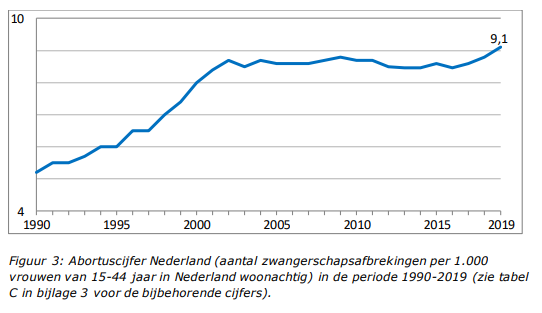
Abortion rates there are still low by comparison with Sweden and the UK, but they continue to grow, according to a new report. The abortion rate (number of abortions per woman) and ratio (number per pregnancy) have never been so high.


The report also showed that 17 Irish women had an abortion in the Netherlands in 2019. There were 18 in 2018. This means that there was no significant difference in numbers after the referendum and the introduction of abortion in Ireland.