martedì, giugno 29, 2021

Ireland’s abortion rate increased last year


A total of 6,577 women had an abortion in Ireland in 2020, according to a report presented today by the Department of Health. That is slightly down on the figure of 6,666 in 2019, but the ratio (number of abortions per live births) is up, because fewer women became pregnant last year, so it is very bad news.

As 194 women with an Irish address also had an abortion in England in 2020, the total recorded number for last year is 6,771.

In terms of absolute numbers there was no substantial difference (-1.3%) compared to 2019, when 6,666 women had an abortion in Ireland and 375 went England.

But if we look at the number of recorded pregnancies, in 2020 the number of them that ended in abortion was higher than the previous year.

As there were 55,959 live births in Ireland in 2020, the abortion ratio, which is calculated per 1,000 live births, is 120.9. It was 117.7 in 2019. We would have hoped that lockdown might have caused a substantial fall in both the number and rate of abortions, but that did not happen.

The abortion rate, calculated per 1,000 women aged 15-44, was 6.6 in 2020 and 6.9 in 2019.

It is interesting to understand how the lockdown influenced conceptions, abortions and births.

Between January and April 2020, 2,554 abortions were performed in Ireland. This is a 20% increase compared to the same period in 2019 (2,161).

Those babies were all conceived before the lockdown. From May to December 2020, 3,965 terminations of life were carried out, 10.6% less than the previous year.

So, the number of abortions grew until the pandemic began and then declined during the lockdown. Part of this is surely due to the fact that fewer casual and unplanned pregnancies happened during these months.

lunedì, giugno 28, 2021

All Irish MEPs vote in favour of declaring abortion a ‘right’


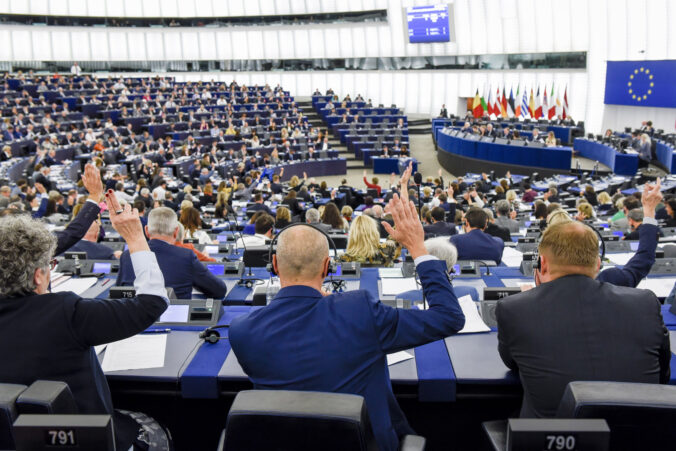
A new report that presents abortion as a ‘human right’ and would undermine conscientious objection was approved by the European Parliament last week. Every Irish MEP voted in favour of it. The report does not have the force of law behind it, but it is all part of an effort to shift the EU in an ever more pro-abortion direction, to make a ‘right’ to abortion a ‘European value’.

The Matić report is a long document covering sexual health and so-called “reproductive rights”, which include abortion, sterilisation, prenatal screening, etc. It is named after the Croatian MEP Predrag Fred Matić, from the Socialists and Democrats Group, who acted as a Rapporteur.

The report falsely presents abortion as a right but no international treaty recognises a “right to abortion” and the European Court of Human Rights has held that a woman’s right to privacy does not imply a right to abortion.

The resolution approved by the European Parliament last week calls for the removal of all barriers to access abortion, and these barriers would include conscientious objection of healthcare professionals.

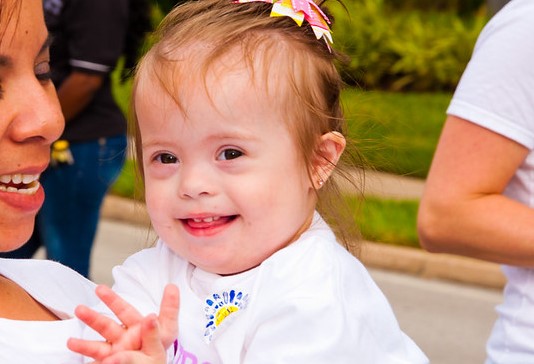
It deceitfully claims that the denial of abortion on grounds of religion or conscience “endangers women’s lives and rights” and it also “hinders access to prenatal screening”. We know that prenatal screening is often used to select and abort children carrying a disability, such as Down Syndrome.

The typical language and concepts of the most radical activists appears in the Matić report. Conscientious objection, which is recognised and protected by the Charter of Fundamental Rights of the European Union, is presented in the Matić report as “refusal of medical care”.

Another example of its radical ideology is in the use of ambiguous expressions such as “pregnant people” or “pregnant person”, rather than “pregnant women”. This attempt to employ so-called “inclusive language” as a matter of fact erases women and their absolutely unique role in bringing a child into the world.

Critics of this extremely ideological document have highlighted that it is an affront the sovereignty of the EU Member States. The fields of health and education belong to the Member States and this document overreaches the competences of the European Union.

Several European bodies have acknowledged that the power to legislate on abortion and health matters lie with the different States. The European Union cannot impose the “right to abortion” on its members and this is particularly significant as Malta, for instance, is an EU state and has resisted international pressure to liberalise its abortion laws so far.

The Matić report has no binding legal value but such resolutions are often used by member states to introduce and legitimise changes in their national legislation.  They are also used by activists to strengthen their positions in court cases or in political campaigns. While lacking legal authority, such documents can still have a profound impact in national and international parliaments and courts. A similar report was rejected in 2013.

This time it has found support from all the left parties in the EU parliament, but also from significant sectors of the centrist European Popular Party, of which Fine Gael is a member, and from the Renew group, which includes Fianna Fail.

Bishop Kevin Doran has commented on Twitter: “Very disappointing to see the every Irish MEP voted today against the right to freedom of conscience which is recognised in the Universal Declaration of Human Rights and in favour of the non-existent human right to abortion. God bless our healthcare professionals.”

On the same day when the Matić report was approved, an attempt to discredit pro-life organisations was rejected. To mark the 25th anniversary of the International Conference on Population and Development in Nairobi, a resolution was approved by the EU parliament.

An amendment to this resolution, presented by the Left Group but rejected by the parliament, expressed concern that important international pro-life organisations were included in the EU transparency register and “authorised to work openly with public institutions for the decline of women’s rights, and sexual and reproductive health rights”.

martedì, giugno 22, 2021

Catholic pupils now being bullied in schools


Children who are practising Catholics are being targeted for bullying in school, according to the director of Dublin City University’s Anti-Bullying Centre. They are now a minority to be protected.

Professor James O’Higgins Norman was speaking last week at the Oireachtas Committee on Education, about the topic of school bullying and the impact on mental health.

Addressing the issue of Catholic children being bullied in mainly Catholic schools, he said: “We are in a particular place in our society now, we have become pluralist, things have changed, and it is no surprise that people who practise religion, and maybe practise the Catholic religion, are increasingly in the minority, especially young children and teenagers in school. So, one of the studies we have done recently has shown a concern among religion teachers about what they are observing among students who are practicing Catholics and are being targeted for that, more than a concern about kids who are not practicing a religion.” 

Professor O’Higgins Norman was referring to a study, to be published at the end of the summer, and authored by two members of the DCU’s Anty-Bullying Centre: Amalee Meehan and Derek Laffan.

The research, entitled “Inclusive Religious Education: The Voices of Religious Education Teachers in Post-Primary Schools in Ireland: Identity, bullying, and inclusion”, focuses on students aged from 11 to 16 and found that religion teachers have concerns about those who practice religion, as they would be targeted for bullying more than those who do not practice.

“15 or 20 years ago we were talking about homophobic bullying and that was a focus of bullying in school, it was a concern for anyone, and now today here we are talking about the possibility that children who practice a religion might be the ones who have been targeted for bullying”, Professor O’Higgins Norman told the Oireachtas Committee.

He explained that the outcome of the study agrees with similar research conducted internationally. This research suggests that when a particular worldview loses its dominant position, those who are still following that worldview would be seen as old-fashioned, as out of the mainstream culture and they would targeted more by others. This is happening in Ireland with regard to the Catholic religion, according to Prof. O’Higgins Norman. Those who are still practising, a minority, stand out and are bullied for being different.

During the hearing, Senator Ronan Mullen asked Prof. O’Higgins Norman whether a hegemonic media culture hostile to religion could be part of the problem.

Prof. O’Higgins Norman agreed with this suggestion. He said: “The predominant peer culture among children and adolescents in schools is influenced by their family, their parents, wider media so on, and in our current context, those who are going against the grain or standing out, they will of course then be more likely to be targets for bullying, so well if that’s for religious reasons or for other reasons.”

DCU’s Anti-Bullying Centre recommended raising awareness “of the vulnerability of students based on identity, for example Catholics, LGBTQ+, Ethnicity, etc.” This is surely the first time that practising Catholics are considered a minority to be protected. A sign of how much the mainstream culture has changed in Ireland, and not for the better.

lunedì, giugno 14, 2021

More Irish opting for eugenic abortion


The number of abortions in England and Wales hit a record high last year, and the number of Irish women travelling there to abort unborn children with Down Syndrome and other abnormalities has also increased, in line with growing acceptance of eugenics across the Western world.

In 2020, 209,917 women had an abortion in England and Wales. This was despite the extended lockdown. This is the highest number since the Abortion Act was introduced and it also represents the highest rate ever (18.2 per 1,000 women of fertile age).  Scotland also registered the highest historical rate last year.

The number of aborted babies is even higher than those figures as some women were expecting more than one baby.

194 women listed as resident in Ireland had an abortion in England in 2020, a 48pc drop from 2019, when Ireland’s liberal abortion law went into operation. Many went to England because the foetus had non-fatal disabilities and, after 12 weeks of gestation, it cannot be legally killed in Ireland for this reason. Many diagnoses of disabilities are made after 12 weeks.

In spite of the decline in numbers travelling to England, the number of Irish babies with Down Syndrome aborted there went from 17 in 2018, to 27 in 2019 reaching 35 last year.  Other conditions included three babies with spina bifida, one with cleft lip and palate.

The IFPA, together with other campaigners, want abortion for non-fatal abnormalities to happen in Ireland too.

The increasing number of Irish women opting to abort children with Down Syndrome could be due to more women availing of screening programmes and also greater social acceptability for what amounts to eugenics.

The number of English women opting to abort babies with Down Syndrome also increased to 693, a rise of 6pc from 2019, although this may be an underestimate.

The abortion rate in England and Wales continues to decline for girls age under 18, going from 16.5 to 6.9 per 1,000 between 2010 and 2020. This is a general trend in Western countries. But the rate for all other age groups has increased in the last 10 years.

In 2020, more than half of women over 30 undergoing abortion had one or more terminations before. Repeat abortions are now more and more common in the UK.

81pc of women who had terminations in England and Wales in 2020 were single. 51pc were single with a partner. This proportion has remained fairly constant in the last decade.

The report gives an idea of how the Covid pandemic impacted on the phenomenon of abortion.

In the first three months of 2020, before lockdown, the number of women undergoing abortion in England and Wales rose by 4.1pc compared to the first quarter of the previous year. After a spike in April (+28.7pc), just after lockdown was imposed, the rest of the year saw no substantial difference when compared to the previous one.

With regard to the 194 Irish women who travelled to England for abortions in 2020, 101 did so in the first half of the year and 93 in the second half when it was much more difficult to travel.

Another result of Covid restrictions can be seen in selective terminations, which is when only one child in a multiple pregnancy is killed. In England they decreased from 126 in 2019 to 65 in 2020. They generally happen after an IVF treatment, when multiple embryos are produced artificially, then moved into the womb and eventually selected if the couple do not want as many as have survived. This decline in 2020 is due to fewer IVF treatments happening during the pandemic.

mercoledì, giugno 09, 2021

Why Europe needs a common day of rest


Once upon a time, not so long ago, Sunday was considered a day of rest. But now, like every other day of the week, it has basically been captured by the demands of commerce. So there is no longer a communal day of rest in a lot of countries. This needs to change. There needs to be a European weekly common day of rest, together with the right to disconnect from work, according to a campaign group called the European Sunday Alliance.

The group held an online conference last week, which saw the participation of MEPs from different European parties, and also a representative of the European Commission.

A healthy balance between private life and working time is essential for families, particularly during these difficult times, says the Alliance.

They argue that a work-free Sunday has become even more relevant during the pandemic, when most people work remotely. With more time spent in the house working hours have also extended and now it is more and more difficult to separate work duties from family time. Many employers expect job commitment during the evenings and even the weekends.

A recent report of the Committee On Employment and Social Affairs of the European Parliament notes that “digitalisation has brought many advantages to employers and workers, but also disadvantages, because it can intensify work, extend working hours and increase the unpredictability of working hours, blurring the boundaries between work and private life”

All the politicians taking part agreed with the need to have a common weekly day of rest but had different opinions though on what is the best policy to implement this.

In January, the European Parliament called on the European Commission “to propose a law that enables those who work digitally to disconnect outside their working hours. It should also establish minimum requirements for remote working and clarity working conditions, hours and rest periods”.

A right to disconnect means the possibility to separate, on a regular basis, family or leisure time from working hours. This is beneficial not only to the workers but, ultimately, also to society at large. During a day of rest we can spend more time with others, engaging in social activities, volunteering, sport, faith-related activities, travels, holidays, etc.

In most  European countries, Sunday is traditionally the day of rest from work. This is the heritage of the Christian tradition. Precisely 1,700 years ago, the Emperor Constantine decreed Sunday to be a day of rest protected by law. Nonetheless, many countries, including Ireland, allow businesses to run seven days a week. This has a profound impact on workers and their families.

The European Sunday Alliance is a network of trade unions, religious bodies and civil society organisations that want to raise awareness of the importance and value of a weekly day free from work. They also, ask for legislation at EU and Member States levels to be “more protective of the health, safety, dignity of everyone and should more attentively promote the reconciliation of professional and family life”.

Notably, there were no Irish speakers. This is simply not an issue in Ireland. It should be.

giovedì, giugno 03, 2021

venerdì, maggio 28, 2021

Push on to make Ireland’s abortion law even more permissive


This week saw the third anniversary of the abortion referendum. A review of the abortion law at the three-year stage was promised by the Government and to mark the occasion, the National Women’s Council in Ireland (NWCI) has released a major report that seeks to make Ireland’s already very liberal abortion regime even more permissive. Among other things, they want to remove the three-day waiting period and totally decriminalise abortion.

At present, abortion can be obtained for any reason up to 12 weeks, which is when the vast majority of terminations take place. The NWCI want to extend this limit into the second trimester of pregnancy – up to 24 weeks – which means abortion-on-demand even when the baby could survive outside the womb.

As mentioned, they want the complete removal of the three-day waiting period. A cooling-off period between asking for, and receiving an abortion, is quite common in other countries. For instance, it is seven days in Italy, six days in Belgium, five days in the Netherlands, and it gives the mother some time to consider an irreversible choice.

The current legislation allows abortion up to birth if the foetus is expected to die within 28 day of birth due to a potentially fatal condition.

The NWCI want a complete removal of any time limit. It means that a baby which could live for months, or even years after birth, could be killed in the womb, or else delivered alive and left to die.

Moreover, they want the State to cover all the medical and travel costs for those who have abortion abroad. This would include “claim expenses around the repatriation of remains and funeral arrangement”. No such provision exists for similar abortions carried out in the country.

The NWCI want to ban prayers or protests outside abortion facilities. No other European country has similar bans and Garda Commissioner Drew Harris has said that exclusion zones outside abortion facilities are not needed.

The document also says: “Conscientious objection should not be permitted to obstruct access to abortion care”. It is not clear what this implies but the NWCI think that the State should be collecting data about conscientious objections. This could have a chilling effect on the right.

Currently, in nine of the 19 Irish maternity hospitals abortions are not offered because of conscientious objectors. The NWCI want abortions in every maternity hospital and are demanding fast-tracked medical appointments to fill the gaps. As a consequence, doctors would be recruited only if they are not conscientious objectors. What will happen to them if they change their mind? This would undermine the basic principle of freedom of conscience.

The NWCI document also requests maternity hospitals to offer priority ultrasound access to women seeking abortions, over any other expecting mother. They want all “abortion services” to be free for all, including illegal immigrants, and they are asking to remove the requirement for an Irish address.

In addition, they want the definition of ‘health’ broadened to the greatest possible extent so that, in practical terms, abortion is available on-demand at any point in the pregnancy.

As we can see, the abortion lobby in Ireland is not satisfied with the huge victory they achieved three years ago. They are now seeking to extinguish the right-to-life of the unborn even more. It is more urgent than ever that the pro-life movement keep the humanity of the unborn before the public and never let it be lost sight of.

lunedì, maggio 24, 2021

Pain-relief must be compulsory for late-term abortions

A group of pro-life TDs has presented a Bill that would require doctors to give pain-relief medication to a foetus before it is aborted.

There is scientific evidence that babies in the womb can feel pain. In fact, it would be stunning if beyond a certain stage of development, a foetus, being a living human being, could not feel pain. Recent studies suggest that this can happen as early as 13 weeks.

Pain-relief medication is routinely administered as standard medical practice by foetal surgeons who operate on unborn babies but there is no such requirement for abortions.

The Bill, presented by the Life and Dignity Group and other pro-life TDs, requires the administration of anaesthetic or analgesic to a foetus that has reached or exceeds 20 weeks of pregnancy, or when it is likely that it will suffer pain.

This is similar to an amendment proposed when the current abortion legislation was debated in the Oireachtas in 2018. At the time, Minister for Health, Simon Harris rejected the proposal on the basis that such provisions should not be in primary legislation but rather in the medical guidelines.

Minister Harris said: “I cannot write the clinical guidelines, … our clinicians know how to carry out procedures and operate in an ethical manner in accordance with the Medical Council. I have absolutely no doubt about that. Our doctors go into hospitals every day to ease pain and I have no doubt that all these issues will be considered when the clinical guidelines are being drawn up. What we cannot do in this House is don the white coats and the stethoscopes and become obstetricians and gynaecologists. We are policymakers. Pain relief and care pathways come from doctors, not politicians.”

But Minister Harris is wrong for two reasons. Firstly, the onus on veterinary doctors to administer pain relief to animals when performing procedures is covered in primary legislation and so there is no reason why similar provisions cannot be put in place with regard to human pain. Animals are treated better than unborn children.

Moreover, three years after the abortion referendum, no guidelines appear to have been issued by any hospital or professional medical body in Ireland that prescribe foetal pain relief in case of abortions. This is why this Bill is necessary.

The guidelines issued in January 2020 by the Institute of Obstetricians and Gynaecologists in Ireland do not mention pain relief to the baby when presenting the various types of abortion procedures.

Things are different in other countries. The French College of Obstetricians and Gynaecologists, for instance, recommends that doctors administer pain relief to unborn babies before late-term abortions. And close to 20 states in the US also have laws ensuring that babies are given pain-relief before late-term abortion.

When presenting the Bill to the Dáil, Deputy Carol Nolan said: “The infliction of unnecessary or avoidable pain on human beings, especially those with no capacity to resist, is something that all compassionate societies should seek to avoid. Thankfully, in most areas of modern medicine, this principle is routinely adopted in practice. This is why medical ethics require that surgical procedures, both routine and major, are carried out with the use of anaesthetics and analgesics, except in extreme circumstances where this is not possible.”

After being introduced on the 12th May, the Pain Relief Bill is now before Dáil Éireann and it will be debated after the Summer recess at the earliest. 

martedì, maggio 11, 2021

Why vaccine passports must not be compulsory


‘Vaccine passports’, if they are introduced, are documents which would certify that someone has been vaccinated against Covid-19. Without them, you might not be able to access certain places or services. There is even concern churches might insist on them for access to worship. But they are morally problematic for a number of reasons.

Of course, authorities have a right, and also a duty, to protect public health, but the necessary measures have to be proportionate and should not infringe basic rights.

Personally speaking, I believe I have a moral duty to be vaccinated. But I also believe that this must be voluntary, and the State (and private organisations as a general rule) have no right to impose a Covid-19 vaccine on citizens.

Every medical treatment should be based on consent. If excessive burdens are imposed on those who do not want, or cannot get vaccinated, this becomes de facto a form of coercion.

A refusal to be vaccinated should be respected. Some people might have moral or philosophical reasons to object to vaccines and, unless they become dangerous to others, it is their right to follow their conscience.

Requiring people to prove they have received the Covid vaccination to access certain places or services is equivalent to punishing those who have not received it. It creates two classes of citizens, and one has more rights than others.

An alternative to insisting that someone who boards a flight (say), has been vaccinated, is to ensure they test negatively for the virus before they embark.

Another negative effect of requiring vaccine passports is the possibility of diminishing public confidence in health authorities. Hesitant citizens will become even more suspicious if public health measures are enforced with a punitive attitude.

Vaccine passports are not per se immoral. Restrictions can be introduced when the circumstances require them, but only on a limited basis and they must be proportionate to the actual threat that unvaccinated people pose to the rest of society.

It is also important to distinguish common or essential activities from non-necessary ones. People should not be prevented accessing necessary services.

The use of vaccine passports instead would be more acceptable, for instance, to restrict those travelling from countries with a high level of infection, as they are more at risk, but it should not be the norm for the general population. Again, passengers could be tested for the virus before boarding.

Concerns similar to the ones outlined above have been expressed by a letter signed by more than 1,200 church leaders in the UK, warning that introducing vaccine passport would create a “medical apartheid”.

“This scheme has the potential to bring about the end of liberal democracy as we know it and to create a surveillance state in which the government uses technology to control certain aspects of citizens’ lives,” the letter said.

The Anscombe Bioethics Centre, a Catholic institute based in Oxford, has produced a detailed document in response to the UK government call for consultation on vaccine passports. They claim that “if applied widely, [vaccine passports] would undermine the voluntariness of vaccination and constitute unethical coercion. They would also very likely be socially divisive and raise questions in relation to equality law.”


martedì, maggio 04, 2021

Covid-19 caused a bigger decline in Catholic weddings than civil ones. Why?


 What effect did Covid-19 have on the number of weddings that took place in Ireland last year compared with 2019? As you can imagine, a very big effect. In fact, the figure halved, but the reduction in the amount of Catholic weddings was bigger than in the number of civil weddings. Why might that have been?

2020 has been an exceptional year because of the pandemic, and it would be pointless to compare the 2020 statistics with the previous year to infer some sort of trend, but it is interesting to analyse in details what has happened to avoid rush conclusions.

There were 9,209 opposite-sex marriages in Ireland in 2020, about half the number for 2019 (19,673) and 2018 (20,389), according to the recently released figures from the CSO 53pc less, to be more precise.

Same-sex marriages also halved from 640 in 2019 to 314 in 2020, which represents a 51pc decline.

The 2020 opposite-sex marriage rate for 1,000 population was a mere 1.9. This figure was 4.7 in 2015 and 4.0 in 2019, and it means that less people are getting married. The rate has been constantly declining since the 1980s, particularly so in recent years, and it has now reached approximately the same level as in the UK.

While a general drop in the number of weddings was easily predictable, the fact that the number of civil weddings surpassed Catholic weddings for the first time certainly stood out.

While religious marriages overall were still slightly more frequent (50.2pc) than non-religious ones (49.8pc), civil ceremonies (3,779) were more popular than Catholic weddings (3,295) in the year of the pandemic.

Atheist Ireland claimed that these figures show that Ireland is no longer a Catholic country, but I am afraid they may be disappointed to discover that most likely not the case.

The reason for this temporary decline seems quite simple: of all weddings, civil ones are the least likely to be postponed. A closer look at the statistics will prove my point.

When we compare the distribution of marriages through the year, we see a sharp decline in April, May and June 2020, and another decline in November. December, instead of the traditional August, was the month with most weddings in 2020.

Many marriages were postponed last year but, if we look at the statistics, it is clear that civil marriages were postponed less than other marriages. For instance, compared to the previous year, civil marriages saw a 43pc decline, while all marriages went down 53pc and Catholic marriages dropped 63pc. This is not because Ireland has suddenly become far less Catholic but because the couples who marry in a church are more likely to want a big day and so they are more likely to be postponed in a period of uncertainty, while civil ceremonies in a registry office are likely to be smaller affairs.

If we look, for instance, at same-sex marriages we discover that in 2020 civil ceremonies represented 72.6pc of the overall number, while they were 62.2pc the previous years. Humanist and Spiritualist ceremonies for same-sex marriages went from 29.7pc combined in 2019 to 20.7pc in 2020.

If we look at non-religious ceremonies, civil weddings went up from 31.6pc in 2019 to 42.1pc in 2020 while Humanist ceremonies went down from 9.4pc to 7.8 pc. The explanation is the same as above: civil marriages are the least likely to be postponed.

Spiritualist marriages also went down from 8pc of the total in 2019, to 6.7pc last year. These often take place in hotels and involve couples who don’t marry in a church but want a religious element to their wedding.

There is another important factor to consider.

First marriages went down 55.4pc in 2020, compared to the previous year. But marriages involving at least one divorced person went down by ‘only’ 41.8pc. This shows that those who are marrying for the first time were more likely to postpone their big day compared to those who were remarrying. And given that Catholic marriages generally do not involve someone who is divorced, this factor also contributed to the temporary decline of Catholic ceremonies in 2020.

In 2020 marriages were postponed for very practical reasons and, the more complex the ceremony, the more likely this happened.

This is not to say religious marriages are not declining in number anyway overall, but last year was unique for the reasons given above. 2021 is still an exceptional year but, as we will be back to normality, some anomalies that we saw in the 2020 figures will likely also disappear.