venerdì, agosto 26, 2022

Political ideology as a substitute for religion


Politics has become a substitute for religion and ‘social justice warriors’ are today’s Puritans, a new BBC documentary claims.

Helen Lewis, who was raised Catholic but is now an atheist, has produced a new documentary for BBC Radio 4 in which she explores the thesis that contemporary social justice movements have the same characteristics that used to be typical of religion.

As she explains in an article for the Atlantic magazine, with the decline of organised religions, “we might expect that religious concepts—repentance, hellfire, heresy, apostasy—would have become less salient as a result. But that’s not the case. For some activists, politics has usurped the role that religion used to play as a source of meaning and purpose in our lives, and a way to find a community.”

She thinks that human being always long for shared values, for a sense of belonging and for meaning. Many young people might find all this in ‘social justice movements,’ which is to say, in left-wing or environmental activism, more than in churches, but there striking similarities between the new and old orthodoxies.

Taking the knee to fight racism, for instance, is a direct inheritance from religious celebrations. Announcing your pronouns is a ritual that “shows allegiance to a common belief, reassuring a group that everyone present shares the same values”, she says.

Lewis claims that social justice groups are not necessarily more inclusive or respectful of differences. They have inherited not only the positive elements but also the worst characteristics of religion, such as intolerance and prejudice.

“I know a lot of LGBTQ+ young people who say it’s harder to come out as Christian in an LGBT space than LGBT in a Christian space”, a cleric of the United Reformed Church, one of the most liberal Christian denominations, told Lewis. The minister identifies as ‘gender non-binary’.

Helen Lewis notes that “treating politics like a religion also makes it more emotionally volatile, more tribal (because differences of opinion become matters of good and evil) and more prone to outbreaks of moralizing and piety.”

A fundamentalist fervour pervades the public presence of social justice warriors, she claims. Those who do not conform to the new orthodoxy are ‘burnt’ as heretics on social media or cancelled from public life.

Lewis is correct, even if her thesis is not particularly original. The same was often observed about the secular ideologies of the 20th century by philosophers like Eric Voegelin. It is true that human beings are always searching for truth and meaning. We are also ritualistic; our values are embodied in collective symbolic actions and recurring celebrations.

We have a deep desire for something that transcends our daily lives and politics can become an attempt to find salvation in this world, rather than in the next.

The BBC documentary proves that human nature doesn’t really change: religion is an essential part of what we human beings are, even when if it can find new forms.

venerdì, agosto 19, 2022

Liberals still ignore the fact that family structure matters


In England in 2021, for the first time a majority of births took place outside marriage. In Ireland, the figure is now above 40pc.

Covid-19 might have contributed to those figures, as many couples have delayed their plans to marry during the pandemic while they continued to have children, but the trend is clear: the percentage of births outside of marriage has grown constantly since the 1970s. It was 11.8 in 1980, 28.3 in 1990 and 39.5 in 2000.

In Ireland, last year 41.4pc of all births were registered outside marriage. A substantial increase when compared to the year 2000 (31.5pc) or 1990 (14.6pc).

Some might say that this is a purely private matter, but it’s not true, because family structure is important and the evidence remains that children tend to fare best when raised by their own two, married parents.

According to new figures from the Office for National Statistics, in 2021, 51.3pc of births were to unmarried parents compared to 49pc in the previous year.

Covid-19 might have contributed to those figures, as many couples have delayed their plans to marry during the pandemic while they continued to have children, but the trend is clear: the percentage of births outside of marriage has grown constantly since the 1970s. It was 11.8 in 1980, 28.3 in 1990 and 39.5 in 2000.

In Ireland, last year 41.4pc of all births were registered outside marriage. A substantial increase when compared to the year 2000 (31.5pc) or 1990 (14.6pc).

Marriage is a social institution, with a specific role, and the family structure children are born in and raised should be everyone’s concern.

The main social purpose of marriage is to give children a mother and a father who are publicly committed to their family. Marriage is a child-centred institution and study after study show that children do best when they are raised by their married parents.

Marriage adds stability to the family, compared with cohabitation, and therefore it is good from the point of view of children welfare.

This much is borne out again by a recent study from the British-based Centre for Social Justice (CSJ)  called ‘Family Structure Still Matters’.

It refers to the British Millennium Cohort Study (MCS), which followed the lives of 19,000 young people in the UK. The study shows that children born to cohabiting parents were far less likely to be living with both their parents by the time they were 5 years old, compared with children born to married parents.

This has an effect on children. As the CSJ reports says: “Children of married parents displayed the lowest rates of cognitive delay; the highest rates were found in children of stepfamilies. MCS children who had experienced family structure change had lower cognitive assessment indicators and higher behaviour problems at age 5, compared to those who had not”.

It continues: “Children model behaviours they observe, and challenging conduct may correlate with experiencing disrupted attachment and regular conflict in the home.  …. Compared to children living with married parents, children who lived in other family types, including other stable families, were more likely to display externalising behavioural problems at age 5, even after adjustment for a range of socio-economic, demographic and health factors. Income, a common explanation for this difference, interestingly bore no correlation with behaviours.”

The issue of family structure is now completely neglected by liberals despite the evidence that it matters. Children born outside of marriage tend to perpetuate the family structure they have experienced themselves, and this has long-term consequence on society.

“Parents are children’s first role models. Their relationship is the template children will copy. Boys who grew up with a single parent or who experience multiple transitions have a substantially higher likelihood of becoming fathers early, are less likely to marry and are particularly likely to become non-resident fathers.”, says the Centre for Social Justice.

Liberals don’t want to confront the consequences of their overemphasis on adult autonomy despite the detrimental consequences this can have for children, but the growing number of children born outside marriage should be everyone’s concern. They prefer to ignore this inconvenient fact instead.


venerdì, agosto 12, 2022

Archie Battersbee case was not black or white


The recent case of Archie Battersbee, who had his life support machine turned off after a long legal battle and against the wishes of his parents, raises questions on whether and when it is morally permissible to do this, and who should decide.

The 12-year-old boy suffered brain injury while at home in London, in April, and he was soon declared “brain-dead”. The family contested this diagnosis but after six hearings in different UK courts, a decision of the European Court of Human Rights and even the intervention of a UN Committee, last week the judges ordered the ventilation to be withdrawn.

The main difficulty in Archie’s case was to establish whether he was already dead. The very concept of “brain stem death”, which is not defined in the UK common law or statutes, was disputed in court. (The Christian Legal Centre, which helped Archie’s family, explain well the technical difficulties of such definition here)

There are cases when it is morally permissible, in certain circumstances, to switch a person’s life-support machine off. Each case should be addressed in its individual merits but there are some general ethical principles to take into consideration.

The first principle is that death should be never intentionally procured. It is always wrong to kill patients or facilitate their suicide, and this is the reason why euthanasia and assisted suicide are always morally wrong.

On the other side, it is morally permitted, and sometimes even required, to withdraw or withhold a treatment when it is futile or harmful, even if the unintended consequence is the acceleration of the death of the patient. A treatment should always be proportionate and foremost in the interest of the patient.

In other words, there is no moral duty to artificially prolong the life of a terminal patient whose cerebral functions are irreversibly lost.

The final decision should involve the medical professionals, the family, and also the patients if they are in the condition to express their opinion or have given instructions in advance.

Even when death is inevitable, the interest of others involved, particularly parents and siblings, has to be taken into consideration as they also need time to come to terms with their tragic loss.

In the case of Archie Battersbee, the judges acknowledged that he was not in pain and he had previously expressed a wish to be kept on life support if found in such circumstances, but they still deemed that this was not in his best interest. This ruling led to a harsh dispute between the courts and his family, which wished for their child what they considered a more dignified death, “in God’s time, in God’s way”.

Archie’s case is the latest in a long list of similar situations where health authorities have come into conflict with the wishes of a child’s parents, and the courts have ruled against the parents.

The Anscombe Bioethics Centre denounced “a systematic lack of respect in English law for the role and responsibilities of parents in such cases”. 

They have accused the British medical and judicial establishment of a peculiar form of paternalism, which is not seen in other countries, for not taking expressions of a wish to receive treatment and live with the same seriousness as they take expressions of a wish not to receive treatment.

The Anscombe Bioethics Centre has called for changes in the law and a government review to avoid further conflicts between the parents and hospital authorities.

mercoledì, agosto 10, 2022

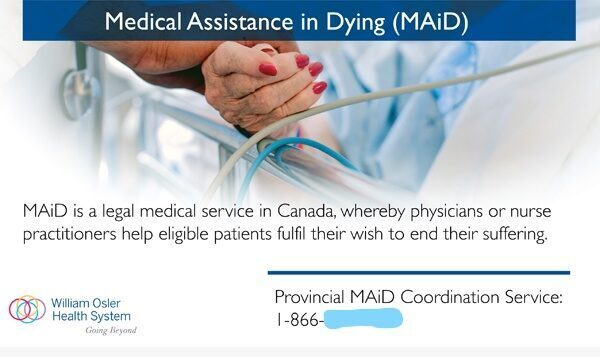
Over 10,000 Canadians died by euthanasia last year


Over 10,000 Canadians died by euthanasia in 2021, 32pc more than in the previous year, according to a new official report. It shows once more that when you open the door to euthanasia and assisted suicide, the numbers availing of them rise rapidly and social norms change. It’s worth look at the report in some detail, because it provides a window into what might happen here in the future.

A figure that stands out is that 36pc of those who died by euthanasia said they perceived themselves to be a ‘burden’ to their family, friends or caregiver. More than 1,700 said they suffered from ‘isolation’ and ‘loneliness’. A compassionate country offers something better to the sick and lonely than death by gas or injection.

Canada introduced euthanasia and assisted suicide for terminally ill people in 2016 and then the grounds for them rapidly expanded.

The total number of those who availed of ‘medical assistance in dying’ (to use the euphemism) since its introduction in 2016 up to the end of last year now stands at 31,664.

The figure for last year represents a tenfold increase compared to 2016 (1,018) and accounted for 3.3pc of all deaths in Canada. There are geographical variations but in British Columbia almost one in every 20 deaths occurs by euthanasia.

The law allows assisted suicide in the form of self-administration of lethal drugs but this happens rarely. There were only seven such cases in 2021. Almost all patients are directly killed by a doctor or a nurse (that is, by euthanasia). The majority (52.3pc) of them were men. The total average was 76.3 years, 77 for women and 75.6 for men.

Legislative changes in 2021 extended euthanasia to individuals for whom ‘natural death was not reasonably foreseeable’. They might have a non-terminal but incurable illness and be far from natural death. They could suffer from a disability or else experience psychological or physical suffering. This is very broad-ranging indeed.

A total of 219 individuals who availed of euthanasia fell into this category. As euthanasia has been available to the non-terminally ill only since June 2021, the figure in the report covers only half of the year, and the number of such deaths will likely double next year and then rise from there.

The average age of non-terminal patients who were euthanised was 70.1, six years lower than the average terminal patients. 37pc of non-terminal deaths occurred in the 18-64 age cohort. 

The most commonly cited source of suffering, for all sort of patients, was the loss of ability to engage in meaningful activities (86.3pc). More than 3,500 said they perceived to be a burden to the family, friends or caregiver and more than 1,700 suffered isolation and loneliness. 

The term natural deaths that are ‘not reasonably foreseeable’ requires a bit of unpacking. You might say that the natural death of an elderly person with a chronic illness is ‘reasonably foreseeable’, but they are not terminally ill as such. Such a person would qualify for euthanasia. The 219 people whose natural deaths were not ‘reasonably foreseeable’ were presumably years away from natural death, but they were able to avail of euthanasia anyway.

Only 4pc of the requests for euthanasia were refused because of ineligibility, while about 2pc withdrew their request.

The most common underlying medical condition among terminally-ill patients was cancer (65.6pc) while for non-terminal patients it was neurological (dementia or Alzheimer).

The report does not offer details of the socio-economic characteristics of the patients but we know from other reports – Oregon for example – that white and university educated people are over-represented.

Canada proves that the slippery slope is real and once euthanasia and assisted suicide are introduced, the eligibility criteria expand with time and also the numbers tend to grow.

domenica, agosto 07, 2022

Adorare

 “Quando gli uomini abbandonano l’adorazione di Dio e dei santi prendono ad adorare se stessi. L’Io si presta ottimamente a questo culto perché il proprio Io è un modello di perfezione, e soprattutto non è possibile metterne in dubbio l’esistenza. Il culto di noi stessi ha il grande vantaggio di essere culto di qualche cosa che certamente esiste, la cui presenza è certa, a portata di mano e, per noi, oggetto di sconfinata ammirazione. Ma adorare, per la natura stessa dell’atto, significa pagare un tributo, che deve necessariamente rivolgersi a un oggetto esterno. Il culto di noi stessi non può dunque attuarsi che in una forma riflessa. La forma più corrente di questo culto è quella che ha per suo oggetto l’umanità. Dal culto dell’umanità ci vengono religioni come quella del Socialismo, della Fratellanza Universale, del Credo della Bontà Universale e simili.”


Hilaire Belloc (1870 – 1953), Saggio sull’indole dell’Inghilterra contemporanea (An Essay on the Nature of Contemporary England,1937)

domenica, luglio 31, 2022

L’ Irlande va légaliser la location d’utérus


Une commission parlementaire irlandaise a proposé de reconnaître la maternité de substitution commerciale, une pratique interdite dans toute l’Europe à l’exception de la Russie, de l’Ukraine et du Biélorussie.

Dans certains pays, dont l’Italie, on discute de la manière de punir ceux qui ont recours à ce qu’on appelle la “location d’utérus” en se rendant à l’étranger pour acheter. Au contraire, l’Irlande, désormais perdue dans une dérive hyper permissive, va dans la direction opposée, une direction qui pourrait même en faire la nouvelle destination du tourisme procréatif, maintenant que la guerre a submergé les destinations très traditionnelles.

En février, le ministère irlandais de la santé a présenté un projet de loi visant à réglementer diverses formes de fécondation assistée, dont précisément la “maternité de substitution”. Toutefois, le gouvernement n’avait pas l’intention de s’attaquer à la question de la reconnaissance des naissances de mères porteuses à l’extérieur du pays. Pourtant, après une campagne médiatique à laquelle ont participé des personnalités du monde du spectacle qui avaient elles-mêmes eu recours à des mères porteuses à l’étranger, le Parlement a décidé de créer une commission ad hoc, qui a présenté ses conclusions déroutantes.

Le projet de loi du gouvernement n’autorise que la “maternité de substitution” dite “altruiste”, mais permet en même temps le remboursement des “dépenses raisonnables” engagées par la “mère porteuse”. C’est-à-dire non seulement les frais médicaux au sens strict, mais aussi toute perte de revenu sur une période de 12 mois, ce qui pour de nombreuses femmes, représente une somme d’argent considérable.

En fait, l’un des experts appelés à témoigner, a déclaré à la commission que “selon le projet de loi, il est possible de payer une mère porteuse irlandaise pour des dépenses raisonnables. Une fois que vous avez calculé la perte de revenu et les autres dépenses, le chiffre peut facilement atteindre 10 000 euros, ce qui n’est probablement pas très différent de ce que les mères porteuses sont payées dans d’autres pays, à l’exception des États-Unis.” En Ukraine, où se rendent généralement les couples à la recherche d’une “mère porteuse”, le revenu moyen par habitant est de 2 500 euros par an.

En bref, bien qu’elle interdise théoriquement la maternité de substitution à des fins commerciales, la proposition du gouvernement laisse en pratique une certaine marge de manœuvre, par le biais de remboursements de frais, ce qui pour de nombreuses femmes plus pauvres, représenterait un véritable travail.

Le rapport de la commission souligne également l’hypocrisie qu’il y a à qualifier d'”altruiste” une pratique impliquant des paiements substantiels et demande donc que le projet de loi soit modifié. Mais le même rapport va plus loin et recommande le paiement de certains services effectués à l’étranger que la proposition du gouvernement interdirait, car ils sont explicitement de nature commerciale. Par exemple, le paiement des agences ou des cliniques qui organisent ou donnent effet à un contrat entre les mandants et la “mère porteuse” est interdit.

Au cours des travaux de la Commission, un seul des participants avait dénoncé les risques de la “maternité de substitution commerciale”, qui transforme le bébé en marchandise et la femme en couveuse. Tous les autres, poussés par une campagne de presse très efficace, se sont montrés disposés à répondre à toute demande de couples ou de célibataires ayant recours à la “maternité de substitution”.

Certains fonctionnaires qui avaient participé à la préparation du projet de loi du gouvernement lors des auditions de la Commission sur la “maternité de substitution” internationale avaient rappelé l’impossibilité d’utiliser un double standard, permettant la reconnaissance d’une pratique interdite dans le pays uniquement parce qu’elle est possible à l’étranger. S’il est mal de louer un utérus en Irlande, pourquoi cela devrait-il être acceptable à l’étranger ?

Mais la Commission indique que, même s’il serait souhaitable que les conditions couvertes par les contrats signés à l’étranger correspondent aux conditions requises dans l’État irlandais, ce principe est presque impossible à appliquer, et la Commission estime donc qu'”il suffit que les conditions médicales et sanitaires fixées par l’État de la mère porteuse soient remplies.”

C’est-à-dire que c’est précisément le double standard qui s’applique et la double morale qui s’applique : être un peu plus strict à l’intérieur, mais fermer les yeux sur ce qui se passe à l’extérieur. Et cela va évidemment augmenter le tourisme procréatif.

Si la proposition de la Commission est adoptée, l’Irlande deviendra le seul État au monde à accorder une reconnaissance juridique aux contrats de “maternité de substitution” étrangers. Maintenant, il y aurait un garde-fou : par exemple, l’enfant doit avoir un lien génétique avec au moins l’un des parents commanditaires. Mais un autre passage du rapport qui laisse perplexe est la conclusion de la Commission selon laquelle une telle exigence dans le projet de loi du gouvernement est inutile si et quand la “maternité de substitution” a lieu en dehors de l’Irlande. Cela signifie qu’un homme non marié pourrait payer une femme pour mettre au monde un enfant conçu à l’aide des gamètes de deux donneurs, qui seront également remboursés. Quelle serait la différence entre cette pratique et l’achat d’enfants ?

Le bébé grandirait sans avoir aucune relation avec la mère génétique, avec le père génétique, avec l’autre mère qui s’est occupée de lui pendant neuf mois et lui a donné naissance, et avec les frères et sœurs génétiques, le cas échéant. Juridiquement, en somme, elle ne sera liée qu’à l’étranger qui l’a commandée, en payant les différents acteurs de cette tragédie. Il semble incroyable qu’un pays autrefois catholique comme l’Irlande ait complètement perdu le sens du lien maternel et soit sur le point d’approuver une pratique aberrante que le reste de l’Europe rejette et condamne.

venerdì, luglio 29, 2022

Ireland to legalize uterus for rent


An Irish parliament committee has proposed recognition of commercial surrogacy, a practice banned throughout Europe with the exception of Russia, Ukraine and Belarus.

In some countries, including Italy, there are discussions about how to punish those who resort to so-called “womb renting” by traveling abroad to procure children that way. Instead, Ireland, now lost in a hyper-permissive drift, is moving in the opposite direction, one that could even make it the new destination for procreative tourism, now that the war has overwhelmed the very traditional destinations.

In February, the Irish Department of Health introduced a bill to regulate various forms of assisted fertilization, including surrogacy. However, it was not part of the government’s intent to address the issue of recognizing births to surrogate mothers outside the country. And yet, after a media campaign that also featured entertainment personalities who had themselves resorted to surrogate mothers abroad, the parliament decided to set up an ad hoc committee that, just in the past few days, presented its puzzling conclusions.

The government bill only allows for the so-called altruistic surrogacy, but at the same time it also envisages reimbursement of “reasonable expenses” incurred by the “surrogate mother.” That is, not only medical expenses in the strict sense, but also any loss of income over a 12-month period, which for many women would represent a substantial amount of money.

In fact, one of the experts called to testify told the commission that, “under the bill, it is possible to pay an Irish surrogate mother for reasonable expenses. Once you calculate the loss of income and other expenses, the figure can easily be as high as 10,000 euros, which is probably not very different from what surrogate mothers are paid in other countries, with the exception of the United States.” In Ukraine, where couples seeking a surrogate usually go, the average per capita income is 2,500 euros a year.

In short, while theoretically banning commercial surrogacy, in practice the government’s proposal allows for some leeway, through expense reimbursements, which for many poorer women would represent real work.

The commission’s report also underscores the hypocrisy of calling a practice involving substantial payments “altruistic” and therefore calls for the bill to be amended. But the same report goes further and recommends payment for certain services performed abroad that the government’s proposal would prohibit, as they are explicitly commercial in nature. For example, payment of agencies or clinics that arrange or give effect to a contract between principals and the surrogate mother is prohibited.

During the Commission’s work, only one of the participants denounced the risks of commercial surrogacy, which turns the baby into a commodity and the woman into an incubator. All others, prompted by a very effective press campaign, have been willing to meet any request from couples or singles resorting to surrogacy.

Some state officials who had helped prepare the bill during Commission hearings on international surrogacy recalled the impossibility of using a double standard, allowing the recognition of a practice banned at home only because it is possible abroad. If it is wrong to rent a womb in Ireland, why should it be acceptable to do so abroad?

But the Commission says that while it would be desirable for the conditions covered in contracts signed abroad to match the conditions required within the Irish state, this principle is almost impossible to enforce, and therefore the Commission believes that “it is sufficient that the medical and health conditions set by the surrogate’s state are met.”

That is, precisely the double standard and the double moral is applied: a little stricter at home, but turning a blind eye to what is happening abroad. And this will obviously give boost to procreative tourism.

If the Commission’s proposal passes, Ireland would become the only state in the world to give legal recognition to foreign surrogacy contracts. However, there would be a safeguard: for example, the child must have a genetic link to at least one of the commissioning parents. But another puzzling passage in the report is the Commission’s finding that such a requirement in the government’s bill is unnecessary if and when surrogacy takes place in Ireland.”

It means that an unmarried man could pay a woman to bring into the world a child conceived using the reproductive cells of two donors, who will also be reimbursed. What would be the difference between this practice and buying children?

The baby would grow up without having any relationship with the genetic mother, with the genetic father, with the other mother who cared it for nine months and then gave birth, and with genetic brothers and sisters, if any. Legally, in short, it would only be linked to the outsider who commissioned it, paying the various actors in this tragedy. It seems incredible how a once-Catholic country like Ireland has completely lost its sense of the maternal bond and is about to approve an aberrant practice that the rest of Europe rejects and condemns.

L’Irlanda sta legalizzando l’«utero in affitto»


Una commissione del parlamento irlandese ha proposto il riconoscimento della maternità surrogata commerciale, una pratica vietata in tutta l’Europa con l’eccezione di Russia, Ucraina e Bielorussia.

In alcuni Paesi, inclusa l’Italia, si discute di come punire chi ricorra al cosiddetto «utero in affitto» recandosi all’estero per la compera. Invece l’Irlanda, ormai persa in una deriva iperpermissivistica, si muove nella direzione opposta, una direzione che potrebbe addirittura farla diventare la nuova destinazione del turismo procreativo, ora che la guerra ha travolto proprio le mete tradizionali.

In febbraio il ministero della Sanità irlandese ha presentato un progetto di legge per regolare le diverse forme di fecondazione assistita, tra le quali appunto la «maternità surrogata». Non rientrava però tra gli intenti del governo affrontare la questione del riconoscimento delle nascite da madri surrogate fuori dal territorio nazionale. E però, dopo una campagna mediatica che ha visto protagonisti anche personaggi dello spettacolo che avevano fatto essi stessi ricorso a madri surrogate all’estero, il parlamento ha deciso di istituire una commissione ad hoc che, proprio nei giorni scorsi, ha presentato le proprie conclusioni sconcertanti.

Il progetto di legge del governo autorizza solo la «maternità surrogata» cosiddetta «altruistica», ma, allo stesso tempo, permette il rimborso di «spese ragionevoli» sostenute dalla «madre surrogata». Non solo, cioè, le spese mediche in senso stretto, ma anche qualsiasi perdita di reddito per un periodo di dodici mesi, che per molte donne rappresenterebbe una cifra sostanziale.

Uno degli esperti chiamati a testimoniare ha infatti detto alla Commissione che, «in base al progetto di legge, è possibile pagare una madre surrogata irlandese per spese ragionevoli. Una volta calcolati la perdita di reddito e altre spese, la cifra può facilmente arrivare a 10mila euro, cifra probabilmente non molto differente da quanto le madri surrogate vengono pagate in altri Paesi, con l’eccezione degli Stati Uniti». In Ucraina, dove solitamente vanno le coppie che cercano una «surrogata», il reddito pro capite medio è di 2mila e 500 euro l’anno.

Insomma, pur vietando in teoria la surrogata commerciale, in pratica la proposta del governo permette un certo margine di guadagno, tramite i rimborsi spese, che per molte donne più povere rappresenterebbe un vero e proprio lavoro.

Il rapporto della Commissione sottolinea pure l’ipocrisia del chiamare «altruistica» una pratica che implica pagamenti consistenti e chiede pertanto la modifica del progetto di legge. Ma lo stesso rapporto si spinge oltre e raccomanda il pagamento di alcuni servizi effettuati all’estero che la proposta del governo vieterebbe, in quanto di natura esplicitamente commerciale. Per esempio si vieta il pagamento di agenzie o cliniche che organizzano o danno effetto ad un contratto tra i committenti e la «madre surrogata».

Durante i lavori della Commissione, solo uno dei partecipanti aveva denunciato i rischi della «surrogata commerciale», che trasforma il bimbo in merce e la donna in incubatrice. Tutti gli altri, spinti da una campagna di stampa molto efficace, si sono dimostrati disponibili a soddisfare qualsiasi richiesta proveniente da coppie o single facenti ricorso a una «surrogata».

Alcuni funzionari statali che avevano contribuito a preparare il disegno di legge del governo, durante le audizioni della Commissione sulla «maternità surrogata» internazionale avevano richiamo l’impossibilità di utilizzare un doppio standard, permettendo il riconoscimento di una pratica vietata in patria solo perché essa è possibile all’estero. Se è sbagliato affittare un utero in Irlanda, perché dovrebbe essere accettabile all’estero?

Ma la Commissione afferma che, mentre sarebbe desiderabile che le condizioni contemplate nei contratti sottoscritti all’estero corrispondano alle condizioni richieste all’interno dello Stato irlandese, questo principio è quasi impossibile da far rispettare, e pertanto la Commissione crede che «sia sufficiente che le condizioni mediche e sanitarie stabilite dallo stato della surrogata siano soddisfatte».

Vale cioè appunto il doppio standard e vale la morale doppia: un po’ più severi in patria, ma chiudendo un occhio su quanto avviene all’estero. E questo ovviamente incrementerà il turismo procreativo.

L’Irlanda, se passasse la proposta della Commissione, diventerebbe l’unico Stato al mondo a dare riconoscimento legale a contratti stranieri di «utero in affitto». Ora, esisterebbe una salvaguardia: il bimbo deve avere per esempio un legame genetico con almeno uno dei genitori committenti. Ma un altro passaggio sconcertante del rapporto è il fatto che la Commissione ritenga tale requisito, previsto dal progetto di legge del governo, non necessario se e quando la «maternità surrogata» avviene in Irlanda. Significa che un uomo celibe potrebbe pagare una donna per mettere al mondo un bambino che venga concepito utilizzando i gameti di due donatori, i quali verranno anche loro rimborsati. Quale sarebbe la differenza tra questa pratica e il comprare bambini?

Il bimbo crescerebbe senza avere alcuna relazione con la madre genetica, con il padre genetico, con l’altra madre che l’ha custodito per nove mesi e poi partorito, e con i fratelli e le sorelle genetici, se esistono. Giuridicamente sarà insomma legato solo all’estraneo che l’ha commissionato, pagando i diversi attori di questa tragedia. Pare incredibile come un Paese un tempo cattolico, come l’Irlanda, abbia perso del tutto il senso del legame materno e si appresti ad approvare una pratica aberrante che il resto d’Europa rigetta e condanna.

mercoledì, luglio 27, 2022

The radical approach to sex education backed by the HSE


Pornography to be studied in class”, said the front page of the Irish Independent last week, which is alarming at first glance, but much depends on how this is done because some HSE-backed researchers believe porn can be both ‘ethical’ and ‘positive’.

The National Council for Curriculum and Assessment (NCCA) is currently redesigning the Relationships and Sexuality Education (RSE) curriculum for school, starting with Junior Certificate level.

Some of what is being taught in classrooms is already deeply concerning, and hopefully the Minister for Education will reject this approach.

The approach is exemplified by Sexual Health West, an organisation based in Galway, primarily funded by HSE West. The WISER (West of Ireland Sexuality Education Resource) team provides youth and community education on sexual health.

Grace Alice O’Shea is Relationship and Sexuality Educator at WISER and she recently authored “Sex Educated”, a guidebook for sexual education in schools and elsewhere, with extensive contributions from other members of WISER.

The book is based on “over thirty-years’ experience of delivering sex education in Ireland, working with tens of thousands of young people” and is addressed to teenagers and their educators.

On the back cover page there is the HSE logo and the endorsing words of President Michael Higgins: “I have no doubt that this publication will be an invaluable resource for our younger citizens, and for all those charged with their health and well-being”.

The main message of the book is that any kind of sexual activity is ok as long as it is consensual and ‘safe’.

The author has no objection to having multiple sexual partners. As she says: “It is not bad to have a ‘high’ number of sexual partners. This number is subjective anyway, and what one person considers a ‘low’ number may seem ‘high’ to someone else. What matters is that all sexual encounters are fully consensual and as safe as possible. You may have only one sexual partner for your life, or you may have many. There is nothing wrong with this, and there should be zero shame attached. The only person you need to talk to about your number of sexual partners is a medical professional if they ask, e.g. during a STI check. Apart from that, it is no one’s business but yours, and it certainly does not define your worth”. (p. 255)

Is this the message pupils should hear? What do their parents think?

The book has no objection to polyamory. “Some people have multiple intimate partners and everyone involved has agreed to this situation. This is known as polyamory, and it has been around for long time. … Monogamy can be perfect for some people but may not suit other people and their relationships. There are many different types of non-monogamous relationships. For example, people may engage in ‘open’ relationships, in which partners can typically have sex with other people but not have romantic relationship with others. Again, this must all be talked through in detail between the two people in the relationship, with everyone’s wishes and feelings being heard and considered.” (p. 377)

The authors of the guidebook also believes that there is nothing wrong with porn as such, and it can be used in a ‘safe’ and ‘healthy’ way.

She says: “Watching porn does not have to be bad. If someone watches porn and enjoys the experience, knows that porn is not like real sex, understands that it is all acted out and unrealistic, and knows when to switch off and look for help if they see something that felt wrong or they are worried about something, then that is a great starting point for looking at porn in a safe and healthy way. Watching porn can become a problem if someone uses it a sex education tool, feels under pressure to re-enact, feels bad, ashamed or distressed in any way during or after watching it, pressures others to watch it, or feels that their experiences of body image, masturbation, orgasm, or sex is negatively affected. In a nutshell, watching porn can be bad for someone, depending on how it is affecting them, but watching porn in itself is nothing to feel ashamed about.” (p. 183)

The book also defends so-called “ethical porn”, i.e. “porn made legally, respecting the rights of performers, with good working conditions, shows both fantasy and real-world sex and celebrates sexual diversity.” (pp. 183-84).

(In a previous blog we have covered the defense of “ethical porn” by Kate Dawson, one of the contributors of this book. See here https://ionainstitute.ie/teaching-children-that-porn-can-be-ethical-and-positive/)

These views are presented by people who have been teaching RSE in schools for over thirty years. They are funded by the HSE and endorsed by the President of Ireland.

Is this the kind of sex education parents want for their children? Why is the approach funded by the HSE? What does the NCCA and the Department of Education think?

giovedì, luglio 21, 2022

Pro-choice campaigners no longer care how many abortions take place


Abortion will be “safe, legal and rare”, was the aspiration of the Government before the 2018 referendum to repeal the 8th amendment. The reality is that abortion in Ireland is far from rare and we now have reached 7,000 terminations per year.

In January 2018, when announcing that the Cabinet had agreed to hold a referendum to repeal the 8th amendment, Leo Varadkar, who was then Taoiseach, said: “If the amendment is approved in a referendum, abortion in Ireland will become safe, legal and rare, in the situations provided for by the Oireachtas.” And again, in the same occasion, he repeated: “Safe, legal and rare. No longer an article of our Constitution, but rather a private and personal matter for women and doctors.”

Katherine Zappone, who was minister of children (the tragic irony!) at the time, said: “I hope that our people, that together, we will live in an Ireland someday soon where abortion is safe, legal and rare”.

A few days before the referendum, then Minister for Health, Simon Harris, announced free access to contraception as a way to keep the number of pregnancies low. “If our underlying principle is that abortion should be safe, legal, and rare, then we must do all we can to reduce the number of crisis pregnancies and to support women in every way,” he said.

Now, after three years, it is clear that the Government policies to make abortion rare were completely ineffective. Did they really believe it was even possible?

But it is now the case that leading pro-abortion campaigners have abandoned the goal of keeping abortion rare, something even Hillary Clinton signed up to once upon a time.

During the referendum, The Abortion Right Campaign (ARC) objected to the Government slogan that abortion should “safe, legal and rare”. It said the slogan “shamed” women.

It told the Government: “It’s vital that in the ensuing campaign to repeal the 8th Amendment we avoid shaming those who have made the decision to have an abortion, or those who may need one in the future.” The organisation asked: “What message does it send to those people when we say that their decision is undesirable [to terminate a pregnancy], that they are part of a problem to be minimised?”

Last week, when the Minister for Health said that GPs had claimed reimbursement for 6,700 abortion final consultations in 2021, the Abortion Right Campaign welcomed the news with enthusiasm. “ARC celebrates 6700 people accessing abortion care, but more and better abortion provision needed”, their press released said. Would any number be considered problematic for them? Probably not. The more, the better.

The slogan “safe, legal and rare” was first used by Bill Clinton in 1992 to express the view that the Democratic party was pro-choice but also wanted to keep abortions at a minimum. Hillary Clinton repeated the slogan, adding “and by rare, I mean rare”, in her 2008 presidential primary run.  But now, many on the pro-choice side regard the slogan as unacceptable because it ‘stigmatises’ abortion, and they have abandoned it. It implies that abortion is something negative, to be reduced, and they have substituted “rare” with the word “free”.

In practice, where has abortion become rare after it has been made legal on broad-ranging grounds?

The “safe, legal and rare” slogan might have convinced some naïve voters at the time of the referendum, but it was never realistic. If those who have used in the past sincerely believed in it, they have to look at the growing number of abortions in Ireland and acknowledge their mistakes. But they won’t, because they no longer believe, if they ever did, that abortion should be rare. They don’t seem to care how many take place.