martedì, dicembre 19, 2023

Palliative care doctors spell out the case against euthanasia


Palliative care doctors in Ireland and the UK were before the Oireachtas Committee on Assisted Dying last week and very firmly and eloquently explained why they are against euthanasia. It is extremely noteworthy that the group of doctors who are the most dedicated by reason of their branch of medicine to those nearing the end of their lives are also typically the most strongly opposed to assisted suicide.

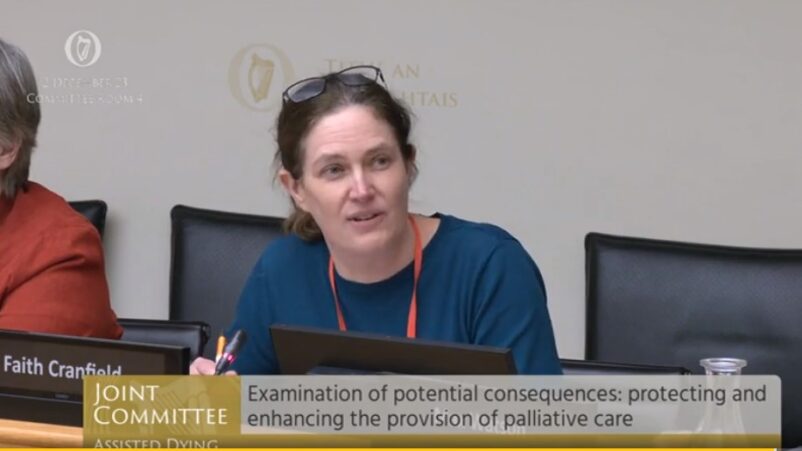
Dr Faith Cranfield (pictured), speaking on behalf of the Irish Palliative Medicine Consultants Association, told committee members that her biggest concern is that the availability of assisted suicide or euthanasia would impact the ability of palliative care practitioners to effectively and humanely address the suffering of their patients, as they do everyday, because it will offer immediate death as a remedy instead.

She asked the committee to imagine the case of ‘Mary’, who has cancer, is overwhelmed by a sense of despair and wants to die. The family hears her expressing this wish and is tempted to feel the same way. But palliative care steps in and her situation becomes far more manageable. She experienced many other valuable moments in her life with her family. In a world with euthanasia, would this happen, or would Mary be ushered towards euthanasia instead?

Dr Matthew Doré, secretary of the Association of Palliative Medicine for Great Britain and Ireland, said that in Canada, hospices have been shut on the basis that they were not facilitating ‘medical assistance in dying’, and there is now an existential crisis in its workforce.

Professor Max Watson, who has worked in hospices for more than 35 years, including with the Irish Hospice Foundation said: “It is very difficult to see safeguarding working because in every legislation where it started, those safeguards are then attacked in law”.

“I am suspicious of safeguards because I have not seen them really work. Today’s safeguards are what another section of the population will take to court on the grounds that they are being legislated against. A person who is depressed could demand access to the same things as people who have a terminal diagnosis. Once we embark on this we are heading towards a situation where it comes down to people’s individual choice”, Prof. Watson told the Committee.

Dr Doré seconded Prof. Watson’s opinion: “The very proponents for this legislation admit to its arbitrary criteria and thus seek to extend it, and if legalised will succeed, as it becomes a question of equality of access for a ‘treatment’. In Canada in 2016 it was clearly stated that the country would not end up like Belgium and would be an exception. Do we think Ireland is going to be an exception to this tried and tested international trend?”, he asked.

Dr Regina McQuillan, representing the Irish Palliative Medicine Consultants Association, maintained that introducing assisted suicide legislation may pressure individuals with serious illnesses. The option of assisted suicide or euthanasia can create what she called “unintended coercion”, i.e. making individuals feel obliged to choose it to relieve the burden on their families, even if not explicitly stated by their loved ones.

She said that the concept of assisted suicide is initially introduced to prevent a difficult death, but then it evolves to also address the desire to escape a difficult life. This shift alters people’s knowledge, desires, and expectations, leading to broader societal transformations. “Putting it into healthcare confuses things further”, she said.

Dr Matthew Doré drew parallels with historical cases of wrongful executions, emphasising the potential for mistakes when determining who should be euthanised. He argued that “incorrect deaths” can result from various factors, including misdiagnosis, unpredictable prognoses, fluctuating choices, mental health issues, elder abuse, and financial concerns. He raised concerns about the societal impact of legalising assisted suicide and questioned what percentage of such “incorrect, unnecessary deaths” would be deemed acceptable.

“An incorrect death is a death mismatched with the rationale for having an assisted death. It is a consequence of pre-empting the unknowable. As lawmakers, committee members will know laws balance individual liberty against societal safety. We have speed limits because driving over 30 km/h on O’Connell Street risks other people, the pedestrians. All traffic laws, all domestic laws, all criminal laws, – it is why we have prisons – are balancing individual choice versus society. Your individual liberty is limited to how it affects other people. My question to the committee is: what percentage of incorrect, unnecessary deaths in the population due to the legalisation of assisted suicide would be acceptable? I suggest none”, Dr Doré said.

Professor Watson spoke about the effect of ‘assisted dying’ legislation on the quality of health services: “We have seen a deterioration in countries which have introduced assisted dying. Australia has decreased end-of-life care. It has gone down two places in the league table, from fourth. The Netherlands has gone down. New Zealand has gone down eight places since 2015. Switzerland has actually improved. Canada has gone down 11 places in terms of overall indices. Belgium has gone down 21 places. It is not universal in all countries but there is a trend that where assisted dying has come in, the quality of end-of-life care, as previously assessed, has decreased.”

Last week’s session was one of the most informative so far. The palliative care doctors spoke from their daily experience with terminally-ill patients and their message to the Committee was really clear: do not legislate for ‘assisted dying’. Will the members of the Committee listen to them? Deputy Gino Kenny certainly was not. Listening to his questions, you would almost think he knew more about dealing with the terminally ill than those who do it every day.

venerdì, dicembre 15, 2023

How family breakdown perpetuates social disadvantage

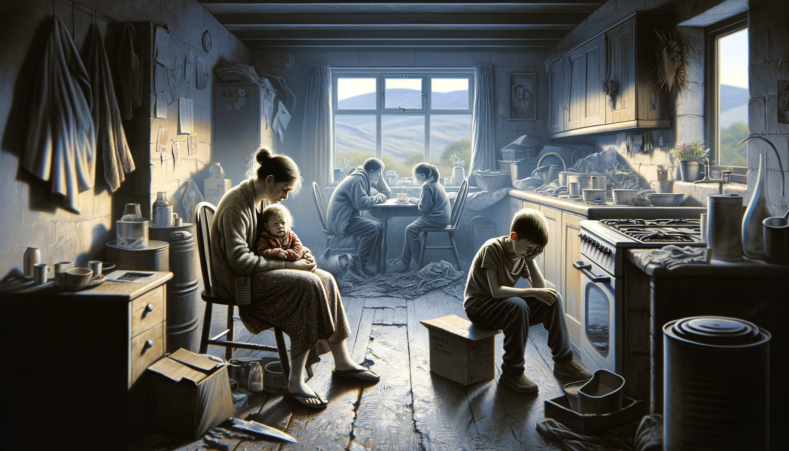
Family breakdown is one of the chief reasons why many people in Britain remain in poverty and cannot climb up the social ladder, according to a major new report called “Two nations”, published by the Centre for Social Justice. The essential argument is that social disadvantage contributes to family breakdown, and in turn makes it even harder to escape from poverty. It is a vicious cycle.

The report lists the causes of social deprivation: “The most disadvantaged across our nation are not always those who have the least money but those whose lives are marked by wasted potential driven by family breakdown, educational failure, worklessness, addiction, and debt”.

The same certainly applies here in Ireland and the Dublin riot was probably evidence of that.

Family breakdown causes not only human misery, the report points out, but it costs an estimated £51 billion to public services every year.

While divorce rates have remained relatively steady in Britain since 1980, the increase in family breakdown is now primarily attributed to the dissolution of cohabiting partnerships, rather than divorce itself because many couples never marry at all anymore.

The poorest families are hit hardest by a family breakdown: a teenager growing up in the poorest 20pc of households is two-thirds more likely to experience family breakdown than a teenager in the top 20pc.

Marriage brings not only financial stability to the family but also better mental health and cognitive development for children.

Families that reported problems with family functioning exhibited higher levels of mental disorders compared to the general population.

The analysis from the CSJ found that “those who experience family breakdown are 2.3 times more likely to experience homelessness, 1.7 times more likely to experience mental health issues and 1.6 times more likely to experience debt.”

In the UK, 23pc of families are headed by a single parent, compared with an EU average of 13pc. The figure in Ireland is 17pc.

Over 40pc of births in this country now take place outside marriage, although about half of those are to cohabiting parents. Over time, the percentage of children in Ireland being raised by a lone parent is surely set to increase.

In Britain for the first time more children are born to unmarried mothers than to married mothers. The report found there are significant differences among ethnic groups. Fifty-one percent of Black, or Caribbean families are headed by a lone parent, compared with an average of 16pc for those from an Asian ethnicity, and 22pc for those from a White ethnicity.

In most of the cases (84pc), lone parent families are led by the mother. In cases of family dissolution, it is almost invariably the father who departs from the household.

Absent fathers are a major societal problem and the report estimated that 2.6 million children in Britain do not have a father who lives with them at home.

The “Two Nations” report underscores the imperative to promptly address the ramifications of family breakdown. Without the foundation of a stable family life, built on marriage, the most disadvantaged will persist in experiencing poverty and enduring detrimental effects on their mental health.

An Iona Institute report published in 2019 showed that in Ireland, as elsewhere, people from the most disadvantaged groups are by far and away the most likely to have experienced family breakdown which further perpetuates their disadvantages.

What one charity worker told the CSJ almost certainly applies to Ireland as well: “One of the things we get frustrated with when we’re working with Government and MPs is that they seem to forget how important family is to all of us. They never really take it into account when they’re making policy.”

mercoledì, dicembre 13, 2023

lunedì, dicembre 04, 2023

Il proprio pensionamento

Ho poco da dire a chi ha acquisito una esperienza sul campo, tra gli ammalati ascoltando le loro storie, i loro bisogni, le loro lamentele, condividendo i loro disagi e le loro ansie per la paura della malattia. Una realtà osservata fatta da essere umano per altri esseri umani; parlare con il cuore di cose vere, che nascono dalla vita. In ogni cosa il fare dipende dal capire e il capire dipende dall’ascoltare, vedere, conoscere. Queste mie parole possano essere utili ai più giovani, perché anche loro andranno in pensione e il confrontarsi con i problemi della pensione e il conoscerli, quando sarà il loro turno, sarà sicuramente comodo.

Questo, infatti, non è un evento facoltativo della nostra vita ma una sicura realtà anche se quando si domanda ai più giovani che pensano di tale fase della vita rispondono: “Non ci penso". E questo per non accettare un evento ritenuto scomodo, lo si ignora. Il pensionamento produce un drastico cambiamento nello stile di vita. La festa, il brindisi, il regalo sono momenti piacevoli. Ma “passata la festa” fuori da quel mondo dove si è trascorsa una vita, cosa ti attende? Finito il rito della timbratura del cartellino e svuotati i cassetti dell’armadietto ... La vita è spesso perdita, abbandono di qualcosa, di persone, cose ... La nostra vita è fatta di partenze: partire è un po’ morire. La perdita di una persona amata toglie a chi resta la voglia di vivere. Restare soli mette l’individuo nella necessità di riorganizzare le proprie risorse interne ed esterne per far fronte alle difficoltà del cambiamento. Ma non è facile reagire, specie se si deve consumare il dolore in solitudine. La stanchezza, fisica e psichica, i dolori e le delusioni, lasciano segni e per cancellarli occorre molto tempo. E certi dolori lasciano impronta per sempre, ben sapendo che qualsiasi proseguire non è mai un dono, ma una conquista, quasi sempre anche scomoda.

Il pensionamento non deve essere vissuto come un aborrito traguardo ma come un punto di partenza trasformandolo in occasione di rinnovamento, di recupero di vecchi interessi e di aspirazioni. Certo, tutti ci sentiamo ad una certa età abbandonati negli affetti e tutti vorremmo sentirci amati semplicemente girando un interruttore sempre disponibile. Ma questo non è possibile. Né si deve calare mai definitivamente il sipario. Ognuno di noi ha un mandato d’amore e può viverlo anche al meriggio. Forse il sole del tramonto è meno bello di quello dell’aurora? La nostra tristezza dipende anche da noi, non è proficuo fare un pacco di tutte le cose che ci sono andate storte e portarlo sempre con noi per aprirlo in ogni occasione. Anche uno stato d’animo di piccole cose, un po’ di calore umano, un sorriso, un raggio di sole fanno ritrovare la gioia di vivere. Ma nei nostri rapporti interpersonali quotidiani poche volte ci è capitato di incontrare individui che hanno costruito se stessi nei valori della humanitas e della pietas e quindi sanno leggere la propria vita e quella degli altri per sintonizzarsi con se stessi e con il prossimo. Che hanno acquisito umanità, che hanno imparato ad accettare gli eventi, a metabolizzare il dolore. Con il proprio carattere, con la propria storia, con i propri limiti, hanno cercato di andare avanti.

Tutta la vita è cammino e se si vuole entrare nel mondo e negli altri bisogna lasciare la porta aperta a chi ha bisogno di aiuto. Tutti possiamo essere portatori di speranza. Dedicarsi agli altri non è sempre gratificante. A volte è faticoso, talora persino frustrante quando si incontrano indifferenza e ingratitudine. Ma non c’è piacere più grande che accendere un sorriso, togliere un po’ di dolore perché scaldando il cuore degli altri si riscalderà anche il proprio.


Vittorio Giuseppe Bottone

31 luglio 2000

sabato, dicembre 02, 2023

Gli idioti confondono il cristianesimo con l'essere bacchettoni o puritani. Gesù ha trattato sempre con estrema dolcezza prostitute e fedifraghe, affidando a uomini come San Paolo, già persecutore di cristiani, la missione di diffondere la Parola. Sant'Agostino era un uomo notoriamente sensibile al fascino femminile ("Signore rendimi casto, ma non subito"), eppure la "Patristica" ha trionfato comunque. Il cuore del messaggio cristiano non è la "perfezione formale" tipica dei farisei invisi al Maestro ("pubblicani e prostitute entreranno prima di voi nel regno di Dio", Mt, 21, 28-32). È abominevole infatti rispettare la lettera e tradire lo spirito. Il cuore del messaggio cristiano è il libero arbitrio unito alla carità e alla compassione. Dove c'è empatia, dove c'è capacità di condividere il dolore e le paure dell'altro, non per soggiogarlo ma per liberarlo, lì c'è il bene. Spesso gli uomini capaci di fare grandi errori si trasformano in grandi santi. Oppure, sul piano laico, rievocano le gesta del Jean Valjean uscito dalla penna geniale di Victor Hugo ne "I Miserabili". I "tiepidi" invece non sono buoni né per le cose troppo luminose né per quelle tenebrose. "Ma poiché sei tiepido, non sei cioè né freddo né caldo, sto per vomitarti dalla mia bocca" (Ap, 3, 16)

Francesco Toscano

venerdì, dicembre 01, 2023

Committee hears the most extreme pro-‘assisted dying’ view yet


Assisted suicide should be available on demand to any adult who wants it, the Oireachtas Committee on Assisted Dying has heard. This is the direct equivalent, applied to assisted suicide and euthanasia, of demands from the abortion lobby that a termination of pregnancy be available to women for any reason.

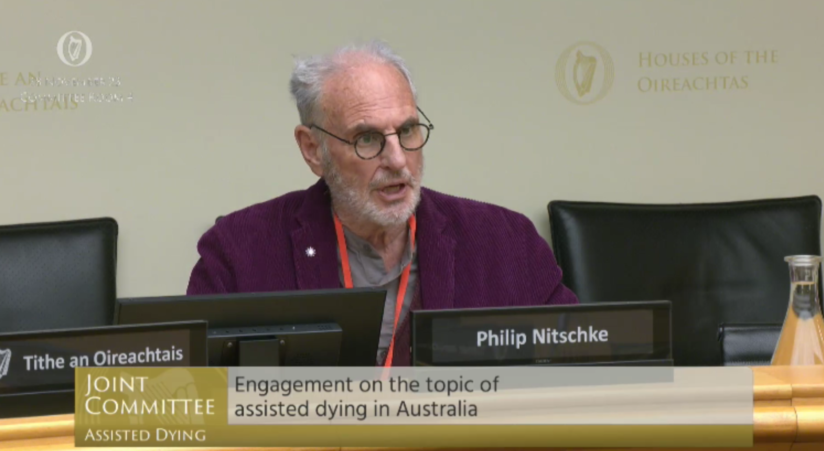
The call came from Philip Nitschke, founder and director of Exit International, which has an Irish branch headed by Tom Curran. Nitschke says no medical condition should be required to qualify, and the medical profession should not have to be involved.

Notably, there was no pushback from pro-euthanasia advocates on the committee such as Gino Kenny and Lynn Ruane who say they want to restrict the procedure to those within six months of death. They frequently pushback against those who warn of a slippery slope even though right in front of them on this occasion was a man who wants us to go right down to the bottom as soon as possible.

Nitschke told the Committee that Ireland should adopt the Swiss model, whereby “any person can be assisted to die, as long as the motive of those providing the assistance is altruistic in kind. In Switzerland, there is no requirement that the person receiving the assistance has been diagnosed with an illness of any kind”.

He mentioned the cases of couples who want to die, where one is sick and the other is not, or elderly people with no terminal or chronic conditions.


“We see too many people who have really good non-medical reasons for wanting to die and I will not try to interfere with them”, he said.

Mental capacity in Switzerland is assumed. A psychiatric assessment is required only if that person has been already diagnosed with a psychiatric or neurological condition. Otherwise, no medical professional need be involved. Assisted suicide is provided on demand. What appears to have kept figures relatively low there is that people have to self-administer their poison. Where doctors do it, numbers availing of the procedure rise rapidly.

Swiss law does not regulate the substances to be used in killing yourself. Nitschke has developed “Sarco”, a suicide machine that releases nitrogen and supposedly kills in a short period of time.


When he began speaking about the specific drugs used to kill those who request assisted suicide, the public session of the Oireachtas Committee had to be suspended as there were concerns about vulnerable members of the public.

Nitschke’s views on assisting patients to die has always been extremely controversial. In 2016 he ended his medical career and left his native Australia, moving to the Netherlands, after his medical licence was temporarily suspended and then the Medical Board imposed on him onerous restrictions. The head of the UK branch of Exit has been convicted of three murders in South Africa for helping three people to end their own lives.

Last week the committee heard that Exit was involved in the assisted suicide in Switzerland of an Irish man with mental health issues.

Nitschke, in his written submission, refers to the Irish director of Exit International, Tom Curran, who also defended the Swiss model when he spoke to the Committee last month. Nitschke and Curran reject the “medical model”, whereby doctors are involved in the assessment of who can qualify for assisted suicide.

Nitschke told the committee members: “My involvement in the right to die movement over the past 27 years has taught me that any framework that creates an exclusive ‘club’ of people with a distinct qualification criteria ends up discriminating against far more people than it will ever help. By its very nature far too many deserving people will find that they do not quite qualify to use such a law: they will not be sick enough, or their diagnosis will have an ambiguous prognosis. People like the late partner of my good colleague and friend Tom Curran, Marie Fleming, provide a good example. With a diagnosis of progressive MS, Marie’s neurologist could never say when she was likely to die. Tom tells the story that Marie could have died in two months, two years or 20 years. No one could say. A medical model law excludes people like Marie. … By thinking beyond the medical model, Ireland is well placed to make laws that benefit the majority, rather than the select few who are sick enough to qualify for a law which by its very nature is exclusionary, rather than inclusionary. Such a law would honour fully the courageous legal battle (and the memory) of Marie Fleming.”

Politicians will not go as far as Exit International wants on this occasion, but they do want to open the door and eventually we could easily get to the appalling world Exit wants of assisted suicide on demand.

domenica, novembre 26, 2023

The convicted murderer who helped an Irishman die by assisted suicide


A pro-euthanasia activist with three murder convictions has helped an Irish man struggling with mental health to secretly access assisted suicide in Switzerland.

On Tuesday, Emer Maguire told the Oireachtas Committee on Assisted Dying that her uncle Jay died by assisted suicide on the 26th September this year, with the help of Sean Davison.

Davison is the UK director of Exit, a “right to die” group that believes that any mentally competent adult should be able to access assisted suicide for any reason. They are active in Ireland.

Davison was convicted in three distinct cases of premeditated murder in South Africa in 2019. In each instance, he assisted ill individuals who expressed a desire to end their lives, one of whom was his own mother. It was his sister who ultimately reported him to the authorities.

Struggling to hold back her tears, Mrs Maguire told the Committee that her uncle was in good physical health, though he suffered of mental health issues, and travelled on his own to Switzerland, where he was met by Davison. Davison had organised Jay’s application for assisted suicide in a clinic there and identified his body after the lethal procedure, according to the testimony presented to the Oireachtas.

The family members were unaware of their relative’s intentions, and they were informed by Davison only five days after Jay’s death and cremation.

“Those closer to him were aware that he was struggling with mental health and encouraged him to seek help. However, he managed to master most of this, with most of the people around him”, Emer Maguire told the Committee.

Only after his death, the family discovered that Jay was a member of Exit for fifteen years. This extreme organisation facilitates the suicide of competent adults. Their Irish connection is something worth exploring.

“Exit supports the Swiss model of assisted dying laws which are not based on strict medical criteria”, they say on their website. In other words, they campaign for assisted suicide being available not only to those who are terminally ill or suffer an incurable disease but to every adult who has mental capacity.

Exit has a branch in Ireland that is led by Tom Curran. Ten years ago Mr Curran’s wife, Marie Fleming, lost a famous “right-to-die” case.

Speaking on RTE’s ‘Claire Byrne Live’, two years ago Mr Curran said that he supported the “right” of a healthy woman to die by assisted suicide in Switzerland, because she did not want to continue living once her sick husband had died in the same way.

Last month he was invited to address the Oireachtas Committee on Assisted Dying, where he advocated for the Swiss model to be implemented here.

The founder of Exit International, Philip Nitschke, also known as “Dr Death”, held suicide workshops in Ireland in the past.

Dr Nitschke is also behind a suicide machine called “Sarco”, after sarcophagus, approved for use in Switzerland. The suicide pod releases nitrogen and kills in 10 minutes.

Sean Davison, who leads Exit UK, moved to England after having lost his medical licence to practice in New Zealand, because of his murder convictions. In 2019 he was sentenced eight years house arrest, five of which suspended.

This conviction happened while he was also the president of the World Federation of Right to Die Societies. This same organisation will have its next global conference here in Ireland next year, hosted by End of Life Ireland, the main group campaigning for the legalisation of euthanasia here.

Emer Maguire presented her uncle’s case to the Committee to highlight the shocking impact that assisted suicide has on families and friends, but this case also shows the malign presence of Exit in Ireland. This organisation and its extreme ideology have received no proper scrutiny by the media.

sabato, novembre 25, 2023

L'Oriente

Tutti abbiamo conosciuto, temo, qualche reduce dall'Oriente. Lo sguardo assorto, la dizione lenta, il sorriso allusivo, parlano con un distacco computo che ci fa dubitare, per la prima volta, del buddhismo. Se c'è un divario tra speculazione orientale e occidentale è che la prima si traduce in vita e la seconda in parole. Ed ecco che questi turisti del pensiero incarnano il tradimento delle dottrine che professano. Incerti tra una superiorità distratta e una indulgenza didattica, si rifugiano in una ironia che vorrebbe significare distanza e che esprime il contrario.

Eppure non c'è limite al peggio.
È su questo presentimento che la nozione di inferno continua a trovare credito sulla Terra.
E infatti una specie ancora più temibile è quella degli entusiasti, che cercano proseliti nello scompartimento di un treno o nell'anticamera di un dentista. Avessero assimilato che il desiderio è la radice del dolore e che il nirvana coincide con la sua estinzione, forse non desidererebbero tanto la resa altrui e la loro vittoria. Ma niente sa occultarsi quanto l'evidenza.


I piccioni viaggiatori

Giuseppe Pontiggia.


sabato, novembre 18, 2023

Rinascimento: quante banalità dure a morire

Arriva in libreria un saggio britannico annunciato da titoli, in inglese come in italiano, densi di luoghi comuni. Si tratta comunque – denunzie e demonizzazioni a parte – di un onesto trattato di storia italiana di facile e gradevole lettura.

Catherine Fletcher, Il libro nero del Rinascimento, Milano, Garzanti, 2022, pp. 466, euri 28,00.

Ti arriva sul tavolo un volume come questo ed ecco che t’invade la malinconia. Questo libro è stato salutato nientemeno che dal Sunday Times con le severe parole indirizzate ai lettori: “Se pensavate che il Rinascimento fosse solo bei quadri e riscoperta dei classici, vi sbagliavate di grosso”. E non dico l’illustre studioso, ma perfino il modesto travet della cultura media – l’insegnante, il recensore librario sui quotidiani – si chiede: ma come, siamo ancora a questo punto? Credevamo fosse chiaro che da circa due secoli i Gregorovius, i Michelet, i Burckhardt, sia pure svolgendo egregiamente il loro compito di scopritori e di divulgatori, avevano diffuso a proposito di quel lungo periodo della storia della civiltà e delle arti d’Europa, durato grosso modo dalla seconda metà del Tre a quella del Cinquecento, una massa immensa e inestricabile di pregiudizi e di luoghi comuni. Li abbiamo contrastati per lunghi decenni: abbiamo studiato i due lunghi periodi di crisi climatica, demografica, socioeconomica da concentrazione della ricchezza e da una spaventosa sperequazione, abbiamo rivelato i retroscena politici e le messinscene mediatiche sottostanti alla meravigliosa avventura del “mecenatismo”, non abbiamo certo taciuto le guerre, i colpi di stato, le congiure. E abbiamo anche corretto molti, troppi “luoghi comuni”.
Machiavelli non fu mai un apologeta del crimine voluto e prezzolato da un tiranno; e la virtuosa Lucrezia Borgia duchessa di Ferrara non fu affatto un’avvelenatrice.
Macché. Niente da fare. “Invidïosi veri”, direbbe il Padre Dante, come al solito predicando al vento. Gli occhiuti e sovente assoldati custodi del conformismo bignamesco non demordono. E hanno dalla loro due potenti alleati: anzitutto la pigrizia di molti insegnanti e di molti “addetti ai lavori” o sedice nti tali ai quali l’aggiornamento pesa; quindi il dogmatismo ottuso di troppi “operatori mediatici” pronti a smascherare qualunque forma di “revisionismo”, come dicono loro. Guai a sostenere che il “luminoso” Rinascimento non fu né sempre né dappertutto tale e che il “buio” medioevo non è mai esistito: non ci sono né fonti né studi, né argomenti che tengano. Vero è tuttavia che qua e là certe cose si rimettono in discussione: magari, anche lì, a costo di ulteriori malintesi.
Prendete il grosso libro di Catherine Fletcher, brava studiosa della Manchester Metropolitan University e collaboratrice della Bbc, la quale – esplicitamente rivolta ai suoi studenti, ai quali esso è dedicato – ha scritto un saggio dal titolo The beauty and the terror: an alternative history of the Italian Renaissance. Ebbene: alternative history  in che senso, e a che cosa? Con ogni evidenza, a una tradizione troppo “aurea”, o “rosata”, del Rinascimento italiano sereno scrigno di bellezza, almeno secondo una certa visione soprattutto angloamericana che fa scuola dai tempi di Burckhardt e che continua a riversare sulle nostre città e i nostri lidi – il che, tuttavia, è lontano dal farci dispiacere – legioni di turisti che annualmente invadono le strade e le piazze di Venezia o di Firenze, per quanto ameremmo fossero un po’ più educati e un po’ meno parsimoniosi. Ma l’editore italiano ha trovato il titolo inglese, tutto sommato, molto poco impressionante nella nostra lingua e dalle nostre parti. Noi, alla bellezza mischiata al terrore ci siamo tutto sommato piuttosto abituati. Semmai, una parvenza di “provocazione” in più poteva pervenire – si è pensato – dall’espressione “Libro Nero”, c he richiama alcuni, numerosi pamphlets politici specie antifascisti, anticomunisti e antiamericani. Anche il nostro caro, vecchio Umberto Eco (che ci manca molto) aveva collezionato esempi rinascimentali con i quali puntellare la tesi da lui esposta in un saggio, Il fascismo eterno (edizioni La Nave di Teseo), che onestamente non è tra le sue cose più brillanti.
E di storie rinascimentali “nere”, a onor del vero, ce ne sono molte: il che nulla toglie, va da sé, all’eccezionalità artistica e intellettuale di quel periodo. Ciò detto, bisogna notare che il contenuto del libro forse non rende intera giustizia al titolo italiano, mentre quello inglese a modo suo resta più adatto a descrivere la ricchezza dell’arte rinascimentale in rapporto al cinismo e sovente alla spietatezza con la quale alcuni potenti si facevano committenti d’arte per appoggiare il loro regime per mezzo di una sapiente rete di terrore, di complicità e di consenso. Questi potrebbero essere i tre key-word che dominano un libro ben costruito, denso di eventi accuratamente, anche se sinteticamente, narrati, che si apre su un quadro dell’Europa del Quattrocento per poi parlare delle corti, delle guerre, del Nuovo Mondo, della Riforma e Controriforma, delle guerre di religione, del pericolo turco. Un onesto tracciato storico di storia italiana che riesce di facile e gradevole lettura.
Franco Cardini

venerdì, novembre 17, 2023

Make euthanasia available to dementia patients committee told

Patients with dementia should be offered euthanasia or assisted suicide, the Oireachtas Committee on ‘assisted dying’ has been told.

The Committee heard from representatives from End of Life Ireland that “assisted dying” should be introduced not only for terminally ill patients but also for those with neurodegenerative conditions such as dementia, who could be years away from death.

The general public can be easily confused by the expression “assisted dying”, but for those campaigners it clearly means not only assisting those who are dying soon but also a direct intervention to procure or facilitate death, if requested.

Ms Janie Lazar, chairperson of the organisation, told the Committee in heropening statement said that “assisted dying” should be offered even when death is not foreseeable: “We’re asking you as legislators, to honour a person who has a terminal or life limiting diagnosis. Because time alone, ‘foreseeable death’ ought not be the sole basis for calculating eligibility criteria; some neurodegenerative conditions can go on for years as we see with Dementia, with MS.”

Notably, none of the pro-euthanasia committee members objected. This is significant. They say they want the law in Ireland to be restricted to those supposedly within six months of death, but when people come before them demanding euthanasia and assisted suicide on much broader grounds than that, they have nothing to say. Their silence speakers volumes.

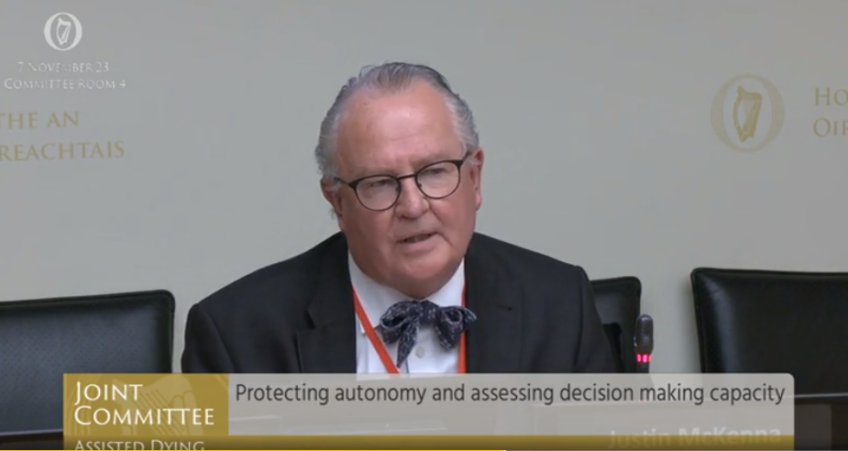
When asked to elaborate on euthanasia for dementia patients, another representative of End of Life, Mr Justin McKenna (pictured), said that patients can write an advanced healthcare directive and “in the context of dementia, I see the circumstances of the patient being relevant. The quality of the life of the person will have diminished to a point that is clinically intolerable within the grounds of that person’s determination and where there is no prospect of that quality improving by natural means.”

Notably, the TD who asked Mr McKenna to elaborate, Emer Higgins of Fine Gael, raised no objection to his line of reasoning.

Mr McKenna emphasised the distinction between ‘lifespan’ and ‘health span’.  “They are not the same”, he said. “You can live with dementia for a very long time. We in this room will all know people who are in that condition and who could sustain a life, or perhaps an existence. However, is it healthy? Is it healthy in the way they would like it to be? In a previous time, when they had capacity and when they were able to determine what they regarded as quality, they should be allowed to maintain it and decide when it should end, if that quality no longer exists.”


This distinction between ‘lifespan’ and ‘health span’ has potentially huge implications. It appears to mean that a person should be offered euthanasia not when their life is nearly over, but when their health is nearly spent, whatever that may mean. If so, euthanasia would be available on very wide grounds indeed.

If patients with dementia can request euthanasia through advanced healthcare directives, this would entail killing them when someone judges they being mentally incapacitated, without a final explicit consent.

This proposal aligns with recent developments in Belgium and the Netherlands, where eligibility criteria for euthanasia have expanded to include psychiatric and neurodegenerative conditions. In Belgium, last year there were 21 cases of euthanasia for cognitive disorders, including dementia and Alzheimer’s, as well as 21 cases for psychiatric conditions.

In the Netherlands, the number of euthanasia deaths based on dementia increased by 34pc last year. According to the official report there were 288 cases of euthanasia for dementia and 115 for psychiatric conditions.

Some weeks ago, Theo Boer, a Dutch professor of healthcare ethics and former member of the Review Committee on Euthanasia, told the Oireachtas Committee: “I am convinced that it is only a matter of time before we take the next hurdle: allowing children of dementia patients to request euthanasia for their demented parents.”

In reply to End of Life Ireland shocking proposals, Senator Ronan Mullen spoke about his father’s illness: “I lived with and helped to care for my own father at home for approximately ten years during the time in which he suffered from Alzheimer’s. I can say that we did not let him miss out on anything he needed in order to deal with any pain, including sedation. I can also say that while he would have hated the way in which he became extremely dependent on us for the most basic necessities of life that enabled a climate of love and care in our family that I never could have imagined being possible. Regardless of what letter anybody might have written in the past about how they would like to be dealt with in the future if they should lose capacity, there is more to the story. There is the story of how the relationship with that person can continue.”

A climate of care and love is what patients with neurodegenerative conditions need. Euthanasia is not care and is not love.