Visualizzazione post con etichetta Euthanasia. Mostra tutti i post

mercoledì, febbraio 25, 2026

Euthanasia numbers in Canada continue to soar


In Canada in 2024, an astonishing total of 16,499 people died by euthanasia, according to the latest official report. It means the number dying in this way has trebled in just five years. Under Canada’s very liberal ‘assisted dying’ law, a person does not have to be terminally ill to avail of euthanasia. Worryingly, half of those who asked to be euthanised said they felt they were a burden on their relations. What was once presented as an exceptional measure has rapidly become a routine feature of the ‘healthcare’ system in Canada. This is not the mark of a civilised country.

Another 4,017 people who requested ‘Medical Assistance in Dying’ (MAID) died before receiving it. If they had not, then the number euthanised would have exceeded 20,000. This suggests not only rising demand, but also a growing cultural expectation: euthanasia is increasingly seen as a normal pathway at the end of life.

The expansion of eligibility criteria is central to this shift. Under Canadian law, a person must have a “grievous and irremediable medical condition”. However, since 2021 this includes individuals whose natural death is not reasonably foreseeable (so-called Track 2 cases). In 2024, there were 729 such cases and only 32.2pc of these patients had access to palliative care, according to the official report. People are choosing death because adequate care and support are lacking.

The nature of suffering reported by patients is equally revealing. The most common reason cited was loss of the ability to engage in meaningful activities (over 95pc in both tracks). But beyond this, deeply social and psychological factors loom large. Half of all patients reported feeling like a burden on family, friends, or caregivers, while 44pc of non-terminal patients reported isolation or loneliness.

These are not simply medical conditions; they are profoundly human experiences that, in many cases, could be addressed through better care, stronger community support, and more robust social services. The concept of “self-perceived burden” is well known in palliative care. It reflects a distressing sense of guilt and dependency that can fuel a desire for death. That such feelings are so widespread among MAID recipients should concern us deeply.

The percentage of disabled individuals among non-terminal euthanasia recipients was significantly higher. The data also show that 32.9pc of respondents identified as having a disability, rising sharply to 61.5pc among Track 2 (non-terminal) cases. This raises serious ethical concerns about whether some of society’s most vulnerable individuals are being failed rather than protected.

In every case in 2024, a lethal substance was administered by a medical practitioner. Although self-administration (assisted suicide) is legally permitted in most of Canada, it is very rarely chosen. The state-sanctioned ending of life is therefore overwhelmingly carried out by medical professionals, which is a profound betrayal of the healing vocation of medicine.

The human cost of this system is illustrated by the case of Roger Foley, a Canadian man with a severe neurological condition. Foley repeatedly warned that he felt pressured towards euthanasia due to inadequate care options. He spoke openly about being offered euthanasia while struggling to secure the support needed to live with dignity. “I’m fighting to my last breath, but I’m up against a regime that is cruel, desensitised, and out for blood,” he said.

Taken together, these figures and stories point to a profound shift in how Canadian society understands care, suffering, and human dignity. When loneliness, disability, and the fear of being a burden become pathways to assisted death, we must ask whether the healthcare system is no longer alleviating suffering, but instead eliminating those who suffer. Is this what we want for Ireland?

giovedì, luglio 03, 2025

English hospices may soon be forced to close before of euthanasia law


The Catholic Bishops of England and Wales have warned that the future of Catholic care homes and hospices is in doubt if the assisted suicide legislation currently before parliament is passed because they may be forced to comply with its provisions, thereby totally violating their own ethos.

The warning came following the recent passage of the End of Life Bill by the House of Commons.

The Bill provides no protections for institutional conscience. An amendment to the Bill, which would have explicitly allowed institutions to not be involved with assisted suicide, was rejected at the report stage.  Faith-based hospices may be compelled to participate in practices that directly contradict their founding mission: to care, not to kill. If they refuse, they could face defunding, reputational damage, or closure.

In its evidence to the Bill Committee, St. Gemma’s hospice in Leeds stated: “If compliance with assisted dying provision becomes a condition for NHS funding, institutions like St. Gemma’s may have no alternative but to cease operations entirely”.

The Catholic Bishops also highlighted another consequence of the Bill: the erosion of public trust. “The widespread support which hospices attract from local communities will also be undermined by these demands which, in many cases, will require these institutions to act contrary to their traditional and principled foundations”, they said in their statement.

Religious institutions risk losing not only funding, but also the moral credibility that sustains them. Their fears are already becoming reality overseas and now, perhaps soon, in England.

The most illustrative case comes from British Columbia, Canada. The Irene Thomas Hospice in Delta refused to allow euthanasia on its premises, in line with its pro-life ethos. In response, the provincial government withdrew $1.5 million in annual funding, the equivalent of 94pc of the hospice’s budget. Unable to continue, the hospice was shut down, and the province seized the facility, despite $15 million in privately donated assets raised by the local community. The forced closure became a chilling symbol of what can happen when religious conscience collides with state-endorsed euthanasia policies.

This is not an isolated case. Other religious institutions across Canada have faced similar pressures. St. Paul’s Hospital in Vancouver, a Catholic institution, was forced to host a euthanasia unit on its campus, despite objections from leadership and staff.

In Quebec, medical authorities now mandate that every palliative care unit, regardless of religious or ethical affiliation, provide euthanasia services.

The UK now risks walking the same path.

Although the Bill has passed the House of Commons, it must now undergo scrutiny and possible amendment in the House of Lords before receiving Royal Assent.

The Bill represents not merely a dramatic shift in end-of-life care policy, and for this reason alone it should be rejected, but it is also a potential erasure of pluralism in healthcare. Unless new legal safeguards are introduced, institutions rooted in conscience may disappear, replaced by a one-size-fits-all model that leaves no room for dissent.

What happened in Canada could soon happen in the UK.

sabato, febbraio 08, 2025

The coming trend: couples euthanasia

The number of couples requesting euthanasia together is on the rise in the Netherlands, according to official reports. In 2024, there were 54 such cases, compared to just nine in 2018. A notable case involving a former Dutch prime minister and his wife last year appears to have contributed to the growing demand.

In the Netherlands, assisted suicide or euthanasia can be requested by individuals experiencing ‘unbearable psychological suffering’, even if they are not physically ill. The prospect of losing a lifelong partner is often considered a cause of unbearable suffering and therefore can be sufficient to qualify for euthanasia or assisted suicide. Although requests from couples are treated separately, it is unlikely that only one would be denied if both individuals are deemed mentally competent.

Couple euthanasia is not only becoming more common but is also increasingly romanticised. In February last year, media outlets framed the deaths by euthanasia of the former Dutch prime minister and his wife —and similar cases also —as part of a “love story,” a poetic ending to a long life shared together.

Influenced by this high-profile case, the number of Dutch couples euthanised together rose from 34 in 2023 to 54 in 2024, a significant increase in just one year. While the law requires explicit consent from both individuals, a type of pressure can often be masked by formal agreement. Many spouses dread the prospect of living without each other. The idea of being left alone may, even unconsciously, pressure someone to make the same decision as their partner.

The risk of a contagion effect is really high. It is difficult to ignore the possibility that one partner’s decision could influence the other, even without direct coercion. Moreover, cases of joint euthanasia are not limited to romantic couples. In the Netherlands there have also been instances involving siblings or a mother and her child. In such cases, the reasoning is similar: the surviving individual may consider life unbearable without their loved one.

A recent poll conducted among Dutch citizens with partners found that 75pc were open to the idea of couple euthanasia. However, 60pc expressed concerns about the potential pressure involved, while 40pc believed it would be difficult to determine whether the desire to die was entirely independent.

Commenting on these findings, Philip Nitschke, the inventor of the controversial “Sarco” suicide pod, tweeted: “The Sarco Duo is currently in production”.

Where others are concerned, or scandalised, by the idea of couples killing themselves together, pro-euthanasia activists see it as another opportunity to promote their ideology.

Nitschke is the founder and director of Exit International, an organisation advocating for assisted suicide to be available on demand to any adult, regardless of their reason.

The growing acceptance of couple euthanasia in the Netherlands is part of the broader normalisation that inevitably follows the legalisation of such procedures. Over time, initial restrictions tend to be relaxed, and more individuals may feel influenced, if not explicitly coerced, into choosing to die alongside their loved ones.

venerdì, dicembre 27, 2024

Euthanasia continues to go out of control in Canada


The number of euthanasia cases continues to rise in Canada, according to the latest official report on the topic, raising further alarm, particularly among disability rights groups. Even some early supporters of ‘Medical Assistance in Dying’ (MAID) are now voicing concerns.

Last year, 15,343 Canadians died by euthanasia or assisted suicide, according to the ‘Fifth Annual Report on Medical Assistance in Dying’. This marks a 15.8pc increase over 2022 and represents 4.7pc of all deaths in 2023. Since its legalisation in 2016, there have been 60,301 cases of assisted suicide and euthanasia cases in Canada that we know of.

Adding to these frightening figures, 2,906 individuals died last year before their euthanasia requests could be fulfilled. Meanwhile, 496 individuals withdrew their requests.

Canada allows both assisted suicide, where the patient self-administers lethal drugs (except in Quebec), and euthanasia, which is administered by a doctor or nurse. Self-administration is extremely rare, with fewer than five cases reported last year, showing that people are scared to take a poison themselves.

Dementia was cited as a medical condition in 241 euthanasia recipients in 2023, and in 106 of these cases, dementia was their sole condition.

Not all those who received euthanasia were terminally ill. In 622 cases, natural death was not deemed “reasonably foreseeable.” This category, called Track 2, allows euthanasia for non-terminal patients. Some could have lived for a decade or longer but chose euthanasia due to isolation or feeling like a burden. Euthanasia can be requested when someone experiences “physical or psychological suffering that is intolerable to them.” This is another example of the slippery slope in action.

Isolation or loneliness was significantly more common among Track 2 patients (47.1pc) compared to Track 1 patients (those within six months of death) at 21.1pc, but we can still see feeling isolated was significant. Crucially, 45.1pc of Track 1 and 49.2pc of Track 2 patients cited feeling like a “burden on family, friends or caregivers” as a key reason for their suffering.

Among Track 2 recipients, where death was not foreseeable, women constituted 58.5pc of cases. These patients were typically younger and had lived with their conditions for much longer. Perhaps this is also a function of the fact that women typically live longer than men and are more likely to be widowed and therefore living alone.

The percentage of disabled individuals among non-terminal euthanasia recipients was significantly higher: 58.3pc compared to 33.5pc among those within six months of death. They are heavily over-represented in Canada’s euthanasia statistics.

“When other people express loneliness or a loss of dignity or a desire to die, we usually respond with support or prevention. But with people with disabilities, we respond with an offer for MAID,” said Isabel Grant, a law professor at the University of British Columbia.

This same group of non-terminal patients had, on average, lived with a disability for a fifth of their lifespan.

According to the report, 594 individuals received euthanasia under a waiver of final consent arrangement due to a loss of capacity. This means they were euthanised based on a prior request, even though they could no longer give consent.

Euthanasia was legalised in Canada in 2016 following a case brought by the British Columbia Civil Liberties Association (BCCLA). However, the regime has become so permissive that even the BCCLA has raised concerns, particularly about euthanasia for prisoners and disabled individuals. The organisation has highlighted reports of people accessing MAID due to intolerable social circumstances or being offered it in cases that may not meet legal requirements.

“Of particular concern are reports of MAID being used in prisons while incarcerated individuals were shackled to their beds, the programme’s lack of legal oversight, disproportionate representation of impoverished people receiving assisted suicide, and healthcare practitioners offering MAID when patients sought support for living,” the BCCLA stated.

venerdì, dicembre 06, 2024

Lessons so far from the British ‘assisted dying’ debate

The assisted suicide bill regrettably passed its second reading in the UK House of Commons last week, with 330 MPs voting in favour and 275 against. Among Labour MPs, 58pc supported the bill, as did 60pc of Reform Party representatives, while only 19pc of Conservative MPs backed it. On the plus side, more Labour MPs voted against than had once been predicted and perhaps the bill can be defeated, or at least watered down at a later stage. It intends to allow those within six months of death to end their own lives via a doctor-prescribed poison.

The bill will now move to the committee stage for detailed scrutiny before returning to the Commons for a third reading, expected in April.

Supporters of the bill have used euphemistic language, such as the term “assisted dying”, misleading the public and obscuring the fact that a person is ending their own life, which is suicide.

During the parliamentary debate, a Labour representative objected to the use of the word “suicide”, as offensive and incorrect. Danny Kruger, a Tory MP and prominent opponent of the bill, replied that one of its effect was to amend the Suicide Act.

This tactic of changing the language using neutral or positive words has been central to the campaign led by groups like Dignity in Dying, formerly the Voluntary Euthanasia Society, which frames the bill as a compassionate choice that ensures dignity for terminally ill patients. Euphemisms manipulate public perception and mask the bill’s potential risks. A recent survey showed that support for the bill goes significantly down when respondents are correctly explained what “assisted dying” really means. Many confuse it with palliative care.

Another misleading tactic is the denial of the slippery slope effect, i.e. that the restrictions for accessing assisted suicide or euthanasia are gradually lifted with time, as it has happened in other countries.

Deputy Leadbeater, said on BBC radio that “once the bill is passed, it cannot be changed”.

This false claim was repeated by the Economist magazine: “some cannot shake the fear that Ms Leadbeater’s law would be a slippery slope. If they mean that the criteria would sneakily be broadened to include the mentally ill or disabled without further legislation, then the facts are against them. In no case has an assisted-dying law restricted to the terminally ill expanded in this way”.

But it is undeniable that every piece of legislation can be changed in the future, by politicians or by courts. In many states with assisted suicide laws, the courts have re-interpreted those laws to broaden the grounds more than legislators envisaged. Moreover, one of the effects of legalising assisted suicide/euthanasia is the change in social attitudes towards the practices, which in turn stirs further changes in the law.

We also that the campaign for assisted suicide has been bolstered by plenty of money.

For example, in the London Underground, where at least one suicide attempt occurs every week, lots of posters were on display including one showing a woman dancing in the kitchen alongside the words: “My dying wish is my family won’t see me suffer. And I won’t have to.” These highly insensitive billboards were later covered with posters promoting the Samaritans helpline.

Deputy Kim Leadbeater, who sponsored this bill, is the Chair of More in Common UK. This network is supported by organisations like the William and Flora Hewlett Foundation, and the Open Society Foundations, led by George Soros, which have a long history of promoting population control initiatives. Will we see something similar happening here? With a new Government due to be agreed after last week’s election, assisted suicide and euthanasia are sure to be somewhere in the programme for the new Dail.

mercoledì, novembre 27, 2024

Some surprising opposition to England’s ‘assisted dying’ bill

On Friday, the UK House of Commons will vote on a bill by a Labour MP to introduce assisted suicide in England and Wales. Some interesting opposition to it has emerged.

Prime Minister Keir Starmer has said a whip would not apply and Labour party members could “vote their conscience”, but some important members of his Cabinet and also other Labour MPs have expressed concerns.

The most prominent opponent is the former Prime Minister Gordon Brown who said that the early loss of his daughter Jennifer, who lived only eleven days, taught him that the focus should be on the improvement of palliative care.

“An assisted dying law, however well intended, would alter society’s attitude towards elderly, seriously ill and disabled people, even if only subliminally, and I also fear the caring professions would lose something irreplaceable – their position as exclusively caregivers”, he wrote in an opinion piece for the Guardian.

The bill pertains only England and Wales, while Scotland is considering its own legislation. Brown is Scottish.

At least five cabinet ministers will vote against the proposed bill, including the Deputy Prime Minister Angela Ryner, who has opposed similar legislation in the past.

Wes Streeting, the Health Secretary, has raised concerns that the bill could pressure terminally ill patients to end their lives to save NHS resources, potentially leading to a “chilling” scenario where financial considerations influence patient choices.

Shabana Mahmood, the Justice Secretary, has also indicated her opposition. “I feel that once you cross that line, you’ve crossed it forever. If it just becomes the norm that at a certain age or with certain diseases, you are now a bit of a burden… that’s a really dangerous position to be in”, she said.

Education Secretary, Bridget Phillipson, suggested there were not enough safeguards in the Bill.

Jonathan Reynolds, the Business Secretary, has also stated his opposition to the proposed legislation. “Constituents will know in the past I have always voted against proposals to change the law in this way. This is mainly because I have profound concerns about how vulnerable people could be protected should this happen”, Reynolds wrote on Facebook.

As of today, eight members of the UK Cabinet have publicly declared their intention to vote in favour of the assisted suicide bill.

Another leading Labour figure to come out against the bill is the major of London, Sadiq Khan.

The Conservative Party’s leadership has also permitted a free vote on the bill, enabling MPs to decide based on their individual convictions. This approach reflects the deeply personal nature of the issue and acknowledges the diverse opinions within the party.

Three former Conservative Prime Ministers – Boris Johnson, Liz Truss and Theresa May –  have stated they will vote against the proposal.

The Catholic Bishops’ Conference of England and Wales has actively campaigned against the bill. In 2024, Cardinal Vincent Nichols issued a pastoral letter urging Catholics to oppose the legislation, warning that it could shift medical duty from care to the facilitation of death.

sabato, novembre 09, 2024

Some good and bad pro-life news from the US elections


In this week’s US election, citizens voted not only in the presidential and two congressional elections but also in numerous referendums, including several on pro-life issues. In three states, attempts to make abortion laws more liberal were rejected, while seven states passed pro-choice ballot measures.

The most significant pro-life victory occurred in Florida, where an effort to extend the legal abortion limit from 6 to 24 weeks of gestation did not reach the required quota of 60pc of the vote.

Pro-life advocates, led by Governor Ron DeSantis, successfully blocked Amendment 4, a proposed constitutional amendment aimed at establishing a “right” to abortion. The amendment would also have allowed abortions after 24 weeks for “health reasons”, which are always vague, like in Britain.

If passed, Amendment 4 would have nullified Florida’s current six-week abortion limit and potentially override parental consent requirements, threatening parental rights.

Despite over $40 million in support from out-of-state pro-abortion organisations, the amendment fell three short of the 60pc threshold needed to pass constitutional amendments in the state.

Pro-life advocates celebrated significant wins also in Nebraska and South Dakota, as voters rejected proposed constitutional amendments aimed at expanding abortion access.

Nebraska had two papers on the ballot. The current law prohibits abortions after the first trimester (12 weeks), except for medical emergencies or cases related to rape or incest.

An attempt to lift the 12-week limit was rejected by voters, while they approved by 55pc a competing ballot measure to enshrine the current limit not only in legislation but also in the state constitution.

In South Dakota abortion is banned except to save the life of the mother. A constitutional right to abortion was opposed by 58.6pc of voters.

These results are extremely important for the prolife movements. In 2022, the Supreme Court found that there is no right to abortion in the US Constitution, and left every state to regulate this issue in its constitutions or in legislation. In the meantime, the pro-life side has lost one vote after another, until the various referendums this week.

Another important pro-life victory was achieved in West Virginia, where voters approved a constitutional amendment to prohibit assisted suicide and euthanasia. They were already illegal but now the ban is now in the state constitution.

Unfortunately, radical pro-choice amendments passed in seven states.

Colorado voted to create a ‘right’ to abortion in the state constitution and allowing the use of public funds for it. Its law was already one of the most extreme as it does not restrict abortion after a specific point in a pregnancy. Babies can be killed up to birth. In 2020, voters rejected an initiative that would have banned abortions after 22 weeks.

A similarly radical amendment passed with a large support (61.5pc) in the state of New York, where abortion is already allowed up to birth.

In Maryland, Montana and Nevada, where abortion is already legal up to viability (24 weeks), voters added a new article to the Constitution’s Declaration of Rights establishing a “right to reproductive freedom”.

Missouri voters also made abortion ‘a fundamental right’ to its Constitution by a small margin (51.7pc). The pro-choice campaign spent almost $29 million compared to a mere $1.3 million of pro-life side.

In Arizona, where abortion is legal for any reasons up to 15 weeks of gestation, 61pc of voters supported an amendment to the state constitution establishing that the state may not interfere with ‘the fundamental right’ to abortion before the point of foetal viability.

These result show how radical the pro-choice movement has become in the US. They always push the limits and, even when the law has no gestational limits to abortion, they push it to make a ‘fundamental constitutional right’.

These recent pro-life victories are encouraging but the disappointing results in many states show that fight for the right to life is far from over.

giovedì, settembre 26, 2024

Extreme euthanasia agenda revealed at Irish conference

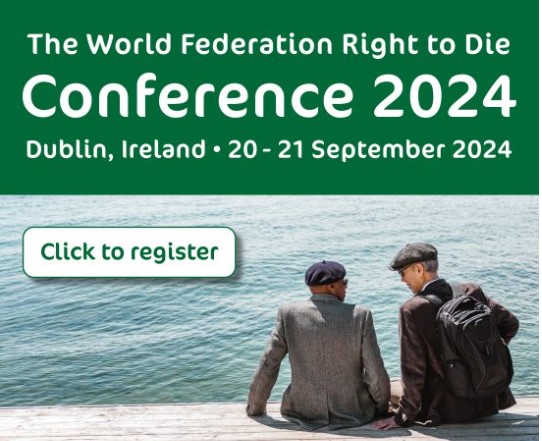
Last month, End of Life Ireland hosted the 2024 international conference of the World Federation of Right to Die Societies, which pro-euthanasia campaigners from around the world attended.  Several speakers at the conference made no secret of their wish to see euthanasia and assisted suicide permitted on very broad grounds indeed, far beyond the terminally ill.  They are not even trying to hide the slippery slope.

On 17th October, the Dáil will vote on the Report of the Joint Oireachtas Committee on Assisted Dying, which recommends both euthanasia and assisted suicide for patients with an incurable and irreversible condition. We can already see the ambition of campaigners to go much further than this.

Speakers at the conference included Justin McKenna and Jane Lazer of End of Life Ireland. When they appeared before the Oireachtas Committee, they expressed a wish that euthanasia and assisted suicide be made available on broad grounds. They clearly stated their aim to extend assisted suicide to include patients suffering from conditions such as dementia and multiple sclerosis. Some of what they had to say can be found here.

Another speaker was Colin Brewer. He is worth noting because he was struck off the medical register in Britain in 2006 for serious professional misconduct. According to The Guardian, he had provided “patients with a lethal cocktail of drugs that led to the death of one and the development of further addictions in several others”.

Later, Brewer revealed that between 2013 and 2016 he had helped six British patients with dementia to end their lives at assisted suicide clinics in Switzerland, despite none of these patients being terminally ill. Although Brewer was no longer licensed to practise in Britain, he nonetheless assessed these patients’ mental capacity to choose death before their trips abroad.

Why did the Irish speakers seem happy to share a platform with him?

Brewer is an advocate for euthanasia not only for those suffering from dementia but also for “patients with motor neurone disease, stroke and other intractable and/or progressive conditions don’t want to face years of intolerable quality of life.”

At the Dublin conference, Brewer’s presentation was titled: “Most people considering MAID (medically assisted death) for early dementia aren’t ‘depressed’, they are understandably unhappy.” His panel also featured a presentation titled “Dementia as part of the end of life conversation,” and on the same day, two Canadian activists spoke about “Glimpses into dementia and assisted dying”.

Five of the six patients assessed by Brewer ended their lives at the Dignitas clinic in Zurich.

Silvan Luley, a representative of Dignitas, also spoke at the conference. His talk, “Assistance for the right to choose the time and manner of one’s end of life – Beyond terminal”, underscored that Dignitas offers assisted suicide not only for terminally ill patients but also for those with “unbearable pain”, which is defined entirely at the discretion of the person seeking to die.

When Luley presented at the Joint Oireachtas Committee, last year, he noted that less than half of those who die at Dignitas are terminally ill.

Luley also revealed that 12 Irish residents have died at Dignitas since 2003, while approximately 100 Irish people are currently members of the organisation. The membership fee for “accompanied suicide” is 2,500 Swiss Francs (around 2,600 euro), but the full service, including funeral and administrative arrangements, costs more than 11,500 euro plus VAT.

During his address to the Joint Oireachtas Committee, Luley emphasised Dignitas’ philosophy: “The core thing really is to install a system of maximum freedom of choice and at the same time education for the public and education for the healthcare system and healthcare professionals so they learn how to deal with and how to listen to wishes of people who say "I do not want to continue living". We must change the culture via education in the direction of making the base layer so that people can come forward and whatever the reason may be for them to say "I want to end my own life, I want to die and I want to use suicide", they are being met at eye level and from there on, there is discussion around what is there in terms of solutions towards reinstalling quality of life, to bring them back on track to enjoy life and have a good quality of life, and if that is not possible to make it possible that these people can have a professional way out of their suffering, which is assisted dying.” 

Members of the Dáil who will vote on the Report next month must recognise that once assisted suicide or euthanasia is legalised, it becomes difficult to maintain strict limitations. The experiences of other countries, along with discussions at the recent international conference, demonstrate that there will be continual pressure to further liberalise these laws. To prevent such escalation, the Report must be firmly rejected.


P. S.

A prominent pro-euthanasia campaigner in Ireland is Tom Curran from Exit International. Exit International was previously a member of the World Federation of Right to Die Societies but left in 2021. While the Federation prefers a medical model regulated by legislation, Exit International believes euthanasia and assisted suicide are fundamental human rights. They argue that any mentally competent adult should have access to these options without needing to meet any medical criteria, and that healthcare professionals should not be required to participate.

venerdì, agosto 23, 2024

New poll shows public misgivings about euthanasia


A new poll highlights significant public concerns about the potential legalisation of euthanasia and assisted suicide in the UK. It also highlights contradictory attitudes. There is broad support for allowing the procedures but nervousness about how it may work out.

While a majority may support “assisted dying” in principle, many feel that the complexities and risks involved make it unsafe for implementation in Britain. A substantial 60pc worry that pro-euthanasia legalisation would alter the doctor-patient relationship, and 56pc fear it could normalise suicide.

Concerns also include the possibility of pressuring vulnerable people, especially under the strain of NHS budgets, to choose death. 43pc fear it could incentivise health professionals to encourage some patients to take their lives.

The poll found that most people supported legalising euthanasia or assisted suicide but believed it would backfire in practice. (Curiously, the poll found that the 18-24 age cohort is the only in which the majority of respondents does not support a change in the legislation.)

Moreover, 70pc of respondents believe that countries like Canada and the Netherlands have “gone too far” with similar laws.

In both of these countries some of the worst fears of euthanasia critics have been confirmed (see here and here) and these fears are confirmed by a new report about Canada titled “From exceptional to routine”.

This study shows that “Medical Assistance in Dying” (MAiD) was introduced in 2015 as a rare option and it is now the fifth cause of death in Canada.

While the number of denied requests continue to decrease every year, approved cases went from 1,028 in 2016, the first year of operation, to 13,241 in 2022. This represents a thirteenfold increase. No other country has seen such a dramatic rate of growth.

Unlike other jurisdictions, the criminal prohibition in Canada on euthanasia and assisted suicide was overturned not through new legislation but through the courts. It was originally intended for exceptional cases and then, in a few years, most of the initial safeguards have been removed by judges or by legislators.

For instance, there was a minimum ten-day assessment period for MAiD but a government bill removed it in 2021. The median time between written request and death in 2022 was only eleven days, and it is possible for requests to be assessed and provided in a single day.

Moreover, the previous requirement that the patient give final consent before administration of death is now no longer mandatory.

Euthanasia and assisted suicide became initially available to persons whose death was “reasonably foreseeable” and later it was extended to anyone considering that their physical suffering, from a disability for example, is intolerable to them.

One of the few restrictions still in place is again under attack. Currently, people suffering solely from mental disorders are not eligible for MAiD but a very recent case aims at removing this safeguard as it is considered discriminatory.

If it is offered to those who are in physical pain, why not to those who are in mental pain, argue the pro-euthanasia campaigners.

The growing acceptance and expansion of euthanasia and assisted suicide in Canada, including the potential for its use solely in cases of mental illness, raises alarms about the inevitable slippery slope such legalisation would create. Something worth considering before any attempt to change the law, here or in the UK.

giovedì, luglio 04, 2024

European Court of Human Rights turns down euthanasia bid


In some good news, the European Court of Human Rights (ECHR) has recently ruled that there is no right to assisted suicide under the European Convention on Human Rights, allowing individual signatory States such as Ireland to continue banning euthanasia and similar practices.

Last month, the ECHR ruled on the case of Dániel Karsai, a Hungarian lawyer suffering from amyotrophic lateral sclerosis (ALS). Mr Karsai argued that Hungary’s ban on euthanasia and assisted suicide violated his human rights under Articles 8 (respect for private and family life) and 14 (prohibition of discrimination) of the European Convention on Human Rights.

Mr. Karsai maintained that he was being discriminated against because terminally ill patients in Hungary are allowed to withdraw from life-sustaining treatments, but he had no option to hasten his death. Hungarian law criminalises facilitating suicide, even if it occurs abroad. Given his condition, Mr. Karsai claimed he could not end his life without assistance, which he argued was discriminatory.

The Court, which has jurisdiction over 46 member States of the Council of Europe, affirmed that there is no right to assisted suicide in the European Convention on Human Rights. In a 6-1 majority decision, the ECHR rejected Mr. Karsai’s arguments, recognising the distinction between the right to refuse or withdraw from medical treatment, which is common among the members of the Council of Europe, and the request to be actively killed or helped with suicide.

The Court acknowledged that while what they call “physician assisted dying” (PAD) has been introduced in some countries, “the majority of member States continue to prohibit and prosecute assistance in suicide, including PAD. Moreover, the Court notes that the relevant international instruments and reports, including the Council of Europe’s Oviedo Convention, provide no basis for concluding that the member States are thereby advised, let alone required, to provide access to PAD”.

The judges observed that opinions on this topic differ profoundly in democratic countries, granting member states a considerable margin of appreciation (that is, freedom to decide their own laws). This means States are free to legislate on the matter of euthanasia and assisted suicide according to their societal values.

The judges observe that “the wider social implications and the risks of abuse and error entailed in the provision of PAD weigh heavily in the balance when assessing if and how to accommodate the interests of those who wish to be assisted in dying.” The member States enjoy considerable freedom in deciding how that balance should be struck.

The ECHR noted that the available options in palliative care, including the use of palliative sedation, are generally able to provide relief to patients in Mr Karsai’s situation and allow them to die peacefully.

Mr Karsai complained that Hungary’s law considers as a criminal offence the facilitation of suicide even when it happens abroad. The Court replied that this is nothing unusual or excessive. “The criminal prohibition on assisted suicide is intended to deter life‑endangering acts and to protect interests arising from considerations of a moral and ethical nature”, they said, and the State is entitled to extend this protection of its citizens even outside its borders.

This is an important ruling that reaffirms that, even as euthanasia and assisted suicide are gaining wider acceptance, they are not human rights under the Convention and States have no obligation to permit these practices.

lunedì, maggio 13, 2024

The organisation that offers abortion ceremonies


Recently, I revealed the rapid increase in what might broadly be called ‘New Age’ wedding ceremonies in Ireland presided over by various non-denominational organisations. But wedding services are not all they provide. At least one group offers ceremonies to mark abortion, divorce, and “preparation for dying”. It would have been also unimaginable until very recently that a ceremony would be offered to mark, or even celebrate, an abortion, but this is the point we have reached.

The organisation is called ‘Entheos Ireland’. It presides over hundreds of marriages per year, having been founded just three years ago.

In the “ceremonies of threshold and transition” section of their website, they also outline ceremonies that “have their roots in beginnings, such as Renaming, Gender Affirmation, Coming-of-age, New Career”, in addition to ones that “stem from endings, such as Abortion, Divorce, Retirement”.

To this list must be added “preparation for dying” services, which are distinct from funerals.

Abortion or “preparation for dying” celebrations sound quite shocking, but not surprising when we explore who is behind these new ceremonies.

Entheos Ireland was launched in 2021 by Karen Dempsey. Dempsey is a pro-choice activist who was involved in the Repeal the 8th referendum campaign. At the time, she was one of the 25 women who dressed as red handmaidens (inspired by the book, ‘The Handmaid’s Tale’), and marched to the Dail in an event organised by the Socialist feminist group ROSA, one of the most radical pro-choice groups.

(She also protested against the removal of a pro-abortion mural from the Project’s Art Centre a few years ago. See here)

Entheos describes “preparation for dying” ceremonies as follows: “Our End of Life sessions create a space for the psychological and spiritual exploration needed for individuals and families facing death.  …  Actively engaging with the process of dying can be both liberating and comforting, and can help to relieve the anxiety of dying with important things left unsaid and undone.”

Interestingly, one of their solemnisers is Janie Lazar, the chair of the pro-euthanasia organisation End of Life Ireland.

We can envisage that if assisted suicide or euthanasia are legalised in Ireland, groups such as Entheos will offer ceremonies to go along with them. Some might be shocked, but in Canada there is at least one church that hosts assisted suicide ceremonies on its premises.

Entheos does not promote a specific faith, but their solemnisers are registered with the HSE as “religious”. They are akin to religious ministers without a regular congregation, performing ceremonies upon request. This is a new form of “liquid spirituality”, which requires no strong commitment or beliefs. Anything goes.

“I would rather not have the word religious involved with us,” said its founder Karen Dempsey in a recent interview. The interviewer says that “the designation as ‘religious’ is a useful loophole [in the relevant regulations]. It allows Entheos’ celebrants to incorporate elements of faith into people’s ceremonies … in a way that a totally secular officiating body could not.”

The organisation already has 65 celebrants registered with the HSE and over 80 people on the waiting list for their training sessions, which costs €2,500. This emergent market can be quite profitable, with an average fee of €600 for a wedding and €280 for funerals and other ceremonies.

The rise of these ‘New Age’ ceremonies indicates that people still want a spiritual element in the key moments of their lives. But apart from funerals, traditional religions have always offered these ‘rites of passage’ at positive moments like when a baby is born, or a couple get married. The emerging spirituality adds much less positive events like abortion and divorce to the list of possible rites of passage, and probably in time, euthanasia as well.

martedì, aprile 02, 2024

Recommendations for 'assisted dying' are wrong and dangerous, even by their own standards


As predicted, the Joint Oireachtas Committee on Assisted Dying has recommended the legalisation of assisted suicide and euthanasia in Ireland. It claims they will be allowed under only strict conditions and with proper safeguards, but when you read the actual report, some of the conditions and safeguards seem neither strict nor proper.

The final report from the Committee, presented last month, includes some criteria to qualify for assisted suicide and euthanasia, but it also recommends a formal review of the legislation after three years of operation, when these criteria could be changed. We all know that they will be changed, as it has happened in other countries.

Specifically, the report recommends that so-called “assisted dying” should be offered to adults who are Irish citizens or have been residents here for at least one year.

In order to qualify, the person should be “diagnosed with a disease, illness or medical condition that is: a) both incurable and irreversible; b) advanced, progressive and will cause death; c) expected to cause death within six months (or, in the case of a person with a neurodegenerative disease, illness or condition, within 12 months); and d) causing suffering to the person that cannot be relieved in a manner that the person finds tolerable.”

This is objectionable enough, but even on its own terms, the report’s recommendations would not create proper safeguards.

For example, take Recommendation 28 of the report. It says: “The Committee recommends that two formal requests for assisted dying must be made, with a set specified interval between. At least one of these requests must be recorded in writing, and before two independent witnesses.”

So, two requests have to be made, only one of which in writing and before two witnesses.

This is extremely loose wording. It does not tell us whether the two requests must be made to two separate individuals. Could the two requests be made to the same person?

We are not told that the person or persons to whom the requests are made should be a doctor. Presumably they ought to be, but we should be told. Then again, should doctors be involved in this at all except to confirm that the person is dying and is within a certain number of months of death?

Who would the “independent witnesses” be? Two friends? Two strangers? Two lawyers? Who knows?

The report does not clarify who will assess the requests and, specifically, no mental health assessment is recommended. It only says that “the doctors have an obligation to acknowledge receipt of the request and should deliver a response within a specified timeframe.” According to the recommendations, a qualified psychiatrist is required only when there are concerns that the person might not be competent to make an informed decision.

The report recommends an interval between the two requests, but it does not specify its length. It could be two weeks or a day. Such intervals are required, in some jurisdictions that permit assisted suicide or euthanasia, as “cooling off” periods that allow the patients to reflect about their decision.

There is no requirement in the report that the family of the patients be informed before the procedure.

In some jurisdictions, health professionals cannot actively suggest assisted suicide or euthanasia to their patients as an option, but they can only accept requests coming spontaneously from patients. This is a protection against patients being coerced or led towards the procedure.

In the Oireachtas report there is no recommendation that would stop doctors mentioning ‘assisted dying’ as an option, which is an appalling oversight, or was it deliberate?

The recommended protections for conscientious protection do not go far enough. Medical personnel will not be obliged to take part in ‘assisted dying’ but will have to refer a patient who requests to die in this way to another doctor. This is seen by many doctors as a form of coerced participation. Institutions are offered no protection. This means a hospice, for example, could potentially be forced to allow its patients to die in this way if that is what a patient wants, regardless of its ethos.

The final report received approval by nine of the Committee’s fourteen members. Three members voted against it. Notably, the Chair of the Committee, independent Michael Healy Rae, voted against, together with Fianna Fail TD Robert Troy and independent Senator Ronan Mullen. One member of the Committee was absent from the final vote and one, namely Pa Daly from Sinn Fein, abstained.

The three members who voted against also presented a minority report, which I will analyse in the future.

The 38 recommendations in the report, while extensive, demonstrate a problematic prioritisation of ‘choice’ over the intrinsic value of life and the potential for unintended consequences, especially for the most vulnerable in society.

The report ignores the opposition of the main medical organisations in Ireland, particularly of those medical professionals who work in palliative care.

The report glosses over the evidence presented by many experts regarding the deeply divisive and contentious outcomes observed in jurisdictions like the Netherlands, and Canada, where the slippery slope of criteria expansion and the blurring lines between voluntary and non-voluntary euthanasia have been well-documented.

Even on their own terms, some of the recommendations of the report are appallingly lax. The final document has been barely analysed by a media distracted by the resignation of Leo Varadkar as Taoiseach, and which tend not to subject euthanasia advocates to proper critical scrutiny anyway.

In the greater scheme of things this report, which represents a big step towards euthanasia and assisted suicide, is far more important than the resignation of any given Taoiseach. It beckons us to cross a moral rubicon.


venerdì, febbraio 09, 2024

Oireachtas Committee hears why Denmark has rejected euthanasia


The Danish parliament has a Council of Ethics that sometimes reports to it on ethical issues. Recently it reported on euthanasia. Surprisingly perhaps – given Denmark’s reputation as a hyper-modern society – the Council recently voted overwhelmingly against recommending euthanasia or assisted suicide in any way, shape or form. Members of the Council of Ethics appeared before the Oireachtas Committee on Assisted Dying last week to explain their decision.

If euthanasia becomes an option, they said, “there is a great risk that it will become an expectation more than a right”.

The Committee was told: “The only thing that will be able to protect the lives and respect of those who are most vulnerable in society will be a ban without exceptions.”

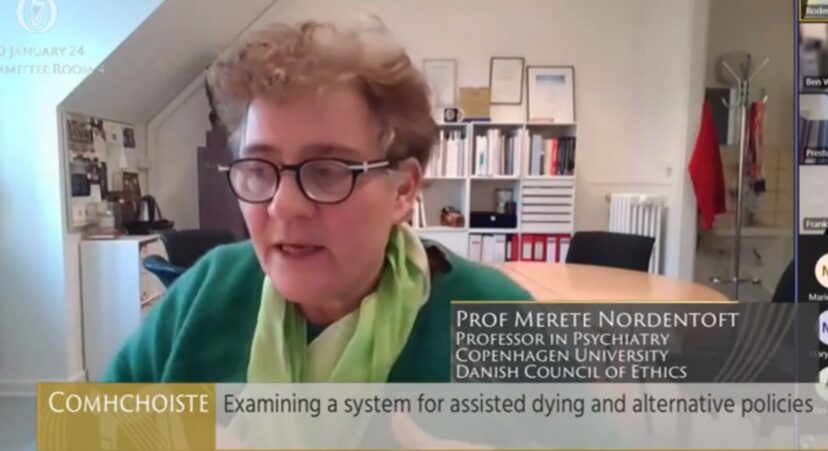
Dr. Merete Nordentoft (pictured), professor of psychiatry at the University of Copenhagen and a member of the Council, said: “There is a risk that it [euthanasia] will even be experienced as a duty”.

The potential societal impacts of legalising euthanasia were highlighted, including negative changes to perceptions of old age, disability, and quality of life.

“Assisted dying may cause unacceptable changes to basic norms for society and healthcare. The very existence of an offer of assisted dying will decisively change our ideas about old age, the coming of death, living with disability, quality of life and what it means to take others into account”, Prof. Nordentoft remarked.

In its written statement to the Oireachtas Committee, the Council of Ethics stated without ambiguity that only a total ban will protect the lives of the most vulnerable.

“We do not believe that legislation can be developed which will be able to function properly. We are concerned, particularly based on findings of developments in broad regimes of assisted dying, about the ability to adequately monitor and restrict the practice and possible expansions. The only thing that will be able to protect the lives and respect of those who are most vulnerable in society will be a ban without exceptions.”

As an expert in the field of suicide prevention, Prof. Nordentoft told the Committee about the often-changing nature of suicidal ideation and the importance of retaining the option to change one’s mind. Assisted suicide and euthanasia, instead, are irreversible and remove this possibility.

Also, it was noted that many patients undergoing palliative care may reassess their perception of a worthy life, suggesting that their desire for euthanasia may also evolve and reverse over time.

When asked about the apparent support for euthanasia among the Danish population, Prof. Nordentoft replied that this is often based on lack of proper knowledge of the current legal and medical situation. Many people believe that they will be forced to suffer against their will but, in Denmark as in Ireland, doctors are not obliged to provide life-prolonging treatment against a patient’s will, except in cases of psychosis and severe anorexia nervosa. Moreover, the use of medication to alleviate suffering, is allowed in palliative care, even when it may unintentionally shorten life.

The thoughtful recommendations provided by the Danish Council of Ethics should serve as a crucial consideration for legislators, urging them to reflect deeply on the outcomes and pitfalls observed in the Netherlands.

Indeed, the Netherlands is about to make euthanasia available to those between the ages of one and 12. For the time being, it will be only available to children in this age group with a terminal illness. Small babies can already be euthanised and so can anyone over 12. The change means that all age groups can now be killed via euthanasia.  The logic of euthanasia is inexorable. Eventually, it covers everyone.