Visualizzazione post con etichetta abortion. Mostra tutti i post

mercoledì, gennaio 21, 2026

One in three pregnancies in England now end in abortion

New official figures show that abortions in England and Wales reached a record high in 2023, while the number of births continued to fall. As a result, about one in three pregnancies now ends in abortion.

According to the latest statistics, 278,740 abortions were carried out in England and Wales in 2023, an enormous number. This represents a 10.6pc increase on the previous year and marks the highest number ever recorded. Ten years earlier, in 2013, 190,800 took place.

At the same time, the number of births continued to decline. In 2023 there were 591,072 live births in England and Wales compared with 698,512 in 2013. The decline in births comes despite a growing population, something that is driven almost entirely by immigration.

Comparing the number of terminations with the number of births, we see that there were approximately 47 abortions for every 100 live births. This represents a substantial shift from the previous year, when the figures stood at 37 abortions per 100 live births.

Taken together, these figures mean that England and Wales now have the highest proportions of pregnancies ending in abortion in the Western world.

Scotland has seen a similar overall trend. In 2024 (Scotland’s data is reported a year ahead of England and Wales), there were 18,710 abortions, a 3pc increase on the 18,242 recorded in 2023. Ten years earlier, in 2014, they were 11,787.

While abortion numbers have been rising gradually for over a decade, the most recent data show a sharper increase. One likely explanation is the widespread use of abortion pills. Originally introduced as a temporary measure during the Covid pandemic, the option to take abortion pills at home was made permanent in England and Scotland in 2022. As a result, 72pc of abortions in England and Wales in 2023 took place at home, and 57.1pc in Scotland in 2024.

The England and Wales report also shows that a large proportion of abortions are repeat procedures. In 2023, 42pc of women having an abortion had previously had one or more abortions, up from 37pc ten years earlier.

The breakdown by marital status has remained broadly unchanged. In 2023, 82pc of abortions were carried out on women recorded as ‘single’. Of these, 52pc were unmarried but in a relationship. These proportions have been relatively stable over the past decade. A married woman is vastly less likely to have an abortion than a unmarried woman.

The data also include women travelling from abroad. In 2023, 235 women resident in Ireland had abortions in England, up from 201 the previous year. Among them, 55pc were single, 13pc had previously had an abortion, and 72pc identified their ethnicity as Irish. For 62pc of these women, the abortion was authorised under Ground C (mental or physical health).

In at least 50 cases, the baby was diagnosed with Down Syndrome, up from 37 the year before. However, the true number may be higher, as such diagnoses were underreported in earlier years.

With abortion rates at record highs and births continuing to fall, what will be the UK’s long-term demographic future?

lunedì, ottobre 06, 2025

Shocking revelation about babies born alive after abortion


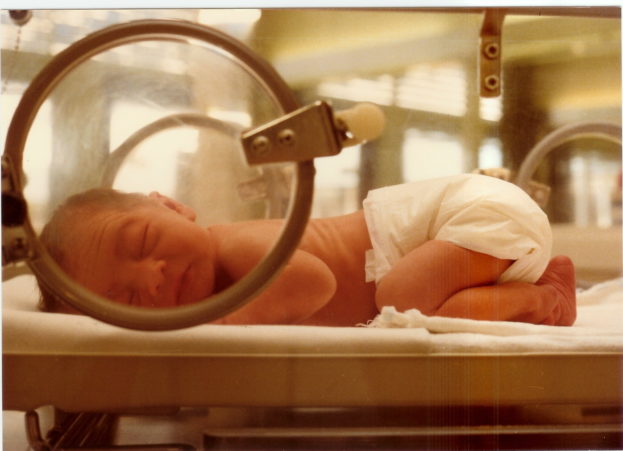
It has been revealed that more than one hundred babies have been born alive in Ireland following abortions since the procedure was legalised in 2019. A large majority of these babies suffered from a major congenital abnormality and were generally delivered between the 22nd and 27th week of pregnancy. The grim news came in reply to a Parliamentary Question from Deputy Ken O’Flynn (Independent Ireland). The HSE confirmed that in 2022 alone, 12 neonatal deaths followed a termination of pregnancy.

These were babies born alive after an abortion who died within the first week of being delivered, generally on the first day. As mentioned, in nearly all of these cases, they suffered from a life-limiting condition. The HSE response did not include a further 11 cases from the same year where babies were delivered alive before 24 weeks of pregnancy or with a birth weight under 500 grams.

Reports from the National Perinatal Epidemiology Centre (NPEC) provide a fuller picture.

Between 2019 and 2022, the NPEC recorded 84 live births following termination of pregnancy. Every one of these babies died soon after birth, either as a neonatal death or at an earlier “pre-viable” stage, before 24 weeks’ gestation and weighing under 500 grams.

The numbers varied by year. In 2019 there were 17 such cases, in 2020 there were 30, in 2021 there were 14, and in 2022 there were 23. Most of these cases occurred between 22 and 27 weeks of pregnancy, and in nearly every instance the babies had a major congenital anomaly — a serious medical condition that meant survival beyond 28 days after birth was not expected.

This would be a ground for legal abortion in Ireland after 12 weeks of pregnancy.

Alongside the live births, the NPEC reports also record cases where babies are delivered without signs of life following a termination. Between 2019 and 2022, there were 106 stillbirths after abortion in Ireland. As with the live births, the overwhelming majority occurred between 22 and 27 weeks of pregnancy.

What about the most recent years? Unlike the earlier reports, the 2023 NPEC audit excluded abortions from its main figures, but if the same pattern continued, there were probably around 18 live births after abortion in 2023, with a similar number expected in 2024.  That would bring the total for the six years 2019–2024 to about 120 live births following terminations of pregnancy in Ireland.

Deputy O’Flynn has raised further questions with the Minister for Health about the kind of care these babies receive in the moments after birth.

In 2020, a study based on interviews with 10 doctors who perform abortions in Irish hospitals revealed that it was unclear to them who should look after babies born alive, and that they were “begging people to help” provide palliative care.

In 2023, even the strongly pro-choice review of abortion legislation by Marie O’Shea noted that some doctors were not “prepared to offer comfort care where the birth is a result of a termination of pregnancy,” and called for proper guidelines to be developed.

Pro Life Campaign spokesperson Eilís Mulroy commented on the recent revelations from the HSE: “Back in 2018, soon after the abortion referendum, the then Minister for Health, Simon Harris, accused TDs in the Dáil of resorting to ‘shock tactics’ for raising concerns about babies being born alive after abortion and the care they might receive. We now know that the concerns raised are grounded in harsh reality and should not have been dismissed.”

mercoledì, agosto 13, 2025

Ireland’s terrible combination: more abortions and fewer births

Since the 2018 referendum repealing the Eighth Amendment, the number of abortions in Ireland has continued to rise.  According to the annual report produced by the Department of Health recently the number rose to 10,852 in 2024 compared with 6,666 in 2019. This represents a 63pc increase.

Additionally, 201 Irish residents had abortions in England, based on the most recent UK statistics (referring to 2022), and 10 Irish residents had abortions in the Netherlands (in 2023).

The upward trend is clear. Abortion has become more socially accepted, and the legal framework introduced after the referendum has significantly increased requests.

One measurable outcome of this shift is the abortion ratio, i.e. the number of abortions compared to births. In 2024, there were 201 abortions for every 1,000 live births, meaning approximately 16.8pc of known pregnancies (excluding miscarriages and stillbirths) ended in abortion. To put this in context, let’s consider the figures from when abortion was legal in Ireland only to save the life of the mother.

In 2018, 2,879 Irish women had abortions in England, equivalent to 47 abortions per 1,000 live births, or 4.5pc of know pregnancies.

Pro-choice campaigners told the Oireachtas Committee on abortion in 2017 that around 5,000 Irish women were having abortions annually at that time, between women travelling to England, and women buying the abortion pill illegally. This would be an upper estimate of the total number.

This upper estimate means that at most there were about 82 abortions per 1,000 live births in 2018.

This means that since the repeal of the Eighth Amendment, the proportion of pregnancies ending in abortion increased hugely from 7.6pc (taking the pro-choice claim at face value) to 16.8pc. This sharp increase is one of the most striking consequences of the 2018 referendum.

Setting aside for a moment all moral considerations, let’s see how the growing number of abortions has an impact on the future population.

The current fertility rate in Ireland is just 1.5 children per woman, well below the replacement level of 2.1. At this rate, assuming no emigration or immigration, Ireland’s population would decline to around 3.05 million in 50 years-time from 5.3 today. Of course, there will surely be lots of net immigration, but we can still see what a low birth rate can do.

Fertility rates reflect only live births because they are calculated as the average number of children a woman would have in a lifetime, but if abortions are included in the calculation, the adjusted fertility rate for Ireland in 2024 would raise to approximately 1.78.

This is still below the replacement level, but significantly higher than the current rate.

A 1.78 rate means that, assuming no emigration or immigration, Ireland’s population would decline to around 4.04 million in 2075, a much smaller drop.

What is more concerning is that as the abortion rate is increasing, the impact on the future population is likely to be even more dramatic.

The figures outlined above make it clear that the abortion referendum in 2018 has brought about not only a legal and cultural shift, but also a significant demographic one. The significant rise of the abortion ratio within less than a decade is a measurable and consequential outcome. The broader societal implications, particularly in terms of declining fertility and long-term population reduction, should not be overlooked.

venerdì, giugno 20, 2025

England crosses another abortion red line


The House of Commons has just voted to decriminalise self‑induced abortions up to birth. What this means is that a woman can abort her child at any stage up to birth and not face criminal penalties.

This shocking decision is the biggest change in the English law pertaining to this issue since the Abortion Act in 1967.

It remains a criminal offence to help a woman with an abortion outside the legal bounds.

The current legislation allows abortions up to 24 weeks of gestation on certain grounds which are very broadly interpreted and applied, and even later in case of serious anomalies or where there is a perceived threat to the physical or mental health of the mother.

Those regulations remain for hospitals or clinics. What is new is that a woman who has an abortion outside those limits won’t be persecuted.

According to the latest figures, more than 250,000 abortions are performed every year in England and Wales. The equivalent of 54 abortions per 100 live births.

Removing criminal penalties could encourage late-term or unregulated home abortions, especially with easier access to abortion pills nowadays. Abortion pills can be obtained through remote consultation, during which crucial details such as gestational age and conditions of the pregnancy can be easily concealed.

But the change to the law, which now goes before the House of Lords, removes a further protection for unborn human beings. In theory, a woman can kill her baby on the day before it is due and face no criminal charge. (In practice, women were very rarely prosecuted for having an abortion outside the legal limits).

Reaction from the Catholic Church and pro-life group has been swift.

The Catholic Bishops’ Conference of England and Wales stated: “This decision significantly reduces the protection of unborn lives and will result in grave harm for pregnant women. Women will be even more vulnerable to manipulation, coerced and forced abortions. This legal change will also discourage medical consultation and make the use of abortion pills for dangerous late-term, at-home abortions more likely.”

They continued: “Abortion is often chosen because of the personal challenges that a woman faces, as well as the lack of proper suitable guidance and support. The enacting of New Clause 1 will result in women being more alone, vulnerable, and isolated.”

Dawn McAvoy, from Both Lives Matter UK, commented: “In effect, parliament have voted to facilitate dangerous backstreet abortions [via the abortion pill at home] where dangerous, even late-term abortion is legitimised, and girls are left more vulnerable than ever.  This is just not healthcare, that is abandonment.”

Right To Life UK spokesperson, Catherine Robinson, said: “Pro-abortion MPs have hijacked a government bill to rush through this radical and seismic change to our abortion laws after just two hours’ debate. This is the primary time this extreme abortion amendment has been debated within the House of Commons, and there was no consultation with the general public on this seismic law change. We will likely be fighting this amendment at every stage within the Lords.”

In Northern Ireland, in 2019 the British government introduced a new legal framework stating that women “will not be criminalised in relation to their own pregnancy under any circumstances”.

Similarly, here in Ireland, legal limits and regulations do not apply to women that self-procure an abortion but campaigners such as the National Women’s Council of Ireland want to extend decriminalisation to anyone involved in abortions.

venerdì, febbraio 21, 2025

Number of abortions in Northern Ireland continues to surge


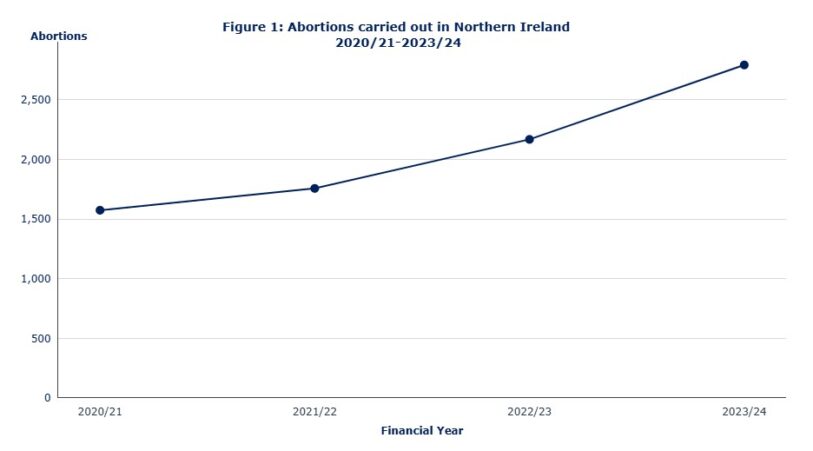
The number of abortions being carried out in Northern Ireland has increased by a massive 29pc in a single year, according to official statistics published by the Department of Health. The figure of 2,792  is three times the number of Northern Ireland women who went to England for abortions before the law in the North was liberalised in 2019. This mirrors what is happening in the South where 10,000 abortions were carried out in 2023.

The new figures indicate that the number of abortions in Northern Ireland rose from 2,168 in the financial year 2022/23 to 2,792 in 2023/24. Notably, 97pc of these procedures were carried out under Ground A, which permits abortion for any reason before 12 weeks of gestation.

In Northern Ireland, abortion was decriminalised in October 2019. Before this, it was only permitted in limited circumstances, such as when it was necessary to save the life of the mother or prevent permanent and severe harm. As a result, the number of abortions performed in Northern Ireland was extremely low. Only 22 cases were recorded in 2019.

In the same year, 1,014 women from Northern Ireland travelled to England for abortion procedures, which were funded by the UK government. In cases of financial hardship, travel costs were also covered.

With the introduction of new liberal regulations in March 2020, abortions in Northern Ireland expanded significantly, resulting in over 10,000 terminations in total since the legal change.

Compared to the first year of the new regulatory regime, there has been a 77pc increase of abortions taking place in Northern Ireland hospitals, the recent statistics show. However, once we include also abortions carried out abroad, the overall picture is even more shocking.

To the recently released figures, which are underestimated according to the report, one must add the number of Northern Ireland residents who had abortion in England – 172 according to the latest statistics referring to 2022 – and also those carried out in the Republic (9 in 2023).

This brings the total number of abortions involving Northern Ireland residents to approximately 3,000 per year—three times higher than the 1,014 terminations recorded in England in 2019, the final year before the introduction of the new regulations.

Unlike reports on abortion services in England and Wales, the Northern Ireland Department of Health does not provide details about marital status, previous abortions, or other demographic information. This is because such details are only recorded in a notification form if voluntarily disclosed by the woman.

However, the most recent data from Northern Ireland residents who had abortions in England reveal that only 12pc were married and 14pc had one or more previous abortions.

The recent statistics form the Department of Health confirm that restrictive legislation keeps abortion figures down. A threefold increase in only five years should prompt politicians to reconsider the current legislation.

sabato, novembre 09, 2024

Some good and bad pro-life news from the US elections


In this week’s US election, citizens voted not only in the presidential and two congressional elections but also in numerous referendums, including several on pro-life issues. In three states, attempts to make abortion laws more liberal were rejected, while seven states passed pro-choice ballot measures.

The most significant pro-life victory occurred in Florida, where an effort to extend the legal abortion limit from 6 to 24 weeks of gestation did not reach the required quota of 60pc of the vote.

Pro-life advocates, led by Governor Ron DeSantis, successfully blocked Amendment 4, a proposed constitutional amendment aimed at establishing a “right” to abortion. The amendment would also have allowed abortions after 24 weeks for “health reasons”, which are always vague, like in Britain.

If passed, Amendment 4 would have nullified Florida’s current six-week abortion limit and potentially override parental consent requirements, threatening parental rights.

Despite over $40 million in support from out-of-state pro-abortion organisations, the amendment fell three short of the 60pc threshold needed to pass constitutional amendments in the state.

Pro-life advocates celebrated significant wins also in Nebraska and South Dakota, as voters rejected proposed constitutional amendments aimed at expanding abortion access.

Nebraska had two papers on the ballot. The current law prohibits abortions after the first trimester (12 weeks), except for medical emergencies or cases related to rape or incest.

An attempt to lift the 12-week limit was rejected by voters, while they approved by 55pc a competing ballot measure to enshrine the current limit not only in legislation but also in the state constitution.

In South Dakota abortion is banned except to save the life of the mother. A constitutional right to abortion was opposed by 58.6pc of voters.

These results are extremely important for the prolife movements. In 2022, the Supreme Court found that there is no right to abortion in the US Constitution, and left every state to regulate this issue in its constitutions or in legislation. In the meantime, the pro-life side has lost one vote after another, until the various referendums this week.

Another important pro-life victory was achieved in West Virginia, where voters approved a constitutional amendment to prohibit assisted suicide and euthanasia. They were already illegal but now the ban is now in the state constitution.

Unfortunately, radical pro-choice amendments passed in seven states.

Colorado voted to create a ‘right’ to abortion in the state constitution and allowing the use of public funds for it. Its law was already one of the most extreme as it does not restrict abortion after a specific point in a pregnancy. Babies can be killed up to birth. In 2020, voters rejected an initiative that would have banned abortions after 22 weeks.

A similarly radical amendment passed with a large support (61.5pc) in the state of New York, where abortion is already allowed up to birth.

In MarylandMontana and Nevada, where abortion is already legal up to viability (24 weeks), voters added a new article to the Constitution’s Declaration of Rights establishing a “right to reproductive freedom”.

Missouri voters also made abortion ‘a fundamental right’ to its Constitution by a small margin (51.7pc). The pro-choice campaign spent almost $29 million compared to a mere $1.3 million of pro-life side.

In Arizona, where abortion is legal for any reasons up to 15 weeks of gestation, 61pc of voters supported an amendment to the state constitution establishing that the state may not interfere with ‘the fundamental right’ to abortion before the point of foetal viability.

These result show how radical the pro-choice movement has become in the US. They always push the limits and, even when the law has no gestational limits to abortion, they push it to make a ‘fundamental constitutional right’.

These recent pro-life victories are encouraging but the disappointing results in many states show that fight for the right to life is far from over.

venerdì, ottobre 25, 2024

“They can have an abortion every month if they want”


recent study by two pro-choice academics provides interesting insights into the GPs who offer abortion services in Ireland. Those GPs, while fully in favour of abortion, nonetheless have reservations about some of what they are seeing, and in particular about women who have had multiple abortions in a relatively short time.

Very revealingly, when one doctor raised concerns about women having multiple abortions, someone from the British Pregnancy Advisory Service (BPAS), which is a big abortion provider, accused the doctor of being ‘judgemental’, and said women should be able to have an abortion every month if they want.

The research, published by two members of the Law School at University College Cork (UCC), is based on interviews with 15 doctors, most of whom are part of START (Southern Task-force on Abortion and Reproductive Topics), a network of pro-choice healthcare professionals.

According to the study, a key motivation for participating in providing abortions is “respect for human rights, women’s rights, and equality.” ‘Dr H’ (all names are anonymised) stated: “I’m a very great believer in bodily autonomy and the rights of the individual.”

Some of these doctors were politically active in campaigns to repeal the Eighth Amendment. However, the anonymous interviews reveal that even among strong pro-choice advocates, there are reservations about aspects of the work they are doing.

‘Dr P’ told the researchers: “I think it’s important to acknowledge that we’ve made a decision that a woman should be able to have an abortion if she wants one and, big deal, you shouldn’t have to justify it or beg for one. But at the same time, like I remember, I had one girl, a student, and she had three abortions in 18 months. And I remember thinking, you know, that’s not what I voted yes for.”

It should be noted that the study is written from a distinctly pro-choice perspective. It was partially funded by the Irish Family Planning Association, and one of its authors is a member of the Abortion Working Group of the National Women’s Council of Ireland. Only selected responses from the interviews are published, and we do not have access to the complete data, yet these selected quotes reveal some hesitations.

Another doctor, referred to as ‘Dr O’R’, remarked: “You know, I have had five who’ve had three [abortions]. Four or five women for three. And when we’re talking in our group, we get quite paternalistic saying, ‘Jesus, throw the Implanon [a long-term form of contraception] into her.’ And when we had BPAS over, they were saying, ‘How dare you be so judgemental? She can have a termination every month if she wants.’ Still, you know, the medic part of me goes, ‘God—surely that’s tough on her,’ you know, but yeah—how do you reconcile that?”

Unlike other countries, Ireland collects almost no data on women undergoing terminations, so it is unclear how many have had more than one abortion but this study confirms that this is not uncommon here.

The interviews also reveal tensions within GP practices between those who provide abortion services and those who do not. “Yeah, I’m probably known as the baby killer, but no, all nicely. Some of my very best friends and colleagues absolutely refuse to do this. They will remain my best friends. You know, I don’t do toenails. I send them up to my colleague. He sends me, you know… so we, you know, I think we’re all over it,” said ‘Dr O’R’.

Some participants in the study admitted they do not discuss their involvement in providing abortion services with family members or acquaintances. ‘Dr B’ stated: “I would say there’s very few people who would talk openly about the fact that they provide that service in a social setting because they just don’t know who’s there and what their view is going to be. And that’s actually a stigma, like, that is actually, you know, a stigma that you’re carrying.”

The report by Marie O’Shea on abortion services in Ireland estimates that around 90pc of Irish GPs do not participate in offering these services. This new study suggests that even those who are involved may struggle to reconcile their ideological commitment with the realities they face in practice.

giovedì, giugno 13, 2024

The number of abortions in hte UK reaches a new high


The number of abortions carried out in the UK in 2022 rose to its highest ever, according to new data, while births continued to decline. More than a quarter of pregnancies are now terminated before birth.

The year 2022 marked the highest number of recorded abortions in England and Wales since the Abortion Act was introduced. According to the latest official statistics, there were 251,377 abortions in 2022, reflecting a huge 17pc increase over the previous year. This significant surge has brought the annual abortion rate to 20.6 per 1,000 women aged 15 to 44 years. The rate was 16.4 ten years earlier.

Also in 2022, there were 605,479 births in England and Wales, which translates  to approximately 37 abortions for every 100 live births. In other words, for every 100 babies conceived, more than a quarter (about 26) were aborted.

Scotland also saw a rise in terminations of life. Scottish statistics are reported a year ahead compared to English data, showing that in 2023 there were 18,207 abortions, a 10pc increase from 16,607 in 2022. This increase was observed across all age groups, with the abortion rate rising from 16.1 to 17.6 per 1,000 women aged 15–44, up from 11.5 in 2013.

While the rise had been gradual and constant over the past decade, recent figures represent a sharper uptick, explained by the widespread use of abortion pills. These accounted for 86pc of all abortions in England and Wales in 2022, and for 98pc in Scotland. Introduced as temporary measures during the Covid pandemic, the English and Scottish governments made the option to take both abortion pills at home permanent in 2022. Consequently, 61pc of all abortions in 2022 took place at home in England, while the figure for Scotland in 2023 was 57.6pc.

The England and Wales report highlights that a significant proportion of abortions in 2022 were repeat procedures. Specifically, 41pc of women undergoing abortions had previously had one or more abortions, up from 37pc in 2012.

Regarding marital status, the data remains consistent with previous years. In 2022, 82pc of abortions were performed on women whose marital status was recorded as ‘single.’ Among these, 51pc were single with a partner. These proportions have remained relatively stable over the last decade.

In 2022, 201 Irish residents had an abortion in England, not a substantial change from the 206 in the previous year. Of these, 53.5pc were single and 10pc had had a previous abortion. 80pc identified their ethnicity as Irish. For women resident in Ireland, the proportion of abortions performed under Ground C (the mental or physical health of the woman) increased from 50pc in 2021 to 63pc in 2022, while those under Ground E (substantial risk of fetal abnormality) decreased from 50pc to 37pc.

In at least 37 cases the baby was diagnosed with Down Syndrome, but in this respect the statistics are incomplete, and the actual number might be higher.

Public opinion and policymakers should reflect on these tragic figures and discuss how to reverse the deadly trend. Instead, both governments and opposition parties in the UK, as well as here in Ireland, are making abortion laws and policies increasingly liberal. This, coupled with the declining numbers of births and marriages, raises significant concerns about the future demographic and social landscape.

lunedì, maggio 13, 2024

The organisation that offers abortion ceremonies


Recently, I revealed the rapid increase in what might broadly be called ‘New Age’ wedding ceremonies in Ireland presided over by various non-denominational organisations. But wedding services are not all they provide. At least one group offers ceremonies to mark abortion, divorce, and “preparation for dying”. It would have been also unimaginable until very recently that a ceremony would be offered to mark, or even celebrate, an abortion, but this is the point we have reached.

The organisation is called ‘Entheos Ireland’. It presides over hundreds of marriages per year, having been founded just three years ago.

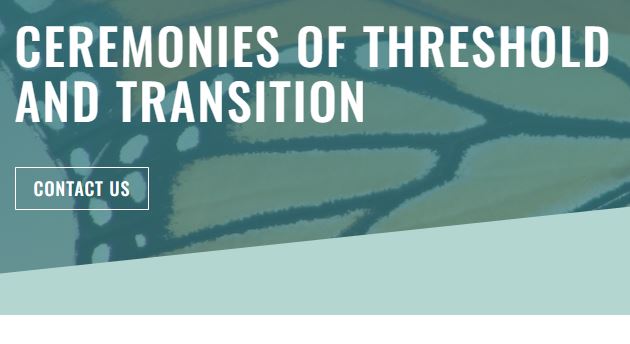
In the “ceremonies of threshold and transition” section of their website, they also outline ceremonies that “have their roots in beginnings, such as Renaming, Gender Affirmation, Coming-of-age, New Career”, in addition to ones that “stem from endings, such as Abortion, Divorce, Retirement”.

To this list must be added “preparation for dying” services, which are distinct from funerals.

Abortion or “preparation for dying” celebrations sound quite shocking, but not surprising when we explore who is behind these new ceremonies.

Entheos Ireland was launched in 2021 by Karen Dempsey. Dempsey is a pro-choice activist who was involved in the Repeal the 8th referendum campaign. At the time, she was one of the 25 women who dressed as red handmaidens (inspired by the book, ‘The Handmaid’s Tale’), and marched to the Dail in an event organised by the Socialist feminist group ROSA, one of the most radical pro-choice groups.

(She also protested against the removal of a pro-abortion mural from the Project’s Art Centre a few years ago. See here)

Entheos describes “preparation for dying” ceremonies as follows: “Our End of Life sessions create a space for the psychological and spiritual exploration needed for individuals and families facing death.  …  Actively engaging with the process of dying can be both liberating and comforting, and can help to relieve the anxiety of dying with important things left unsaid and undone.”

Interestingly, one of their solemnisers is Janie Lazar, the chair of the pro-euthanasia organisation End of Life Ireland.

We can envisage that if assisted suicide or euthanasia are legalised in Ireland, groups such as Entheos will offer ceremonies to go along with them. Some might be shocked, but in Canada there is at least one church that hosts assisted suicide ceremonies on its premises.

Entheos does not promote a specific faith, but their solemnisers are registered with the HSE as “religious”. They are akin to religious ministers without a regular congregation, performing ceremonies upon request. This is a new form of “liquid spirituality”, which requires no strong commitment or beliefs. Anything goes.

“I would rather not have the word religious involved with us,” said its founder Karen Dempsey in a recent interview. The interviewer says that “the designation as ‘religious’ is a useful loophole [in the relevant regulations]. It allows Entheos’ celebrants to incorporate elements of faith into people’s ceremonies … in a way that a totally secular officiating body could not.”

The organisation already has 65 celebrants registered with the HSE and over 80 people on the waiting list for their training sessions, which costs €2,500. This emergent market can be quite profitable, with an average fee of €600 for a wedding and €280 for funerals and other ceremonies.

The rise of these ‘New Age’ ceremonies indicates that people still want a spiritual element in the key moments of their lives. But apart from funerals, traditional religions have always offered these ‘rites of passage’ at positive moments like when a baby is born, or a couple get married. The emerging spirituality adds much less positive events like abortion and divorce to the list of possible rites of passage, and probably in time, euthanasia as well.

venerdì, aprile 19, 2024

RTE’s hopelessly unbalanced review of Ireland’s abortion law


At a time when the government is considering a further liberalisation of our already permissive abortion legislation, RTE Investigates this week aired a documentary on “the realities of Ireland’s current abortion services” which was far from being fair and impartial. In fact, we didn’t get to hear from a single pro-life advocate, and it did not tell us that some of the experts we did get to hear from are, in fact, long-time pro-choice advocates. All in all, a very bad day’s work.

The documentary, which was aired on Monday night, included several ‘sting operations’, in an attempt to “expose” pro-life agencies that offer support to pregnant women. Three health professionals were introduced in neutral terms and were asked to comment on the advice those agencies were giving.

One of them, Mark Murphy, portrayed in the documentary as merely a GP, actually served as the national spokesperson for Together for Yes, the organisation leading the campaign to repeal the 8th amendment during the 2018 referendum. We were not told this.

Similarly, psychiatrist Veronica O’Keane featured in the documentary. She responded in shock to some of the advice being offered to pregnant women by the pro-life agencies, but she was a long-time critic of the 8th Amendment. Again, the innocent viewers at home were not informed of this, potentially leading them to perceive those doctors as impartial experts.

Yet, the most egregious example involved Dr. Jonathan Lord, who was portrayed in the documentary solely as a “consultant gynaecologist.”

In fact, Dr Lord is the Medical Director of MSI Reproductive Choices UK, one of the leading providers of abortion in the UK.

This chain of abortion clinics has a history of failings that put women at risk, but we are not told about this either, which is interesting given that the programme was supposed to be partly an exposé of manipulatively emotional practices.

In 2016, inspectors from the UK Care Quality Commission found numerous failings at MSI clinics, including staff “bulk signing” consent forms, limited clinical oversight, poorly trained staff, and at least one case in which a vulnerable woman was given a termination despite not understanding what was going on.

A further inspection in 2017 found more failings.  (You can read the official reports here: https://www.cqc.org.uk/provider/1-102643434/reports )

MSI were also accused of paying their staff performances bonuses for persuading women to have abortions.

MSI Reproductive Choices UK used to be called "Marie Stopes UK" but in 2020 they removed the reference to Marie Stopes as she was a racist eugenicist who wanted the "hopelessly rotten and racial diseased" to be sterilised.

Inviting a representative from the most fervently pro-abortion sector to offer insight on purported "rogue pro-life agencies" is akin to soliciting commentary on animal cruelty from the CEO of a slaughterhouse corporation.

The programme also presented the stories of three women who went to England to have a termination. Their unborn children were diagnosed with some anomaly that would not qualify for abortion here in Ireland as they were expected to live more than 28 days after birth.

We were not told what the anomalies were. What life expectancy did the children have? Was it weeks, months or years?

Is RTE now effectively campaigning for abortion to take place in Ireland when a foetus is found to have an anomaly that might not result in death for years? Would that include Down Syndrome? We know from British figures that many of the Irish women who still travel to England for abortions (206 according to the last report), do so because their babies have conditions like Down Syndrome.

Even though the documentary was about the operation of our abortion law, it signally failed to tell us how the number opting for abortion keeps on increasing, probably far past the point that the average person who voted Yes in 2018 expected. It looks like 10,000 abortions took place here last year.

The undercover investigation of the counselling agencies didn’t even reveal very much. For example, one of the Gianna Care counsellors advised the RTE undercover reporter to read online about the possible bad emotional effects of abortion. But shouldn’t pro-choice agencies also do this?

Two RTE journalists attended, on false pretenses, a spiritual retreat for women who regret their abortion. It would have been insightful to hear from those women. RTE failed to interview them, or to interview Bernadette Goulding, the organiser of those retreats, who herself regrets her past abortion and dedicates her life to supporting women who have undergone similar experiences.

Furthermore, why would a documentary purportedly focused on “the realities of Ireland’s current abortion services” fail to even acknowledge, let alone interview, women who have undergone abortions after being incorrectly told that their baby had a fatal anomaly?

The programme set out to review Ireland’s abortion law and services, but the lack of balance in it was so bad, it deserves a review of its own.

martedì, luglio 04, 2023

Pro-life activist tells meeting about being arrested praying near abortion clinic


A woman who was arrested while praying in silence outside an abortion clinic in the UK was in Dublin on Saturday for the Rally for Life and told a gathering before the march about her ordeal. Some local councils in Britain have introduced exclusion zones outside centres that provide abortions and the Irish government wants to introduce a similar prohibition here in Ireland, but on a national basis, which would make us an outlier internationally.

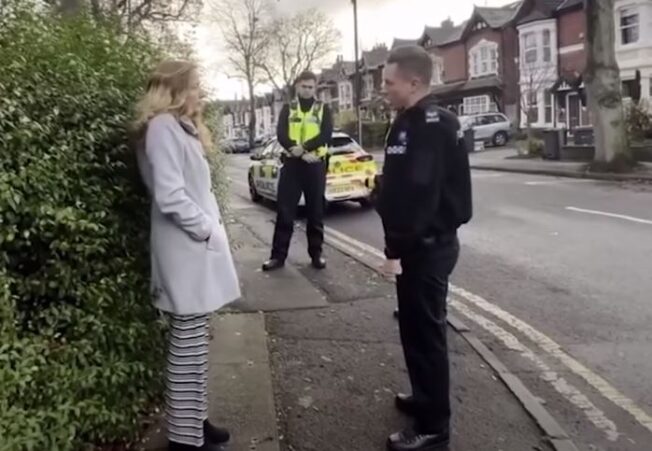
Isabel Vaughan-Spruce was arrested and charged in Birmingham on 6th December last year while praying in silence across the road from an abortion clinic.

“I didn’t have any leaflet on me, no poster, or pro-life t-shirt or anything like that. I wasn’t manifesting my prayer in any way. And clearly, the thoughts inside my head, that can’t be prohibited by any law, because that is just my private business”, she told the meeting in Dublin (which was organised by Family Solidarity).

She was accused of breaching a Public Space Protection Order (PSPO) issued by Birmingham City Council that prohibits any act of disapproval of abortion services, by any means, “including prayer or counselling”, in the vicinity of some abortion clinics.

I was asked [by police] if I was protesting, I made it clear I wasn’t protesting, but when I was asked if I was praying, I said I might be silently praying but not aloud, and I was arrested on that basis”, Isabel told the Saturday’s meeting. The video of this shocking incident went viral.

She was locked in a police cell for a few hours, and quizzed about her pro-life activities.

“The police particularly wanted to know what I was thinking about, what I have been praying for, and I stress that because some people say that it had nothing to do with your prayer, why you were arrested. It quite clearly was because this is what the police was quizzing me about when I was in the police station.”

Eventually, she was completely acquitted from all charges in February, together with a priest who was arrested, on a separate occasion, also for praying outside the same abortion clinic.

Two weeks after she was acquitted, Isabel Vaughan-Spruce went to pray in the same spot and was arrested again.

“Since I was completely acquitted, and vindicated of everything, I thought it is ok for me to go and do it right now. This time six police officers came with a van. The police officer told me: ‘your prayers are an offence’. When I said, I didn’t think prayers could be offensive, he just become more emphatic. ‘Your prayers are an offence’. And they took me away in a police van, I was in a cell for a while and eventually was released on bail.”

She has not been charged for this second arrest, but this might still happen.

It is astonishing that simple silent prayer is now illegal in some UK cities if it takes place close to an abortion clinic.

It is uncertain whether this could also happen in Ireland. A Bill approved by the Government only last week will make it a criminal offence to “engage in conduct directed at the public or a section of the public in a manner that is likely to influence the decision of a person in relation to availing of, or providing, termination of pregnancy services”. What does this mean?

The concept of conduct likely to “influence” a decision is so broad and vague that it could include almost anything, and even if it does not include praying silently, then almost certainly it does include praying in an audible way, never mind holding up a banner of some sort.

The introduction of “exclusion zones” around hospitals and GP clinics has been delayed for a number of years in Ireland as it might be unconstitutional and even the Garda Commissioner said that there was no need for such legislation as harassment is already a crime.

An attempt to impose exclusion zones in one part of Germany was recently found to be against the freedom of assembly by a federal court.
Isabel Vaughan-Spruce has been involved in pro-life activism for years. She recalled the hostile reactions she has experienced from time to time. She said: “we were sworn at, spat at, physically abused, we had our property stolen, we’d have cars driving down the street fast speed towards us, swerving off at the last minute, young women were told they’d be followed home, that things would happen to their families. The aggression was terrible. There was even one person who had to do ‘restorative justice’ because we caught on camera the physical abuses he was giving to our volunteers.”
 
At least that person was justifiably found guilty of something. Isabel Vaughan-Spruce has been arrested twice for behaviour that any liberal democracy should permit. 

sabato, giugno 24, 2023

Dr Peter Boylan proven wrong as abortion number rises


Newly released figures from the Department of Health reveal that last year 8,156 abortions took place in Ireland, the highest number since the referendum of 2018. This is exactly in line with pro-life predictions. Pro-choice advocate, Dr Peter Boylan, said the opposite would happen. Numbers also continue to rise in England and Wales, and Scotland to horrifying levels.

The official figures almost certainly underestimate the real number as the HSE revealed to Carol Nolan, TD that 8,876 reimbursement claims were made by doctors for helping women to terminate their pregnancies last year.

The official number of abortions was 6,666 in 2019 and 6,577 in 2020. (Figures for 2021 were unreliable, according to the Minister for Health, but GPs made financial claims for about 6,700 procedures).

The new report, which is extremely poor in terms of information, gives no explanation for the soaring numbers.

But it does tell us that only 0.3pc of those procedures were carried out because there was a risk to the life or health of the mother, while 98.6pc were carried out before 12 weeks, when abortion is available for any reason.

The report says nothing about the socioeconomic circumstances of the mothers, or the method used in the procedure, which are common features in similar reports in other countries. However, the vast majority would have involved the abortion pill.

A substantial increase in abortion numbers has been registered in the UK as well.

In Scotland, rates have increased steadily from 2013 to 2021, with a sharp surge last year. The 2022 abortion rate per 1000 women (16.1) is the highest ever. The total came to 16,584, which is twice our figure with a similar-sized population.

Last year, Scotland also recorded its highest number of abortions of unborn children diagnosed with Down Syndrome, which is, of course, eugenics.

Surgical terminations are now rare (1.2pc) and the most common method used are the abortion pills (98.8pc).

Figures for the full 2022 year are not available for England and Wales, but the provisional report that covers the first half of last year shows a huge rise in the number of 17pc compared to the same period in the previous year.

In 2021, the number was already the highest ever recorded.

In the first six months of 2022, 85 women resident in Ireland had an abortion in England. We read that 16pc of them had an abortion before, 56pc were single, and 98pc had passed 12 weeks of pregnancy.

There has been no comment from our government or from politicians about the constant surge in the number of abortions in Ireland, although Leo Varadkar did repeat this week that he want abortion to be rare.

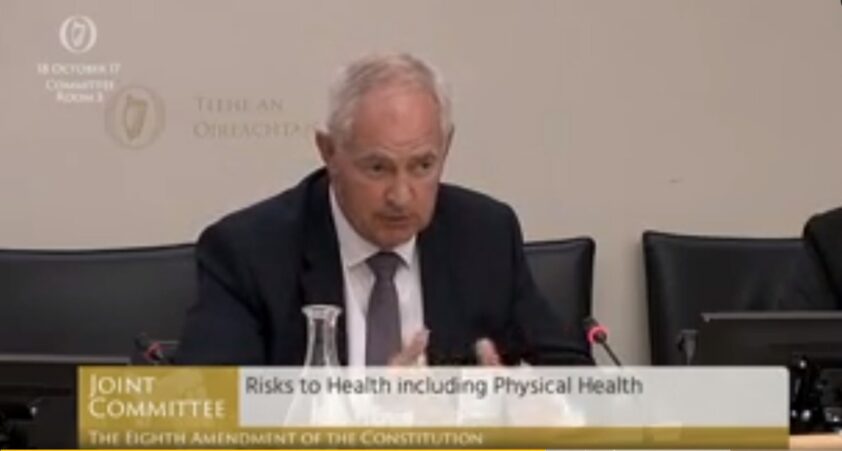
Before the 2018 referendum, we were told that rates would decrease with time. Dr Peter Boylan said to the Oireachtas that “the rate of termination comes down once more liberalised legislation is introduced, for all of the obvious reasons.”

After four years of operations, official figures prove the predictions of the pro-life side, and any review of the current law must address this terrible reality.

mercoledì, maggio 03, 2023

Abortion law review has pro-life medics in its sights


The official review of Ireland’s abortion law, published last week, was exactly as bad as pro-life campaigners feared it would be. Its only aim is to make it even easier to access abortion. It shows no visible concern for the unborn child and no visible wish that abortion should be rare, which is what the Government said it intended at the time of the abortion referendum.

The review recommends fully decriminalising abortion, targeting pro-life doctors and nurses, getting rid of the three-day waiting period, and allowing abortion in cases of a ‘fatal foetal abnormality’ even when the baby is likely to live more than 28 days beyond birth.

The review, commissioned by the Department of Health, also confirmed that some babies are born alive after an abortion and left to die.

Here are some the worst recommendations:

–          Decriminalisation of abortion.

Currently, abortions performed outside the limits of the law are considered a criminal offence. The review wants a full decriminalisation. Even Simon Harris, when he was the Minister for Health, thought that decriminalisation “would present a risk to the lives and health of women and that it would protect women who were forced into seeking an abortion, or where there was a dominant personality or sexual abuse.” The review disregards this thinking, even though it comes from a pro-choice perspective.

–          Cracking down on pro-life doctors and nurses.

The review says the health system should “positively discriminate in favour of persons willing to provide termination of pregnancy services” during the recruitment process of doctors. In other words, do not employ pro-life medics. Conscientious objectors are always presented in negative terms in the review.

In addition, it recommends so-called “values clarification” workshops in order to persuade pro-life doctors and nurses to become pro-choice.

It praises the HSE for already running these workshops which aim at “enabling participants to reflect on their values and thoughts about termination of pregnancy services by looking at their own beliefs and attitudes from the [point of view] of women seeking the service.”

Over time, the effect of these measures would be to sharply reduce, if not eliminate completely, the pro-life presence in Irish maternity wards.

–          Removal of the mandatory three-waiting period between the first visit to the doctor and an abortion

Waiting periods are a common feature in abortion legislation in other countries. In Italy, for instance, it is seven days; six days in Belgium. It allows women to reflect on their decision. According to HSE data, 17% of Irish women who made an initial appointment with a doctor with a view to ending their pregnancy did not return, indicating they went ahead with their pregnancies. The review ignored official data and used instead figures collected by a pro-choice group that underestimated the number of women who changed their mind.

–          Expansion of the current limits for abortion in cases of disabilities

Currently, an abortion can be requested at any moment of the pregnancy when the baby has a medical condition that might lead to its death within 28 days of birth. The review acknowledges that there is no universal list of such conditions and recommends a relaxation of the current restrictions. It also acknowledges that “fatal foetal anomaly” is not a medical term, something that the pro-life side continuously stressed during the referendum campaign.

–          Expanding the range of professionals who can provide abortions

Nurse or midwifes should be able to offer abortions, according to the review, in order to increase the number of providers and improve its geographical distribution. Currently, 11 of 19 maternity hospitals or units, and 422 GPs or clinics (around 10pc of the total) offer abortions.

–          Starve pro-life hospitals of funding 

The review recommends the diversion of funding from maternity hospitals not-providing abortions to ones that do so.

The review also recommends the development of specific guidelines to deal with babies who are born alive after an abortion. It says that “foeticide [killing the baby while still in the womb] will prevent parents and labour ward staff from facing the agony of neonatal distress and pain”. No concern is shown for the baby.

The review fails to address important issues such as the cases of misdiagnoses that have led to the aborting of healthy babies, the lack of abortion pill reversal treatment for women who have changed their minds after taking the first of the two abortion pills, the lack of mandatory counselling during the three-day waiting period.

This document says nothing about reducing the number of abortions, even though the Government promised abortion would be rare. The entire aim is to make it easier to access abortions which would only increase the rate. According to Health Minister, Stephen Donnelly, around 8,500 abortions took place last year.

giovedì, aprile 20, 2023

Abortion pill risks not being properly explained to women


Women are not being made fully aware of the risks that can be associated with abortion pills, a conference organised by Bios Centre in Britain has been told. Over the phone consultation adds more danger to their use. The same applies here in Ireland where 133 “adverse incidents” related to abortion have been reported by women to the State Claims Agency over the last five years, according to figures obtained by Peadar Toibin.

Abortion pills have become the most common method for terminating a pregnancy, particularly in the early stages of gestation.  In Ireland, women up to nine weeks pregnant usually take the abortion pills at home, following a consultation with a GP or a family planning clinic, either in-person, or by phone or video call.

However, the safety and the effectiveness of this method, particularly when used outside a hospital, has been questioned by Dr Greg Pike of the Bios Centre, who was addressing a conference this week organised by the Centre.

Is women’s choice really based on informed consent, he asked? Do they know and understand the danger of taking such pills?

“Women have been misled by abortion providers”, he said. They are not made fully aware of risk and the effectiveness of the abortive pills, Dr Pike claimed.

Citing research, he noted that 40pc of women who have taken those pills said they experienced more pain than expected. These figures raise questions about whether women are properly informed of these statistics before being prescribed the abortion poll.

Furthermore, the seminar was told, there has been no proper study conducted on the psychological effect of seeing the dead embryo following the abortion.

In Ireland, the HSE guidelines rather callously say: “You can decide how to dispose of the pregnancy remains. They can be flushed down the toilet, or wrapped in tissue and disposed of as you wish.”

This is how a Scottish woman who saw her little child expelled after an abortion pill-induced termination recalls the shocking experience: “In hindsight I wish I hadn’t looked but I did, and that was probably the most traumatic thing I’ve ever seen or done. I thought ‘what on earth?’”

The possible trauma associated with this dramatic experience needs to be properly investigated, the seminar heard.

Some studies found that the pills can fail up to 10pc of the time, with the pregnancy occasionally continuing, the fetus not being spontaneously expelled, or an additional dose of drugs being required.

When this happens at home, there is a higher likelihood that the drugs are not taken as recommended, resulting in higher rates of failure.

An investigation conducted in England has found that “1-in-17 women having an induced medical abortion are subsequently treated at an NHS hospital for complications arising from an incomplete abortion with retained products of conception.”

There are no data available for Ireland.

During the Covid emergency in March 2020, Simon Harris, who was then the Minister for Health, introduced remote consultation by phone or video call for women requesting abortions, also known as teleabortion.

Now that the emergency is ended, this provisional measure should be discontinued but it is likely that the ongoing review of the abortion services will keep it instead.

The HSE has admitted that it does not collect data about complications arising after an at-home abortion. It also recognised that women who have a remote consultation, on the phone or on video call, maybe be subject to coercion.

Dr Pike, who has studied coercion, noted that not all women go back to their doctor after receiving the pills. Others admitted not having used the drugs, and could even have passed them to other women. “There is an association of abortion and trafficking. We know that there is a strong pressure on women involved in trafficking to have an abortion. The tele-abortion model makes it easier for abusers to get hold of the drugs and force them on to women”, he pointed out.

All of these concerns suggest that remote consultation and the use of abortion pills outside of hospitals should be discontinued. The ongoing review of abortion in Ireland should take these issues into consideration.