Visualizzazione post con etichetta Christianity. Mostra tutti i post

venerdì, febbraio 06, 2026

What draws young people to Christianity?


venerdì, dicembre 12, 2025

More good news on the ‘quiet revival’ front


After decades of steady decline, the proportion of Americans who identify as Christians appears to have stabilised, according to a major new survey by the Pew Research Center. Moreover, the youngest age group surveyed – the 18 to 24-year-olds – seems to be somewhat more religious than age groups immediately above them. This is similar to polling finding here in Ireland, both in the North and the South.

The survey is called the ‘Religious Landscape Study’ (RLS). It is a vast project involving almost 37,000 adults. Becaure the US census does not collect information on religion, the RLS is the country’s most authoritative measure of religious composition.

An important finding is that for the first time in years, the youngest adults in the United States are more likely to identify as Christians than other young people. Fifty-one percent of Americans aged 18 to 24 identify as Christian compared with 45pc of those aged 24 to 34.

Aside from the two polls commissioned by the Iona Institute, a recent survey from Britain showed the same pattern.

These findings challenge the assumption that each new age cohort will be less religious than the one before, suggesting instead that a plateau in secularisation may have been reached.

Even more striking is a subtle but significant gender shift within these younger groups. Historically, across every age cohort, American women have tended to be more religious than men. Yet among today’s young adults, this pattern has reversed, according to the Pew Center survey. Young men are slightly more likely than young women to say that religion is “very important” in their lives. This reversal, if it continues, would mark a major cultural change in the gender profile of American religiosity.

Despite the stabilisation among Christians, a substantial minority of the population say they have no religion. Nearly three in ten Americans now call themselves atheists, agnostics or “nothing in particular”, up from 23pc in 2014 and just 16pc in 2007. However, the rate of growth is slower than in recent years. The shift is visible across the political spectrum, but it is much more pronounced among liberals than among conservatives. A large majority of conservatives still identify as Christian, according to the survey.

Within American Christianity itself, Protestants remain the largest group, making up 40pc of adults, while Catholics account for 19pc. Both proportions have declined significantly since 2007. However, the Protestant share has held relatively steady since 2019, and the Catholic share has shown little change since 2014, with only minor year-to-year fluctuations.

The survey also highlights demographic differences that may shape future trends. Christians report an average completed fertility rate of 2.2 children per respondent, compared with 1.8 among the religiously unaffiliated and 1.8 among followers of non-Christian religions. Higher birth rates among Christians may help keep numbers steady, but what also matters in the long run is whether children raised Christian stay Christian as adults.

Together, these findings suggest that the long decline of Christianity in the United States may have paused, and that the youngest generation, far from accelerating secularisation, may be playing a part in this unexpected stabilisation.

sabato, novembre 01, 2025

Saint John Henry Newman: Doctor of the Church

Today, Pope Leo will proclaim Saint John Henry Newman a new Doctor of the Church. This is an event of immense significance for the universal Church, for educators, and for all who care about the dialogue between faith and reason. Newman’s thought, born in the intellectual ferment of nineteenth-century Oxford and matured through his years in Rome, Dublin and Birmingham, continues to speak with extraordinary vigour to our age of rapid change and fragile certainties.

To mark this occasion, I am deeply honoured to have contributed in various ways to the reflection on  Saint Newman’s legacy.

This week The Irish Catholic publishes my article “John Henry Newman: Doctor of the classroom and the soul”. The piece explores Newman’s lifelong dedication to teaching, his founding of the Catholic University of Ireland, and his vision of education as a spiritual work, a friendship of minds and hearts in the pursuit of truth.

Here below you will find the full text of that article.

I have also explored Newman’s vision in other contexts.

My article In cammino verso l’unità interiore was published in the Italian edition of L’Osservatore Romano on 30 October 2025, reflecting on Newman’s journey towards interior unity and the harmony of faith and intellect.

I have also contributed a chapter on Newman’s Engagement with Locke’s Epistemology to the new Gracewing volume "John Henry Newman the educator. His formation, philosophy and lecacy", which examines the philosophical and theological horizons of  the thought of the British cardinal.

I gave an interview to Tempi.it about Newman as “the Doctor of the Church who surrendered to truth”, later translated into Portuguese for Padre Paulo Ricardo.

A short piece, also appeared on the weekly newspaper of the Diocese of Venice, in Italy.


John Henry Newman: Doctor of the classroom and the soul”

It should come as no surprise that Pope Leo chose the Jubilee of Educators (1 November) as the occasion to proclaim Saint John Henry Newman a Doctor of the Church. Few figures in modern Christianity have embodied so completely the vocation of education as a service to truth and to the integral formation of the human person. Newman was a theologian, preacher and apologist, but above all an educator in the fullest sense of the word. In his journal he once confessed: “From first to last, education, in the broad sense of the term, has been my line.” His entire life can be read as a long, steady commitment to the art of educating both minds and hearts in the pursuit of truth.

For half of his life Newman lived and worked in Oxford, the intellectual heart of England. There he matured his deep reflection on the nature of education. As a tutor at Oriel College, he experienced first-hand the power of personal influence, the transformative encounter between teacher and student. He realised that authentic knowledge does not arise solely from books or lectures but from the meeting of two souls, from the living transmission of ideas, example and values. After his conversion to Catholicism in 1845, this conviction became the guiding principle of his educational work.

Newman’s first great project after conversion was the Catholic University of Ireland, inaugurated in Dublin in 1854. His aim was nothing less than to offer Irish Catholics, long excluded from the academic world, an institution that could unite intellectual excellence with a strong spiritual and moral formation. Later, in Birmingham, he founded the Oratory School, a secondary school intended to embody the same ideals in the education of boys.

The heart of Newman’s educational vision lies in his masterpiece, The Idea of a University, written in Dublin. For Newman, education could never be reduced to technical training or professional preparation. It was, rather, a journey towards wisdom, an inner growth that embraces the whole person. A true university, he wrote, does not exist to serve immediate or utilitarian ends, but to cultivate the intellect and to form in students a critical and generous mind. Its task is to shape men and women capable of thinking, discerning and acting with conscience.

Such a vision was strikingly counter-cultural in the nineteenth century, an age dominated by industrial expansion and the utilitarian creed of efficiency and profit. Newman looked with concern on a culture that prized usefulness over goodness and tended to fragment knowledge into technical specialisms. “Though the useful is not always good, the good is always useful,” he wrote. Knowledge, he argued, has value in itself and precisely for that reason it is also fruitful, because only a mind formed by truth and a heart directed towards the good can truly serve society.

At the centre of Newman’s philosophy stands a profound harmony between faith and reason. He saw them not as competing forces but as two converging paths towards the same truth. In his Dublin lectures he defended the place of theology within the circle of university disciplines: to exclude it, he argued, would be to mutilate the very idea of universal knowledge.

“If a University be a place of instruction where universal knowledge is professed,” he wrote, “and if in a certain University, so called, the subject of Religion is excluded, one of two conclusions is inevitable: either, on the one hand, that the province of Religion is very barren of real knowledge, or, on the other, that in such a University one special and important branch of knowledge is omitted.”

For Newman, the university was to be a home for all the sciences, including the knowledge of God.

This insight spoke directly to the Irish context of his time. The new Catholic University of Ireland was a bold attempt to reconcile modern intellectual life with the faith of a people emerging from centuries of religious marginalisation. Newman’s brief tenure as its first rector was not without frustration: he faced inadequate funding, political tension, and an educational system still recovering from the wounds of the Penal era. Yet the experiment left a lasting mark.

Among those who gave lustre to the Catholic University was the Jesuit poet Gerard Manley Hopkins, who taught Greek and Latin there in the 1880s. Hopkins’s sense of beauty, his sacramental vision of the world and his conviction that “Christ plays in ten thousand places” reflect Newman’s own belief that faith and culture should illuminate one another. One of the University’s most famous students, James Joyce, would later recall in his writings the complex intellectual atmosphere shaped by Newman’s influence.

A cornerstone of Newman’s educational thought is his emphasis on personal relationships. He was convinced that teaching must never become impersonal or mechanical. He criticised universities where contact between professors and students was minimal or purely administrative. During his Oxford years he developed a tutorial model grounded in friendship, dialogue and shared life. A tutor, he wrote, is not merely a dispenser of knowledge but a moral and spiritual guide, a mentor standing in loco parentis.

This belief shaped his later foundation, the Oratory School in Birmingham. The school was designed to unite intellectual formation with moral and spiritual growth in a family-like atmosphere. Among its most celebrated pupils was Hilaire Belloc, the future writer and Catholic apologist, whose wit and intellectual independence bore the stamp of Newman’s spirit. Another connection, though indirect, was J.R.R. Tolkien. He never attended the Oratory School, yet after his mother’s death he was raised under the guardianship of Fr Francis Xavier Morgan, an Oratorian priest and disciple of Newman’s first generation. Through him Tolkien absorbed that same vision of faith, learning and integrity which later infused his imagination.

At the root of all this lay Newman’s conviction that education is a spiritual work. A teacher does not form intellects alone but whole persons. He does not merely communicate ideas; he communicates a presence, an influence. True teaching, Newman believed, is an act of friendship, a sharing of life. The influence of a good teacher reaches beyond the classroom, shaping character and conscience.

For this reason Newman’s message remains remarkably fresh. In an age when technology tends to replace human interaction and education risks being reduced to measurable competencies, he reminds us that at the heart of teaching there is always a face, a voice, a testimony. The proclamation of Newman as a Doctor of the Church during the Jubilee of Educators is therefore far more than a symbolic gesture. It is a prophetic sign, inviting the Church to rediscover the spiritual dimension of education and to recognise that every genuine act of teaching is, in truth, an act of love.

For educators in Ireland and beyond, Newman’s legacy poses searching questions. How can schools and universities remain faithful to the whole person when social and economic pressures demand immediate results? How can teachers keep alive the dialogue between faith and reason in societies that often separate the two? How can Catholic education sustain its identity while serving an increasingly plural and secular public?

Newman does not offer ready-made solutions, but he does offer principles. He urges educators to place the person before the system, to value the slow work of formation over the rapid production of credentials. He calls us to recover the sense of education as a vocation rather than a job — a ministry of truth that involves heart as well as intellect. He challenges Catholic institutions to cultivate a distinctive ethos, one that integrates belief with intellectual rigour and that measures success not only by academic achievement but by the growth of faith and virtue.

Newman stands before us as both a classic and a contemporary. His thought bridges centuries because it speaks to what is perennial in the human condition: the thirst for truth, the need for meaning, the desire to be formed rather than merely informed. He reminds us that education is never neutral; it always shapes a vision of the human person and of the world.

For teachers, parents and all who care about the formation of the young, Newman’s example is an encouragement to persevere. He invites us to believe once more in the power of relationship, in the quiet influence of integrity, and in the patience required to nurture the seeds of faith and reason in the hearts of our students.

Education, for Newman, was a form of intellectual charity, an act of love that unites teacher and pupil in a shared search for truth. In recognising him as a Doctor of the Church, the Pope acknowledges not only a master of theology but a doctor of life: one whose wisdom continues to enlighten classrooms, universities and homes wherever the Gospel inspires the work of teaching.

In an era of instant information and fragile certainties, Newman’s voice invites us to recover the slow, humane and sacred art of educating the whole person. Only an education born from living relationships can truly become culture and, in the deepest sense, a leaven of humanity.


venerdì, aprile 14, 2023

President Biden invokes the very Christian concept of dignity in address


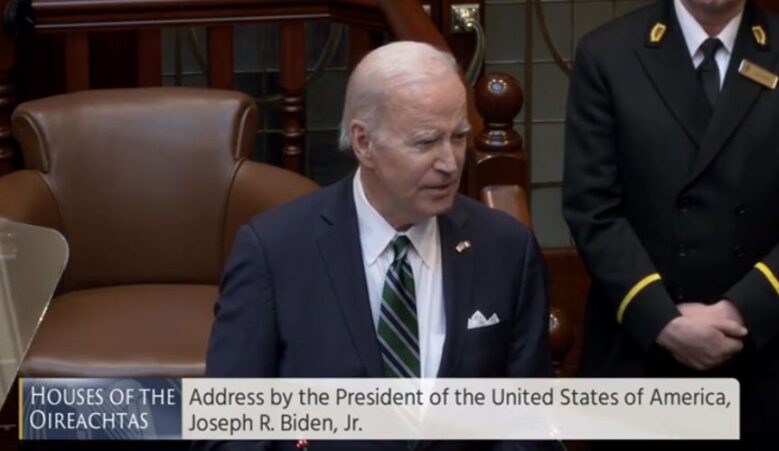
When President Joe Biden addressed the Joint Houses of the Oireachtas yesterday, he mentioned the word ‘dignity’ no fewer than seven times, asking the assembled politicians to “Name me another country, in whatever their language is, that use the word ‘dignity’ as much as we Irish use the word ‘dignity’.”

In fact, what he did not say, but could have, is that the Irish Constitution was the first in the world, back in 1937, to explicitly mention that word, largely because it is a product of Catholic social teaching.

Three presidents before Biden addressed the Oireachtas, namely John F Kennedy, Ronald Reagan and Bill Clinton, and both Reagan and Clinton invoked the concept of dignity.

There was no mention of the religion roots of this concept in Biden’s speech.

But in 1984, Reagan explicitly linked dignity to Christianity, saying that Ireland “gave the world the saints and scholars who preserved Western culture, the missionaries and soldiers who spoke of human dignity and freedom and put much of the spark to my own country’s quest for independence, and that of other nations.”

Bill Clinton, in his address to the Oireachtas in 1995, mentioned dignity in connection with our God-given abilities. He said: “We want for all of your children the right to grow up in an Ireland where this entire island gives every man and woman the right to live up to the fullest of their God-given abilities and gives people the right to live in equality, freedom and dignity.”

In his speech in Leinster House in 1963, John F Kennedy said: “No larger nation did more to keep Christianity and Western culture alive in their darkest centuries.”

While some countries introduced the concept of human dignity into their Constitution after the horrors of the Second World War, Ireland was the first to do so in 1937.

In invoking the Trinity, the Preamble proclaims that the Irish people adopt Bunreacht na hÉireann “so that the dignity and freedom of the individual may be assured”.

Samuel Moyn, Professor of History at Yale University, who has studied the drafting of this important document, maintains that the insertion of the notion of dignity was inspired by Pope Pius XI and his encyclical letter Divini Redemptoris issued in the same weeks when the Preamble to the Constitution was written. (Prof. Moyn is not Catholic and is not defending a partisan view)

A previous draft of the Preamble mentioned not the “dignity and freedom of the individual” but “of the citizens”. Moyn notes that this is “an important revision since to restrict dignity to “citizens” might seem to ignore its natural foundations and thus its role in constraining the state.”

The concept of the dignity of the individual was promoted in the social teaching of the Church to defend the natural rights of human beings from the undue interference of the state. In March 1937, when the Preamble was written, Pope Pius XI wrote two encyclicals against the totalitarian state: Divini Redemptoris, against Communism, and Mit Brennender Sorge, in which he denounced Nazism because it “violates every human right and dignity”.

Soon after the World War II, the United Nations issued the Universal Declaration of Human Rights that mentions dignity twice in its preamble, then in its first article (“All human beings are born free and equal in dignity and rights”), and two more times later. The French philosopher Jacques Maritain, a Catholic convert, had a central role in the drafting of the Declaration. (See more here.)

The ultimate basis for human dignity is, of course, the belief that we are all made in the Image and Likeness of God, and are not chance products of a blind universe. Catholic social teaching says that dignity begins at conception and does not end until natural death.

It is a pity that Joe Biden, a practicing Catholic, no longer believes that the concept of dignity begins in the womb. On the contrary, as his career has progressed, his support for the unborn has waned to the point of total non-existence.

lunedì, novembre 28, 2022

New report highlights worsening persecution of Christians


Numerically speaking, Christians are the most persecuted religious group in the world and a new report by Aid to the Church in Need (ACN), says things are getting worse.

The document, titled “Persecuted and Forgotten? A Report on Christians oppressed for their Faith 2020–22”, was presented last week on Red Wednesday, the annual day when ACN raises awareness of the plight of persecuted Christians.

The persecution comes in two forms. One is inflicted by Governments, and another is by local communities or organisations. Attacks vary from legal, to physical, to outright murder.

In almost all of the countries surveyed, levels of oppression have increased in the two years since the last report. Part of the problem, according to the ACN document, is a “cultural misperception in the West that continues to deny that Christians remain the most widely persecuted faith group.” Religious discrimination, which is widespread in many countries, is generally ignored.

For instance, Qatar is currently hosting the football World Cup and we have heard much criticism of their lack respect for women or minorities. But almost nothing is heard about the lack of religious freedom in that country.

The ACN report says: “Despite improvements, including removing some anti-Christian references in school text-books, there has been a sharp rise in reports of intolerance.”

Turning to Saudi Arabia, another country that has strong business connections with the Western world, it says, there are “ongoing bans on Christian places of worship and public display of crosses, Bibles, etc.”

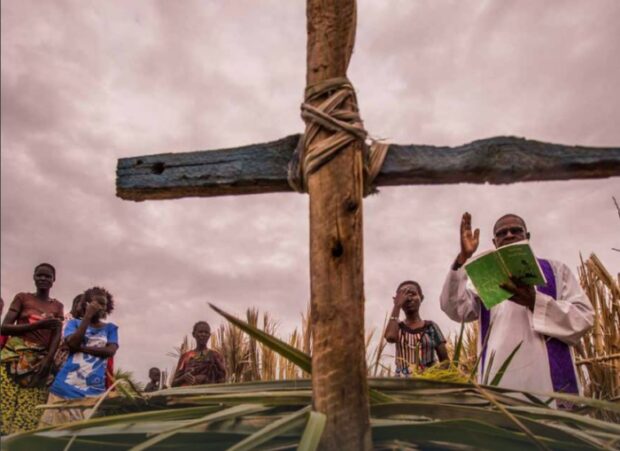
Nigeria, the largest country in Africa, “teeters on the brink of becoming a failed state, with kidnappings, priests killed and deadly attacks on churches becoming increasingly regular”, says the report. This is due particularly to the presence of Jihadism in the region. Between January 2021 and June 2022, more than 7,600 Christians were killed in Nigeria.

If in Africa, oppression comes mostly from militant groups, often inspired by the jihadist ideology, in Asia it is often the State that restrains the freedom of Christians.

“In varying degrees, from tightening constraints in Vietnam to an almost total ban in North Korea, State authoritarianism restricts – or even strangulates – believers’ ability to worship freely in Asia”, the report comments.

Cardinal Zen’s arrest in Hong Kong is presented as a significant case. He was involved in an organisation that helps pro-democracy protesters. For this, the Cardinal has been unjustly accused of ‘colluding’ with foreign forces and threatening China’s national security. “In China and North Korea, totalitarian governments crush the faithful underfoot, monitoring their every move”, the document notes.

Christians are harassed in more countries that any other faith group. In the period covered by the report, October 2020 – September 2022, the situation has worsened in the 24 countries under scrutiny.

In the Middle East, the situation in territories that were under Daesh (ISIS) occupation has not improved since they were liberated. Iran is the only one of the seven Middle East countries reviewed that has seen some improvement.

ACN is active in Iraq with a comprehensive post-Daesh stabilisation programme that involves the rebuilding of Christian towns and villages, homes, schools, churches and other public facilities.

This is only one example of the many activities promoted by Aid to the Church in Need in support of Christians. They are present in 140 countries, particularly where believers are persecuted or oppressed. The Irish branch of ACN can be accessed here: https://www.acnireland.org

martedì, novembre 23, 2021

Hate crimes against Christians on the rise in Europe


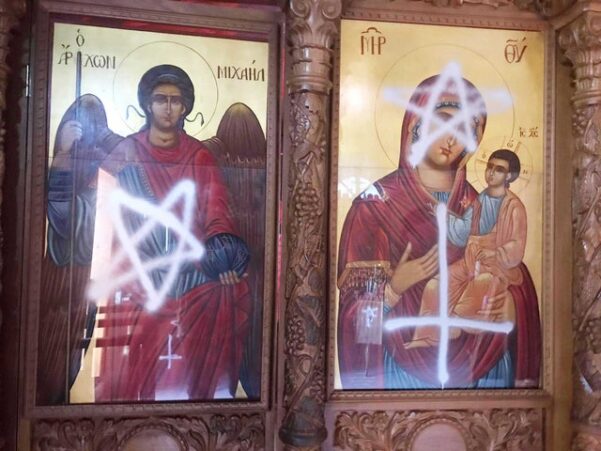
Hate crimes against Christians have risen dramatically in recent years, according to a newly published report from the Organization for Security and Cooperation in Europe (OCSE). These include violent attacks on individual Christians, on churches and on holy objects.

To mark “International Day for Tolerance”, last Tuesday the OCSE presented its annual report on hate crimes in Europe. (By ‘hate crime’ is meant a criminal offence motivated by bias against a particular group.)

Each year the OCSE collects data from 42 participant States, 136 civil society groups and also from international organisations.

The recent 2020 report documented 7,181 hate incidents. Christians were the victims of more than 980 of those violent and threatening incidents. This represent a significant increase compared to the previous year, when 595 cases against Christians were reported.

Last year, 56 known cases were violent attacks against people, 55 involved threats and 871 of those incidents were attacks against property, include arson attacks against churches, desecration, robbery of holy communion hosts, vandalisation, etc.

Three churches were vandalised in Ireland last year.

The highest number of reported cases (250) happened in Poland. Churches and groups of faithful have been attacked for their pro-life views, particularly after the government and the Polish Constitutional Court took put restrictions to the current abortion laws.

In France, according to official police numbers, almost 25pc of all hate crimes are against Christians. In the last few years, there have been a growing number of arsons against churches. In October 2020, three people were fatally stabbed in the Basilica of Notre Dame of Nice.

In Spain, four churches and a monastery were vandalised on International Women’s Day by feminist activists. Masses were also interrupted on the same day.

The OCSE list is not comprehensive as only 11 States reported on hate crimes against Christians, so their possible number is much higher, aside from unreported incidents.

“Medially and politically, hatred of Christians is hardly noticed as an increasingly obvious social problem. The OSCE report reflects only part of this trend, which we have been documenting for years, and yet it is a loud wake-up call against indifference and fashionable Christian-bashing,” said Madeleine Enzlberger, head of “Observatory of Intolerance and Discrimination against Christians”.

Attacks on Christians is a world-wide phenomenon. Eighty percent of all acts of religious persecution are committed against Christians, according to Aid to the Church in Need, an organisation assisting Christian communities that face hostility and discrimination.

From today until November 26th, Aid to the Church in Need in Ireland and elsewhere will celebrate the “Week of Witness for suffering and persecuted Christians”. This initiative will involve talks and exhibition to highlight the persecution of Christian believers. On Wednesday, prayer vigils will be held around Ireland in spiritual union with those who suffer because of their faith in Christ.

You can find more details here: https://www.acnireland.org/witness

martedì, agosto 24, 2021

Afghan Christians were in a very difficult situation even before the Taliban


Now that the Taliban are back in power Afghanistan, Christians and other religious minorities can expect to be treated appallingly. But even before the Taliban marched into Kabul again, the country was already a very hostile place for Christians, which is one reason for the tiny number there.

Afghanistan has always been among the countries that most severely persecutes religious minorities, says Dr. Thomas Heine-Geldern, Executive President of Aid to the Church in Need (ACN), an organisation that assisted persecuted Christians all over the world.

ACN produces a biannual report on religious freedom worldwide. The last was produced in April of this year.

Commenting on the report, Dr Heine-Geldern says: “Especially in the last three years, the report highlights the repeated and egregious attacks against places of worship, religious leaders, and worshippers [in Afghanistan]. Our analysis, unfortunately, does not leave much room for hope. All those who do not espouse the extreme Islamist views of the Taliban are at risk, even moderate Sunni. The Shia (10%), the small Christian community, and all other religious minorities, already under threat, will suffer even greater oppression. This is a huge setback for all human rights and especially for religious freedom in the country.”

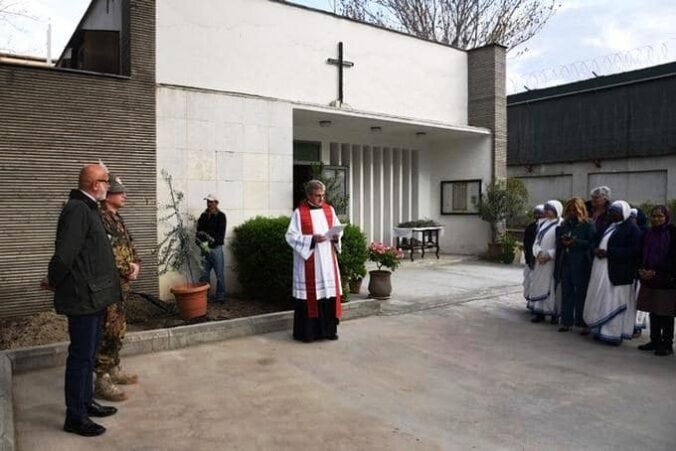
There is only one Catholic church in the whole of the country, and it is in the Italian Embassy. Italy was the first Western country to recognise the new Afghan state in 1919 and, as a sign of gratitude, it was given permission to build a small church. Only in 1931 did the first chaplain arrive and since then the Italian Barnabites (a religious order) take care of the small group of faithful, made up of mostly of non-nationals who worship in the church. Crucially, seeking converts was explicitly banned under Afghan law even before the return of the Taliban.

Even without legal restrictions, it would be extremely hard for any Afghan to convert to Christianity because of the enormous social pressure, and even violence, to which they could be subjected.

Up to last week, there were three Catholic religious congregations operating in Afghanistan. The Jesuits, ran a number of schools in four provinces since 2004. But they have now have suspended all activities and left the country.

Four Missionaries of Charity nuns – the order founded by Mother Theresa of Kolkata – who run an orphanage and help families in need. They left Afghanistan last week, together with disabled children.

A third Catholic organisation is PBK – Bambini pro Kabul (Children for Kabul), established by members of a number of religious congregations from Italy, helps children with learning disabilities. But the organisation’s future is uncertain.

Other Christian organisations are also present, doing humanitarian work or assisting the very few faithful, but these are leaving the country in fear of being targeted because of their religion.

Many converts have moved abroad over the years. There only a few thousand Christians estimated to be living in Afghanistan.

“They move from area to area. They want to leave the country but have no one to help them. I am looking for a humanitarian channel that can help them,” say Ali Eshani, a Christian who fled Afghanistan in the 1990s after he saw his parents killed and their home razed to the ground.

They can expected even more treatment now.

martedì, agosto 10, 2021

Violent persecution of Christians continues unabated and underreported


The Covid pandemic has obscured almost all other news, but even before the outbreak one story garnered far less attention than it deserves, namely the violent persecution of Christians in many parts of the world, not least in countries like Nigeria, and increasingly in the Tigray region of Ethiopia where a war is raging.

Over the past 12 year, an estimated 43,000 Christians have been killed in Nigeria, often by Islamist militants, with 3,500 believed to have been murdered since the beginning of this year. Massacres of Christians are taking place also in the Tigray region of Ethiopia.

Aid to the Church in Need catalogues how bad the situation is.

Attack by radical Islamist groups, which usually associated with the North and the ‘Middle Belt’ of Nigeria, are now becoming more common in the South where the majority of the Christian population lives.

Nigeria has an estimated population of 210 million – making it Africa’s most populous country – and almost half of them, about 95 million, are Christians of different denominations, mainly protestant (75pc). The rest of the population is chiefly Muslim.

The United States Department of State has designated Nigeria as a Country of Particular Concern (CPC) for engaging or tolerating “systematic, ongoing, egregious violations of religious freedom,”

An estimated 2,000 Christian schools and 300 churches have been attacked this year, according to the International Society for Civil Liberties and Rule of Law (Intersociety), which is based in Nigeria.

Meanwhile, massacres of Christians are taking place in the Tigray region of Ethiopia, at the border of Eritrea and Sudan.

At the beginning of the year the killing of up to 750 people sheltering in the Orthodox cathedral of Axum was reported.

Ethiopia is one of the most ancient Christian countries in the world and in the 4th century Christianity was declared as the official religion of the Kingdom of Axum, in modern Tigray. The Orthodox cathedral of Axum reputedly houses the Ark of the Covenant.

At present, 90pc of the Tigray population is displaced, after the Ethiopian government has sent federal troops to fight the Tigray People’s Liberation Front, which is accused of holding ‘illegitimate elections’.

Aid to the Church in Need says that young people, particularly Tigrayan women, have been targeted by indiscriminate killing and widespread sexual violence, including the rape of nuns.

“This is clearly genocide against the people of Tigray. This is not just fighting, they are killing everybody – that is a sign of genocide.”, a source told ACN.

The organisation, which has worked in Ethiopia since 1993, has launched an appeal to support victims of the war.

mercoledì, giugno 09, 2021

Why Europe needs a common day of rest


Once upon a time, not so long ago, Sunday was considered a day of rest. But now, like every other day of the week, it has basically been captured by the demands of commerce. So there is no longer a communal day of rest in a lot of countries. This needs to change. There needs to be a European weekly common day of rest, together with the right to disconnect from work, according to a campaign group called the European Sunday Alliance.

The group held an online conference last week, which saw the participation of MEPs from different European parties, and also a representative of the European Commission.

A healthy balance between private life and working time is essential for families, particularly during these difficult times, says the Alliance.

They argue that a work-free Sunday has become even more relevant during the pandemic, when most people work remotely. With more time spent in the house working hours have also extended and now it is more and more difficult to separate work duties from family time. Many employers expect job commitment during the evenings and even the weekends.

recent report of the Committee On Employment and Social Affairs of the European Parliament notes that “digitalisation has brought many advantages to employers and workers, but also disadvantages, because it can intensify work, extend working hours and increase the unpredictability of working hours, blurring the boundaries between work and private life”

All the politicians taking part agreed with the need to have a common weekly day of rest but had different opinions though on what is the best policy to implement this.

In January, the European Parliament called on the European Commission “to propose a law that enables those who work digitally to disconnect outside their working hours. It should also establish minimum requirements for remote working and clarity working conditions, hours and rest periods”.

A right to disconnect means the possibility to separate, on a regular basis, family or leisure time from working hours. This is beneficial not only to the workers but, ultimately, also to society at large. During a day of rest we can spend more time with others, engaging in social activities, volunteering, sport, faith-related activities, travels, holidays, etc.

In most  European countries, Sunday is traditionally the day of rest from work. This is the heritage of the Christian tradition. Precisely 1,700 years ago, the Emperor Constantine decreed Sunday to be a day of rest protected by law. Nonetheless, many countries, including Ireland, allow businesses to run seven days a week. This has a profound impact on workers and their families.

The European Sunday Alliance is a network of trade unions, religious bodies and civil society organisations that want to raise awareness of the importance and value of a weekly day free from work. They also, ask for legislation at EU and Member States levels to be “more protective of the health, safety, dignity of everyone and should more attentively promote the reconciliation of professional and family life”.

Notably, there were no Irish speakers. This is simply not an issue in Ireland. It should be.

martedì, marzo 23, 2021

China is cracking down on all religious believers, including Christians


The Uyghur Muslim population of China is being savagely persecuted by the Chinese State, but an overall crackdown on religious believers, including Christians, is taking place, and has been intensifying.

In its report, ‘Persecuted and Forgotten’, Aid to the Church in Need describes how President Xi Jinping has called Christianity “a foreign infiltration”. It refers to “increased hostility to Church communities, accused of resisting government control, has resulted in the widespread removal of crosses from churches and the destruction of church buildings. Some regional authorities have banned Christmas trees and greetings cards.”

The report goes on to say: “There has been a renewed crackdown on Church leaders considered dissidents by the regime, notably Bishop Vincent Guo Xijin of Mindong and Bishop Peter Shao Zhumin”, who has been repeated harassed.

A report issued last year by the Pew Forum, listed China as placing the worst restrictions on religious freedom of any country it could measure. (It did not measure North Korea, which is undoubtedly worse, because it is a closed society).

The US Commission on International Religious Freedom found a similar picture in its latest report.

On the situation of Christians in China specifically, it points out: “Chinese authorities raided or closed down hundreds of Protestant house churches in 2019, including Rock Church in Henan Province and Shouwang Church in Beijing.”

It describes how, in December 2018, the government “a court charged Pastor Wang Yi with ‘subversion of state power’ and sentenced him to nine years imprisonment.”

It goes on: “Local authorities continued to harass and detain bishops, including Guo Xijin and Cui Tai, who refused to join the state-affiliated Catholic association.”

It says: “Several local governments, including Guangzho city, offered cash bounties for individuals who informed on underground churches. In addition, authorities across the country have removed crosses from churches, banned youth under the age of 18 from participating in religious services, and replaced images of Jesus Christ or the Virgin Mary with pictures of President Xi Jinping”.

These are the worst crackdowns since the time of Chairman Mao.

It seems hard to imagine for those of us who live in a free world that in China the Bible and other religious texts have been removed from online booksellers, including Amazon.  To circumvent internet censorship, Christian organisations have to drop the name of ‘Jesus’ from book titles and replace it with initials or with other expressions.

Christians have been arrested for selling audio Bibles. From a legal point of view, the book can only be distributed by the agencies approved by the government that supervise and control the activities of Christian churches.

As a result of censorship, many religious bookstores have closed their activities or operate clandestinely.

Bitter Winter’ is a magazine covering religious freedom and human rights in Asia, particularly in China.

They report that churches are constantly asked to remove religious symbols and paintings inside, and the cross outside, and to replace them with party symbols such as the five-pointed star or the communist party flag.

Those who refuse to join the state-approved Chinese Patriotic Catholic Association are subjected to all sorts of discrimination. Non-approved churches and meeting avenues are systematically shut down.

For instance, in the city of Wenzhou, with a population of 9 million, over 1,600 churches have had their crosses being burnt or destroyed, according to China Aid, a US group that helps the persecuted Christians.

Even for State-approved churches it is very hard to practice the faith. Local officials impose various sanctions or restrictions to limit religious activities.

According to the Christian Post, “To discourage churches from meeting for the holidays, government officials required a state-sanctioned Catholic church in Jiangsu province’s Wuxi city to obtain approval from at least eight offices before it was permitted to hold Christmas mass.”

Those of us who live in the West have little idea of the suffering of millions of people in the biggest country of the world. It is not an exaggeration to claim that never in history so many Christian believers have been oppressed by a despotic and atheistic regime.

Western countries tend to ignore or downsize the atrocities happening in China, for economic interests or for fear of a powerful state that has a strong influence internationally. But how can we deal with a regime that negates religious freedom and at the same claim we believe in human rights? The freedom to practice your faith is one of the most fundamental human rights. It is time for Ireland and other countries to denounce the brutalities experienced by religious believers in China, including Christians, and to act accordingly, even if it hurts trade.

sabato, giugno 13, 2020

martedì, giugno 09, 2020

More light thrown on religious practice in a lockdown

Prayer and online religious practice have increased in the island of Ireland during the Covid-19 pandemic, according to a new report.

“Many faith leaders described an increase in religious practice, linked to moving online. They observed surprising numbers of people tuning in for worship services and other events, noting that people who would not have entered their church building were accessing online services. Some from evangelical traditions wrote of people being ‘saved’ or converting to Christianity during the pandemic.”, said the principal investigator of the survey, Dr Gladys Glaniel from Queen’s University Belfast, in the report.

The survey was carried out between May 6th and 22nd. Faith leaders sent 439 usable responses, from every county on the island. Thirty-five pc of respondents were Catholic (23pc diocesan priests or deacons and 12 pc religious), 18 pc Church of Ireland, 14 pc Presbyterian, 9 pc Methodist, 23 pc ‘Other’ Christian, and 1 pc from ‘Other’ religions.

55 pc of the responses came from the Republic of Ireland while 45 pc were from Northern Ireland. (This means that a greater proportional response came from Northern Ireland and from non-Catholics).

Many faith leaders were surprised by the number of people tuning in for worship services and other events.

“As a scattered, small church it is a pleasure how many people are glad about our online services: we reach significantly more people than before. It is obvious that physical meetings and services are more appreciated, but the new online paths will remain in addition to the physical ones. Another aspect is the increased sense of being responsible for each other.” Wrote a Lutheran representative from the Republic of Ireland.

Before the restrictions, 44pc of respondents did not provide online services or resources, 24pc offered livestreaming and 20pc recorded sermons or services. Protestant churches were much less likely to have online worship opportunities, while Catholics offered mostly Mass livestreaming.

All this changed dramatically in March and now only 13pc of faith communities do not offer online worship, according to the respondents.

Catholics are more likely to provide opportunities once a day or several times per day, while Protestants are more likely to provide once a week or several times per week. This reflects the different kind of worship (daily Mass and rosaries vs Sunday service) of those Christians denominations.

Some faith leaders commented that moving online had sometimes improved interactions within their faith communities and created new opportunities for pastoral care.

Others noted an increased interest in religious practice during the pandemic and a renewed respect for churches and their own ministries:

“Knowing that having gone through the terrible years of abuse within the church globally and feeling slightly irrelevant, that the Church matters more than we fully really realised. Given great hope for the future.” Said a Catholic diocesan priest from Northern Ireland.

Before the pandemic, 31pc of faith communities had no one responsible for online worship while now it is only 7pc. It will be interesting to see how this will continue when the pandemic will be over.

The most common source for guidance about providing online resources was “personal research”. This shows that the churches were not prepared for this drastic change and leaders had to rely on their own initiative rather than proper training and planning. (Methodists were an exception as 93pc said that had received advice or guidance from their denomination).

With regard to the impact of stress on those who were somehow working on the frontline, 46pc said that their ministry had been more stressful than usual, 33pc said it had been the same, and 21 pc responded that it had been less stressful than usual. The difference between the denominations was significant. Methodists (58pc) were most likely to say their ministry had been more stressful than usual, while Catholic Religious (34pc), which includes male and female religious, were most likely to say their ministry had been less stressful than usual. Probably most of the religious are over 70 and were cocooning.

The most stressful experiences were “comforting the bereaved” and “conducting funerals”. 51pc of the respondents said they have conducted a funeral during the pandemic. It should be noted that in the Republic, the Church of Ireland prohibited funeral services in the churches. This element and the limitation in the number of people allowed to attend, were probably the cause of much stress for faith ministers.

When asked how people in their communities have experienced mental health difficulties during the pandemic, 40pc replied that they had experienced mental health difficulties ‘more than usual’.

Some Catholic priests complained about the insufficient pastoral care for clergy. “My Parish is very supportive – my diocesan leadership is not – only two phone calls in two months. Letters were written to school Principals and students – but none to clergy. Sense of value diminished.”, said a Catholic priest.

The results of this survey are in line with a similar one commissioned by the Iona Institute in April, which found that during the pandemic many pray more and value family more.

“When these observations are taken together and set alongside earlier examples of an increase in prayer, it could be argued that there is evidence of a renewal of faith during the pandemic. At the same time, the depth of interest in faith and commitment to greater service and involvement is not clear. In particular, some aspects of online faith could be quite superficial and ephemeral, fading as the pandemic subsides.”, commented Dr Gladys Glaniel in her report.

giovedì, giugno 04, 2020

Safety above all things is not a Christian virtue

Too much or too little are two ways of doing something wrong. A well-meant action can go bad because of an excess of it or a lack of it. Courageous gestures, for instance, lie between excessive fear and recklessness.

If we consider risk, which is a common and inevitable element of life, what is too much or too little risk? The answer depends on the circumstances, it is not something fixed that can established in theory but only in practice.

For instance, public worship is not permitted in Ireland at the moment, because there is some risk of spreading the Corona virus. Proper measures could be established to limit the risk we can afford but a total ban, which is an extreme approach, has been enforced instead. At what point does this become unbalanced, especially in view of the fact that all European countries – bar the UK – have already restored public worship, albeit with limits on number attending? Ireland does not propose to do this until July 20th.

We haven’t seen cases of reckless imprudence, where dozens of worshippers have crammed into a church currently open for private prayer, thereby defying the rules of social distance. This wrecked behavior has happened at some recent political rallies.

What we have seen in Ireland, instead, is probably an excess of fear when compared to other European countries, where the Christians – lay and cleric – have often lobbied, successfully, for a restoration of a full celebrations, with the due precautions. Ireland is an exception.

The Christian world view never equates the good life with self-preservation and excessive risk aversion. Obviously, in the face of a real threat, we have to respond with prudence and respect the gift of life but, on the other hand, the accomplishment of the good requires a certain inevitable risk taking.

We would have no Christianity if those living under persecution, from the first centuries until now, put their own health and safety before preaching the Gospel.

If we let fear lead us to narrow the scope of our vision, ignoring what is normally happening in other countries, and assume a posture of self-preservation, we would betray our Christian call.

“Normal fear protects us; abnormal fear paralyzes us. Normal fear is a friend that motivates us to improve our individual and collective welfare; abnormal fear is an enemy that constantly poisons and distorts our inner lives. So, our problem is not to get rid of fear but to harness and master it”, wrote Rev. Martin Luther King in one of his most famous sermons.

An ethics of security that trumps other goods has never inspired saints.

During this epidemic we have seen many acts of heroism, particularly by those who were taking care of others. In Italy, for instance, many of the priests and nuns who have died, were infected while ministering the sick.

Clearly, not everyone is required such an extraordinary level of self-sacrifice and, more important, there is no heroism in putting other people’s life in danger.

While we appreciate self-sacrifice, we also have a duty to protect others. Nonetheless, there is no Christian life, or life in general, without risk and all personal decisions have unavoidable consequences on others. Those who professed the faith during the persecutions also exposed their own families or communities to a certain level of hazard. The concern of hostile consequences should never stop us from doing good.

It might also be said that it is one thing for a person to take a risk for themselves by attending church in a pandemic, but then they risk others if they become infected. Nonetheless, again, this calculation will have been made by the Church in every other part of Europe, and they have decided the risk of catching the virus at a public Mass which has limited numbers and has proper hygiene measures is very small and is worth taking.

Someone might distinguish between moral and natural evil, where moral evil is the one voluntarily produced by human beings, while the natural one follows from the events of nature outside human control, such as diseases, calamities, etc.

They could claim that risks taken in defiance of a moral evil might be virtuous – think of the martyrs – while risks taken in defiance of a natural evil are mere foolishness.

I honestly don’t find this distinction between moral and natural evil significant when we consider those who suffer from these evils. Enduring the most difficult circumstances, including natural evils, is a form of strength not less praiseworthy than suffering from human misdemeanours.

“Not the injury but the cause makes martyrs”, says St Augustine. Similarly, not the origin of evil but our resistance to its many manifestations, makes us virtuous.

Courage stands between excessive fear and insensitive fearlessness. Following St Augustine, St Thomas Aquinas teaches that “fear is born of love, since man fears the loss of what he loves.” Courage takes fear into account and surmounts it, avoiding both excess and defect.

Sacramental grace is currently denied in Ireland, when we need it most. “‘Twas grace that taught my heart to fear and grace my fears relieved”, we sing.  Sooner than July 20th we should return to public worship and let grace relieve our fears so that we can safely worship God.