Visualizzazione post con etichetta eutanasia. Mostra tutti i post

mercoledì, giugno 04, 2025

Introducing organ donation euthanasia


A new “soft opt-out” organ donation law will take effect from June 17th. Under this legislation, the State will be allowed to remove your organs upon death without your explicit consent, unless you registered a request to opt out.

When the law was still being debated, I argued that donation should arise only from an informed and deliberate decision on a person’s part. If consent is only presumed, organs will be taken from individuals who never agreed to it, simply because they failed to opt out.

However, there is a more disturbing trend emerging in countries where euthanasia is legal: the practice of harvesting organs from patients who have chosen “medical assistance in dying”. The convergence of opt-out organ donation systems with legalised euthanasia, as seen in the Netherlands, Belgium, and some provinces of Canada, sets a dangerous precedent. The line between patient care and organ procurement becomes perilously blurred.

While donation after euthanasia is already happening in those countries, doctors are now discussing harvesting organs before euthanasia patients are declared dead, in order to preserve organ viability.

They propose that organs be removed under general anaesthesia before the patient is declared dead, thereby maintaining continuous blood circulation and oxygenation to the organs until the moment of retrieval. This method could significantly improve the quality and quantity of organs available for transplantation.

The practice, known as “organ donation euthanasia,” represents a profound ethical breach. It violates the “dead donor rule”, the fundamental medical and moral principle stipulating that organs may only be taken from those who are already dead.

Proponents of this practice argue it is a triumph of autonomy: if a patient chooses euthanasia and also chooses to donate their organs, why should we deny them that choice?

But this logic is dangerously superficial and overlooks the subtle pressures that may influence such decisions. If and when euthanasia becomes normalised, an organ donation system can exert subtle but powerful pressure on the dying. They may feel an obligation to “give back” to society by allowing their organs to be removed from their bodies before they are finally euthanised. And the pressure to opt for euthanasia that bit sooner because your organs will benefit someone will that bit greater.

Even more disturbingly, doctors, many of whom are involved in both euthanasia and organ transplant programs, may, consciously or not, begin to view their patients through a utilitarian lens. The desire to save multiple lives through organ donation can bias physicians toward steering patients toward euthanasia, especially in emotionally charged or economically constrained health systems. What starts as compassionate care can mutate into a system where ending life is seen as medically efficient and socially beneficial.

Ireland must not embark on this perilous path. The combination of a soft opt-out organ donation regime with the potential legalisation of euthanasia is a recipe for abuse and moral pressure. Such a system opens the door to exploitation, particularly of vulnerable patients.

We must defend the foundational principles of medical ethics: that life has inherent dignity and that doctors must never become agents of death. Failing to do so risks transforming medicine into a cold calculation of utility, where the very sick are increasingly valued for the usefulness of their body parts.

martedì, maggio 21, 2024

Irish medical bodies almost uniformly against euthanasia


The Irish Medical Council recently dropped from its ethical guidelines the prohibition on doctors deliberately killing their patients. It is hard to believe they are not paving the way for euthanasia. However, they made this change without properly consulting their members. However, most of the bodies representing the medical profession in Ireland remain firmly opposed. This was confirmed after the recommendations of the Joint Oireachtas Committee on Assisted Dying  in favour of the practice were published recently. They claim that legislating for assisted suicide is harmful and contravenes good medical practice.

The bodies that pushed back against the recommendations are the Irish Association of Palliative Care, the Irish Palliative Care Consultants’ Association, the Royal College of Physicians and the College of Psychiatrists of Ireland.

The Irish Association of Palliative Care stated: “We do not support any change in the law to legalize euthanasia or Physician-Assisted Suicide. Palliative care should exclude any action or treatment designed to cause a patient’s death.”

Instead of euthanasia and assisted suicide legislation, they advocate for “an emphasis on enabling dignified dying, delivered through the provision of palliative care, to help people live well until they die. The focus should be on ensuring that patients have access to resources and information about their end of life and dying.”

The Irish Palliative Care Consultants Association also expressed deep disappointment with the majority report of the Committee, claiming that ‘assisted dying’ will inevitably and disproportionately place vulnerable people at risk. “In a progressive and inclusive society, we believe the fears and challenges of life-limiting illnesses, particularly if they lead to a wish to die, should be responded to with better care rather than facilitating an early death. In view of this, we do not feel that legislating for assisted dying is the appropriate answer to address these concerns”.

The Royal College of Physicians of Ireland (RCPI) said they “oppose the introduction of any legislation supportive of assisted suicide because it is contrary to medical practice.” The RCPI, which has more than 11,000 members, is the largest postgraduate medical training and professional body in Ireland.

Dr. Feargal Twomey, Chair of the RCPI expert group and a Consultant in Palliative Medicine, added: “The introduction of legislation on assisted suicide has the potential for immense harm and unintended consequences, and our view is that the potential harms outweigh the arguments in favor of legislation for assisted suicide.” Dr. Twomey, who presented to the Oireachtas Committee on Assisted Dying last October, stated: “My concern about the inability for safeguards to be maintained leads me to say the only true safeguard is that the law does not change.”

Another critical response came from the College of Psychiatrists of Ireland. They said that the recommendations of the Committee “undermine Irish society’s strong focus on suicide prevention policy” and believe that Ireland “can do better in providing compassionate care to those who are dying than to introduce assisted suicide and euthanasia.”

The consistent opposition from these medical professional bodies, who confront end-of-life situations daily, underscores a profound understanding of the complexities and the ill effects involved in legislating for euthanasia or assisted suicide.

Given their expertise and the concerns they raise, it is essential for lawmakers and the public to reflect deeply on these perspectives before taking any decision on these matters.

mercoledì, aprile 24, 2024

The minority report of the Oireachtas euthanasia Committee


The introduction of euthanasia in Ireland could lead to the closure of care homes and have an ill effect on the healthcare system, according to the minority report from the members of the Oireachtas Committee on Assisted Dying. A government seeking savings in the healthcare system could favour assisted suicide over comprehensive end-of-life medical treatments, they said.

Last month, the Joint Oireachtas Committee on Assisted Dying presented its final report, which received approval by nine of the Committee’s fourteen members. A minority report was also produced on that occasion, but its release coincided with the resignation of Leo Varadkar, which overshadowed its public reception. Given the circumstances, it is worth now considering the contents of this minority report and the significant issues it raises.

According to the minority report, several critical issues have been overlooked or insufficiently addressed by the Committee.

Firstly, there are worries that the introduction of euthanasia or assisted suicide could detract from the quality and availability of palliative care services. The minority members are concerned about the economic implications of introducing assisted dying, including the potential for healthcare cost-cutting measures that could favour assisted dying over more extensive and expensive care options.

“Why should the service be provided by the State? How can one ensure that a Government seeking savings in the health-care system will not prefer assisted dying over end-of-life medical treatments? How can one ensure that health insurers do not promote assisted dying as a cheaper option for elderly or chronically ill patients? Given the potential, and possibly hidden, impact of potential budgetary savings on policy, the Committee should have undertaken to investigate these matters in depth.” (p. 33)

A second major critical issue regards the ethical implications for healthcare providers involved in “assisted dying”. Requiring professionals to participate in or refer for euthanasia and assisted suicide can compromise their ethical standards and the trust placed in them by patients, says the minority document.

More specifically, because the Committee recommends that only individuals should be allowed to avail of conscientious objection to euthanasia or assisted suicide, institutions with a pro-life ethos such as Catholic hospitals or nursing and care homes may be forced to close, as it has happened in other countries.

“The [Committee] majority believes that, once the State legislates for assisted dying, it must somehow become an obligation for a State-funded institution, or indeed any caring institution, to provide it. Yet any legislation reflecting such thinking may lead to the closure of many care homes and the withdrawal of staff from an already understaffed Irish healthcare sector.” (p. 32)

Another criticism from the minority is that the safeguards proposed by the Committee’s final report are inadequate for protecting vulnerable groups, including the elderly, disabled, and those suffering from mental illnesses. These safeguards would fail to prevent coercion and abuse effectively.

“The Committee majority voted down a recommendation to make it a criminal offence for any health professional to advertise assisted dying or to initiate the question of assisted dying with any patient.” (p. 19)

The minority report highlights potential societal impacts, such as the normalisation of euthanasia and suicide, and their effect on societal attitudes towards the elderly and disabled. The Committee minority members are concerned about the message the report sends regarding the value of life, especially for those considered vulnerable. The official final report fails to adequately address the complex psychological impacts of assisted dying on patients and their families. This includes the risk of increased suicide rates and the need for comprehensive mental health supports.

The minority report also expresses concerns about the legal implications of assisted dying, including potential challenges to the constitutionality of such legislation. They worry about the legal precedents it might set and the implications for the right to life enshrined in the Constitution.

The minority report was endorsed by the three members of the Joint Oireachtas Committee. Notably, the Chair of the Committee, independent Michael Healy Rae, together with Fianna Fail TD Robert Troy and independent Senator Ronan Mullen. One member of the Committee was absent from the final vote, one member, namely Pa Daly from Sinn Fein, abstained, and the rest voted in favour.

venerdì, novembre 17, 2023

Make euthanasia available to dementia patients committee told

Patients with dementia should be offered euthanasia or assisted suicide, the Oireachtas Committee on ‘assisted dying’ has been told.

The Committee heard from representatives from End of Life Ireland that “assisted dying” should be introduced not only for terminally ill patients but also for those with neurodegenerative conditions such as dementia, who could be years away from death.

The general public can be easily confused by the expression “assisted dying”, but for those campaigners it clearly means not only assisting those who are dying soon but also a direct intervention to procure or facilitate death, if requested.

Ms Janie Lazar, chairperson of the organisation, told the Committee in heropening statement said that “assisted dying” should be offered even when death is not foreseeable: “We’re asking you as legislators, to honour a person who has a terminal or life limiting diagnosis. Because time alone, ‘foreseeable death’ ought not be the sole basis for calculating eligibility criteria; some neurodegenerative conditions can go on for years as we see with Dementia, with MS.”

Notably, none of the pro-euthanasia committee members objected. This is significant. They say they want the law in Ireland to be restricted to those supposedly within six months of death, but when people come before them demanding euthanasia and assisted suicide on much broader grounds than that, they have nothing to say. Their silence speakers volumes.

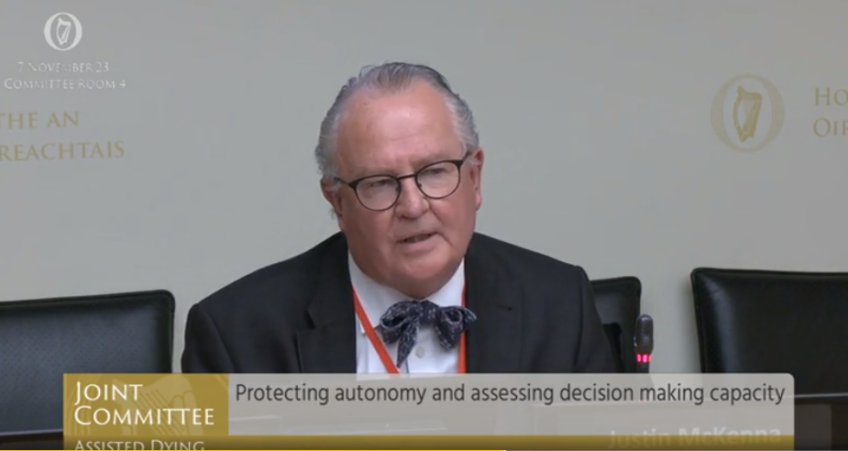
When asked to elaborate on euthanasia for dementia patients, another representative of End of Life, Mr Justin McKenna (pictured), said that patients can write an advanced healthcare directive and “in the context of dementia, I see the circumstances of the patient being relevant. The quality of the life of the person will have diminished to a point that is clinically intolerable within the grounds of that person’s determination and where there is no prospect of that quality improving by natural means.”

Notably, the TD who asked Mr McKenna to elaborate, Emer Higgins of Fine Gael, raised no objection to his line of reasoning.

Mr McKenna emphasised the distinction between ‘lifespan’ and ‘health span’.  “They are not the same”, he said. “You can live with dementia for a very long time. We in this room will all know people who are in that condition and who could sustain a life, or perhaps an existence. However, is it healthy? Is it healthy in the way they would like it to be? In a previous time, when they had capacity and when they were able to determine what they regarded as quality, they should be allowed to maintain it and decide when it should end, if that quality no longer exists.”


This distinction between ‘lifespan’ and ‘health span’ has potentially huge implications. It appears to mean that a person should be offered euthanasia not when their life is nearly over, but when their health is nearly spent, whatever that may mean. If so, euthanasia would be available on very wide grounds indeed.

If patients with dementia can request euthanasia through advanced healthcare directives, this would entail killing them when someone judges they being mentally incapacitated, without a final explicit consent.

This proposal aligns with recent developments in Belgium and the Netherlands, where eligibility criteria for euthanasia have expanded to include psychiatric and neurodegenerative conditions. In Belgium, last year there were 21 cases of euthanasia for cognitive disorders, including dementia and Alzheimer’s, as well as 21 cases for psychiatric conditions.

In the Netherlands, the number of euthanasia deaths based on dementia increased by 34pc last year. According to the official report there were 288 cases of euthanasia for dementia and 115 for psychiatric conditions.

Some weeks ago, Theo Boer, a Dutch professor of healthcare ethics and former member of the Review Committee on Euthanasia, told the Oireachtas Committee: “I am convinced that it is only a matter of time before we take the next hurdle: allowing children of dementia patients to request euthanasia for their demented parents.”

In reply to End of Life Ireland shocking proposals, Senator Ronan Mullen spoke about his father’s illness: “I lived with and helped to care for my own father at home for approximately ten years during the time in which he suffered from Alzheimer’s. I can say that we did not let him miss out on anything he needed in order to deal with any pain, including sedation. I can also say that while he would have hated the way in which he became extremely dependent on us for the most basic necessities of life that enabled a climate of love and care in our family that I never could have imagined being possible. Regardless of what letter anybody might have written in the past about how they would like to be dealt with in the future if they should lose capacity, there is more to the story. There is the story of how the relationship with that person can continue.”

A climate of care and love is what patients with neurodegenerative conditions need. Euthanasia is not care and is not love.

mercoledì, ottobre 25, 2023

‘Assisted dying’ against best medical practice leading doctor tells committee


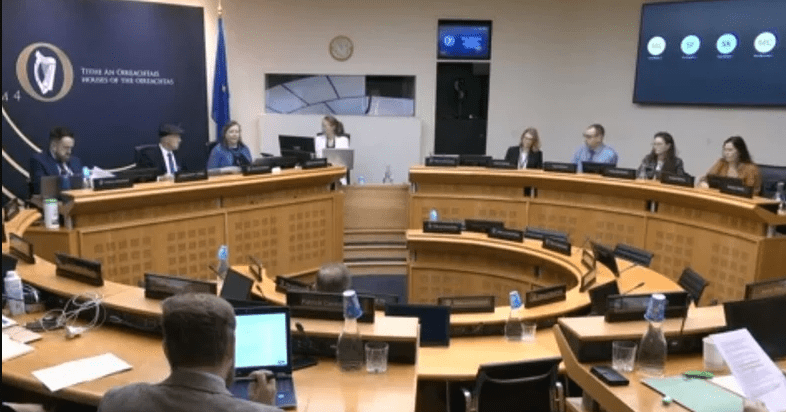
Doctors were before the Oireachtas Committee on ‘assisted dying’ last week, representing a group in favour, a group fully against, and a group mainly against. It’s important to note that while this gives the impression that doctors are more or less evenly divided on the matter, easily the biggest representative body in attendance, namely the Royal College of the Physicians of Ireland (RCPI), is totally opposed to euthanasia/assisted suicide.

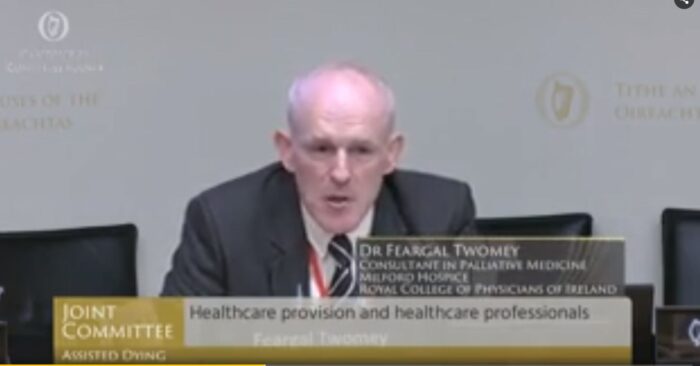
Dr Feargal Twomey [pictured] spoke on behalf of the RCPI, and he told the committee that assisted suicide and euthanasia are contrary to best medical practice. The only true safeguard for seriously ill people is that the law does not change, he said.

The RPCI has more than 11,000 members and is the largest postgraduate medical training and professional body in the country.

He stated: “RPCI opposes the introduction of legislation for assisted suicide because, in our view, it is contrary to best medical practice. It is our view that the potential harms outweigh the arguments that can be made in favour of assisted suicide”.

He claimed that such legislation would undermine the efforts of doctors, nurses and healthcare professionals who deliver compassionate and expert care, “risking a shift away from funding, development and delivery of new and existing palliative care services”.

Dr Twomey reminded the committee that recent analysis of data from countries where so-called “assisted dying” is available shows a progressing broadening of the limits that were initially established by the law. In Canada, safeguards have been systemically eroded. In the Netherlands the extension of eligible groups now includes very sick new-born infants, while euthanasia is available in Belgium to children of any age.

Dr Twomey, who works in palliative care, said that the relaxation of restrictions in Canada and the erosion of safeguards have been frightening. Jurisdictions begin with what is presented as a conservative or moderate approach and then go down a slippery slope.

“My concern about the inability for safeguards to be maintained leads me to say the only way true safeguard is that the law does not change”, he commented.

Dr Gabrielle Colleran and Prof. Robert Landers, representing of the Irish Hospital Consultants Association (IHCA) also expressed concerns about legislative changes. “Ethical considerations must always be paramount in health. The ethical dilemma posed by intentionally ending the life of a patient challenges our fundamental commitment to preserving life and could potentially erode the trust that patients place in our care”, Prof. Landers said.

The IHCA has 3,500 members. Dr Colleran invited the committee to consider a report from the ethics committee of the Danish Parliament earlier this month that recommended against allowing euthanasia because, when it becomes an option, it also becomes an expectation aimed at special groups in society.

A small group called ‘Irish Doctors supporting Medical Assistance in Dying’ also addressed the committee. They claim to have about 100 members, out of 16,000 registered medical doctors in Ireland.

Presenting on their behalf, Dr Brendan O’Shea said that both euthanasia and assisted suicide should be available to adults who are within six months of death or have an incurable terminal condition causing progressive physical deterioration. This last criterion is potentially very broad and has no time limits. Would it include people with MS or Parkinson’s Disease who might be years away from death? Presumably it would. What about dementia patients? Ultimately, it is terminal also. In fact, Dr O’Shea specifically mentioned dementia in his presentation. He spoke about a dementia patient who applied for ‘assisted dying’ in Canada. He was approved. Dr O’Shea did not say he was opposed to this. “At the moment [our italics], we are not recommending that dementia be considered a primary qualifying condition on its own”, he said.

Dr O’Shea estimates that about 1,000 to 1,500 people would avail of ‘assisted dying’ over the next three to four years, if introduced in Ireland. This is guesswork, of course. It could be less, or it could be more. His figure would account for around 1pc to 1.5pc of all deaths in Ireland.

Commenting on the non-medical motivations that could lead to a request for assisted suicide, Dr O’Shea said that “for ourselves, we have to consider the legitimacy of not wishing to be a burden. It is certainly an imperative of a kind society that nobody should have to consider this, but, for me, it is a personal decision.”

This would seem to indicate ‘assisted dying’ should be available on very wide grounds indeed.

venerdì, ottobre 13, 2023

A clash of worldview at the ‘assisted dying’ hearings


The Oireachtas committee on ‘assisted dying’ has met three times in the last two weeks. As usual, the hearings offered useful insights into the thinking of both sides of the divide. What follows are some highlights from the meetings.

Session One

The first session held on Tuesday 3rd October was dedicated to ethics.

Dr Thomas Finegan, assistant professor at Mary Immaculate College Limerick and member of the board of the Iona Institute, told committee members that euthanasia is a violation of the value of life. When introduced in the healthcare system, euthanasia goes against the primary healthcare norm which prohibits the intentional killing of a patient.

“Even if all such future choices were safeguarded from coercion, it would still be the case that the central purpose of healthcare is being overturned or at least severely qualified”, he said.

Euthanasia is often presented as a choice and defended in the name of personal autonomy but if we accept this principle, all attempts to draw a limit in terms of when or by whom it can be accessed will appear as unfair discrimination to someone who is excluded, he claimed.

“Consistency demands that if euthanasia were to be legalised, it would be available on virtually all medical grounds, including, for example, chronic illness, conditions closely associated with disability, experience of suffering – which is inherently subjective and not limited to physical suffering – and mental disorders, once capacity remains,” he said.

Dr. Annie McKeown O’Donovan, from University of Galway, believes that assisted suicide should be permitted but only when death is “imminent”, and the intent is to reduce harm. She also believes that no one apart from the patient should administer the lethal substance, and so she opposes direct euthanasia, which is when the substance is administered by a third party such as a doctor.

Dr Finegan replied that the logic of seeking to minimise harm means that assisted suicide should be offered even more to those who suffer chronic illness and therefore have more suffering ahead of them than those near death.

Dr Kevin Yuill, representing ‘Humanists Against Assisted Suicide and Euthanasia’, reminded the committee that “the inherent problem with any assisted dying legislation is that it is based on a subjective idea of suffering, what it means and who is suffering.” He mentioned the case of a Canadian man who sought ‘medically assisted dying’ because he was homeless.

This prompted a harsh reaction from Deputy Gino Kelly, who accused Dr Yuill and Dr Finegan of using “deeply distasteful and very selective language, to say the least.”

He also demanded evidence on the spot from Dr Yuill to back up his claim about the homeless person, and when Yuill said he could not do immediately, saying he would do so later, Deputy Kenny angrily accused him of not being credible.

But the case Dr Yuill was referring is well known. Mr Amir Farsoud, a disabled 54-year old, applied for ‘medically assisted death’ because was about to be made homeless and had no money. His request was approved by his GP although it needed a second doctor to approve it. It did not go ahead, but from next year in Canada, people suffering from mental suffering will be able to apply for ‘assisted dying’.

In this interview he clearly says: "I don't want to die. But I don't want to be homeless more than I don't want to die".  

https://toronto.citynews.ca/video/2022/10/13/choosing-death-over-homelessness/

Similar cases are emerging, here is another example: https://www.orilliamatters.com/local-news/homeless-hopeless-orillia-man-to-seek-medically-assisted-death-6415189 

A recent survey showed that 28pc of Canadians believe that homelessness should be a ground for access to assisted dying.

Also, a recent article in the New Atlantis revealed conversations between Canadian practitioners of euthanasia who believe the procedure should be made available for non-physical suffering.

Session Two

The second session of the hearings last week was devoted to the experience of the United States.

Dr Mark Komrad, a clinical psychiatrist at Johns Hopkins Hospital and a clinical assistant professor of psychiatry at the University of Maryland, told the committee that assisted suicide is not widespread in the US, and there have been 270 failed attempts to introduce such legislation in many states. Nine states have passed laws inoculating themselves against such legislation ever being introduced there in the future, he said.

Where legal, those practices can go terribly wrong. In Colorado, patients with anorexia were prescribed lethal drugs. In Oregon, at least nine patients survived after having taken such drugs.

The other two experts, Dr Tom Jeanne and Prof. Margaret Battin who both support assisted suicide, were a representative of the Oregon Health Authority and a professor of philosophy respectively.

Oregon has been presented as a good model by some who spoke to the committee in the past. Rates seems to be lower than countries such as Canada or the Netherlands, even if the numbers of those who died by assisted suicide have increased more than fourfold in the last five years.

The law allows only terminally ill patients to kill themselves through the self-administration of a lethal drug prescribed by a doctor. Most of them die at home. This seems to make a big difference to numbers because people are much more reluctant to self-administer a poison than to have a doctor do it for them.

Dr Komrad noted that the drugs are not monitored after they are provided to those who have requested them. In one case they were stored in a house for more than four years, with the risk that others might have taken them.

He commented: “The experience with assisted suicide in the US has demonstrated inadequate and mutating guidelines that eventually push beyond the limited scope of the original laws; flimsy safeguards; zealous physicians who do not follow the law … Leading medical organisations have declared this bad medical ethics, and the majority of American legislators have concluded that it is poor public policy. I hope Ireland can learn from our bad example”.

Senator Ronan Mullen mentioned a very recent study from the British Medical Journal which found that 46pc of those who opted for ‘assisted death’ were concerned about being a burden to others.

It also found that in Oregon, whereas in the past most (80pc) of those accessing assisted suicide were using private insurance to cover their expenses, now public insurance is mainly (80pc) covering costs. Assisted suicide in Oregon is covered by Medicaid, the government program that provides health insurance for those with limited income. This change from predominantly private to mostly public funding could explain the growth in number of cases of assisted suicide in Oregon, particularly among the less wealthy.

Session Three

This week, the Oireachtas heard from four witnesses from Ireland.

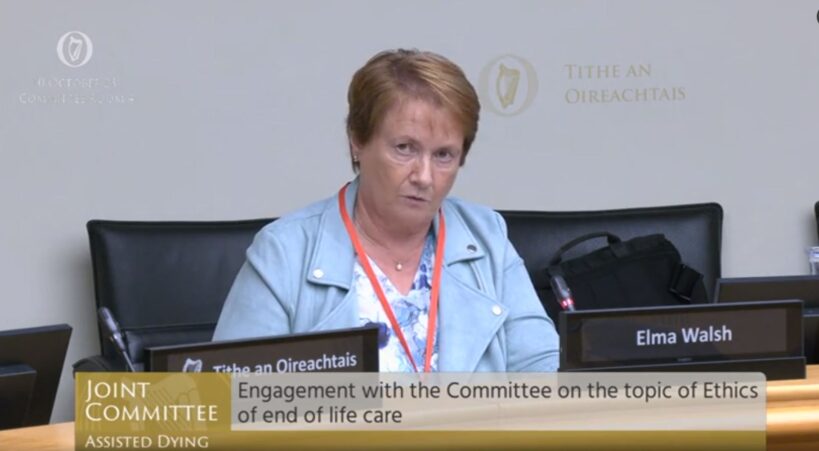
Elma Walsh (pictured), whose son teenage Donal became known in 2013 for his battle with cancer, told the Oireachtas committee of his good experience with palliative care, which allowed him to live the last months of his life as an inspiration for his peers. He visited schools and spoke against suicide, encouraging young people to value life.

Donal died with dignity, the mother said. She cautioned that by removing the present legal ban on euthanasia/assisted suicide the value of life will be significantly reduced.

The other three witnesses support assisted suicide and/or euthanasia to varying degrees.

John Wall, who was diagnosed with a terminal illness, believes that assisted suicide should be available when “it is blindingly obvious that the end is very nigh”.

Tom Curran, whose late partner Marie Fleming lost a Supreme Court case to access assisted suicide in 2013, favours the Swiss model, where a legal drug can be administered by non-medical professionals. He believes that anyone of a sound mind should have that choice, for any reason.

“It is not about aid or about end of life. It is about a choice as to when you feel that your life had ended”, he said.  In the past, he admitted that he had helped Irish people in Switzerland to access assisted suicide.

Garret Ahern, another witness, told the Committee about his late wife Vicky Jannsens who legally took her life in native Belgium, this April after having suffered from breast cancer for ten years. He lamented that it could not have happened here.

Mrs Walsh expressed fear that even a law for limited cases will be extended in the future. “Society must promote hope” she said, “assisted suicide is a statement of no hope. Palliative care allowed Donal to spread a message of hope and reduce the number of suicides. Telling young people that their life is valuable, no matter how uphill it may seem at the time, is important. As Donal said, “Everybody has their own mountain to climb.” Legalising assisted dying is to bring about a clash in society. Life is valuable no matter our age or circumstances. We can all help to fight against suicide by turning our back on assisted suicide.”

Committee hearings continue.
mercoledì, settembre 06, 2023

A report from a meeting of pro-‘assisted dying’ leaders


End of Life Ireland (EOLI), a group campaigning for the legalisation of euthanasia, held a public meeting in Dublin last week to present their views. It was a revealing insight into their objectives and how to get there.

The main speaker was Greg Mewett, a palliative care doctor from Australia who believes that patients have a right to end their lives. He admitted that this view is quite “heretical” among palliative care circles. (The Irish Association for Palliative Care is opposed to ‘assisted dying’. You can find their document on the matter here).

Dr Mewett said that “voluntary assisted dying” should not be seen in opposition to palliative care as more than 80% of patients who wish to end their lives have gone through some form of palliative care before.

He stressed the importance of language in trying to convince people, saying that euthanasia or assisted suicide are bad terms, while the word “voluntary” is key.

He wants the law in Australia changed so that doctors can offer patients the option of assisted suicide.

One of the local speakers was John Wall, an Irish campaigner who said he was able to convince the Government to change the definition of ‘terminal illness’ and, as a consequence, to extend the eligibility for a medical card to those who are given a prognosis of up to 24 months.

He believes that ‘assisted dying’ is simply a matter of choice, and it should be available even for prognoses longer than 24 months. He claimed that the life span of 6 months or shorter, which is common in other jurisdictions that allow euthanasia, is too short. “How long do you want me to suffer?”, he asked.

Another speaker was Dr Brendan O’Shea, a GP from Kildare. He is former head of the Irish College of General Practitioners and was representing on this occasion a group of about 100 healthcare professionals, mainly GPs, working with End of Life Ireland. They call themselves ‘Irish Doctors supporting Medical Assistance in Dying’ and believe that ‘patient autonomy’ should be always respected, even when patients wish to be killed.

All the Irish medical bodies that have taken a public position on this topic are of the opposite view.

Doctors are probably the major opponents to changes in legislation in this area. When, during the debate, someone pointed out that the Hippocratic Oath clearly rejects euthanasia, Dr O’Shea replied that nowadays Hippocrates would have written a different oath. We cannot know this, of course, and it is hard to see why, as suffering is a permanent feature of the human condition and pain was far less treatable by doctors in Ancient Greece than it is today.

EOLI on their website acknowledge that “it can be difficult for healthcare professionals to publicly support providing Medical Assistance in Dying.” To help their campaign an anonymous register of healthcare professionals has been created.

Another speaker was Tom Curran from Exit International, which is probably the most radical pro-assisted suicide organisation in the world, as they believe that it should be available to any mentally competent adult, for whatever reason.

Mr Curran, partner of the late Marie Fleming whose request for assisted suicide was rejected by the Supreme Court, told the audience of how he helped to draft legislation in this area.

Justin McKenna, a solicitor that deals with health cases, also spoke. Michael Nugent of Atheist Ireland, who could not attend, sent a video showing full support for the event.

The public meeting was attended by about 60 people, mostly sympathetic with the aims of the organisers. During the debate following the presentations only a couple of interventions showed some concern. A man suggested caution and mentioned how the slippery slope has operated in other countries, such as Canada, after assisted suicide has been legalised.

The organisers are very confident that the general population and most politicians are on their side and will hold similar events in the future. In 2024 they will host the World Federation of Right to Die Societies conference.

Those opposed to assisted suicide needs to be as well organised as its proponents.

venerdì, maggio 19, 2023

Extend assisted suicide to the poor, argue Canadian ethicists


Assisted suicide should be made available to the poor, the homeless and the disabled, two ethicists from the University of Toronto have argued, and a large number of Canadians agree with them. Once again, we see how quickly assisted suicide and euthanasia can become normalised in a country and be seen as an acceptable way out of a difficult life.

The philosophers, whose article appears in an academic journal, maintain that those who live in ‘unjust social circumstances’ should not be prevented from accessing what is euphemistically termed ‘Medical Aid in Dying’ (MAiD).

Poverty, disability, or homelessness can cause despair. There already have been cases in Canada of people asking for MAiD because they could not afford a house compatible with their medical condition. Experts are concerned by the growing number of prisoners asking for assisted suicide.

One argument against allowing such people access to assisted suicide is that their decision is not really autonomous because of the pressure created by their situations. Nonetheless, the two ethicists reject the idea that “the autonomy of people choosing death in the context of injustice is necessarily reduced”. They believe that decisions taken in desperate and oppressive circumstances have to be respected anyway.

The central requirement for access to euthanasia in the Canadian legislation is “having enduring and intolerable physical or psychological suffering”. It is irrelevant whether suffering is determined by social circumstances rather than medical reasons, the philosophers maintain in their article.

They acknowledge that “it is not feasible to expect medical professionals to assess the extent to which the person in their care has had their options restricted because of oppression.” But they don’t find this a good reason to reject the call for expanding the grounds to access MAiD.

Social conditions could improve but until this happens, they say, it is better for the poor and the disabled to be able to choose to die. They call their approach “harm reduction”.

“In the case of the availability of MAiD in Canada to people who not only might but have explicitly said they would choose differently if they had access to the options they preferred, we argue that the least harmful way forward is to allow MAiD to be available.”

Not allowing poor people to request assisted suicide would cause them more harm, is the bizarre conclusion of these highly educated ethicists. Refusing options amounts to perpetuating suffering.

Assisted suicide and euthanasia were initially introduced in Canada in 2016 on medical grounds for incurable illnesses when death was foreseeable, but soon the grounds were expanded by court decisions or updates in the legislation.

Pro-life activists’ predictions of a slippery slope are becoming a stark reality, unfolding at an unexpectedly accelerated pace. Safeguards are constantly eliminated or relaxed.

A recent survey showed that large numbers of Canadians believe that the grounds for access to MAID should include inability to receive medical treatment (51pc), disability (50pc), mental illness (43pc), homelessness (28pc), and even poverty (27pc). Support for these reasons is higher among young Canadians.

So, we can see that the opinions of the two ethicists are shared by a substantial portion of the Canadian population.

If death is the solution to suffering, there is no reason why it should not be offered to everyone. And if suffering is caused by social injustice and lack of alternatives, these philosophers will tell us that the right to kill oneself should extend to everyone, including the poor and the disabled. Lack of hope does not undermine autonomy, they say.

This is where the assisted death legislation is leading Canada and it should serve as a cautionary example for Ireland and for all other countries considering similar laws.


Photo by John Moeses Bauan on Unsplash

mercoledì, dicembre 07, 2022

Canada slides right down the assisted suicide slippery slope


Canada only introduced assisted suicide in 2016, but already we see that the grounds to avail of it are widening and the country now has one of the most permissive euthanasia and assisted suicide laws in the world. Increasingly, assisted suicide is being seen an alternative to a lack of proper health care or welfare resources. There are even ritual and ceremonies being developed to accompany the produce which both glamourises and normalises it.

Last year, the total number of deaths by ‘medical-assistance-in-dying (MAiD)’ at 10,064. Forty-four percent took place in private residences and 29pc in hospitals. From 2016 to 2021, 31,664 Canadians have been killed in this way.

Is this always by a genuine free choice or, instead, is it taking place because vulnerable patients feel under pressure and believe they have no real alternative, such as palliative care?

Unlike other countries where it is prohibited, in Canada doctors are allowed to offer euthanasia to their patients. This is causing serious concerns. Campaigners for vulnerable patients have highlighted that illness often raises suicidality but these thoughts tend to disappear when proper treatment and care is offered. Suggesting MAiD as one of the possible options makes death an attractive and even expected choice for vulnerable or elderly patients.

“No other country in the world has normalised assisted suicide or euthanasia in this way as a potential first-line therapeutic option to address suffering”, said a group of Canadian doctors in the World Medical Journal recently.

MAiD is becoming an easy solution to compensate the lack of proper care or adequate resources.

We are already seeing cases of desperate people applying for assisted suicide as alternative to being homeless, or because they couldn’t find housing to accommodate their disability.

Last week, a paraplegic army veteran told the Canadian Parliament that when she complained about the lack of a stairlift at her home, she was told: “If you are so desperate, madam, we can offer you MAiD”.

The head of the Human Rights Commission has commented: “Medical Assistance in Dying cannot be a default for Canada’s failure to fulfil its human rights obligations.”

The Canadian experience shows how quickly culture can deteriorate so that what was once taboo is now presented to the public as something that is perfectly understandable and even to be celebrated.

Here are two examples of the process of celebrating assisted suicide. A major fashion retailer has just released a video glamourising the assisted suicide of a 37-year old woman.

Another example is a Christian church in Winnipeg that offers assisted suicide ceremonies to its members. The rituals are hold in the sanctuary. Life, once sacred for Christians, is now terminated with the blessing of a cleric.

Canada shows that the slippery slope is real. When death is offered as a tool to relieve suffering, there are no logical reasons to limit it only to certain groups. Safeguards and limits are lifted once assisted suicide is normalised.

—

Photo by Diana Polekhina on Unsplash

sabato, settembre 17, 2022

Più l’eutanasia è legale, più ammazza senza motivo


Secondo il rapporto ufficiale del ministero canadese della Sanità, sono oltre 10mila i cittadini che in quel Paese sono morti di eutanasia nel 2021. Dieci volte di più rispetto a cinque anni fa.

Il numero è cresciuto del 32% in un solo anno e questo conferma che, una volta introdotti, eutanasia e cosiddetto «suicidio assistito» diventano norme sociali accettate, quasi doveri, per quanti soffrono o hanno perso la voglia di vivere.

Secondo il rapporto, il 36% di quanti hanno ottenuto l’eutanasia lo scorso anno si considerava un peso per la famiglia e per gli amici, mentre oltre 1.700 soffrivano di isolamento e di solitudine. Motivati, cioè, più da cause sociali e psicologiche che dalla malattia. Come, tristemente, e clamorosamente, il regista francese Jean-Luc Godard (1930-2022) nei giorni scorsi.

I dettagli del documento diffuso dal ministero canadese sono del resto rivelatori: mostrano quanto potrebbe accadere in qualsiasi altro Paese, qualora certe pratiche venissero legalizzate.

Il Canada ha introdotto eutanasia e «suicidio assistito» nel 2016. Inizialmente l’accesso era ristretto ai malati terminali, ma nel 2019 la Corte Superiore del Québec ha giudicato incostituzionale il limite e, di conseguenza, nel 2021 il governo federale ha esteso a pazienti non terminali quella che, con un eufemismo, è stata chiamata «assistenza medica al morire». La legislazione del 2021 ha anche rimosso alcune salvaguardie, come il periodo di attesa di dieci giorni di valutazione prima dell’intervento e l’obbligo di offrire l’alternativa delle cure palliative. Dall’anno prossimo estenderà pure la «morte buona» a pazienti che soffrono unicamente di malattie mentali. Ma un Paese sul serio compassionevole dovrebbe offrire qualcosa di più di un’iniezione letale a chi è malato e solo. Invece, afferma il rapporto, da quando la legge è stata introdotta nel 2016, 31.664 persone sono state uccise in questo modo.

Queste cifre, paragonate a quelle dello scorso anno (10.064), indicano una crescita appunto di dieci volte rispetto al 2016 (1.018) e ammontano al 3,3% di tutte le morti registrate in Canada nel 2021. Il dato varia a seconda delle zone geografiche, ma nel British Columbia quasi una morte su venti avviene ora tramite eutanasia.

Il «suicidio assistito» consentito dalla legge avviene attraverso l’auto-somministrazione di farmaci letali, ma è pratica rara: solo sette casi nel 2021. Quasi tutti i pazienti vengono invece uccisi direttamente da un medico o da un infermiere. Sono sia uomini (52,3%) sia donne, e l’età media è di 76,3 anni: 77 per le donne e 75,6 per gli uomini.

L’estensione dell’eutanasia ai malati non terminali prevista dalla legge del 2021 la consente qualora i sofferenti siano affetti da un male definito «incurabile» o se siano disabili e soffrano tanto psicologicamente quanto fisicamente. 219 persone che sono state sottoposte a eutanasia lo scorso anno non erano malati terminali. Poiché questo è stato possibile solo a partire dal mese di giugno di quell’anno, i dati del rapporto si riferiscono soltanto a un semestre e quindi è facile prevedere che i casi, come minimo, raddoppieranno.

L’età media dei pazienti non terminali che sono ricorsi all’eutanasia è di 70,1 anni, ossia oltre sei anni meno dell’età media dei pazienti terminali. Il 37% di queste morti ha interessato persone di età compresa tra i 18 e i 64 anni, mentre per i malati terminali il dato è molto più basso, meno della metà (16,7%). Ovvero, più l’eutanasia si liberalizza e più sono giovani le sue vittime.

La causa di sofferenza più comune, per i pazienti terminali e non, è la perdita della capacità di impegnarsi in attività significative (86,3%). Più di 3.500 di loro hanno dichiarato di sentirsi di peso per la famiglia, per gli amici o per chi si prendeva cura di loro, e (come detto) più di 1700 soffrivano di solitudine e isolamento.

Solo il 4% delle richieste di morte assistita è stato rifiutato perché non soddisfaceva i criteri necessari, mentre circa il 2% delle persone che ne avevano fatto inizialmente richiesta ha poi cambiato idea o è semplicemente deceduto prima per cause naturali.

La patologia più comune fra i malati terminali è il cancro (65,6%), mentre fra i non terminali sono le malattie neurologiche quali demenza o morbo di Alzheimer. L’esperienza del Canada, seppure breve, conferma ancora che, una volta introdotti eutanasia o «suicidio assistito», i limiti posti inizialmente vengono invece pian piano rimossi, il numero delle vittime sale ed è difficile tornare indietro. Lo stesso è avvenuto in Belgio e nei Paesi Bassi.

martedì, gennaio 04, 2022

An important voice is raised up against Assisted Suicide


The College of Psychiatrists in Ireland has come out strongly against the proposal to legalise Physician Assisted Suicide and Euthanasia (PAS-E).

In a new paper released just before Christmas, they say it is “contrary to the efforts of psychiatrists, other mental health staff and the public to prevent deaths by suicide.” It will place vulnerable people at risk, as they will fear of being a burden and, once introduced for limited cases, it will be applied broadly to other groups.

Following other medical bodies that have argued along same lines, the Irish psychiatrists state that “the introduction of assisted dying represents a radical change in Irish law and a long-standing tradition of medical practice, as exemplified in the prohibition of deliberate killing in the Irish Medical Council ethics guidelines”.

In a clear and detailed way, the College of Psychiatrists presents a strong case against PAS-E. They refer to specific scientific studies proving that the introduction of medically-induced death has a contagion effect because it normalises suicide and, as a consequence, leads to higher overall suicide rates in the population.

PAS-E weakens suicide prevention initiatives and impacts negatively on those who are psychologically vulnerable, they say.

“At a time where there is public concern regarding mental health and suicide to a greater degree than ever before, the introduction of PAS-E undermines the valuable work done in addressing the causes of suicidality“, they write.

Once the State recognises a “right to die”, which means a “right to be killed”, those who work daily to relieve psychological suffering, on the assumption that suicide is never a solution, will feel that they should not interfere with somebody’s personal autonomy. Their role changes dramatically.

Fear of loss, fear of pain and fear of the unknown are common causes of distress to patients experiencing terminal illness and their families. Psychiatric issues are also common. According to sources cited in the document, depression is the strongest determinant of desire for death in serious or terminally ill patients. “The prevalence of depression among terminally ill patients with a desire for death is eight times higher than in those without a significant desire for death”.

Appropriate treatment is the best way to address depression and fear, but the availability of euthanasia creates the risk that many people will die from treatable psychological distress and mental illness, the document says. There is evidence that in countries where PAS-E is legal, the number of people with psychiatric disorders who request euthanasia has increased. Some jurisdictions already permit PAS-E for personality disorders and other psychiatric conditions.

International evidence shows that euthanasia safeguards and controls are regularly flouted, the position paper highlights. The slippery slope is real. In the Netherlands, for instance, “the grounds for euthanasia are shifting from relief of suffering to autonomous patient choice”. What initially is introduced for exceptional cases soon becomes the norm and the limits expand.

The Irish psychiatrist warn that the expression “death with dignity” is very often used by campaigners to mean the deliberately procured death of an ill or disabled person, and strongly implies that vulnerable people are “dignified” only in death.

“Not only is euthanasia not necessary for a dignified death, but techniques used to bring about death can themselves result in considerable and protracted suffering”, they wrote, noting that while euthanasia is portrayed by its defenders as a peaceful process, there are reports of prolongation of death (up to 7 days), and re‐awakening from coma (up to 4%).

The concerns expressed by the College of Psychiatrists in their position paper echo similar warnings that appeared in recent documents by the Irish Palliative Medicine Consultants’ Association, the Irish Society of Physicians in Geriatric Medicine, the Royal College of Physicians, the Royal College of Surgeons, and many other medical bodies internationally. The all reject any attempt to legalise PAS-E.

Those alarms come from medical professionals who deal every day with suffering and illness. Unfortunately, their voices will find little attention by Irish media, which seem to be interested only in emotional stories rather than a scientifically informed debate on the disastrous consequences of legalising assisted suicide and euthanasia.
 
Instead, most media debates on the topic are likely to increase public support for the proposition, as a recent edition of Claire Byrne Live on RTE showed.