Visualizzazione post con etichetta covid-19. Mostra tutti i post

giovedì, agosto 29, 2024

The newspaper that stood up for freedom of worship during the pandemic


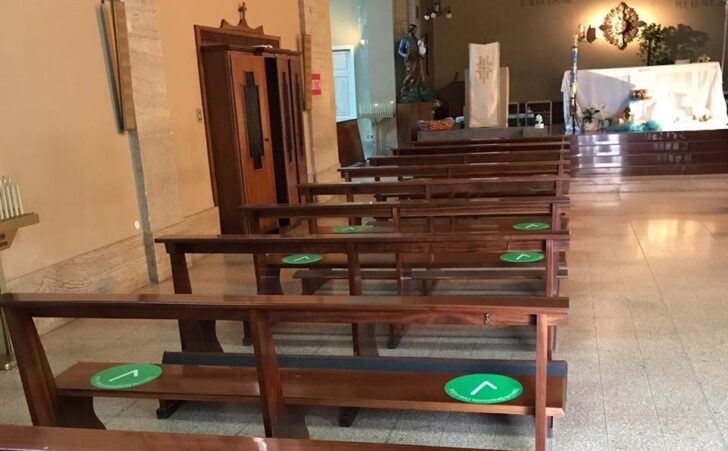
During the Covid-19 pandemic, the Irish Government imposed the longest ban on public worship in Europe, while in Northern Ireland restrictions were less drastic. A new academic study says that religious institutions and media outlets largely supported these measures, with the main exception of the Irish Catholic newspaper.

The study, by Gladys Ganiel and Caoimhe Ní Dhónaill from Queen’s University Belfast, analyses the response from the main Churches, and also religious publication to the very restrictive approach by the authorities.

The two authors noticed that “strict restrictions in other countries prompted religious leaders to criticise the government or to seek redress in the courts on grounds of religious freedom. But such discourses were almost absent on the island of Ireland.”

Religious institutions, including the Catholic Church and Protestant denominations, largely supported the government-imposed restrictions, despite their often very heavy-handed nature. The churches justified their stance by appealing to the broader common good and the need to protect the most vulnerable members of society from the virus.

“No churches, church leaders, or church groups brought religious freedom cases to the courts”, (unlike in various other countries) observed the study. The only exception was Declan Ganley, a prominent Catholic businessman, who contended that the government’s ban on public worship was unjust and violated the fundamental rights of believers. The case was ultimately dropped when restrictions were eased.

Ganiel and Ní Dhónaill noticed that in Northern Ireland, religious leaders were more actively consulted by the government than in the South. This consultation led to a generally cooperative stance by religious institutions in the region. The Protestant churches, for example, continued to encourage adherence to the restrictions while also acknowledging the emotional and psychological toll the pandemic was taking on individuals, particularly due to isolation and the inability to gather for worship.

In the Republic, however, “the government’s approach to restrictions revealed a lack of trust in religion: piety could be perceived as dangerous; or, alternatively, the rights of the pious were deemed less important than those of others”, says the study.

While the Catholic hierarchy accepted the State’s top-down approach and officially supported the government’s measures, there was a notable voice of dissent within the religious media. The Irish Catholic newspaper emerged as a critic of the measures, particularly concerning the ongoing closure of churches.

The paper voiced frustrations over the exclusion of religious services from essential activities, contrasting Ireland’s severe restrictions with more lenient approaches in other European countries.

Quite a few of the articles in that newspaper which questioned the ban on public worship were written by the head of the Iona Institute, David Quinn.

Initially supportive of the government’s efforts, the Irish Catholic‘s tone shifted as the pandemic progressed. The paper highlighted the prolonged closure of churches even as other parts of society began to reopen, questioning why religious gatherings were considered less essential than other activities. This position reflected a broader concern within the publication that Ireland’s secularising public sphere was increasingly marginalising religious expression.

Even the Catholic Church leadership was criticised for not doing enough to defend the rights of the faithful. The paper argued that the government’s approach represented a form of modern-day persecution, likening it to historical anti-Catholic measures.

In contrast, the Protestant media in Northern Ireland, where there was more dialogue between church leaders and the government, largely supported the restrictions and praised political leaders for their decisions.

venerdì, novembre 18, 2022

How Covid curbs on church-going harmed public health


During the Covid-19 pandemic, people were barred in many countries from attending religious worship for long periods, and nowhere more so than in Ireland. When they were not barred, severe restrictions were put on the numbers who could attend. But strictly from a public health perspective, was it worth it? An important new study suggest it was not, and the restrictions may have done more public health harm than good.

The research, just published in the European Economic Review is based on a nationally representative sample of over 100,000 responses from 52,459 individuals in the United States. It was carried out during the period from March 2020 to May 2021, when most American States limited the number who could attend a house of worship.

A crucial finding of the study is that the severe restrictions on religious worship do not seem to have slowed the spread of the virus.

It says: “there is no statistically or economically significant association between restrictions on houses of worship and either COVID-19 infections or deaths regardless of how restrictions are measured”. (p. 12)

The article concludes that “there is almost no evidence that the restrictions had a positive effect on public health, consistent with a growing body of evidence that has evaluated the launch of State quarantine policies.” (p. 12)

But the restrictions or ban on public worship did harm the mental health of some worshippers.

The author focuses on two variables: current life satisfaction and self-isolation.

The study confirmed that religious people have higher level of current life satisfaction overall, compared to the rest of the population. This is partly achieved by being part of a religious community. Therefore, it is no surprise that is also found a “strong negative association between state restrictions and current life satisfaction, particularly for religious adherents.” (p. 6).

If one of the main sources of their wellbeing was removed, how could it be otherwise?

The author notes that going to a church, or attending any other religious venue, offers people the opportunity to forge relationships and grow stronger in their faith. The survey established that the restrictions had “a disproportionate impact on self-isolation among religious adherents.” (p. 7)

Self-isolation among religious people increased by more than among their non-religious counterparts. This is one of the reasons why their well-being suffered more as a result of the pandemic.

The decline in well-being was stronger in Catholic than in Protestant congregations, and non-existent among Mormons, who are concentrated in Utah where no significant restrictions were put into place.

The main result of the study is that “religious adherents experienced systematically lower levels of well-being and isolation following the adoption of such restrictions.” (p. 11)

The study focuses on the United States only. It would be interesting to see such research extended to other countries, particularly to Ireland that had the longest period of worship restrictions in Europe.

giovedì, gennaio 13, 2022

The countries requiring vaccine passport to attend worship

During the pandemic, Ireland prevented worshippers attending religious services longer than any other country in Europe, but at least we haven’t gone so far as to force people to show vaccine passports before attending. Some countries have imposed this requirement, and shockingly, Church authorities are sometimes willing to comply.

In Quebec, for example, the provincial government has enforced a vaccine passport system on all places of worship. Congregants aged 14 to 75 must show proof of vaccination to attend services indoor.

The religious authorities were not consulted before the Government announced its decision.

Some lay faithful organised a prayer vigil to defend religious freedom but the local Catholic bishops, representing the largest Christian denomination in the province, made no objection to the decision.

Cardinal Lacroix, bishop of the archdiocese of Quebec, even voluntarily and unilaterally closed all churches from 23rd December to 10th January as a “strong gesture of solidarity with vulnerable people as well as with the staff of the entire health network and all those who help fight the pandemic.”

This is despite Quebec having a lower number of Covid cases per 100,000 people than Ireland.

From New Year’s Eve the Quebec government has prohibited any indoor social gathering or public worship service, except for funerals. All churches and other religious venues are now closed indefinitely.

The Bishop of Pembroke, Guy Desrochers, wrote a letter just before Christmas, criticising the Quebecois government: “I seriously wonder whether the line between what the State can and cannot dictate to the various religious communities has been crossed with this obligation to present vaccination passports at the entrance to our churches. … Dare to challenge your government representatives to change this latest law which in fact oversteps their role and duty in our society. “ (The diocese of Pembroke is in the province of Ontario, not Quebec).

In Europe, some countries have worship restrictions based on vaccination status.

Luxembourg, for example, requires a vaccination passport when more than 20 are attending an indoor religious gathering. Some priests have protested but Cardinal Hollerich, archbishop of Luxembourg and president of the Commission of the Bishops’ Conferences of the European Union, has defended the government rule.

“During this phase when the pandemic is resurgent, we must save lives, and this green pass should welcome people to Mass, … Some priests have objected, and this isn’t helping the search for a solution”, he said.

Similar measures are in places in other parts of Europe, but the number of people permitted to attend without a pass varies: it is 30 in Slovakia, 50 in Switzerland, 100 in Denmark and Sweden.

In Iceland, for religious events with more than 50 participants a negative rapid antigen is required. A negative test result is also obligatory for weddings and Christenings in Portugal.

In New Zealand, they now have a “traffic light” system  – green, orange and red – based on the severity of the infection.

Under the red setting, a maximum of 100 people can gather in place of worship, but they must show a vaccine pass. A maximum of 25 people can worship together without showing a vaccine passport.

There has been no pushback from Catholic bishops, but the system has been criticised by some protestant leaders.

“This is something that would be unacceptable from the perspective of the Church, and indeed it would be a contradiction of the message of the Gospel. The thought that someone would be barred from coming to church to hear the gospel is abhorrent.”, said a spokesman for Christian Voice New Zealand.

The six Catholic bishops have set guidelines asking parishes to organise Masses for the vaccinated only but also, where possible, opportunities for people without a pass. It is a two-tier system that favours those who have a pass but does not exclude the others completely.

Religious leaders tend to not object to civil authorities but it is difficult to find a compelling reason for a system granting access to churches based on vaccination status. Churches have proven very safe places to be so long as social distancing and other measures are properly observed.

Making vaccine passports a condition to attend public worship is an unacceptable breach of Church/State separation and it is something no religious leaders should tolerate.


martedì, novembre 09, 2021

The ethics of a lockdown

 Qui potete scaricare un mio opuscolo.

giovedì, settembre 09, 2021

Religion had a positive effect on mental health during lockdown


The benefits of religion to mental health are well documented and its positive impact during the pandemic has been confirmed by a number of recent studies.

Covid-19 has had a profound effect on our lives. Significant moments such as baptisms, first communions, weddings, were postponed due to the restrictions imposed by the government. Many could not the attend the funerals of friends and relatives.

Even if we consider it from a merely human point of view, without looking at its supernatural dimension, religion is beneficial to individuals and society as religious practice generally takes place in a community and it creates bonds among the faithful.

Spirituality -not necessarily in an organised form – also plays a key role during important experiences such as illness and bereavement.

Academic articles are now emerging about the impact of Covid-19 on religious practice and its consequences for psychological well-being.

The positive impact of religion and spirituality, in spite of the restrictions, has been confirmed by these studies.

A survey conducted in Brazil and published in the International Journal of Social Psychiatry, found that “most participants (73.4%) reported that religiosity and spirituality was helping them to cope with the social isolation, 57.3% have experienced a spiritual growth and 33.8% believed that the social isolation has improved their religious activities.”

Those who could not attend religious ceremonies, found help in private prayer or in online worship.

study assessing the impact of the pandemic on the America’s Orthodox Jewish population discovered that “positive religious coping, intrinsic religiosity and trust in God strongly correlated with less stress and more positive impact, while negative religious coping and mistrust in God correlated with the inverse. “

study carried out in Italy during the first lockdown confirmed that “spirituality and religious practices are a protective factor connected not only with psychological and mental but also physical health.”

survey conducted among the Irish prisoners abroad identified prayer and spirituality as the most helpful to manage stress and anxiety.

The Iona Institute has commissioned a number of polls during the pandemic to track what happened to religious practice during the lockdowns and then when restrictions eased.

There is a risk associated with public religious events if they are not properly managed, but this has to be balanced with the benefits that religious practice brings to those who do attend, and to society in general as a consequence. For most of the pandemic this was overlooked by the Government and NPHET and hence we had the longest overall ban on public worship in Europe.

The above-mentioned studies have confirmed the positive impact that religion and spirituality have on us, particularly in difficult times. Thus, any future decision about further limiting religious ceremonies (churches are still allowed only to fill to 50pc capacity) should also consider the negative consequences that those restrictions will have on our psychological health.

martedì, maggio 11, 2021

Why vaccine passports must not be compulsory


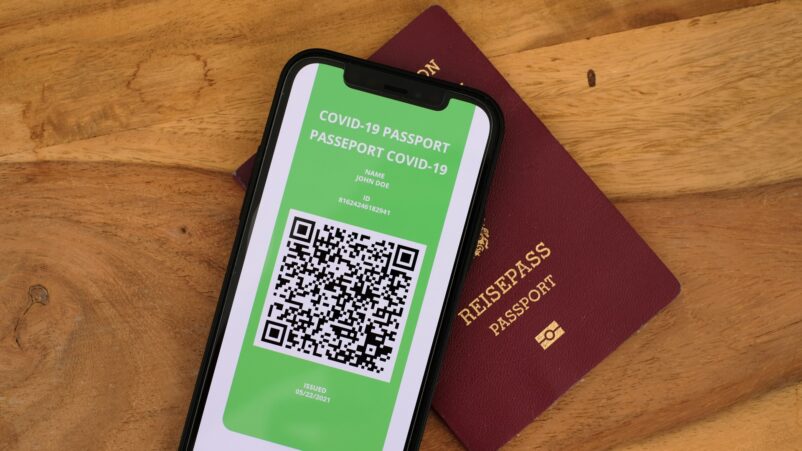
‘Vaccine passports’, if they are introduced, are documents which would certify that someone has been vaccinated against Covid-19. Without them, you might not be able to access certain places or services. There is even concern churches might insist on them for access to worship. But they are morally problematic for a number of reasons.

Of course, authorities have a right, and also a duty, to protect public health, but the necessary measures have to be proportionate and should not infringe basic rights.

Personally speaking, I believe I have a moral duty to be vaccinated. But I also believe that this must be voluntary, and the State (and private organisations as a general rule) have no right to impose a Covid-19 vaccine on citizens.

Every medical treatment should be based on consent. If excessive burdens are imposed on those who do not want, or cannot get vaccinated, this becomes de facto a form of coercion.

A refusal to be vaccinated should be respected. Some people might have moral or philosophical reasons to object to vaccines and, unless they become dangerous to others, it is their right to follow their conscience.

Requiring people to prove they have received the Covid vaccination to access certain places or services is equivalent to punishing those who have not received it. It creates two classes of citizens, and one has more rights than others.

An alternative to insisting that someone who boards a flight (say), has been vaccinated, is to ensure they test negatively for the virus before they embark.

Another negative effect of requiring vaccine passports is the possibility of diminishing public confidence in health authorities. Hesitant citizens will become even more suspicious if public health measures are enforced with a punitive attitude.

Vaccine passports are not per se immoral. Restrictions can be introduced when the circumstances require them, but only on a limited basis and they must be proportionate to the actual threat that unvaccinated people pose to the rest of society.

It is also important to distinguish common or essential activities from non-necessary ones. People should not be prevented accessing necessary services.

The use of vaccine passports instead would be more acceptable, for instance, to restrict those travelling from countries with a high level of infection, as they are more at risk, but it should not be the norm for the general population. Again, passengers could be tested for the virus before boarding.

Concerns similar to the ones outlined above have been expressed by a letter signed by more than 1,200 church leaders in the UK, warning that introducing vaccine passport would create a “medical apartheid”.

“This scheme has the potential to bring about the end of liberal democracy as we know it and to create a surveillance state in which the government uses technology to control certain aspects of citizens’ lives,” the letter said.

The Anscombe Bioethics Centre, a Catholic institute based in Oxford, has produced a detailed document in response to the UK government call for consultation on vaccine passports. They claim that “if applied widely, [vaccine passports] would undermine the voluntariness of vaccination and constitute unethical coercion. They would also very likely be socially divisive and raise questions in relation to equality law.”


venerdì, aprile 02, 2021

An update on public worship restrictions around Europe


Public worship is currently banned in Ireland. For the second year, there will be no Easter celebrations due to the ban imposed by the Government. This is exceptional in Europe, where public worship is allowed in almost every country, albeit with various safety measures. (See details below)

Since the beginning of the Covid-19 crisis last March, public worship in Ireland has been banned for 37 weeks (39 weeks in Dublin and Donegal).  No other country in Europe, and probably in the world, has kept this ban for such a long time.

All other European countries closed their churches for a much shorter period, mostly during the first lockdown last year: England 14 weeks, France 9, Germany and Belgium 6, Italy 5.

Slovakia has had a 31 week ban and Slovenia, 24 weeks. But Ireland beats even them.

Here is an updated list of what is happening in a range of European countries, based on the official EU website Re-open EU.

Public indoor worship restrictions 

Banned: Ireland, Slovakia and Slovenia. In Estonia, religious ceremonies are permitted only outdoor, with a limit of 10 participants.

No specific limits on numbers but worshippers must be socially distanced: Austria, Croatia, Finland, France, Germany, Hungary, Italy, Latvia, Liechtenstein, Lithuania, Luxembourg, Malta, Netherlands, Norway, Poland, Romania, Switzerland.

Limits vary by region:  Greece, Spain and Portugal.

Max 500 participants depending on size of building: Denmark.

Max 50 participants: Cyprus, Iceland.

Max 15 participants: Belgium, Bulgaria, Czechia.

Max 8 participants: Sweden.

giovedì, marzo 11, 2021

Law lecturer says it is not illegal for Catholics to receive Communion during lockdown


Gardaí have been stopping priests distributing Holy Communion. All public worship is currently banned. The Government is fighting businessman, Declan Ganley challenge to the constitutionality of the restrictions on religious gatherings tooth and nail. But one legal expert believes the lockdown law is being incorrectly interpreted, namely Oran Doyle of Trinity College Dublin.

Prof. Doyle is a professor in law at Trinity College Dublin and director of the COVID-19 Law and Human Rights Observatory.

In a new blog he rejects the widespread notion that organising or attending religious celebrations is a criminal offence.

First, he argues, religious events are not prohibited by the Regulation of the lockdown, which explicitly bans other kind of events. Secondly, some have claimed that even if organising a religious ceremony is legal, traveling to one is not permitted. But Prof. Doyle says that the Regulations take great care to not include religious ceremonies among the class of prohibited events. “This implies that it must be permissible to leave one’s home to organise and/or attend those events”, he says. Otherwise, why would religious events be permitted if travelling to attend them is not? It seems to be a contradiction.

Prof. Doyle also comments on a statement from the Archdiocese of Dublin advising priests not to give communion after celebrating an online Mass, on the basis that “no gatherings of people outdoors or indoor are permitted”.

“If this is intended to be a statement of the legal position—and it is difficult to read it any other way—it is categorically incorrect”, Prof. Doyle wrote.

He acknowledges that the Archdiocese’s advice appears to have followed pressure from the Gardaí but he believes that Gardaí around the country have formed the mistaken belief that it is even against the law to go into a church to receive Communion, when this is not true.

Gardaí have threatened priests with prosecution for leaving the church doors open during mass but this is also not against the law.

Prof. Doyle claims that a statement issued last November from the Department of Health on this regard is a “masterpiece of misdirection”. The statement confirms that no penalty attaches to religious celebrations, but its language appears to be calculated to create the impression that what is in reality public health advice only is mandatory and, so, it is a legal requirement.

He says: “ … at the core of the Government’s response lie not restrictions on activities but rather confusion over the extent to which activities are restricted. Rather than clearly distinguish between what citizens are required to do and what they are requested or advised to do, Government statements frequently encourage people to believe that their legal obligations are more restrictive than is in fact the case.”

He believes that this is a strategy. The Government and the media imply a higher level of restriction than it is the case, with the use of misleading pronouncements, and then “allow legally ungrounded threats of prosecution to bring people in line with that higher level of restriction.”

If this is so, then at a minimum, Bishops should allow Catholics to enter a church in order to receive Communion.

mercoledì, marzo 03, 2021

CoViD-19, mappa del culto vietato


Irlanda e Slovenia sono gli unici due Paesi dell’Unione Europea dove i rispettivi governi hanno vietato ogni celebrazione religiosa pubblica. Negli altri Stati membri le restrizioni variano significativamente.

Uno dei regimi più stretti vige in Belgio, dove decine di cattolici si sono già radunati a Bruxelles per protestare nei confronti delle regole attuali che prevedono al massimo quindici persone per celebrazione. La protesta ha avuto luogo di fronte alla basilica di Koekelberg, la quinta chiesa più grande al mondo che potrebbe contenere 8mila fedeli, proprio per mostrare l’assurdità delle restrizioni correnti.

I partecipanti alla protesta, insieme a membri di altre fedi, chiedono al governo belga che il numero di fedeli ammesso alla celebrazione sia proporzionato alla grandezza dell’edificio religioso, come in altri Paesi. Nei vicini Paesi Bassi, del resto, non c’è limite. In Francia è invece di trenta, mentre in Italia è del 50% della capacità.

L’anno scorso il Belgio ha sofferto una delle restrizioni più severe di tutta Europa: le cerimonie religiose sono infatti state bandite fino a quando la comunità ebraica non ha fatto appello al Consiglio di Stato, il quale ha riconosciuto l’eccessiva rigidità delle regole. In dicembre il governo è stato poi obbligato ad allentare decisamente le restrizioni, permettendo 15 fedeli a celebrazione, esclusi il celebrante e i bambini al di sotto dei dodici anni. Nonostante questo, la decisione ha lasciato insoddisfatte le comunità religiose più numerose, che sperano in allentamenti ulteriori.

Quanto all’Irlanda, lo Stato ha vietato il culto pubblico del tutto. In altri Paesi europei vigono restrizioni del numero dei fedeli ammessi al culto, oppure divieti locali o temporanei, ma nessun altro Stato ha vietato celebrazioni religiose pubbliche per periodi così lunghi: diversi mesi nel 2020 e ancora da gennaio di quest’anno.

Una restrizione del medesimo tenore irlandese è al momento in vigore solo in Scozia, che non fa parte però dell’Unione Europea. In Irlanda del Nord le cerimonie religiose sono autorizzate sia dal governo britannico centrale sia da quello locale, ma le principali denominazione cristiane hanno deciso autonomamente di tenere le chiese chiuse almeno fino al 5 marzo.

In Scozia il divieto del culto pubblico è finito nel mirino di don Tom White, decano dell’East St Alphonsus Church di Glasgow, che ha inviato una lettera di diffida al governo locale: «Parlo a nome di tanti nella chiesa quando dico che è molto importante mantenere le persone al sicuro durante la pandemia», ha affermato il sacerdote. «Ma questo può e deve essere fatto mentre si consente alle persone di soddisfare il desiderio di avvicinarsi a Dio e di celebrare in chiesa dentro una comunità. Con le misure di sicurezza appropriate si possono ottenere entrambi gli obiettivi, come avviene in Inghilterra, in Irlanda del Nord e nel Galles».

Ecco una lista delle restrizioni al culto pubblico vigenti nei vari Paesi dell’Unione Europea, stilata sul sito di «Re-open EU».

Culto vietato: Irlanda e Slovenia

Nessun limite specifico (salvo le misure igieniche): Austria, Croazia, Finlandia, Francia, Paesi Bassi, Romania, Slovacchia

Limiti regionali: Germania, Grecia, Spagna e Portogallo

50% della capienza: Italia ed Estonia

20% della capienza: Lettonia

Massimo 500 partecipanti: Danimarca

Massimo 50 partecipanti: Islanda

Massimo 15 partecipanti: Belgio, Bulgaria

Massimo 8 partecipanti: Svezia

Una persona ogni 15 mq: Polonia

Una persona ogni 4 mq: Malta

Massimo del 10% dei posti a sedere: Repubblica Ceca

martedì, febbraio 23, 2021

Ireland one of only two EU countries banning public worship


Ireland is currently one of only two countries in the whole of the European Union where the Government has put a complete stop to public worship.  The other member-state is Slovenia. Restrictions on worship vary from country to country, from mild in Austria, to strict in Belgium.

In Belgium, dozens of Catholics gathered on Sunday in Brussels to protest the current rule that allows only 15 people to attend religious ceremonies.  The protest took place in front of the Keokelberg national basilica, the fifth biggest church in the world that could contain more than 8,000 worshippers, with the purpose of showing the absurdity of some of the current regulations.

The protesters, together with members of other faith groups, are asking the Belgian Government to allow a number of participants in proportion to the size of the building, as it is the case in other countries. In the Netherlands, their neighbour, there is no limit in number. In France it is 30, while it is 50pc of the capacity in Italy.

Last year, Belgium had one of the strongest restrictions in Europe and public religious ceremonies were banned until the Jewish community appealed to the Council of State, which found the rules excessive. In December, the Government was obliged to ease the restrictions and it allowed 15 people per service, not including the celebrant and children under 12. The decision has left the larger faith communities unhappy and they are now hoping for further relaxation at a Government meeting on Friday.

As mentioned, at present Ireland is the one of the only countries in Europe where the State is banning public worship. A similar situation exists in Scotland. In Northern Ireland, public worship is allowed by the Government, but the main Christian denominations have decided to keep their churches closed until March 5th at least.

Scotland’s ban has been attacked by father Tom White, Dean of the City East St Alphonsus Church in Glasgow, who has filed a pre-action letter with the Scottish government

“I speak for many in the church when I say that it’s very important to keep people safe and well during this pandemic,” the priest said. “But this can and should be done while also allowing people to fulfil their need to draw close to God and worship in community at the church. With appropriate safety measures, we can accommodate both of these outcomes, as is shown in England, Northern Ireland and Wales”, he said.

In other countries in Europe there are restrictions in terms of number of worshippers allowed to attend, or local and temporary bans, but no other state has prevented public religious celebrations for so long periods as in Ireland. This has happened for many months in 2020 and then, again, since January 2021.

Many voices have expressed criticism for the excessive measures.

Last November, businessman Declan Ganley sought leave to bring judicial review proceedings against the Minister for Health but the hearing of the case has been postponed several times now and when the ruling will eventually arrive it will be too late.

Ireland's four Catholic archbishops have also recently expressed to the Government their desire to return to worship soon, particularly during Lent and the Holy Week. Moreover, the archbishops have asked the number of mourners allowed to attend funerals to be increased. Taoiseach Martin replied that the concerns raised at the meeting would be given consideration.

Meanwhile, a group of independent Protestant churches called 'Christian Voice Ireland' has launched a video “A Call to Reopen Churches in Ireland” featuring pastors and faithful. The group represents more than 80 Christian churches and ministries and they are asking for the Irish Government to reopen churches in Ireland with immediate effect.

Here is a list of what is happening in various EU countries, based on the official EU website Re-open EU.


Public worship restrictions in selected EU countries

Banned: Ireland and Slovenia.

No specific limits but worshippers must be socially distanced etc: Austria, Croatia,  Finland, France, Netherlands, Romania, Slovakia.

Limits vary by region: Germany, Greece, Spain and Portugal.

50pc of church capacity: Italy and Estonia.

20pc of church capacity: Latvia.

Max 500 participants depending on size of building: Denmark.

Max 50 participants: Iceland.

Max 15 participants: Belgium, Bulgaria.

Max 8 participants: Sweden.

Poland:  one person per 15 m2. 

Malta: one person per 4 m2.

Czechia: no more than 10pc of the venue’s seated capacity.


venerdì, febbraio 19, 2021

The immoral origins of certain cell-lines used in medical research


The use of vaccines that have some connection with abortion poses serious for the Christian conscience. In two other blogs (here and here) I have explained why it is morally permissible to avail of them if they are medically necessary and if there are no alternatives. Nonetheless, the problematic origin of those vaccines remains and has to be exposed.

As an example, I will concentrate on the HEK293 cell line because it is the one used to test, and sometimes to produce, some of the vaccines currently employed to fight Covid-19. I will also refer to another foetal cell-line called PER.C6, dating back to 1985, which at least one vaccine developer uses.

Cell lines are human cells cultivated in laboratories from a single source and they are utilised to discover and test drugs, to develop therapeutic regimes, etc. Many of them have very morally problematic origins.

Someone who is not familiar with this field will be surprised to discover how widely those kinds of cell lines are used in laboratory research.

For instance, H1 is the name of an embryonic stem line derived from the destruction of a spare human embryo initially created in a laboratory for IVF. H1 is the second most commonly used human embryonic cell stem line.

These  cell-lines are now used so widely that is very likely those who work in the life sciences will, at some point of their career, encounter them. Not everyone has the same degree of responsibility with regard to their use in experiments or in treatments, but it should be said without ambiguity that it is always wrong to destroy human life at embryonic or foetal stage.

What is HEK293? HEK means human embryonic kidney while the number 293 refers to the sequence number of the experiment. (It does not mean that 293 babies were aborted to obtained it)

Doctor Alvin Wong has traced the origin of HEK293 and found that, while the original records are lost, we know that the kidney material comes from a healthy baby that was aborted in Leiden (Netherlands) around 1972. We know those details from Dr van de Eb, the professional who performed the abortion. He is the same scientist who created the PER.C6 cell line from human embryonic retinal cells, which are also used in vaccines.

This is how Dr van de Eb describes the origin of PER.C6: “So I isolated retina from a fetus, from a healthy fetus as far as could be seen, of eighteen weeks old. There was nothing special with the family history or the pregnancy was completely normal up to the eighteen weeks, and it turned out to be a socially indicated abortus—abortus provocatus, and that was simply because the woman wanted to get rid of the fetus”. This is terrible.

While there is no certainty about the origin of HEK293, Wong claims that “in all probability the cells were obtained from the embryo of a willfully induced abortion”, rather than from a miscarriage, for two reasons: induced abortions are easier to manage and the foetus are generally healthier, as most of induced abortions happen for “social reasons”, unrelated to the medical conditions of the baby. Given that Dr. van de Eb has used induced abortions to create cell lines in other circumstances, it is highly possible that this was the case also for HEK293.

(It should also be noted the use of the term “embryonic” here is incorrect as both PER.C6 and HEK293 involved foetuses much older than 9 weeks, which is considered the last stage of the embryonic development.)

What is the connection between HEK293 or PER. C6 and the Covid-19 vaccines?

HEK293 cell lines were used in the production of the AstraZeneca/University of Oxford. The same lines were used not in the production but only in the testing of the Pfizer/BioNTech and also of the Moderna vaccines.

Johnson and Johnson/Jannsen Covid vaccines use cell lines from PER.C6.

There are other vaccines under development, but not yet in use, with no connection to abortion-derived cell lines. (See here for details https://lozierinstitute.org/cell-lines-used-for-viral-vaccine-production/)

How can we justify, from a moral point of view, benefitting from an evil dating back several decades? I have explained in more details here and here that while the production of abortion-derived cell lines for research and therapy is always gravely immoral, people who find themselves at the very end of a long chain of responsibility can morally use those vaccines when medically necessary, as the Vatican and many impeccably pro-life moral theologians have explained.

More ethical alternatives always have to be preferred, if available, however.

The public is not responsible for the grave evil that has been committed at the origin of those cell lines. The use of “tainted” vaccines does not imply condoning or ratifying their source. Nonetheless, this grave act of injustice has to be publicly denounced so that only ethical alternatives will be employed in the future.

Photo by Mufid Majnun on Unsplash

martedì, febbraio 16, 2021

I believe I have a moral duty to take the Covid-19 vaccine


I will take the Covid-19 vaccine, when available, and I believe that most of us have a moral duty to do so. I also understand why many have reservations about its safety, its efficacy and its morality. 

(I have already discussed here and here blog the morality of using vaccines using cell lines derived from abortions.)

As I am not a medical expert, I won’t address the first two issues (safety and efficacy) here and I would rather invite everyone to get informed from a variety of reliable sources.

Instead, I will address the ethical factors that need to be considered, in the hope that my thoughts will help others to make up their own mind.

We are dealing here with what moral philosophy call prudential matters, i.e. practical decisions that need to take into consideration the general rules but also the specific circumstances. As these circumstances are different, the outcome of our judgements will be different too and I am not surprised if someone will come up with a diverse conclusion, even if they agree with me in principle.

Our culture overestimates the value freedom of choice and bodily autonomy, but the current pandemic shows how much we depend on each other and it reveals to what extent my decisions - particularly with regard to vaccination - have decisive impact on others.

Our primary ethical consideration should be towards the common good. In deciding what is the right thing to do, I should take into account the good of my community, particularly of those most vulnerable and of those around me that will be directly affected by my own choices.

The success of vaccination programmes depends on widespread compliance. In other circumstances, it is the sacrifice of a few that brings benefit to the rest. Think of soldiers who give their lives to save the whole country. This case is different because vaccination protects both individuals and society, so it is beneficial to all. At the same time, my choice of taking the vaccine does not impose serious threat to others, as generally the only concerns are at individual level. Therefore, we all have an interest in been vaccinated. Do we also have a moral duty?

Yes. However, there are two group resisting this: those who think they do not need vaccination and those who believe vaccines are more harmful than beneficial for them. In both cases, they disregard the common good.

Those who believe they are less likely to be impacted by the virus are also more likely to refuse vaccination and to not comply with hygienic restrictions. They generally young and in good health.

It is not only selfish to take advantage of mass vaccination without accepting the individual costs of achieving it, but it is also irrational to be in the unprotected category. Even when the impact is minimal - “it’s no more than a flu” they say - they expose others to a serious infection.

There is no moral justification for this careless position.

Those, instead, believing that the collective benefits do not outweigh the personal risks should acknowledge the sacrifices others, healthcare professionals for instance, have made for them. Some have lost their lives to save ours.

We should think and act according to a sense of responsibility, rather than personal autonomy and individual choices. Solidarity should take priority over personal concerns.

I am convinced that those, like myself, who have no medical counterindication, have a moral duty to vaccinate. It is a duty towards vulnerable patients who cannot protect themselves, and towards those who have made significant sacrifices.

It is also ethically important to set virtuous example by publicly supporting vaccination. Vaccination needs to be a collective action to optimally effect the common good. The benefits for all will only arrive if there is a wide participation. Any legitimate concern about risks should be addressed from the point of view of the common good.

I appreciate the good faith of those who will reply that, in their knowledge, the cure is worse than the disease. This is an argument beyond the scope of my competence and so I won’t engage in medical matters. I can only say that, having considered the different perspectives, I am not convinced by those who downplay the severity of this disease or emphasise the damages, rather than the benefits, that the vaccines will cause. Their concerns are not unfounded and we need critical voices but, on the balance, I cannot honestly follow their conclusions.

I am convinced that those who object to vaccination are imposing a risk not only on themselves but also on others. Unless one has medical contraindications, the right thing to do is to vaccinate.

venerdì, gennaio 08, 2021

The morality of Covid vaccines


 A number of vaccines are being produced to fight Covid-19 but some of them are creating problems of conscience, as it is well documented that some cell lines used in the development, production or testing of vaccines are derived from aborted foetuses. 

Does this mean that those vaccines should always be rejected? Is their use always ethically unacceptable? There is no simple answer to these questions, as we will see. We need to distinguish the process from the product, even if it is not an easy task. 

There is no doubt that the harvesting of foetal tissue is deeply immoral. It is always morally wrong to participate, at any stage, in the experimentation and production of vaccines that involve cell lines derived from abortions, as this would be a direct cooperation with an evil practice. No good intention, such as saving lives through vaccination, can justify what is intrinsically (always and per se) evil. But what should we do once the product exists? If we use it, to what extend are we responsible for its unethical production? 

While the process is intrinsically wrong, the product, in itself, is not. I will use an analogy to clarify my argument. It is not unethical to cross a bridge that was built by slaves 2,000 years ago. The building process was morally wrong but the product, i.e. the bridge itself, is not. But imagine there is a construction company that nowadays uses forced labour to build bridges. Not only it would be immoral to employ this company for public works, but we also have a duty to publicly denounce this awful practice and do our best to stop it. 

Suppose the bridge exists and it was built only recently by a company that it is still active and it charges a fee for its use, making profit. Is it wrong to make use of it and pay the toll if there is no alternative available and the bridge is necessary to save lives? To what extend are we accomplices with the unethical builders? Here is where the difficulty lies. 

We need to bear in mind that the purchase of a product fosters its production. Using vaccines obtained from unethical practices does contribute to their public legitimisation and encourages the perpetuation of those immoral practices. On the other side, we need to consider that there is a duty to save lives with legitimate means, and there are degrees of responsibility. Those who are at the end of a long chain that goes from the production to the intake, are the least responsible. 

Ethical alternatives always have to be preferred. When this is not reasonably possible, there could be grave reasons to accept morally contentious vaccines, in order to save lives, but only as the last resource and until a more ethically acceptable alternative becomes available. 

At the same time, moral objections should be clearly made public so that the use of an ethically contentious product should in no way appear as a form of endorsement or condoning of a wicked form of production. 

On December 21 the Congregation for the Doctrine of Faith produced a document stating: 

When ethically irreproachable Covid-19 vaccines are not available (e.g. in countries where vaccines without ethical problems are not made available to physicians and patients, or where their distribution is more difficult due to special storage and transport conditions, or when various types of vaccines are distributed in the same country but health authorities do not allow citizens to choose the vaccine with which to be inoculated) it is morally acceptable to receive Covid-19 vaccines that have used cell lines from aborted foetuses in their research and production process … the licit use of such vaccines does not and should not in any way imply that there is a moral endorsement of the use of cell lines proceeding from aborted foetuses.

Some bioethicists and religious leaders have argued along these same lines. The Irish Catholic Bishops’ Conference, for instance, has recently stated: 

If a more ethically acceptable alternative is not readily available to them, it is morally permissible for Catholics to accept a vaccine which involves the use of foetal cell-lines, especially if the potential risk to life or health is significant, as in the case of a pandemic. Refusal to accept a vaccine could contribute to significant loss of life in the community and especially among those who are most vulnerable. This reality must inform any judgement of conscience. We reaffirm the consistent teaching of the Church that abortion is always gravely immoral. The Church has always made a distinction, however, between formal (deliberate) involvement in an immoral act and material involvement, which may be incidental and remote. The decision of those who decide to accept vaccines which have had some link with foetal cell-lines in the past does not imply any consent on their part to abortion.

The Bishops’ Conference of England and Wales explained the distinction between deliberate and accidental involvement, making reference to the questionable history of vaccination: 

The Church distinguishes between the present unethical sourcing of vaccines and the use of historical cell-lines which were derived from aborted foetuses in the 1970s. Human society has often benefited from the wrongs done in the past for which we must repent. We live with the benefits of very questionable medical experimentation. For example, Edward Jenner, who invented vaccination, conducted research by injecting an 8-year-old boy with cowpox followed by smallpox. While today such experimentation would be unethical by any standards, we wouldn’t deny life-saving vaccination because of its dubious historic provenance. 

Bioethicists Jeffrey Barrows and Jonathan Imbody tackle the same issue. In a recent Public Discourse piece they write: “Several mitigating principles can help assuage the concerns of conscientious end users of drugs that have some connection to abortion: the distance in time from the original abortion to the present use of the drug and the lack of availability of any ethical alternatives.” 

Peter A Comensoli, Archbishop of Melbourne and Chair of the Australian Bishops Commission for Life, Family and Public Engagement, on behalf of Australia’s Catholic bishops, says that “the use of an ethically compromised vaccine is acceptable if no other option is available, in order to protect lives.” 

The US Catholic Medical Association agrees and quotes from a Vatican document on the licit use of vaccines dating back to June 2005, during the early days of the Benedict XVI pontificate. The Association states: “When no alternative vaccines are available, it must be reaffirmed that the use of vaccines whose production is connected with acts of procured abortion is lawful ‘on a temporary basis’ and ‘insomuch as is necessary’ to avoid significant risk to the health of an individual or the community.” However, they add: “When no alternative vaccines are available, there is a ‘moral duty to continue to fight and to employ every lawful means’ to pressure the pharmaceutical industry, government authorities and national health systems to make ethical alternatives available.” (The document of the Pontifical Academy for Life quoted is called Moral Reflections on Vaccines Prepared from Cells Derived from Aborted Human Foetuses.) 

Totally ethical vaccines always have to be preferred over morally questionable ones but, when they are not available, there can still be good reasons to use morally contentious vaccines that have already been created, as outlined by the various authorities quoted above. Hopefully in due course, vaccines that protect against Covid and have no connection to abortion, even a very remote and distant one, will become available for use.