Visualizzazione post con etichetta canada. Mostra tutti i post

mercoledì, febbraio 25, 2026

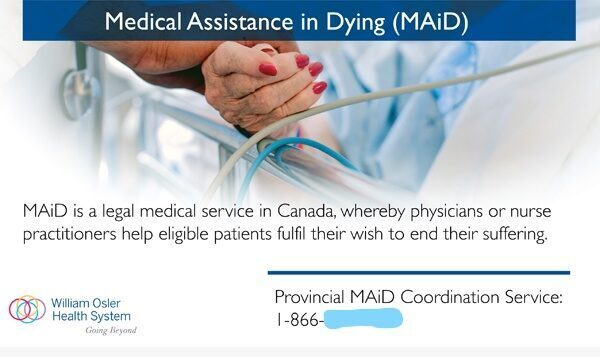
Euthanasia numbers in Canada continue to soar


In Canada in 2024, an astonishing total of 16,499 people died by euthanasia, according to the latest official report. It means the number dying in this way has trebled in just five years. Under Canada’s very liberal ‘assisted dying’ law, a person does not have to be terminally ill to avail of euthanasia. Worryingly, half of those who asked to be euthanised said they felt they were a burden on their relations. What was once presented as an exceptional measure has rapidly become a routine feature of the ‘healthcare’ system in Canada. This is not the mark of a civilised country.

Another 4,017 people who requested ‘Medical Assistance in Dying’ (MAID) died before receiving it. If they had not, then the number euthanised would have exceeded 20,000. This suggests not only rising demand, but also a growing cultural expectation: euthanasia is increasingly seen as a normal pathway at the end of life.

The expansion of eligibility criteria is central to this shift. Under Canadian law, a person must have a “grievous and irremediable medical condition”. However, since 2021 this includes individuals whose natural death is not reasonably foreseeable (so-called Track 2 cases). In 2024, there were 729 such cases and only 32.2pc of these patients had access to palliative care, according to the official report. People are choosing death because adequate care and support are lacking.

The nature of suffering reported by patients is equally revealing. The most common reason cited was loss of the ability to engage in meaningful activities (over 95pc in both tracks). But beyond this, deeply social and psychological factors loom large. Half of all patients reported feeling like a burden on family, friends, or caregivers, while 44pc of non-terminal patients reported isolation or loneliness.

These are not simply medical conditions; they are profoundly human experiences that, in many cases, could be addressed through better care, stronger community support, and more robust social services. The concept of “self-perceived burden” is well known in palliative care. It reflects a distressing sense of guilt and dependency that can fuel a desire for death. That such feelings are so widespread among MAID recipients should concern us deeply.

The percentage of disabled individuals among non-terminal euthanasia recipients was significantly higher. The data also show that 32.9pc of respondents identified as having a disability, rising sharply to 61.5pc among Track 2 (non-terminal) cases. This raises serious ethical concerns about whether some of society’s most vulnerable individuals are being failed rather than protected.

In every case in 2024, a lethal substance was administered by a medical practitioner. Although self-administration (assisted suicide) is legally permitted in most of Canada, it is very rarely chosen. The state-sanctioned ending of life is therefore overwhelmingly carried out by medical professionals, which is a profound betrayal of the healing vocation of medicine.

The human cost of this system is illustrated by the case of Roger Foley, a Canadian man with a severe neurological condition. Foley repeatedly warned that he felt pressured towards euthanasia due to inadequate care options. He spoke openly about being offered euthanasia while struggling to secure the support needed to live with dignity. “I’m fighting to my last breath, but I’m up against a regime that is cruel, desensitised, and out for blood,” he said.

Taken together, these figures and stories point to a profound shift in how Canadian society understands care, suffering, and human dignity. When loneliness, disability, and the fear of being a burden become pathways to assisted death, we must ask whether the healthcare system is no longer alleviating suffering, but instead eliminating those who suffer. Is this what we want for Ireland?

venerdì, dicembre 27, 2024

Euthanasia continues to go out of control in Canada


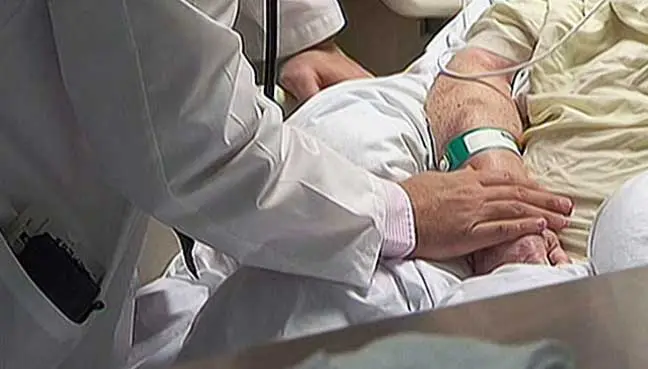
The number of euthanasia cases continues to rise in Canada, according to the latest official report on the topic, raising further alarm, particularly among disability rights groups. Even some early supporters of ‘Medical Assistance in Dying’ (MAID) are now voicing concerns.

Last year, 15,343 Canadians died by euthanasia or assisted suicide, according to the ‘Fifth Annual Report on Medical Assistance in Dying’. This marks a 15.8pc increase over 2022 and represents 4.7pc of all deaths in 2023. Since its legalisation in 2016, there have been 60,301 cases of assisted suicide and euthanasia cases in Canada that we know of.

Adding to these frightening figures, 2,906 individuals died last year before their euthanasia requests could be fulfilled. Meanwhile, 496 individuals withdrew their requests.

Canada allows both assisted suicide, where the patient self-administers lethal drugs (except in Quebec), and euthanasia, which is administered by a doctor or nurse. Self-administration is extremely rare, with fewer than five cases reported last year, showing that people are scared to take a poison themselves.

Dementia was cited as a medical condition in 241 euthanasia recipients in 2023, and in 106 of these cases, dementia was their sole condition.

Not all those who received euthanasia were terminally ill. In 622 cases, natural death was not deemed “reasonably foreseeable.” This category, called Track 2, allows euthanasia for non-terminal patients. Some could have lived for a decade or longer but chose euthanasia due to isolation or feeling like a burden. Euthanasia can be requested when someone experiences “physical or psychological suffering that is intolerable to them.” This is another example of the slippery slope in action.

Isolation or loneliness was significantly more common among Track 2 patients (47.1pc) compared to Track 1 patients (those within six months of death) at 21.1pc, but we can still see feeling isolated was significant. Crucially, 45.1pc of Track 1 and 49.2pc of Track 2 patients cited feeling like a “burden on family, friends or caregivers” as a key reason for their suffering.

Among Track 2 recipients, where death was not foreseeable, women constituted 58.5pc of cases. These patients were typically younger and had lived with their conditions for much longer. Perhaps this is also a function of the fact that women typically live longer than men and are more likely to be widowed and therefore living alone.

The percentage of disabled individuals among non-terminal euthanasia recipients was significantly higher: 58.3pc compared to 33.5pc among those within six months of death. They are heavily over-represented in Canada’s euthanasia statistics.

“When other people express loneliness or a loss of dignity or a desire to die, we usually respond with support or prevention. But with people with disabilities, we respond with an offer for MAID,” said Isabel Grant, a law professor at the University of British Columbia.

This same group of non-terminal patients had, on average, lived with a disability for a fifth of their lifespan.

According to the report, 594 individuals received euthanasia under a waiver of final consent arrangement due to a loss of capacity. This means they were euthanised based on a prior request, even though they could no longer give consent.

Euthanasia was legalised in Canada in 2016 following a case brought by the British Columbia Civil Liberties Association (BCCLA). However, the regime has become so permissive that even the BCCLA has raised concerns, particularly about euthanasia for prisoners and disabled individuals. The organisation has highlighted reports of people accessing MAID due to intolerable social circumstances or being offered it in cases that may not meet legal requirements.

“Of particular concern are reports of MAID being used in prisons while incarcerated individuals were shackled to their beds, the programme’s lack of legal oversight, disproportionate representation of impoverished people receiving assisted suicide, and healthcare practitioners offering MAID when patients sought support for living,” the BCCLA stated.

venerdì, ottobre 20, 2023

Oireachtas committee hears about Canada’s extreme euthanasia regime


Doctors and disability rights campaigners have presented the grim reality of the Canadian “Medical Assistance In Dying”(MAID) regime to the Oireachtas committee that is considering the introduction of such legislation in Ireland.

In Canada, euthanasia was introduced for the terminally ill only, which is the main proposal currently on offer here, but the ground expanded extremely quickly.

“Do not be Canada”, said Dr Heidi Janz of the Health Ethics Centre of the University of Alberta. Dr Janz is wheelchair bound. She told the committee that MAID was initially legalised in 2016 for people with ‘irremediable medical conditions’ but in 2021 the eligibility was expanded to people with disabilities, whose natural death is not reasonably foreseeable. From next year, those with mental illness as the sole underlying condition will qualify for MAID. All these changes were introduced on the basis that these are all forms of suffering and it would count as discrimination to offer euthanasia only to those who suffer physically or only to those who are dying soon.

“Canada is thus continuing its rapid descent down a slippery slope which many still claim does not exist. And so, I sit before this Committee today to implore you, for the sake of preserving true dignity and true choice for disabled, ill, old, and other structurally vulnerable people in Ireland, do not be Canada.”

Dr Leonie Herx, clinical professor of palliative medicine at the University of Calgary, explained that in more than 99.9pc of cases in Canada the lethal drugs are administered by a clinician. Assisted suicide, when the patient takes the drugs themselves, is extremely rare.

She claimed that MAID has had a profound effect on palliative care. “All healthcare facilities are expected to provide MAID, including hospices, whose core palliative care philosophy does not include hastening death. In Quebec, MAID legislation now requires all hospices and palliative care units to provide MAID. There are no euthanasia-free safe spaces”, she said.

Once legalised, it progressively becomes normal and is seen as a solution for virtually any form of suffering, she told the committee.

An increasing number of Canadians are receiving euthanasia “due to fear, loneliness and depression, social deprivation and isolation, lack of access to supports and adequate care needed for living, lack of access to parole for some prisoners, high cost of care and poor conditions at residential facilities.”

She quoted a former minister for disability inclusion who said that “in some places in our country, it’s easier to access MAID than it is to get a wheelchair”.

Prof. Trudo Lemmens, chair in Health Law and Policy at the University of Toronto, initially supported the first law but now he is troubled by having seen death being offered to patient with chronic illness or disability, often in a context of social disadvantage.

Canada is currently the country with the highest number of euthanasia deaths: more than 10,000 per year.

There are several reasons for this, according to Prof. Lemmens. The access criteria were vague in the legislation and have been interpreted excessively broadly by courts, leading to a constant expansion of those who qualify. Moreover, the fact that the lethal substances are administered by healthcare professionals, gives the false impression that it is part of medical care and makes it more acceptable. Regimes that allow only assisted suicide, such as Oregon, seem to have a lower uptake.

Also, Prof. Lemmens said, MAID is explicitly not treated as a last resort in Canadian law. “Healthcare providers do not need to agree that no other options remain. There is no obligation to make care or support available and try it first. Death has been transformed into first-line therapy for often only remotely disease-related suffering”, he said.

At the previous week’s hearings, pro-euthanasia TD, Gino Kenny (pictured), lambasted one of the witnesses about some of his claims about the Canadian regime. What was he thinking deep down this week after hearing the latest evidence?

martedì, ottobre 03, 2023

Insurance companies could easily offer euthanasia in the future


The Oireachtas Committee on ‘assisted dying’ continues to hear expert testimony on the matter. Last week it heard from a Dutch academic who was once a supporter but has now turned into a critic. He spoke of how insurance companies in his country are already funding the procedure for one provider, which is a chilling possible glimpse of the future.

The Dutch expert, Theo Boer, who is a professor of healthcare ethics, said the legalisation of euthanasia in the Netherlands has turned our view of suffering, ageing and taking care upside down. The numbers are speeding up and the biggest increase is now in illnesses that are not terminal.

He was initially supportive of euthanasia legislation and now, having reviewed 4,000 cases on behalf of the Dutch government, has become critical of it.

He told the committee that in 20 years the numbers availing of it in his country have quadrupled and, in some neighbourhoods, medically assisted euthanasia account for 15pc to 20pc of all deaths. These figures are underestimated, he said, as a governmental evaluation has found that between 10pc and 15pc of doctors do not report their participation in the programme.

He noted that there has been an expansion in the reasons for euthanasia — from those at the end of a terminal illness, to people today fearing loneliness, alienation and care dependency. Once euthanasia is introduced, why should it be provided only for terminally-ill patients, or for those suffering from physical illness and pain, he asked. Sometimes it is the absence of hope that provokes the suffering, he said.

“That is why we have now a law in parliament that legalises euthanasia for all people over 74 years, with or without an illness. Their age is the only reason they can have assisted dying. That in turn is why we now have a regulation that allows parents to request euthanasia for their young children aged from zero to 11 years old. I am convinced it is only a matter of time before we take the next hurdle, namely, allowing children of dementia patients to request euthanasia for their demented parents”, he told the committee.

The second expert who spoke was Silvan Luley, representing Dignitas, a group that facilitates assisted suicide in Switzerland, where it has been legal since 1942. Currently, about 1,700 per year avail of it. He claimed that Dignitas has almost 100 Irish members and 12 people from Ireland have been helped to kill themselves by his organisation.

Dignitas offers assisted suicide not only to those who are terminally ill but also to anyone who has an “endurable incapacitating disability” or suffers ‘unbearable pain’. Mr. Luley told the committee that fewer than 50pc of those who avail of their assistance are terminal. He explained that they offer a professional alternative to violent suicides.

It is about having an emergency exit door that provides emotional relief and can prevent people from using rough, violent do-it-yourself suicide methods. The people in Ireland should have what everyone deserves: a legal way to exercise the human right of freedom of choice on all options of professional care to soothe suffering and end life at their home” he said.

Luley was challenged by Prof Boer who referred to new studies presented at a congress of 250 psychiatrists he attended recently. One study found that since the Netherlands allowed euthanasia for reasons of psychiatry, dementia and long-term chronic illnesses, the number of violent suicides has risen against expectations by 35pc, while it went down by 10pc in neighbouring Germany.

Moreover, another new study showed that “in places where there is more euthanasia, there is also a slightly higher suicide rate. … It cannot be proven that if one provides euthanasia, it will bring the suicide numbers down”, according to Prof Boer.

(Previous research from the Anscombe Bioethics Centre found similar results https://ionainstitute.ie/assisted-suicide-does-not-reduce-overall-suicide-rate-says-new-study/)

Prof Boer said that there is a general societal pressure that makes feel the patients a burden to their families and to their country.

He also pointed out that in the Netherlands, one organisation, funded by insurance companies, offers euthanasia. The cost is €3,300, of which the performing physician receives €2,000. “For some of these physicians it is kind of a profit thing. I have heard several of them say that they need this money for several reasons, even though most of them are retired. However, it is officially not for profit. … they only offer euthanasia. They do not offer any other help. They do not offer psychiatric or social help. They can only refer the patient back to where they came from.”

The Swiss group Dignitas, which is also not-for-profit, charges the equivalent of about €11,500, plus VAT, for the complete service, which includes funeral and administrative costs.

As the population ages, and healthcare costs mount, it is easy to envisage insurance companies offering to pat their customers for euthanasia. Think of all the money they would save.

martedì, settembre 12, 2023

Sensationalist claims about Canadian ‘mass graves’ prove unfounded


Two years ago, claims emerged in Canada that mass graves of indigenous children were found in residential schools run by Catholic and other religious groups. There was an instant outburst of public anger, some of it implicitly endorsed by Canadian Prime Minister, Justin Trudeau, and in the aftermath of the claims, at least 83 churches have been burned or vandalised.

Nevertheless, since then, not one single mass grave has been discovered, despite several excavations. It appears that initial reports were grossly exaggerated.

At the time, horrific announcements were based on the unsubstantiated presupposition that some anomalies in the soil at the sites of the old schools detected by ground-penetrating radars were unmarked mass graves.

The Catholic and the Anglican Church, which administered those schools on behalf of the Canadian government, were accused of genocide. Protests and violence erupted in the country and abroad.

After three weeks of attacks on churches, Prime Minister Justin Trudeau said that the vandalism was wrong but “understandable given the shameful history we are becoming more aware of”.

However, no human remains had been unearthed then, and the most recent dig in the basement of a Catholic church in Manitoba also yielded no remains. This is the third excavation case that has turned up no results.

Jacques Rouillard, a professor emeritus in the Department of History at the Université de Montréal commented: “I don’t like to use the word hoax because it’s too strong but there are also too many falsehoods circulating about this issue with no evidence.”

There is no dispute among historian that the conditions of those residential schools were poor, some terrible abuses took place, and the mortality rates were significantly higher than among pupils in regular schools, due to malnutrition and infectious diseases that spread easily in such environments.

Documentation regarding the burial of these children frequently went missing over the years. However, there is no evidence to suggest sinister intentions or the existence of mass graves. Nevertheless, a wave of hysteria swept through, with those advocating for a balanced historical perspective on the schools being labelled as "genocide deniers."

James C McCrae, a former attorney general for Manitoba, had to resign from a government panel after he wrote a piece which questioned the sensational approach employed by campaigners.

He said: “The evidence does not support the overall gruesome narrative put forward around the world for several years, a narrative for which verifiable evidence has been scarce, or non-existent. … anyone who asks any questions or presents real evidence that might bring some relief and peace to indigenous families across Canada is silenced and/or shamed. Is the real truth not ugly enough? Everyone knows of the existence of the schools. Everyone knows there was abuse at some of the schools. Everyone knows there were criminal acts perpetrated against some unfortunate students. Everyone knows the schools played a regrettable part in the history of our country. It is not credible to deny those parts of our history. Why then, is it necessary to exaggerate and tell tales that make the history uglier than it already is?”.

Something similar happened here in Ireland, where many were led to believe that 800 children died in the Tuam mother and baby home that was run by the Bons Secours order and were dumped in a sceptic tank, even though the excavation to establish the truth is yet to begin.

The notion of sinister religious figures responsible for the deaths of children in their care through malnutrition or violence, and disposing of them in undignified ways, might make for a gripping plot in a horror movie. However, while tragic episodes have undeniably occurred in history, concrete verification consistently refutes sensationalistic approaches.

As in the case of the Canadian residential schools, the worst claims about the mother and baby homes in this country have run ahead of the evidence.

Indeed, the official report into those homes ordered by the Government did not fit the most lurid claims about them and not did heap all the blame for their existence or how they were run on to the Catholic Church or the nuns.

Now we must wait for the results of the excavation at the former mother and baby home at Tuam and put the most sensationalist claims about what happened there on hold in the meantime.

venerdì, maggio 19, 2023

Extend assisted suicide to the poor, argue Canadian ethicists


Assisted suicide should be made available to the poor, the homeless and the disabled, two ethicists from the University of Toronto have argued, and a large number of Canadians agree with them. Once again, we see how quickly assisted suicide and euthanasia can become normalised in a country and be seen as an acceptable way out of a difficult life.

The philosophers, whose article appears in an academic journal, maintain that those who live in ‘unjust social circumstances’ should not be prevented from accessing what is euphemistically termed ‘Medical Aid in Dying’ (MAiD).

Poverty, disability, or homelessness can cause despair. There already have been cases in Canada of people asking for MAiD because they could not afford a house compatible with their medical condition. Experts are concerned by the growing number of prisoners asking for assisted suicide.

One argument against allowing such people access to assisted suicide is that their decision is not really autonomous because of the pressure created by their situations. Nonetheless, the two ethicists reject the idea that “the autonomy of people choosing death in the context of injustice is necessarily reduced”. They believe that decisions taken in desperate and oppressive circumstances have to be respected anyway.

The central requirement for access to euthanasia in the Canadian legislation is “having enduring and intolerable physical or psychological suffering”. It is irrelevant whether suffering is determined by social circumstances rather than medical reasons, the philosophers maintain in their article.

They acknowledge that “it is not feasible to expect medical professionals to assess the extent to which the person in their care has had their options restricted because of oppression.” But they don’t find this a good reason to reject the call for expanding the grounds to access MAiD.

Social conditions could improve but until this happens, they say, it is better for the poor and the disabled to be able to choose to die. They call their approach “harm reduction”.

“In the case of the availability of MAiD in Canada to people who not only might but have explicitly said they would choose differently if they had access to the options they preferred, we argue that the least harmful way forward is to allow MAiD to be available.”

Not allowing poor people to request assisted suicide would cause them more harm, is the bizarre conclusion of these highly educated ethicists. Refusing options amounts to perpetuating suffering.

Assisted suicide and euthanasia were initially introduced in Canada in 2016 on medical grounds for incurable illnesses when death was foreseeable, but soon the grounds were expanded by court decisions or updates in the legislation.

Pro-life activists’ predictions of a slippery slope are becoming a stark reality, unfolding at an unexpectedly accelerated pace. Safeguards are constantly eliminated or relaxed.

recent survey showed that large numbers of Canadians believe that the grounds for access to MAID should include inability to receive medical treatment (51pc), disability (50pc), mental illness (43pc), homelessness (28pc), and even poverty (27pc). Support for these reasons is higher among young Canadians.

So, we can see that the opinions of the two ethicists are shared by a substantial portion of the Canadian population.

If death is the solution to suffering, there is no reason why it should not be offered to everyone. And if suffering is caused by social injustice and lack of alternatives, these philosophers will tell us that the right to kill oneself should extend to everyone, including the poor and the disabled. Lack of hope does not undermine autonomy, they say.

This is where the assisted death legislation is leading Canada and it should serve as a cautionary example for Ireland and for all other countries considering similar laws.


Photo by John Moeses Bauan on Unsplash

mercoledì, dicembre 07, 2022

Canada slides right down the assisted suicide slippery slope


Canada only introduced assisted suicide in 2016, but already we see that the grounds to avail of it are widening and the country now has one of the most permissive euthanasia and assisted suicide laws in the world. Increasingly, assisted suicide is being seen an alternative to a lack of proper health care or welfare resources. There are even ritual and ceremonies being developed to accompany the produce which both glamourises and normalises it.

Last year, the total number of deaths by ‘medical-assistance-in-dying (MAiD)’ at 10,064. Forty-four percent took place in private residences and 29pc in hospitals. From 2016 to 2021, 31,664 Canadians have been killed in this way.

Is this always by a genuine free choice or, instead, is it taking place because vulnerable patients feel under pressure and believe they have no real alternative, such as palliative care?

Unlike other countries where it is prohibited, in Canada doctors are allowed to offer euthanasia to their patients. This is causing serious concerns. Campaigners for vulnerable patients have highlighted that illness often raises suicidality but these thoughts tend to disappear when proper treatment and care is offered. Suggesting MAiD as one of the possible options makes death an attractive and even expected choice for vulnerable or elderly patients.

“No other country in the world has normalised assisted suicide or euthanasia in this way as a potential first-line therapeutic option to address suffering”, said a group of Canadian doctors in the World Medical Journal recently.

MAiD is becoming an easy solution to compensate the lack of proper care or adequate resources.

We are already seeing cases of desperate people applying for assisted suicide as alternative to being homeless, or because they couldn’t find housing to accommodate their disability.

Last week, a paraplegic army veteran told the Canadian Parliament that when she complained about the lack of a stairlift at her home, she was told: “If you are so desperate, madam, we can offer you MAiD”.

The head of the Human Rights Commission has commented: “Medical Assistance in Dying cannot be a default for Canada’s failure to fulfil its human rights obligations.”

The Canadian experience shows how quickly culture can deteriorate so that what was once taboo is now presented to the public as something that is perfectly understandable and even to be celebrated.

Here are two examples of the process of celebrating assisted suicide. A major fashion retailer has just released a video glamourising the assisted suicide of a 37-year old woman.

Another example is a Christian church in Winnipeg that offers assisted suicide ceremonies to its members. The rituals are hold in the sanctuary. Life, once sacred for Christians, is now terminated with the blessing of a cleric.

Canada shows that the slippery slope is real. When death is offered as a tool to relieve suffering, there are no logical reasons to limit it only to certain groups. Safeguards and limits are lifted once assisted suicide is normalised.

Photo by Diana Polekhina on Unsplash

sabato, settembre 24, 2022

The more euthanasia is legal, the more it kills for no reason


According to the official report of the Canadian Ministry of Health, more than 10,000 citizens in that country died of euthanasia in 2021. Ten times more than five years ago.

The number grew by 32 percent in just one year, confirming that once introduced, euthanasia and the so-called assisted suicide become accepted social norms, almost duties, for those who are suffering or have lost the will to live.

According to the report, 36 percent of those who were euthanized last year considered themselves a burden to family and friends, while more than 1,700 suffered from isolation and loneliness. This means that they were motivated to end their lives more by social and psychological causes than by illness. Like, sadly, and resoundingly, French filmmaker Jean-Luc Godard (1930-2022), who recently ended his life this way.

Moreover, the details of the document released by the Canadian ministry are revealing: they show what could happen in any other country if certain practices were legalized.

Canada introduced euthanasia and assisted suicide in 2016. Initially, access was reserved only for the terminally ill, but in 2019 the Superior Court of Quebec ruled the limit unconstitutional and, as a result, in 2021 the federal government extended what was euphemistically called “medical assistance in dying” to non-terminally ill patients. The 2021 legislation also removed some safeguards, such as the ten-day waiting period for evaluation before the procedure and the requirement to offer the palliative care alternative. From next year it will also extend “good death” onto patients suffering solely from mental illness. But a seriously compassionate country should offer more than a lethal injection to the sick and lonely. Instead, the report says, 31,664 people have been killed in this way since the law was introduced in 2016.

These figures, compared to those of last year (10,064), indicate an increase of precisely ten times from 2016 (1,018) and amount to 3.3 percent of all deaths recorded in Canada in 2021. The figure varies by geographic area, but in British Columbia nearly one in twenty deaths now occurs through euthanasia.

Assisted suicide allowed by law occurs through self-administration of lethal drugs, but it is rare practice: only seven cases in 2021. Instead, almost all patients are killed directly by a doctor or nurse. They are both men (52.3%) and women, and the average age is 76.3 years: 77 for women and 75.6 for men.

The extension of euthanasia to the non-terminally ill under the 2021 law allows it if the sufferers have an illness defined as “incurable” or if they are disabled and suffer as much psychologically as physically. The 219 people who were euthanized last year were not terminally ill. Since this has only been possible since June of that year, the data in the report refer to only one half of the year, so it is easy to predict that the cases will double, at the very least.

The average age of non-terminal patients who have resorted to euthanasia is 70.1 years, which is more than six years lower than the average age of terminal patients. Of these deaths, 37 percent involved people between the ages of 18 and 64, while for the terminally ill the figure is much lower, less than half (16.7 percent). That is, the more euthanasia is liberalized, the younger its victims are.

The most common cause of distress, for both terminal and non-terminal patients, is the loss of the ability to engage in meaningful activities (86.3%). More than 3,500 of them reported feeling burdened by family, friends or caregivers, and (as mentioned) more than 1,700 suffered from loneliness and isolation.

Only 4 percent of requests for assisted dying were denied because they did not meet the necessary criteria, while about 2 percent of people who initially requested it later changed their minds or simply passed away earlier from natural causes.

The most common disease among the terminally ill is cancer (65.6 percent), while among the non-terminally ill are neurological diseases such as dementia or Alzheimer’s disease. Canada’s experience, though brief, still confirms that once euthanasia or “assisted suicide” is introduced, the limits initially set are instead slowly removed, the number of victims rises and turning back is difficult. The same happened in Belgium and the Netherlands.

sabato, settembre 17, 2022

Più l’eutanasia è legale, più ammazza senza motivo


Secondo il rapporto ufficiale del ministero canadese della Sanità, sono oltre 10mila i cittadini che in quel Paese sono morti di eutanasia nel 2021. Dieci volte di più rispetto a cinque anni fa.

Il numero è cresciuto del 32% in un solo anno e questo conferma che, una volta introdotti, eutanasia e cosiddetto «suicidio assistito» diventano norme sociali accettate, quasi doveri, per quanti soffrono o hanno perso la voglia di vivere.

Secondo il rapporto, il 36% di quanti hanno ottenuto l’eutanasia lo scorso anno si considerava un peso per la famiglia e per gli amici, mentre oltre 1.700 soffrivano di isolamento e di solitudine. Motivati, cioè, più da cause sociali e psicologiche che dalla malattia. Come, tristemente, e clamorosamente, il regista francese Jean-Luc Godard (1930-2022) nei giorni scorsi.

I dettagli del documento diffuso dal ministero canadese sono del resto rivelatori: mostrano quanto potrebbe accadere in qualsiasi altro Paese, qualora certe pratiche venissero legalizzate.

Il Canada ha introdotto eutanasia e «suicidio assistito» nel 2016. Inizialmente l’accesso era ristretto ai malati terminali, ma nel 2019 la Corte Superiore del Québec ha giudicato incostituzionale il limite e, di conseguenza, nel 2021 il governo federale ha esteso a pazienti non terminali quella che, con un eufemismo, è stata chiamata «assistenza medica al morire». La legislazione del 2021 ha anche rimosso alcune salvaguardie, come il periodo di attesa di dieci giorni di valutazione prima dell’intervento e l’obbligo di offrire l’alternativa delle cure palliative. Dall’anno prossimo estenderà pure la «morte buona» a pazienti che soffrono unicamente di malattie mentali. Ma un Paese sul serio compassionevole dovrebbe offrire qualcosa di più di un’iniezione letale a chi è malato e solo. Invece, afferma il rapporto, da quando la legge è stata introdotta nel 2016, 31.664 persone sono state uccise in questo modo.

Queste cifre, paragonate a quelle dello scorso anno (10.064), indicano una crescita appunto di dieci volte rispetto al 2016 (1.018) e ammontano al 3,3% di tutte le morti registrate in Canada nel 2021. Il dato varia a seconda delle zone geografiche, ma nel British Columbia quasi una morte su venti avviene ora tramite eutanasia.

Il «suicidio assistito» consentito dalla legge avviene attraverso l’auto-somministrazione di farmaci letali, ma è pratica rara: solo sette casi nel 2021. Quasi tutti i pazienti vengono invece uccisi direttamente da un medico o da un infermiere. Sono sia uomini (52,3%) sia donne, e l’età media è di 76,3 anni: 77 per le donne e 75,6 per gli uomini.

L’estensione dell’eutanasia ai malati non terminali prevista dalla legge del 2021 la consente qualora i sofferenti siano affetti da un male definito «incurabile» o se siano disabili e soffrano tanto psicologicamente quanto fisicamente. 219 persone che sono state sottoposte a eutanasia lo scorso anno non erano malati terminali. Poiché questo è stato possibile solo a partire dal mese di giugno di quell’anno, i dati del rapporto si riferiscono soltanto a un semestre e quindi è facile prevedere che i casi, come minimo, raddoppieranno.

L’età media dei pazienti non terminali che sono ricorsi all’eutanasia è di 70,1 anni, ossia oltre sei anni meno dell’età media dei pazienti terminali. Il 37% di queste morti ha interessato persone di età compresa tra i 18 e i 64 anni, mentre per i malati terminali il dato è molto più basso, meno della metà (16,7%). Ovvero, più l’eutanasia si liberalizza e più sono giovani le sue vittime.

La causa di sofferenza più comune, per i pazienti terminali e non, è la perdita della capacità di impegnarsi in attività significative (86,3%). Più di 3.500 di loro hanno dichiarato di sentirsi di peso per la famiglia, per gli amici o per chi si prendeva cura di loro, e (come detto) più di 1700 soffrivano di solitudine e isolamento.

Solo il 4% delle richieste di morte assistita è stato rifiutato perché non soddisfaceva i criteri necessari, mentre circa il 2% delle persone che ne avevano fatto inizialmente richiesta ha poi cambiato idea o è semplicemente deceduto prima per cause naturali.

La patologia più comune fra i malati terminali è il cancro (65,6%), mentre fra i non terminali sono le malattie neurologiche quali demenza o morbo di Alzheimer. L’esperienza del Canada, seppure breve, conferma ancora che, una volta introdotti eutanasia o «suicidio assistito», i limiti posti inizialmente vengono invece pian piano rimossi, il numero delle vittime sale ed è difficile tornare indietro. Lo stesso è avvenuto in Belgio e nei Paesi Bassi.

mercoledì, agosto 10, 2022

Over 10,000 Canadians died by euthanasia last year


Over 10,000 Canadians died by euthanasia in 2021, 32pc more than in the previous year, according to a new official report. It shows once more that when you open the door to euthanasia and assisted suicide, the numbers availing of them rise rapidly and social norms change. It’s worth look at the report in some detail, because it provides a window into what might happen here in the future.

A figure that stands out is that 36pc of those who died by euthanasia said they perceived themselves to be a ‘burden’ to their family, friends or caregiver. More than 1,700 said they suffered from ‘isolation’ and ‘loneliness’. A compassionate country offers something better to the sick and lonely than death by gas or injection.

Canada introduced euthanasia and assisted suicide for terminally ill people in 2016 and then the grounds for them rapidly expanded.

The total number of those who availed of ‘medical assistance in dying’ (to use the euphemism) since its introduction in 2016 up to the end of last year now stands at 31,664.

The figure for last year represents a tenfold increase compared to 2016 (1,018) and accounted for 3.3pc of all deaths in Canada. There are geographical variations but in British Columbia almost one in every 20 deaths occurs by euthanasia.

The law allows assisted suicide in the form of self-administration of lethal drugs but this happens rarely. There were only seven such cases in 2021. Almost all patients are directly killed by a doctor or a nurse (that is, by euthanasia). The majority (52.3pc) of them were men. The total average was 76.3 years, 77 for women and 75.6 for men.

Legislative changes in 2021 extended euthanasia to individuals for whom ‘natural death was not reasonably foreseeable’. They might have a non-terminal but incurable illness and be far from natural death. They could suffer from a disability or else experience psychological or physical suffering. This is very broad-ranging indeed.

A total of 219 individuals who availed of euthanasia fell into this category. As euthanasia has been available to the non-terminally ill only since June 2021, the figure in the report covers only half of the year, and the number of such deaths will likely double next year and then rise from there.

The average age of non-terminal patients who were euthanised was 70.1, six years lower than the average terminal patients. 37pc of non-terminal deaths occurred in the 18-64 age cohort. 

The most commonly cited source of suffering, for all sort of patients, was the loss of ability to engage in meaningful activities (86.3pc). More than 3,500 said they perceived to be a burden to the family, friends or caregiver and more than 1,700 suffered isolation and loneliness. 

The term natural deaths that are ‘not reasonably foreseeable’ requires a bit of unpacking. You might say that the natural death of an elderly person with a chronic illness is ‘reasonably foreseeable’, but they are not terminally ill as such. Such a person would qualify for euthanasia. The 219 people whose natural deaths were not ‘reasonably foreseeable’ were presumably years away from natural death, but they were able to avail of euthanasia anyway.

Only 4pc of the requests for euthanasia were refused because of ineligibility, while about 2pc withdrew their request.

The most common underlying medical condition among terminally-ill patients was cancer (65.6pc) while for non-terminal patients it was neurological (dementia or Alzheimer).

The report does not offer details of the socio-economic characteristics of the patients but we know from other reports – Oregon for example – that white and university educated people are over-represented.

Canada proves that the slippery slope is real and once euthanasia and assisted suicide are introduced, the eligibility criteria expand with time and also the numbers tend to grow.

giovedì, gennaio 13, 2022

The countries requiring vaccine passport to attend worship

During the pandemic, Ireland prevented worshippers attending religious services longer than any other country in Europe, but at least we haven’t gone so far as to force people to show vaccine passports before attending. Some countries have imposed this requirement, and shockingly, Church authorities are sometimes willing to comply.

In Quebec, for example, the provincial government has enforced a vaccine passport system on all places of worship. Congregants aged 14 to 75 must show proof of vaccination to attend services indoor.

The religious authorities were not consulted before the Government announced its decision.

Some lay faithful organised a prayer vigil to defend religious freedom but the local Catholic bishops, representing the largest Christian denomination in the province, made no objection to the decision.

Cardinal Lacroix, bishop of the archdiocese of Quebec, even voluntarily and unilaterally closed all churches from 23rd December to 10th January as a “strong gesture of solidarity with vulnerable people as well as with the staff of the entire health network and all those who help fight the pandemic.”

This is despite Quebec having a lower number of Covid cases per 100,000 people than Ireland.

From New Year’s Eve the Quebec government has prohibited any indoor social gathering or public worship service, except for funerals. All churches and other religious venues are now closed indefinitely.

The Bishop of Pembroke, Guy Desrochers, wrote a letter just before Christmas, criticising the Quebecois government: “I seriously wonder whether the line between what the State can and cannot dictate to the various religious communities has been crossed with this obligation to present vaccination passports at the entrance to our churches. … Dare to challenge your government representatives to change this latest law which in fact oversteps their role and duty in our society. “ (The diocese of Pembroke is in the province of Ontario, not Quebec).

In Europe, some countries have worship restrictions based on vaccination status.

Luxembourg, for example, requires a vaccination passport when more than 20 are attending an indoor religious gathering. Some priests have protested but Cardinal Hollerich, archbishop of Luxembourg and president of the Commission of the Bishops’ Conferences of the European Union, has defended the government rule.

“During this phase when the pandemic is resurgent, we must save lives, and this green pass should welcome people to Mass, … Some priests have objected, and this isn’t helping the search for a solution”, he said.

Similar measures are in places in other parts of Europe, but the number of people permitted to attend without a pass varies: it is 30 in Slovakia, 50 in Switzerland, 100 in Denmark and Sweden.

In Iceland, for religious events with more than 50 participants a negative rapid antigen is required. A negative test result is also obligatory for weddings and Christenings in Portugal.

In New Zealand, they now have a “traffic light” system  – green, orange and red – based on the severity of the infection.

Under the red setting, a maximum of 100 people can gather in place of worship, but they must show a vaccine pass. A maximum of 25 people can worship together without showing a vaccine passport.

There has been no pushback from Catholic bishops, but the system has been criticised by some protestant leaders.

“This is something that would be unacceptable from the perspective of the Church, and indeed it would be a contradiction of the message of the Gospel. The thought that someone would be barred from coming to church to hear the gospel is abhorrent.”, said a spokesman for Christian Voice New Zealand.

The six Catholic bishops have set guidelines asking parishes to organise Masses for the vaccinated only but also, where possible, opportunities for people without a pass. It is a two-tier system that favours those who have a pass but does not exclude the others completely.

Religious leaders tend to not object to civil authorities but it is difficult to find a compelling reason for a system granting access to churches based on vaccination status. Churches have proven very safe places to be so long as social distancing and other measures are properly observed.

Making vaccine passports a condition to attend public worship is an unacceptable breach of Church/State separation and it is something no religious leaders should tolerate.


mercoledì, settembre 29, 2021

Missing marriage and the baby carriage

All around the Western world, people are marrying later or not at all. The average Irish couple is now well into their 30s by the time they tie the knot, and marriage rates in Ireland have plunged since the 1970s. A similar pattern exists in Canada, where a new study from pro-family think tank, Cardus highlights some of the reasons behind the trend, including economic ones such as the cost of housing, and cultural ones like the wish to pursue a career first.

Looking at the cultural forces a bit more closely, the paper, entitled ‘Marriage and the Baby Carriage’ quotes sociologist Brad Wilcox. He contrasts the “soulmate” model of marriage, which prioritises individual fulfilment through intense romantic connection with the “institutional” model which focuses more on parenthood and mutual support. The institutional model is more stable, he says, it leads to higher-quality relationships, and it is more beneficial for society. But the soulmate model is the one promoted by media.

For many young adults, marriage becomes obsolete when they see their relationships more as a form of self-expression than a commitment. Marriage is meant to shape people’s behaviour and character towards a clear goal, which is the good of the children and of the spouse. Young adults now like to pursue self-expression outside of marriage but the resulting delay in and the decline of marriages, and of partnership in general, has implications for the whole of society.

One of the obvious negative implications for society is the reduction in fertility. This is a common problem in the Western world, even in places with a generous welfare state, such the Scandinavian countries.

Low fertility rates have an adverse impact on labour supply, public pensions, the health care system, etc.

Some countries are replacing their ageing populations with immigrants. Others, such as Poland and Hungary, are helping families with benefits and allowances, extended parental leaves and subsidies to child-care. The efficacy of those policies has to be tested locally but there is no doubt that if the portion of partnered young adults continues to drop, as it is happening in Canada for instance, it will be impossible to increase fertility rates.

The promotion of marriage, then, as a form of stable commitment, becomes a key factor to tackle what has been called the “demographic winter”. Particularly, the institutional model marriage, focused on the good of the family, more than the soulmate model focused on adults’ needs, should be promoted.

The Cardus paper concludes: “Public policy can address economic issues that make family formation more difficult, and this deserves far more attention. There are limits to what policy can accomplish, however, and policymakers should be cautious about inadvertently intruding on important aspects of family well-being. We should begin by asking about the family life that young adults aspire to, and then seek to identify and address all of the barriers that keep them from achieving these aspirations”.

lunedì, novembre 02, 2020

How ‘science’ was used to victimise unmarried mothers


In Ireland in the past, unmarried mothers and their children were harshly treated as a result of a potent brew of Victorian values and a strict application of Catholic morality. But as we will see, in other countries such as Britain and Sweden, the ‘science’ of eugenics was often applied instead, with fearsome results.

This emerges, for instance, when we consider the debate around the Mental Deficiency Act that in 1913 created the legal categories of “feeble-minded person” and “moral imbecile” in the UK. Those categories related more to the ability to behave according to social expectations, particularly with regard to sexuality, than to abnormal psychological traits. This law was not repealed until 1959.

Alfred Frank Tredgold was the most influential ‘mental deficiency’ specialist of the time. A leading member of the Eugenics Society, he wrote the ‘Text-book of Mental Deficiency (Amentia)’, the “generally accepted standard work”, according to the British Medical Journal.

In this book Tredgold presents a number of working-class young women as case studies for the diagnosis of mental deficiency. This diagnosis is clearly related, in most of the case studies, to sex and pregnancy outside marriage.

Under the Mental Deficiency Act, thousands of young women who had children outside marriage were incarcerated or put in institutions because of fears that they would otherwise become pregnant again.

As Carolyn Oldfield explains in her PhD thesis entitled, ‘Growing up Good? Medical, Social Hygiene and Youth Work Perspectives on Young Women, 1918-1939’: “While this incarceration could extend throughout women’s fertile years and after, authorities directed their efforts towards identifying and segregating adolescent and young adult women, in order to prevent what was expected to be a cycle of repeated pregnancies and short-term recourse to the workhouse”.

Josiah Wedgwood, the main opponent of the Act in the British Parliament, maintained that the legislation purposely targeted women who went into workhouses to have children. (The workhouses were often the alternative to mother and baby homes in Britain as well as Ireland).

Outside the Parliament, one of the few opponents was G. K. Chesterton, who also fought eugenics (human selection) throughout his life. He seized on the subjectivity and almost infinite elasticity of terms like ‘defective’ or ‘lunacy’.

He called the Bill “a scheme to impose all the segregation, ‘control,’ and loss of citizenship which are the tragic consequences of lunacy on a very large class of people who are not lunatics.  … the new Bill will enable officials to treat as defective infants a vast and vague multitude of grown-up people who have suffered from any one of a million unnamed accidents of daily life; a number not only indefinite but infinite. They can be seized upon any excuse or none.”

In early twentieth century, proponents of eugenics were particularly focused in identifying the “defectives” as they believed that mental deficiency could be passed from one generation to another, and consequently deteriorate the quality of the overall population.

In the UK, the eugenicists failed to secure the sterilisation of mental defectives – which Winston Churchill had advocated – due to the opposition coming from sectors of the medical profession, the Catholic Church, and the labour movement.

They succeeded instead in the Nordic countries, particularly in Sweden, and in some American states. About 170,000 forced sterilisations were performed between the 1920s and the late 1970s in Scandinavian countries. For this purpose, the Swedish Institute for Racial Biology was set up at Uppsala University in 1922. Together with sterilisation, the Nordic governments enacted marriage limitation, castration and abortion laws.

Cambridge historian Professor Véronique Mottier writes that among the victims of these policies were “socially deviant groups such as unmarried mothers”.

Tellingly, she says that while “feminists were to be found on both sides of the debate – supporting and opposing eugenics – most opposition came from liberals, who rejected state intervention in private life, and Churches, particularly the Catholic Church.”

She points out: “Social democrat reformers were amongst the pioneers of eugenic ‘science’ as well as policy practices in Europe. A number of eugenic policies such as forced sterilisation of ‘degenerates’ were strongly promoted by the Left and were first applied in countries such as Switzerland and Sweden.”

Eugenic policies also included “education programmes, non-voluntary incarceration in psychiatric clinics, removal of children from parental homes, prohibition to marry, as well as measures that specifically targeted vagrants, ‘gypsies’, and, more generally, socially deviant groups such as unmarried mothers, ‘sexual deviants’, or people with physical or mental impairments”, Prof. Mottier says.

In Canada, in 1928 the province of Alberta created a Eugenic Board that approved more than 5,000 procedures of involuntary sterilisations on people classified as “mentally deficient”, mostly women. This happened with the participation of leading scientists of the time.

In the United States, compulsory sterilisation laws were adopted by over 30 states and affected more than 60,000 individuals who were mentally disabled or belonged to socially disadvantaged groups. (See here for a comprehensive account.)

The most famous of them was Carrie Buck, a teenager who became a test case for Virginia’s new eugenics legislation, in 1924. Carrie was raped by a member of her foster family, then declared feebleminded and “probable potential parent of socially inadequate offspring”. The request for her sterilization went up to the Supreme Court of the US. Justice Oliver Holmes famously said that “three generations of imbeciles are enough”, and Buck’s case opened the floodgates of eugenics and led to involuntary sterilization of thousands of people.
 

As mentioned, sterilisation was never legislated for in the UK. Following the Mental Deficiency Act, detention in institutions was the chosen road.

Once a clear association between young women’s sexual activity and their identification as ‘mentally defective’ was established, they would be practically incarcerated without any trial or recourse to the adult penal system.

The marriage of pregnant ‘mentally defective’ girls was also discouraged because it would make them more likely to bring up their children themselves, rather than giving them for adoption. But also because the stability of marriage would encourage them to have more children and, in this way, to pass on them their “defective genes”.

The fact that those practices were common at the time does not justifies them. Nonetheless, the consideration of the broader international context helps us understanding that the institutionalisations of young unmarried mothers took place not only in Ireland and not only where the Catholic Church had influence. 

We imagine that once religion was removed from the picture, unmarried mothers would be treated humanely but when ‘science’ was applied instead, we got eugenics and huge levels of cruelty.