Visualizzazione post con etichetta United Nations. Mostra tutti i post

lunedì, agosto 25, 2025

A very strong critique of all forms of surrogacy from the UN


A new United Nations report is calling for the eradication of surrogacy in all its forms, arguing that the practice inherently harms both women and children. It also recommends punishing buyers, clinics and agencies. Ireland should pay attention. We have one of the most permissive surrogacy laws in Europe although it is awaiting commencement for reasons discussed below.

The report, authored by Reem Alsalem, UN Special Rapporteur on Violence against Women and Girls, will be formally presented at the General Assembly in October. Titled “The different manifestations of violence against women and girls in the context of surrogacy”, it constitutes the strongest condemnation of surrogacy ever made at the international institutional level and comes from a feminist perspective.

“The practice of surrogacy is characterised by exploitation and violence against women and children, including girls. It reinforces patriarchal norms by commodifying and objectifying women’s bodies and exposing surrogate mothers and children to serious human rights violations,” says the report.

The report recommends that commissioning parents, clinics, and agencies should be penalised, shifting responsibility away from the poor women who become surrogates and towards those profiting from or purchasing children through the practice.

Alsalem dismantles the distinction between commercial and altruistic surrogacy, arguing that, in reality, the line is blurred and illusory: “Particularly in jurisdictions where commercial surrogacy is formally prohibited but where reimbursement is so high that it effectively constitutes commercial payment”.

The report documents multiple forms of violence linked to surrogacy:

  • Economic violence, such as women being denied compensation or left in debt.
  • Psychological violence, including trauma from forced separation and so called “detachment therapies”, i.e. conditioning women to emotionally separate from the child during pregnancy so that handing the baby over will be “easier” afterwards.
  • Physical and reproductive violence, such as coerced abortions, unnecessary caesareans, and health risks from IVF drugs.
  • Trafficking and slavery-like conditions, where women are confined, transported across borders, or subjected to egg harvesting.

It also stresses the risks for children, who may be rendered stateless, abandoned, or even commissioned by sexual offenders, as background checks on intended parents are rarely carried out.

Compared with countries such as Italy, which in 2024 criminalised surrogacy even when carried out abroad, Ireland has placed itself at the opposite end of the spectrum, with what is possibly the most liberal surrogacy legislation in the world. The Assisted Human Reproduction Bill, passed in 2024, permits domestic “altruistic” surrogacy but also recognises foreign commercial surrogacy arrangements.

The law’s allowance for “reasonable expenses” effectively enables large payments to surrogate mother, which is commercial surrogacy in disguise. Ireland’s approach runs directly counter to the UN Special Rapporteur’s recommendations. By giving legal recognition to foreign commercial surrogacy, the Government risks entrenching exploitation abroad while normalising it at home.

Although the Assisted Human Reproduction Act 2024 has been signed into law, its surrogacy provisions have not yet been implemented, with the Government delaying commencement amid concerns about compliance with EU anti-trafficking rules.

This new UN report provides yet another reason to reconsider the law. If the international community is to take the protection of women and children seriously, countries such as Ireland must listen to Alsalem’s warning.

mercoledì, giugno 11, 2025

UN agency finally realises falling births a big problem


The United Nations Population Fund (UNFPA) has raised the alarm about falling fertility rates worldwide, highlighting the many barriers faced by people who want to have children.

In a new report, The Real Fertility Crisis, UNFPA argues that declining birth rates are not aways the result of diminished desire for children, but rather a lack of real choice, driven by economic pressures, gender inequality, and inadequate support for parenting. Yet the UN agency fails to acknowledge the significant role it played for decades in promoting anti-natalist policies.

The report, based on a survey across 14 countries, shows that nearly 20pc of adults will not have their desired number of children, most often due to financial insecurity, job instability, expensive housing, and unequal caregiving burdens. Respondents also cited fears related to climate change, economic instability, and future crises as discouraging factors.

While many governments are nowadays implementing pronatalist incentives, the UNFPA claims that such approaches are often ineffective and dangerous to “reproductive rights”. “Measures that may seem harmless, such as financial ‘incentives’ for larger or smaller families, can indirectly lead to constraints on reproductive choice by increasing men’s and women’s vulnerability to coercion from partners, families or in-laws”, the report claims.

Instead, it advocates expanding what it calls “reproductive agency” through supportive measures such as affordable housing, childcare, paid parental leave, accessible fertility treatments (IVF), and shared responsibilities among parents.

Although it is true that many couples have fewer children than they would like, and many individuals never find a partner or start a family, the report fails to acknowledge another important element in the decline of fertility rates: the damaging legacy of population control policies including the widespread promotion of abortion and sterilisation, policies historically central to the UNFPA’s mission.

UNFPA was founded on the belief that unchecked population growth, particularly in poorer nations, was a key driver of poverty and environmental degradation. It became the principal agency in the global population control movement and endorsed coercive reproductive policies, including China’s one-child programme and India’s mass sterilisation campaigns under Indira Gandhi.

Columbia University historian, Matthew Connelly, writes in his book Fatal Misconception:
“Poor countries were pressed to accept population programs and rich countries were expected to pay for them. A majority finally agreed to create a United Nations Fund for Population Activities. Lobbyists and UN officials worked behind the scenes to shield it from government oversight or at least ensure that it could funnel money to NGOs, which operated even more independently. When some states openly accused proponents of neocolonialism, powerful aid agencies like USAID and the World Bank convinced them to reconsider.” (p. 379)

After the 1994 Cairo Conference, the UNFPA rebranded its mission using the language of human rights, focusing on “reproductive rights”, as it can be notice also in this last report, but according to Connelly, the underlying agenda remained the same: controlling fertility, especially in the developing world.

In light of this history, UNFPA’s current concern about falling fertility appears deeply paradoxical. Having spent decades trying to reduce birth rates by targeting poorer populations, it now expresses alarm over the very consequences of those efforts.

martedì, luglio 05, 2022

Ireland plays along with another charade at the UN


Ireland is currently before the UN Human Rights Committee in order to report on our compliance with the International Covenant on Civil and Political Rights (ICCPR). But the whole process is so deeply flawed, it cannot be taken seriously.

For instance, the committee members in practice often know little about the many countries they have to scrutinise in each session and are deeply influenced by the submissions of home-based NGOs which are almost invariably radically pro-choice and secular.

Several Irish NGOs have told the committee that our present abortion law made even more permissive and claim that Ireland must amend it to be compliant with the ICCPR. This is despite the fact that abortion gets no mention in the document or in any other UN treaty. The ICCPR instead recognises the right to life. Article 6 says: “Every human being has the inherent right to life. This right shall be protected by law. No one shall be arbitrarily deprived of his life.”

Undeterred by this, one member of the committee yesterday asked Ireland to remove the mandatory three-day waiting period after a woman requests an abortion, which is common in many other European countries, and also asked Ireland to allow for the aborting of disabled babies after the current 12-week limit.

The member was simply drawing on a submission from the Abortion Access Campaign West, which is a member of the State-funded National Women’s Council of Ireland. (Their submission can be found here.)

Another example of misapplying the ICCPR is the continued attack on the conscience rights of doctors and nurses. Article 18 of the covenant says: “Everyone shall have the right to freedom of thought, conscience and religion.”

In clear contradiction of this, several NGOs and committee members criticised what they call the “resistance to provision of [‘reproductive health’] services”, i.e. conscientious objection by pro-life health workers.

Pressed on the matter, a representative of the Irish Government announced that the HSE is now recruiting five additional consultant obstetricians on the condition that they perform abortions. (See here at 2 hours and 13 minutes)

It is a shocking paradox that a human right body asks a country to violate the right of conscience, in open contradiction with the spirit and the letter of the UN treaties.

Last year, the European Centre for Law and Justice (ECLJ) published a report that highlighted how committee members are often recruited and funded by leftist and pro-choice organisations.

The members sometimes come from those self-same bodies.

The ECLJ document says: “The omnipresence of these NGOs and foundations has reached such a degree that some mandate holders continue, once elected, to behave like NGO activists, promoting personal political ideas, thus exceeding the terms of their mandates, in violation of the Code of Conduct. This activist mentality, this “NGOization” of mandates contributes, according to several experts interviewed, to the weakening of the authority and effectiveness of the UN system.”

UN committees often present partisan and misleading interpretations of the UN treaties that have no real basis in the treaties themselves and cannot be imposed on Ireland legally.

As explained in this document produced by the Iona Institute, the provisions of any international treaties ratified by Ireland, do not become a part of Irish law unless they are expressly incorporated by the Oireachtas.

So, the highly contentious interpretations of UN committees and monitoring bodies are legally groundless. Nonetheless, they will be used by local campaigners to promote their agendas on the false assumption that those recommendations come from some compelling human right authority.

The whole thing is little more than a charade.

martedì, novembre 16, 2021

As expected, UN pressures us to liberalise our abortion law even more


  • Ireland appeared before the UN Human Rights Council last week
     
  • As expected, several countries asked us to liberalise our abortion law even more
     
  • Even totalitarian North Korea and China lectured us on our human rights record
As we mentioned in a previous e-letter, Ireland was due to appear before the UN Human Right Council. That took place last Wednesday and, as we anticipated, pressure was exerted on Ireland to further liberalise its already very permissive abortion law. Pressure was applied to push us in a more socially liberal direction in other areas as well.
 
The Irish delegation was headed by the Minister for Children, Roderic O’Gorman. After having considered the national report submitted by Minister O’Gorman, each country representative on the Council presented recommendations, for a total of 260. (They can be found here)

We will consider some of them under a number of headings.

 Abortion

The delegates from Austria, Canada, Denmark, the Netherlands, and Switzerland all urged us to use the upcoming three-year review of our abortion law to make it even easier to obtain a termination.
 
For example, the Austrian representative said: “Ensure that the three-year review of the Health Act 2018 on the Regulation of Termination of Pregnancy is comprehensive and focused on providing a human rights-compliant framework for abortion, including by identifying and eliminating barriers impacting marginalized groups”.
 
The Danish delegate told us: “Ensure that the three-year review of the Termination of Pregnancy Act focuses on ways to expand access to voluntary termination of pregnancy, both in law and in practice”.
 
The Netherlands said: “Build on the steps undertaken in the area of sexual and reproductive rights by removing the remaining barriers to accessing safe and legal abortion services and making it practically available to all”.
 
Bizarrely, the Iceland representative asked us to, “Expand access to abortion and repeal the Protection of Life During Pregnancy Act”, as it if this has not already happened in 2018.

 Schools

Surprisingly, no recommendation made reference to denominational schools or to the role of religion in education. The recommendations about schools were quite broad in their scope.
 
“Ensure fair access for all children to quality education” (Qatar);

“Prioritize equitable access to quality education opportunities at all levels” (Botswana);

“Consider introducing legislative guarantee of free primary and secondary education” (Ukraine);

“Improve the system providing children and their parents a real opportunity to choose from among religious, multi-denominational or non-denominational types of schooling and curricula.” (Czechia).
 
Gender
 
Germany and Norway recommended we review Article 40 of the Constitution, which covers fundamental rights, and Article 41, which deals with the issue of women in the home, to make them gender neutral. 

Israel asked to prohibit “conversion therapies”. Cuba and Cyprus wanted more efforts to reduce the gender pay gap. Israel also asked to prohibit “conversion therapies”. Only Panama mentioned sex education while Chile and Iceland raised the issue of intersex children, asking for a ‘rights-based’ care protocol.
 
Family
 
Only Egypt mentioned the natural family as “fundamental unit of society”. Paraguay asked for “additional support to families in situation of homelessness”.
 
Some of the recommendations to Ireland seemed to be totally spurious, particularly when we consider the countries that were presenting them. For example, Iran was concerned about “worrying reports on chronic sexual abuse against underage girls in schools” in Ireland. North Korea asked Ireland to “cease torture and cruel or inhuman treatment of children in places of reformatory and industrial schools operated by religion institutions.” Venezuela asked Ireland to “Provide an apology for the serious violations suffered by mixed race children in institutions or unsuitable families”. China asked us to consider the right of ethnic minorities.
  
Ireland has adopted all the recommendations, which basically means that we will take them into consideration and produce a response before the next session of the Human Right Council that will take place in February and March 2022. The Irish government has also committed to produce a voluntary ad interim report by the late 2023.

lunedì, novembre 08, 2021

Denominational schools under the spotlight at UN committee


On Wednesday, Ireland’s human rights record will once again be under the scrutiny of a United Nations committee. As discussed in a previous blog, more pressure will be heaped on us to make our abortion law even more permissive. But our education system will come under scrutiny, with objections being raised to our mainly denominational schools.

The Humanist Association of Ireland (HAI) complains to the Human Rights Council – the body Ireland will be appearing before as part of our ‘periodic review’ of how well we are implementing certain human right commitments- that there are no fully secular schools in Ireland, as even Educate Together are multi-denominational, they say, even though they are really non-denominational.

The HAI complain that the State funds schools that “inculcate particular religious beliefs”, and that this “serves to perpetuate segregation and division.”

They ask Ireland to accelerate the divestment of State-funded schools from religious patronage, and to create schools which “would not permit faith formation of any kind during the school day”.

A similar view can be found in the submission presented by Atheist Ireland, together with the Evangelical Alliance and the Ahmadiyya Muslim Community.

This atypical coalition of atheists and believers, for instance, recognises that Catholic schools at primary level cannot give enrolment preference to children of Catholic families, while Church of Ireland and other minority faith schools are still allowed to favour members of their communities. But Atheist Ireland and its allies want this privilege to be removed.

In practice, they want to deny minority groups the right to achieve their primary function. What is the point of a Jewish school if it cannot serve its own Jewish community first? Likewise for a Presbyterian or Church of Ireland school, not to mention a Catholic one.

Atheist Ireland and its allies lament that 90pc of primary schools in Ireland are Catholic. Because of this, they say, it is nearly impossible for atheists, Muslims, Evangelicals or other minority faiths, to be teachers in most schools if they don’t study a basic course that would include catechesis and Catholic religious education. But what is the alternative?

The Iona Institute has some sympathy for these views. There is not enough school choice in Ireland, and we have been arguing for more divestment ever since we launched in 2007.

At the same time, we strongly believe in public funding of denominational schools, provided enough parents want this, in addition to whatever other types of schools there is sufficient public demand for.

We would also point out that parents are the primary educators of their children and within very broad limits schools should follow the wishes of parents. This is recognised in the UN Universal Declaration of Human Rights which says clearly: “Parents have a prior right to choose the kind of education that shall be given to their children.”

It also says, “Education shall be free, at least in the elementary and fundamental stages”. This means public funding, but public funding of the sort of schools parents want.

Therefore, if the UN Human Rights Council is true to the UN’s most important human rights document, it can only find that there isn’t enough school choice in Ireland. If it declares against denominational schools in general, it will be going against what the UN itself believes about this matter.

sabato, ottobre 30, 2021

Irish NGOs target true human rights ahead of UN meeting


Ireland, like almost every country in the world, appears on a regular basis before UN committees to give an account of how well it is meeting its various human rights commitments. Those committees have often exceeded their briefs by demanding Ireland introduce abortion. We have done that now, so the next step is to pressure us into making the law even more permissive.

The way these things work is that local NGOs inform like-minded people on the committees of the changes they want in their countries and the committees then lend their weight to them. (A briefing note we issued a few years ago deals with this topic). The NGOs are frequently pro-choice and very secular.

Ireland is to appear before the UN Human Rights Council for one its ‘periodic reviews’ on November 10, and true to the normal pattern, a number of Irish organisations are pushing UN Human Rights Council to recommend a more permissive abortion law in Ireland.

The Iona Institute, along with the Pro-Life Campaign, signed up to the submission from Alliance Defending Freedom. The document focuses on freedom of conscience, parental rights and end of life matters.

Other submissions cover a range of topics, such as refugee rights or racism, but some Irish NGOs are using this opportunity to push their agenda and to criticise the current abortion legislation for being too restrictive.

For instance, the Abortion Rights Campaign and other pro-choice groups recommend abolishing conscientious objection, removing the 12-week limit for abortion-on-demand, removing the three-day waiting period and decriminalising abortion in all circumstances.

There is no UN treaty or convention that would justify such demands and, if accepted, these recommendations would make the Irish abortion legislation among the most extreme in the world.

They also want to close what they call “deceptive rogue agencies”, a derogative expression referring to pro-life services – such as Gianna Care – that offer alternatives to abortion and help mothers in need.

Amnesty International want to extend abortion for cases of foetal impairments which are not fatal but only severe. That would include Down Syndrome.

Babies with severe disabilities could be aborted up to birth. The Irish law allows abortion at any stage of the pregnancy – with no time limits- when the baby is expected to die within 28 days, however Amnesty want to allow abortion of severely disabled babies even when they could survive and live for years.

This is clear discrimination as babies with disabilities would be treated differently from those without them. What UN convention could justify this?

submission by the Irish Council for Civil Liberty, endorsed by the Irish Family Planning Association, the National Women’s Council, and other like-minded groups, want to limit the right-to-protest via exclusion zones outside abortion facilities.

They claim that “ongoing anti-abortion activity … can cause distress, exacerbate existing societal stigmas and pose a serious risk to a range of rights”, and so they are asking to introduce exclusion zones outside abortion providers. They are also calling for the decriminalisation of illegal abortions, which means that abortions performed outside the limit of the law should not be considered a criminal offence. They also want the mandatory three-day waiting period to be removed.

Besides the topic of abortion, another worrying issue is the request to limit the role of religion in Irish education. This can be found in the submissions by Atheist Ireland and the Humanist Association, for instance.

The Universal Periodic Review of the UN Human Rights Council should be the occasion to improve human rights in Ireland and it is astonishing that those groups are asking, instead, for a restriction of rights with regards to conscientious objection, equality for disabled people, religious freedom, education, parental rights, etc. These are all issues widely covered and guaranteed by UN treaties and conventions. Any change in the direction proposed by those Irish groups would be a betrayal of Ireland’s human right commitments and must be opposed.

martedì, marzo 10, 2020

An astonishing UN attack on religious freedom

new U. N. report on freedom of religion is actually a headlong attack on that same freedom in the name of “reproductive and sexual rights”. It makes no mention of the persecution of religious believers, it attacks the conscience rights of pro-life medical workers, it references female genital multilation almost in the same breath as conscientious objection to abortion, and it also decries religious objections to gender ideology which denies the biological basis of gender.

The report gives us a disturbing insight into the way many on the secular side view religious freedom and wish to reduce that freedom to freedom of worship.

Ahmed Shaheed, the United Nation Special Rapporteur on Freedom of Religion and Belief, presented his report to the Human Rights Council in Geneva last week.

Paradoxically, Poland, which after decades of religious persecution by the Communist regime is now a free country with regard to religion, is singled out as a bad example in Europe because some groups campaigned against gender ideology. The report also objects to religious believers defending marriage as the union of a man and a woman.

But if religious believers are forbidden from trying to bring their beliefs to bear on how they carry out they jobs, or from attempting to public policy, except in carefully and ever more circumscribed way, then it is a very limited freedom. Democracy is based specifically on the free confrontation of different opinions, some of which are religiously grounded. The United Nations should promote this freedom, rather than trying to limit it. Indeed, other U. N. documents, not least the Universal Declaration on Human Rights, do this, but other U. N. agencies are now try to curtail religious freedom.

With reference to Asia, the report singles out the Philippines, because “the criminalization of abortion and lack of access to contraception, is often justified by reference to religious postulates.”

Instead, there is absolutely no reference to dictatorships such as China, Vietnam or North Korea, which are the worst countries for religious rights.

It should be noted that both Poland and the Philippines are the most Catholic countries in Europe and Asia respectively.

The report also explicitly attacks conscientious objection, suggesting that it should be limited to “individual medical providers” rather than institutions, although it also has a problem if too many doctors object to abortion and won’t perform them.

It seems to envisage that that a hospital with a pro-life religious ethos should be forced by the State to perform abortions. Other international bodies, the Council of Europe for instance, have defended institutional conscientious objection so it is astonishing that, once again, the U. N. Special Rapporteur on Freedom of Religion and Belief is not promoting but rather limiting freedom of belief.

Archbishop Ivan Jurkovic, the Holy See’s permanent representative observer to the U. N. in Geneva, has strongly criticised the report.  “Particularly unacceptable and offensive are the numerous references that recommend that freedom of religion or belief and conscientious objection must be surrendered for the promotion of other so-called ‘human rights,’ which certainly do not enjoy consensus, thus being a sort of ‘ideological colonization’ on the part of some states and international institutions.”

“Ideological colonization” is an expression by Pope Francis to refer to some Western countries who, through international bodies such as the U. N., are imposing their worldview on less developed countries, often by making the adoption of certain policies based on gender ideology a condition of humanitarian or development aid.

Archbishop Jurkovic added that “it is rather unfortunate, yet increasingly less surprising given its frequency, that a U. N. Report, which should defend the fundamental and universal human right of freedom of religion or belief as well as the right to conscientious objection, is now attacking the very reality it is called to defend.”

mercoledì, novembre 13, 2019

Ireland joins the campaign to legalise abortion worldwide


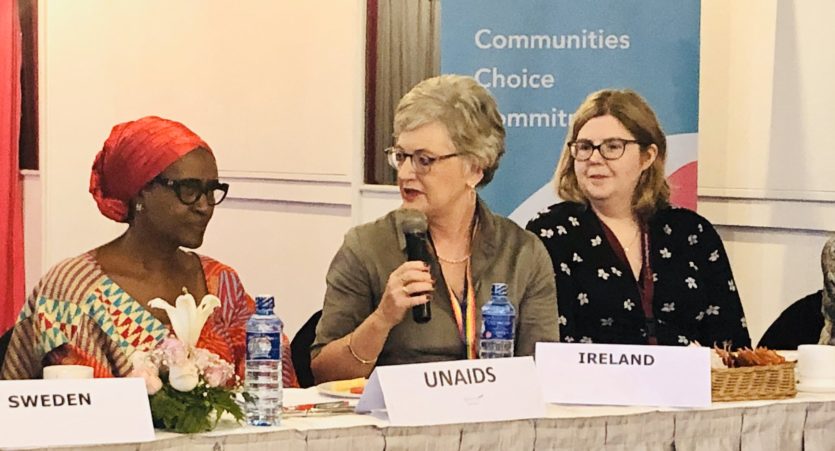
Minister for Children Katherine Zappone, and a number of other Irish politicians, are currently attending a summit in Nairobi, Kenia, to mark the 25th anniversary of the 1994 Cairo Conference on Population and Development.  The occasion was the first time ever that economic and social development had been linked to population, or as critics would have it, population control. The summit saw a huge battle waged by Holy See, allied to a number of UN member-states, to stop language that implicitly supported abortion being inserted into the population and development programme.
Attempts to ally the UN to campaigns for abortion ‘rights’ have only picked up pace since then, and Ireland appears to be joining in. At the end of September, Minister Zappone announced funding of €350,000 to support the Nairobi Summit, “making sure women can choose freely whether, when & how often to become pregnant”. Does this step include promoting or providing abortion services or access to it? It would not be surprising if this is the case.
In September, the UN held a meeting on Universal Health Coverage that brought together 172 heads of state and government, and ministers.
A number of nations, including Ireland, signed a declaration claiming that Sexual and Reproductive Health and Rights (SRHR) are the cornerstone of Universal Health Coverage (UHC).
Even if abortion is not explicitly mentioned in the declaration, SRHR in practice implies the promotion of abortions, or at least this is how some governments want it to be interpreted.
This declaration was a response to an attempt by the US Government, backed by 20 countries representing more than 1.8 billion people, to excise the language of sexual and reproductive rights because it can mean abortion, and can be used to declare a human right to abortion. The same language is used to justify intrusive sex education that contravenes parental rights.
The US Secretary of Health, speaking on behalf of those objecting countries, said: “terms and expressions, such as sexual and reproductive health and rights in U.N. documents … do not adequately take into account the key role of the family in health and education, nor the sovereign right of nations to implement health policies according to their national context. There is no international right to an abortion and these terms should not be used to promote pro-abortion policies and measures. Further, we only support sex education that appreciates the protective role of the family in this education and does not condone harmful sexual risks for young people.”
Cardinal Pietro Parolin, representing the Holy See, reiterated similar reservations over such ambiguous language. Since the 1995 World Conference on Women in Beijing and the 1994 Cairo Conference on Population and Development, the Catholic Church, together with many prolife advocacy groups worldwide, has warned that SRHR language would inevitably enforce abortion on developing countries.
“The Holy See considers it most unfortunate that the adopted declaration includes the deeply concerning and divisive references to ‘sexual and reproductive health-care services’ and ‘sexual and reproductive health and reproductive rights’ as components of universal health coverage. In line with its reservations expressed at the international conferences held in Beijing and Cairo, the Holy See reiterates that it considers the phrase “reproductive health” and related terms as applying to a holistic concept of health, which embraces the person in the entirety of his or her personality, mind and body. In particular, the Holy See rejects the interpretation that considers abortion or access to abortion, sex-selective abortion, abortion of fetuses diagnosed with health challenges, maternal surrogacy, and sterilisation as dimensions of these terms, or of universal health coverage”, Cardinal Parolin said.
In 1994, Pope John Paul II put his personal prestige and the prestige of his office on the line; he also used every diplomatic resource available to him to assemble and lead a coalition of nations to stop the United Nations push to declare abortion a universal human right.
At the same UN meeting in September, Minister Simon Harris claimed: “Ireland believes that if universal health coverage is to be genuinely universal it should and indeed it must embrace all health services including those related to sexual and reproductive health as set out in the sustainable development goals.”
He continued: “We have taken vital steps in Ireland to ensure that such services are available, are of good quality, are accessible to all women & girls throughout their lives, free of stigma, discrimination, coercion and violence. Reproductive healthcare is a basic human right and should not ever be seen as a matter of political discretion. The Irish Government’s new international development policy, “A Better World”, prioritises gender and equality and provides for a number of new initiatives in this area.”
The Department of Foreign Affairs in the past has denied that its international development programme is funding any activities related to the provision of abortion services. But their policy might change now, given the recent introduction of abortion in Ireland after the referendum last year.
As Minister Katherine Zappone announced funding to support the Nairobi Summit and its agenda, it now time to clarify if this step includes promoting or providing abortion services. Should we expect any further announcements on this soon?

venerdì, maggio 31, 2019

UN report warns against all forms of surrogacy


Both commercial and so-called ‘altruistic’ surrogacy could amount to the sale of children, the United Nations Special Rapporteur on the sale and sexual exploitation of children has warned. Our Government normally likes to listen to the UN. Will it do so on this occasion?
The report, presented to the UN Human Rights Council, by Ms Maud de Boer-Buquicchio, noted the presence of abusive practices in both regulated and unregulated contexts.
In the past, other UN bodies have shown similar fears: “The Committee on the Rights of the Child has consistently expressed similar concerns that surrogacy could lead or amount to the sale of children.”
In order to strengthen the viability of norms prohibiting the sale of children, the Rapporteur has provided a series of recommendations and also requested Member States to fill a questionnaire in relation to the rights of children born from surrogacy arrangements.
The report shows that national laws governing surrogacy vary from absolute prohibition (in France, Germany or Italy, for example) to extreme liberal regimes where even commercial surrogacy is permitted (Georgia, Ukraine, Russia and some states in the US). Other countries, such as Ireland, do not have a proper legislation but surrogacy arrangements are completed using pre-existing laws governing parentage and adoption.
The report states that “the required solution is international and national frameworks that clearly regulate surrogacy”, suggesting that the same principles that have led to the restrictions on international adoptions through the years should now be applicable to surrogacy. Those principles are “the best interest of the child as a paramount consideration, the lack of a right to a child, strict regulations and limitations regarding financial transactions, rights to identity and access to origins, and protections against exploitation.”
“Surrogacy, in particular commercial surrogacy, often involves abusive practices”, writes Ms Maud de Boer-Buquicchio, and “many of the arguments provided in support of these legal regimes for commercial surrogacy could, if accepted, legitimate practices in other fields, such as adoption, that are considered illicit.” If accepted, this would undermine established human rights norms and standards.
The proposed legislation on Assisted Human Reproduction presented by the Irish Government would allow only the so-called altruistic surrogacy, which includes the payment of ‘reasonable expenses’. In practice, the Government is showing no signs of stopping couples or individual availing of commercial surrogacy as well.
In regard to the ‘altruistic’ variety, the report notes this often involves substantial reimbursements to surrogate mothers and substantial payments to intermediaries, and these “may blur the line between commercial and altruistic surrogacy.” Reimbursements may be simple disguised payments for the transfer of the child. According to the report, labelling those arrangements as ‘altruistic’ does not automatically avoid the breach of the Convention on the Rights of the Child, and “it is necessary to appropriately regulate altruistic surrogacy to avoid the sale of children.”
‘Families Through Surrogacy’, an organisation offering Irish residents information seminars on foreign surrogacy, have labelled the UN report as “controversial” in their latest newsletter.
Cross-border surrogacy, when couples or singles travel to avoid legal restrictions at home, is a contentious issue and the proposed Irish legislation does not address it properly.
Reproductive tourism is becoming more common and problematic as sometimes the different steps of the process (in vitro fertilization, embryo transfer, pregnancy, birth, etc.) happen in different jurisdictions, making everything extremely complex to regulate. National bans or restrictions become easily void.
During presentations the Oireachtas Committee on Health some politicians and advocacy groups have requested a more permissive approach to commercial surrogacy as well.
But we should remember that there are good reasons why ‘reproductive tourism’ should not be encouraged. Ms Maud de Boer-Buquicchio writes in her report: “Cross-border surrogacies are mostly commercial surrogacies mediated by for-profit intermediaries, and are usually conducted in jurisdictions that permit commercial surrogacy. The State of the intending parents should not assume that such surrogacies are altruistic. Given the risk of sale of children in both regulated and unregulated commercial surrogacies, States generally should not automatically recognize parentage orders or birth records from foreign States in respect of commercial surrogacies, but should review carefully the proceedings abroad.”
It is contradictory to ban certain practices here and, at the same time, to recognize them when happening abroad where the State has no authority or control. The rationale of the law is precisely to maintain high human rights standards and to discourage practices which are detrimental to the women and the children involved.
Minister Harris has confirmed that the upcoming legislation will not regulate Irish citizens being involved in international commercial surrogacy agreements in other countries.
However, in 2012 the Department of Justice and Equality has published a guidance document to ensure that a child born abroad through a surrogacy arrangement may enter and reside in the State. Since then, 108 applications for declarations of parentage have been made.
This is worrying. If we want to avoid the risk of sale of children (paying one woman for her egg and another for the use of her womb), as highlighted by the UN report, it is essential to maintain human rights standards against the pressure created by lobby groups and the surrogacy industry.

venerdì, dicembre 07, 2018

“All human beings are born free and equal in dignity and rights”


“All human beings are born free and equal in dignity and rights” So begins the Universal Declaration of Human Rights, which was proclaimed by the United Nations General Assembly in Paris 70 years ago, on 10th December 1948.
The idea of dignity, which is the basis of any human right, has a long history that goes back to the fundamental Christian teaching that all human beings have an intrinsic value and are created morally equal. This value does not depend on circumstances or specific characteristics but simply on the fact that human beings are created by God. They have a value in themselves by dint of that fact.
The uniqueness of every person has moral significance, as it implies an obligation to respect and cherish each single human. There is value inherent to every person. This is precisely what we mean by dignity and this the source of all individual and collective rights.
Samuel Moyn, professor of law and history at Yale University, has pointed out that the first country to mention dignity in its Constitution was Ireland in 1937. As an alternative to classical liberalism and to totalitarian regimes, both of which were perceived as forms of secularism, the Irish Constitution was inspired by Christian values and specifically by the principle of human dignity.
In invoking the Trinity, the Preamble proclaims that the Irish people adopt Bunreacht na hÉireann “so that the dignity and freedom of the individual may be assured”. Not simply the freedom, as in the liberal tradition, but also the dignity of the individual.
In that same year, Pope Pius XI wrote his encyclical Mit Brennender Sorge in which he denounced Nazism because it “violates every human right and dignity”. This was in line with a long tradition of Catholic social teaching about the necessary respect for all persons, as created by God.
It was only a few years later, after the tragedy of World War II, that the principle of dignity appeared in new national constitutions and international declarations. The Charter of United Nations (1945) and the Universal Declaration of Human Rights (1948) both mention human dignity, and so does, for example, the first article of the German Constitution (1949): “Human dignity shall be inviolable.”
The Preamble of the Charter says that the peoples of the United Nations are determined to “reaffirm faith in fundamental human rights, in the dignity and worth of the human person, in the equal rights of men and women and of nations large and small”.
The Universal Declaration, mentions dignity twice in its preamble, then in its first article (“All human beings are born free and equal in dignity and rights”), and later two more times with respect to just remuneration and to economic, social and cultural rights. The French philosopher Jacques Maritain, a Catholic convert, had a central role in the drafting of the Declaration.
In celebrating 70 years of the Universal Declaration of Human Rights let us not forget the long history behind its fundamental principles, a history deeply indebted to Christianity.