Visualizzazione post con etichetta Europe. Mostra tutti i post

sabato, settembre 23, 2023

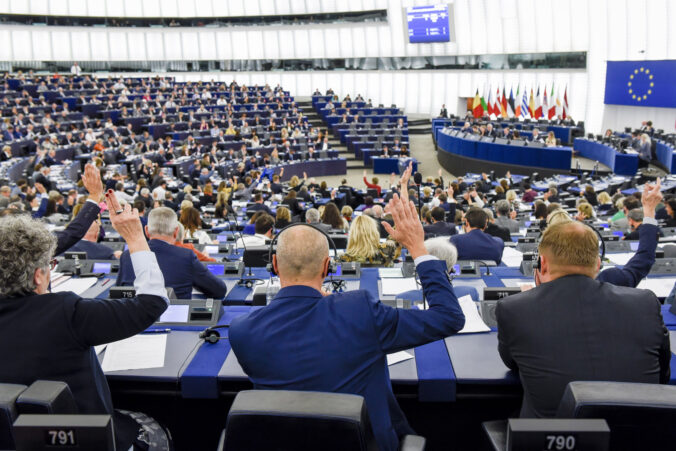
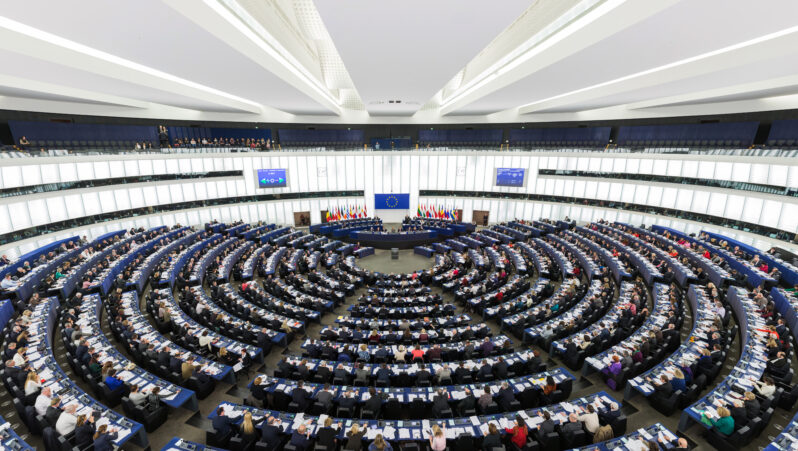
The European Parliament launches a new attack on the right to life


 Last week the European Parliament paved the way for the commercialisation of human embryos and foetuses when, by an overwhelming majority, it passed a regulation of “Substance of Human Origin” intended for human use. This text has far-reaching implications as it regards not only blood, tissues or cells but also embryos and foetuses. Moreover, the regulation imposes genetic selection and the destruction of embryos with genetic anomalies, such as Down Syndrome.

The Catholic Bishops in the EU and also the European Federation of Catholics Families have expressed serious ethical concerns about this proposal.

All in all, the proposal, which now goes before the European Council and the European Commission, is a terrible piece of work that thoroughly disrespects human life at its earliest stages. The regulation was better before it reached the amendment stage.

While the purpose of the “Substance of Human Origin” (SoHO) regulation is to set standards for new forms of processing and use of human organic material, as we can see, it makes no proper distinction between human blood, cells and tissue on the one hand, and human beings themselves on the other, in this case embryos and foetuses, , as well as non-viable prenatal life. They are all regarded as products for scientific and medical use with an embryo put on the same moral plane as a blood cell.

If the proposal becomes law, it will allow human embryos created in laboratories specifically for research purposes, or ‘spare’ embryos left over by the IVF process, to be used for commercial scientific research. In other words, they will be for sale. It might even include naturally conceived unborn children.

This broad categorisation reduces unborn human life to the status of a mere substance, equivalent to saliva, skin cells or blood plasma, which disregards its inherent dignity.

The Catholic bishops’ office in Brussels (COMECE) has expressed concern that the regulation equation could extend to other areas of law, undermining the protection of unborn life in the EU Member States, which is already weak in most cases.

The EU Parliament vote also raised allegations of promoting genetic selection and eugenics.

The SoHO regulation establishes that clinics should “achieve a high level of assurance that genetic conditions are not transmitted to recipients or offspring from medical assisted reproduction” (art. 58) The Bishops’ document questioned how this would be possible without testing embryos or foetuses for such conditions for the purpose of selection. This means that embryos with some genetic anomalies, including Down Syndrome, for instance, have to be destroyed. Genetic selection is a violation of human dignity.

“Does the European Parliament want to promote eugenics?”, asked Vincenzo Bassi, the president of the European Federation of Catholic Family Associations.

The COMECE document highlights the indivisibility of human life, emphasising that an embryo is a human being continually developing without qualitative breaks. “Already with the fusion of the nucleus, an individual human being with own unique DNA comes into being”, it says.

The draft regulation reduces fertilised human eggs and embryos to “mere raw materials without human quality”, potentially compromising their consideration in ethical and legal assessments.

The value and dignity of human life remains unchanged, regardless of whether it is created within a laboratory, through medical intervention or naturally. Human life has inherent value and needs protection, especially in contexts involving research and pharmaceutical production.

The COMECE document emphasises the need to respect the ethical decisions of EU Member States regarding the use or restriction of certain types of ‘substances of human origin’. Additionally, it advocates for Member States’ rights to refuse recognition of authorisations granted by other Member States when they conflict with national regulations.

The regulation approved by the EU Parliament is not final yet, but it will represent the position of the European Parliament in the upcoming negotiations with the EU Commission and the EU Council. To address the aforementioned concerns, the negotiations should produce a new text that will scratch unborn human life from the definition of “substance of human origin” and respect its dignity.

martedì, maggio 24, 2022

The poor state of marriage across the EU


Ireland had one of the lowest marriage rates in Europe in 2020, according to new data from Eurostat. This was the year Covid emerged, so marriage rates dropped everywhere, but Ireland was particularly bad, and the rate was already low.

Figures from Eurostat show that Ireland had a marriage rate of 1.9 per 1,000 people in 2020. It was 4.1 in the previous year. Only Italy (1.6) and Portugal (1.8) had a lower rate but they have an older population. Again, these particularly dismal rates are because of Covid, but the trends have been down in any case.

About 1.4 million marriages took place in the EU in 2020, which is equivalent to 3.2 marriages per 1,000 population. As we can see, Ireland’s 1.9 per thousand was very low even in the context of the pandemic, but then we also had particularly long lockdowns.

The highest marriage rates in the EU in 2020 were reported in Hungary (6.9), Latvia (5.6) and Lithuania (5.5). Hungary was the only country in Europe that celebrated more marriages during the pandemic than before. Except for Latvia, Hungary was also the only country with marriage rates higher than ten years before.

Marriage rates have constantly declined in the last decades in Europe, from 7.8 in 1970 to 5.2 in 2000, and then a further drop to 4.3 in 2019, just before Covid.

In Ireland, the marriage rate is often slightly below the already low EU average. (7.0 in 1970, 5.0 in 2000).

In the early 2010s, Irish rates were slightly above the EU average, and after that, more or less in line with it.

According to the Eurostat data, in 2020 about 800,000 divorces took place in EU countries, the equivalent of 1.6 divorces every 1,000 people. The lowest rates were registered in Malta (0.5) and Slovenia (0.8) while the highest figures were in Latvia, Lithuania and Denmark (all at 2.7).

The divorce rate for Ireland has always been lower than the EU average. The 2020 figures for Ireland were not available at the time of the Eurostat data publication but we know that there was an increase in the number of applications that year.

We often hear that marriage in Ireland is in good health, compared internationally, but the latest Eurostat figures prove that this is definitively not the case.

lunedì, giugno 28, 2021

All Irish MEPs vote in favour of declaring abortion a ‘right’


A new report that presents abortion as a ‘human right’ and would undermine conscientious objection was approved by the European Parliament last week. Every Irish MEP voted in favour of it. The report does not have the force of law behind it, but it is all part of an effort to shift the EU in an ever more pro-abortion direction, to make a ‘right’ to abortion a ‘European value’.

The Matić report is a long document covering sexual health and so-called “reproductive rights”, which include abortion, sterilisation, prenatal screening, etc. It is named after the Croatian MEP Predrag Fred Matić, from the Socialists and Democrats Group, who acted as a Rapporteur.

The report falsely presents abortion as a right but no international treaty recognises a “right to abortion” and the European Court of Human Rights has held that a woman’s right to privacy does not imply a right to abortion.

The resolution approved by the European Parliament last week calls for the removal of all barriers to access abortion, and these barriers would include conscientious objection of healthcare professionals.

It deceitfully claims that the denial of abortion on grounds of religion or conscience “endangers women’s lives and rights” and it also “hinders access to prenatal screening”. We know that prenatal screening is often used to select and abort children carrying a disability, such as Down Syndrome.

The typical language and concepts of the most radical activists appears in the Matić report. Conscientious objection, which is recognised and protected by the Charter of Fundamental Rights of the European Union, is presented in the Matić report as “refusal of medical care”.

Another example of its radical ideology is in the use of ambiguous expressions such as “pregnant people” or “pregnant person”, rather than “pregnant women”. This attempt to employ so-called “inclusive language” as a matter of fact erases women and their absolutely unique role in bringing a child into the world.

Critics of this extremely ideological document have highlighted that it is an affront the sovereignty of the EU Member States. The fields of health and education belong to the Member States and this document overreaches the competences of the European Union.

Several European bodies have acknowledged that the power to legislate on abortion and health matters lie with the different States. The European Union cannot impose the “right to abortion” on its members and this is particularly significant as Malta, for instance, is an EU state and has resisted international pressure to liberalise its abortion laws so far.

The Matić report has no binding legal value but such resolutions are often used by member states to introduce and legitimise changes in their national legislation.  They are also used by activists to strengthen their positions in court cases or in political campaigns. While lacking legal authority, such documents can still have a profound impact in national and international parliaments and courts. A similar report was rejected in 2013.

This time it has found support from all the left parties in the EU parliament, but also from significant sectors of the centrist European Popular Party, of which Fine Gael is a member, and from the Renew group, which includes Fianna Fail.

Bishop Kevin Doran has commented on Twitter: “Very disappointing to see the every Irish MEP voted today against the right to freedom of conscience which is recognised in the Universal Declaration of Human Rights and in favour of the non-existent human right to abortion. God bless our healthcare professionals.”

On the same day when the Matić report was approved, an attempt to discredit pro-life organisations was rejected. To mark the 25th anniversary of the International Conference on Population and Development in Nairobi, a resolution was approved by the EU parliament.

An amendment to this resolution, presented by the Left Group but rejected by the parliament, expressed concern that important international pro-life organisations were included in the EU transparency register and “authorised to work openly with public institutions for the decline of women’s rights, and sexual and reproductive health rights”.

mercoledì, giugno 09, 2021

Why Europe needs a common day of rest


Once upon a time, not so long ago, Sunday was considered a day of rest. But now, like every other day of the week, it has basically been captured by the demands of commerce. So there is no longer a communal day of rest in a lot of countries. This needs to change. There needs to be a European weekly common day of rest, together with the right to disconnect from work, according to a campaign group called the European Sunday Alliance.

The group held an online conference last week, which saw the participation of MEPs from different European parties, and also a representative of the European Commission.

A healthy balance between private life and working time is essential for families, particularly during these difficult times, says the Alliance.

They argue that a work-free Sunday has become even more relevant during the pandemic, when most people work remotely. With more time spent in the house working hours have also extended and now it is more and more difficult to separate work duties from family time. Many employers expect job commitment during the evenings and even the weekends.

recent report of the Committee On Employment and Social Affairs of the European Parliament notes that “digitalisation has brought many advantages to employers and workers, but also disadvantages, because it can intensify work, extend working hours and increase the unpredictability of working hours, blurring the boundaries between work and private life”

All the politicians taking part agreed with the need to have a common weekly day of rest but had different opinions though on what is the best policy to implement this.

In January, the European Parliament called on the European Commission “to propose a law that enables those who work digitally to disconnect outside their working hours. It should also establish minimum requirements for remote working and clarity working conditions, hours and rest periods”.

A right to disconnect means the possibility to separate, on a regular basis, family or leisure time from working hours. This is beneficial not only to the workers but, ultimately, also to society at large. During a day of rest we can spend more time with others, engaging in social activities, volunteering, sport, faith-related activities, travels, holidays, etc.

In most  European countries, Sunday is traditionally the day of rest from work. This is the heritage of the Christian tradition. Precisely 1,700 years ago, the Emperor Constantine decreed Sunday to be a day of rest protected by law. Nonetheless, many countries, including Ireland, allow businesses to run seven days a week. This has a profound impact on workers and their families.

The European Sunday Alliance is a network of trade unions, religious bodies and civil society organisations that want to raise awareness of the importance and value of a weekly day free from work. They also, ask for legislation at EU and Member States levels to be “more protective of the health, safety, dignity of everyone and should more attentively promote the reconciliation of professional and family life”.

Notably, there were no Irish speakers. This is simply not an issue in Ireland. It should be.

lunedì, maggio 18, 2020

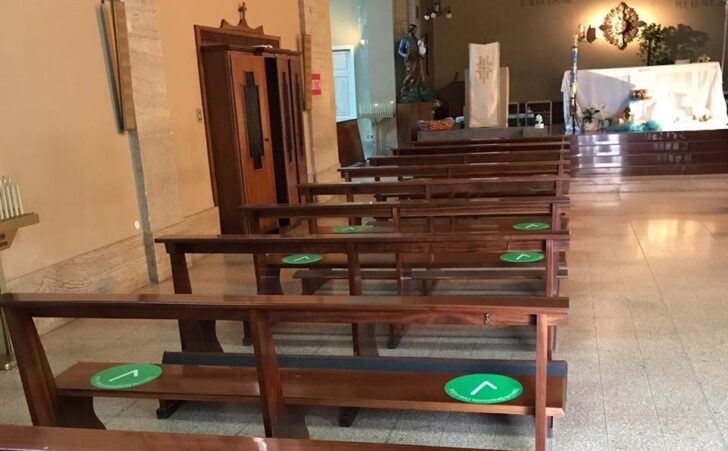
Ireland will be one of the last countries in Europe to restore public worship


While Ireland plans to keep the ban on public religious ceremonies until July 20th, other European countries are allowing public worship again much sooner. In fact, we seem to be one of the last countries to restore public worship.

In some countries like Sweden, Poland and Bulgaria, public worship has never been discontinued even if only a very  limited number of faithful are allowed to take part at one time.

In the Netherlands, the various Churches rather than the Government decided to suspend public ceremonies, with the exception of funerals and weddings. The State had permitted gathering of up to 30 people.

The following countries have already reinstated public worship services, with the due safety precautions:

– Czech Republic: April 27th
– Germany: April 29th
– Croatia: May 2nd
– Monaco: May 4th
– Hungary: May 5th (May 18th in Budapest)
– Slovenia: May 5th
– Slovakia: May 6th
– Lithuania: May 7th
– Latvia: May 8th
– Luxembourg: May 10th
– Estonia: May 10th
– Norway: May 10th
– Austria: May 15th
– Romania: May 17th
– Greece: May 17th
– Italy: May 18th

These are the countries that are planning to reopen their churches soon:

– Portugal: May 31st
– Netherlands: June 1
– Switzerland: June 8th.

Yesterday (May 18th) the French Government has been ordered by the Council of State to allow public worship again within 8 days. It described the ban as a “serious and manifestly illegal infringement” of liberty of religion.  In Germany a similar ban was lifted on April 29th when the Constitutional Court of Karlsruhe found that it violated the religious freedom guaranteed by the German Constitution.

The only countries with no official date for reopening are Belgium and the United Kindgom.

All of the above nations will require strict social distancing, limited numbers and proper hygiene. Nonetheless, they are permitting public ceremonies again.

If almost every other European country has or will soon re-establish public worship, why is Ireland waiting until July 20th?

Remember, some of these countries had much worse outbreaks than here, and even though they went into lockdown faster than here, they are restoring public worship much sooner, often after pressure from bishops.

Archbishop Dairmuid Martin gave an interview on RTE Radio last week on allowing public Masses again. A transcript of it is here.

martedì, luglio 02, 2019

Funding of Church schools is commonplace across Europe


The impression is often given that there is something very and unusual, not to mention undemocratic, about religious schools receiving public funds. In fact, it is absolutely normal. What is unusual is faith schools receiving no public funds.  What is more, the Irish education system is one of the freest in the world, that is, one of the freest from State control.
An article in Studies by Paul Meany, a former principal of Marian College in Dublin, shows that the Irish system is “underpinned by the same principles and philosophies that operate in most of the countries of the world”.
He points out that Cuba, North Korea and Gambia are among the only countries where only State schools are permitted. Even China has some private schools.
Non-State schools are often run by religious institutions. For centuries, the Churches have been a major educational pillar worldwide, before there was ever much of a State to talk about.
Meany highlights a number of international covenants and conventions, including the EU Charter of Fundamental Rights, which affirm the right of parents to how their children educates in line with their values and convictions.
The Charter notes “the freedom to found educational establishments with due respect for democratic principles and the rights of parents to ensure the education and teaching of their children in conformity with their religious, philosophical and pedagogical conviction shall be respected, in accordance with the national laws governing the exercise of such freedom and right” (art. 14).
The OIDEL (Organisation Internationale pour le Droit à l’Education et la Liberté d’Enseignement) is an international organization that was established in 1985 to defend freedom of education.
In 2016 they published a Freedom of Education Index to evaluate how much the State facilitates, through legislation and funding, the exercise of this fundamental right.
Ireland is the highest ranked country in the Freedom of Education Index, followed by the Netherlands, Belgium, Malta, Denmark and the UK. Twenty of the top thirty countries worldwide are in Europe.
The Index looks at a number of indicators such as the percentage of non-governmental schools in primary level, the level of public funding for such schools, etc.
About 30pc of primary and secondary students in Europe are in Catholic schools. Many more are in Protestant-run schools. In Ireland, 73% of the school population attend Catholic institutions.
The only countries where the number of Catholic schools is a significantly low when compared to the size of the Catholic population are Poland, Croatia and Lithuania. This is a legacy of Communism. The State still controls almost all educational institutions and such schools were only established in the last thirty years.
Meany reckons that it is not easy to compare funding for non-governmental schools across Europe as statistics often do not separate staff salaries from grants for running costs and grants for capital costs.
However, only in five European countries does the State provide no funding at all to non-governmental schools. In two countries the State pays for salaries and running costs at the same rate as public schools, and in the remaining twenty-one countries schools receive very substantial funding.
Ireland is not an exception. State funding is so common because without adequate financial support, freedom of education, which include the children’s right to receive an education respecting their family’s beliefs, would be practically restricted.