Visualizzazione post con etichetta vaccines. Mostra tutti i post

martedì, maggio 11, 2021

Why vaccine passports must not be compulsory


‘Vaccine passports’, if they are introduced, are documents which would certify that someone has been vaccinated against Covid-19. Without them, you might not be able to access certain places or services. There is even concern churches might insist on them for access to worship. But they are morally problematic for a number of reasons.

Of course, authorities have a right, and also a duty, to protect public health, but the necessary measures have to be proportionate and should not infringe basic rights.

Personally speaking, I believe I have a moral duty to be vaccinated. But I also believe that this must be voluntary, and the State (and private organisations as a general rule) have no right to impose a Covid-19 vaccine on citizens.

Every medical treatment should be based on consent. If excessive burdens are imposed on those who do not want, or cannot get vaccinated, this becomes de facto a form of coercion.

A refusal to be vaccinated should be respected. Some people might have moral or philosophical reasons to object to vaccines and, unless they become dangerous to others, it is their right to follow their conscience.

Requiring people to prove they have received the Covid vaccination to access certain places or services is equivalent to punishing those who have not received it. It creates two classes of citizens, and one has more rights than others.

An alternative to insisting that someone who boards a flight (say), has been vaccinated, is to ensure they test negatively for the virus before they embark.

Another negative effect of requiring vaccine passports is the possibility of diminishing public confidence in health authorities. Hesitant citizens will become even more suspicious if public health measures are enforced with a punitive attitude.

Vaccine passports are not per se immoral. Restrictions can be introduced when the circumstances require them, but only on a limited basis and they must be proportionate to the actual threat that unvaccinated people pose to the rest of society.

It is also important to distinguish common or essential activities from non-necessary ones. People should not be prevented accessing necessary services.

The use of vaccine passports instead would be more acceptable, for instance, to restrict those travelling from countries with a high level of infection, as they are more at risk, but it should not be the norm for the general population. Again, passengers could be tested for the virus before boarding.

Concerns similar to the ones outlined above have been expressed by a letter signed by more than 1,200 church leaders in the UK, warning that introducing vaccine passport would create a “medical apartheid”.

“This scheme has the potential to bring about the end of liberal democracy as we know it and to create a surveillance state in which the government uses technology to control certain aspects of citizens’ lives,” the letter said.

The Anscombe Bioethics Centre, a Catholic institute based in Oxford, has produced a detailed document in response to the UK government call for consultation on vaccine passports. They claim that “if applied widely, [vaccine passports] would undermine the voluntariness of vaccination and constitute unethical coercion. They would also very likely be socially divisive and raise questions in relation to equality law.”


venerdì, febbraio 19, 2021

The immoral origins of certain cell-lines used in medical research


The use of vaccines that have some connection with abortion poses serious for the Christian conscience. In two other blogs (here and here) I have explained why it is morally permissible to avail of them if they are medically necessary and if there are no alternatives. Nonetheless, the problematic origin of those vaccines remains and has to be exposed.

As an example, I will concentrate on the HEK293 cell line because it is the one used to test, and sometimes to produce, some of the vaccines currently employed to fight Covid-19. I will also refer to another foetal cell-line called PER.C6, dating back to 1985, which at least one vaccine developer uses.

Cell lines are human cells cultivated in laboratories from a single source and they are utilised to discover and test drugs, to develop therapeutic regimes, etc. Many of them have very morally problematic origins.

Someone who is not familiar with this field will be surprised to discover how widely those kinds of cell lines are used in laboratory research.

For instance, H1 is the name of an embryonic stem line derived from the destruction of a spare human embryo initially created in a laboratory for IVF. H1 is the second most commonly used human embryonic cell stem line.

These  cell-lines are now used so widely that is very likely those who work in the life sciences will, at some point of their career, encounter them. Not everyone has the same degree of responsibility with regard to their use in experiments or in treatments, but it should be said without ambiguity that it is always wrong to destroy human life at embryonic or foetal stage.

What is HEK293? HEK means human embryonic kidney while the number 293 refers to the sequence number of the experiment. (It does not mean that 293 babies were aborted to obtained it)

Doctor Alvin Wong has traced the origin of HEK293 and found that, while the original records are lost, we know that the kidney material comes from a healthy baby that was aborted in Leiden (Netherlands) around 1972. We know those details from Dr van de Eb, the professional who performed the abortion. He is the same scientist who created the PER.C6 cell line from human embryonic retinal cells, which are also used in vaccines.

This is how Dr van de Eb describes the origin of PER.C6: “So I isolated retina from a fetus, from a healthy fetus as far as could be seen, of eighteen weeks old. There was nothing special with the family history or the pregnancy was completely normal up to the eighteen weeks, and it turned out to be a socially indicated abortus—abortus provocatus, and that was simply because the woman wanted to get rid of the fetus”. This is terrible.

While there is no certainty about the origin of HEK293, Wong claims that “in all probability the cells were obtained from the embryo of a willfully induced abortion”, rather than from a miscarriage, for two reasons: induced abortions are easier to manage and the foetus are generally healthier, as most of induced abortions happen for “social reasons”, unrelated to the medical conditions of the baby. Given that Dr. van de Eb has used induced abortions to create cell lines in other circumstances, it is highly possible that this was the case also for HEK293.

(It should also be noted the use of the term “embryonic” here is incorrect as both PER.C6 and HEK293 involved foetuses much older than 9 weeks, which is considered the last stage of the embryonic development.)

What is the connection between HEK293 or PER. C6 and the Covid-19 vaccines?

HEK293 cell lines were used in the production of the AstraZeneca/University of Oxford. The same lines were used not in the production but only in the testing of the Pfizer/BioNTech and also of the Moderna vaccines.

Johnson and Johnson/Jannsen Covid vaccines use cell lines from PER.C6.

There are other vaccines under development, but not yet in use, with no connection to abortion-derived cell lines. (See here for details https://lozierinstitute.org/cell-lines-used-for-viral-vaccine-production/)

How can we justify, from a moral point of view, benefitting from an evil dating back several decades? I have explained in more details here and here that while the production of abortion-derived cell lines for research and therapy is always gravely immoral, people who find themselves at the very end of a long chain of responsibility can morally use those vaccines when medically necessary, as the Vatican and many impeccably pro-life moral theologians have explained.

More ethical alternatives always have to be preferred, if available, however.

The public is not responsible for the grave evil that has been committed at the origin of those cell lines. The use of “tainted” vaccines does not imply condoning or ratifying their source. Nonetheless, this grave act of injustice has to be publicly denounced so that only ethical alternatives will be employed in the future.

Photo by Mufid Majnun on Unsplash

martedì, febbraio 16, 2021

I believe I have a moral duty to take the Covid-19 vaccine


I will take the Covid-19 vaccine, when available, and I believe that most of us have a moral duty to do so. I also understand why many have reservations about its safety, its efficacy and its morality. 

(I have already discussed here and here blog the morality of using vaccines using cell lines derived from abortions.)

As I am not a medical expert, I won’t address the first two issues (safety and efficacy) here and I would rather invite everyone to get informed from a variety of reliable sources.

Instead, I will address the ethical factors that need to be considered, in the hope that my thoughts will help others to make up their own mind.

We are dealing here with what moral philosophy call prudential matters, i.e. practical decisions that need to take into consideration the general rules but also the specific circumstances. As these circumstances are different, the outcome of our judgements will be different too and I am not surprised if someone will come up with a diverse conclusion, even if they agree with me in principle.

Our culture overestimates the value freedom of choice and bodily autonomy, but the current pandemic shows how much we depend on each other and it reveals to what extent my decisions - particularly with regard to vaccination - have decisive impact on others.

Our primary ethical consideration should be towards the common good. In deciding what is the right thing to do, I should take into account the good of my community, particularly of those most vulnerable and of those around me that will be directly affected by my own choices.

The success of vaccination programmes depends on widespread compliance. In other circumstances, it is the sacrifice of a few that brings benefit to the rest. Think of soldiers who give their lives to save the whole country. This case is different because vaccination protects both individuals and society, so it is beneficial to all. At the same time, my choice of taking the vaccine does not impose serious threat to others, as generally the only concerns are at individual level. Therefore, we all have an interest in been vaccinated. Do we also have a moral duty?

Yes. However, there are two group resisting this: those who think they do not need vaccination and those who believe vaccines are more harmful than beneficial for them. In both cases, they disregard the common good.

Those who believe they are less likely to be impacted by the virus are also more likely to refuse vaccination and to not comply with hygienic restrictions. They generally young and in good health.

It is not only selfish to take advantage of mass vaccination without accepting the individual costs of achieving it, but it is also irrational to be in the unprotected category. Even when the impact is minimal - “it’s no more than a flu” they say - they expose others to a serious infection.

There is no moral justification for this careless position.

Those, instead, believing that the collective benefits do not outweigh the personal risks should acknowledge the sacrifices others, healthcare professionals for instance, have made for them. Some have lost their lives to save ours.

We should think and act according to a sense of responsibility, rather than personal autonomy and individual choices. Solidarity should take priority over personal concerns.

I am convinced that those, like myself, who have no medical counterindication, have a moral duty to vaccinate. It is a duty towards vulnerable patients who cannot protect themselves, and towards those who have made significant sacrifices.

It is also ethically important to set virtuous example by publicly supporting vaccination. Vaccination needs to be a collective action to optimally effect the common good. The benefits for all will only arrive if there is a wide participation. Any legitimate concern about risks should be addressed from the point of view of the common good.

I appreciate the good faith of those who will reply that, in their knowledge, the cure is worse than the disease. This is an argument beyond the scope of my competence and so I won’t engage in medical matters. I can only say that, having considered the different perspectives, I am not convinced by those who downplay the severity of this disease or emphasise the damages, rather than the benefits, that the vaccines will cause. Their concerns are not unfounded and we need critical voices but, on the balance, I cannot honestly follow their conclusions.

I am convinced that those who object to vaccination are imposing a risk not only on themselves but also on others. Unless one has medical contraindications, the right thing to do is to vaccinate.

venerdì, gennaio 08, 2021

The morality of Covid vaccines


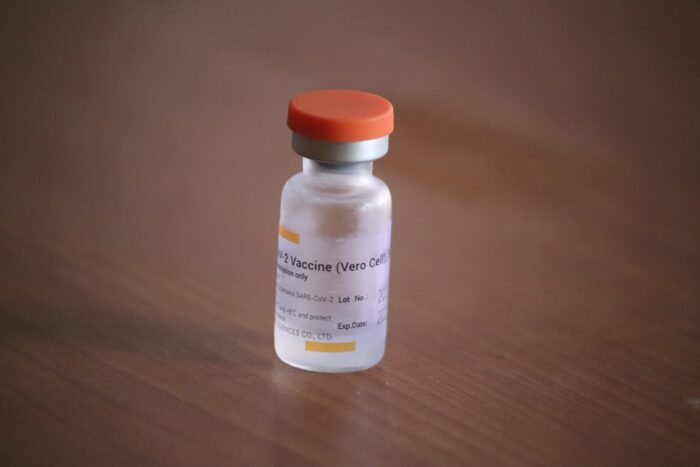
 A number of vaccines are being produced to fight Covid-19 but some of them are creating problems of conscience, as it is well documented that some cell lines used in the development, production or testing of vaccines are derived from aborted foetuses. 

Does this mean that those vaccines should always be rejected? Is their use always ethically unacceptable? There is no simple answer to these questions, as we will see. We need to distinguish the process from the product, even if it is not an easy task. 

There is no doubt that the harvesting of foetal tissue is deeply immoral. It is always morally wrong to participate, at any stage, in the experimentation and production of vaccines that involve cell lines derived from abortions, as this would be a direct cooperation with an evil practice. No good intention, such as saving lives through vaccination, can justify what is intrinsically (always and per se) evil. But what should we do once the product exists? If we use it, to what extend are we responsible for its unethical production? 

While the process is intrinsically wrong, the product, in itself, is not. I will use an analogy to clarify my argument. It is not unethical to cross a bridge that was built by slaves 2,000 years ago. The building process was morally wrong but the product, i.e. the bridge itself, is not. But imagine there is a construction company that nowadays uses forced labour to build bridges. Not only it would be immoral to employ this company for public works, but we also have a duty to publicly denounce this awful practice and do our best to stop it. 

Suppose the bridge exists and it was built only recently by a company that it is still active and it charges a fee for its use, making profit. Is it wrong to make use of it and pay the toll if there is no alternative available and the bridge is necessary to save lives? To what extend are we accomplices with the unethical builders? Here is where the difficulty lies. 

We need to bear in mind that the purchase of a product fosters its production. Using vaccines obtained from unethical practices does contribute to their public legitimisation and encourages the perpetuation of those immoral practices. On the other side, we need to consider that there is a duty to save lives with legitimate means, and there are degrees of responsibility. Those who are at the end of a long chain that goes from the production to the intake, are the least responsible. 

Ethical alternatives always have to be preferred. When this is not reasonably possible, there could be grave reasons to accept morally contentious vaccines, in order to save lives, but only as the last resource and until a more ethically acceptable alternative becomes available. 

At the same time, moral objections should be clearly made public so that the use of an ethically contentious product should in no way appear as a form of endorsement or condoning of a wicked form of production. 

On December 21 the Congregation for the Doctrine of Faith produced a document stating: 

When ethically irreproachable Covid-19 vaccines are not available (e.g. in countries where vaccines without ethical problems are not made available to physicians and patients, or where their distribution is more difficult due to special storage and transport conditions, or when various types of vaccines are distributed in the same country but health authorities do not allow citizens to choose the vaccine with which to be inoculated) it is morally acceptable to receive Covid-19 vaccines that have used cell lines from aborted foetuses in their research and production process … the licit use of such vaccines does not and should not in any way imply that there is a moral endorsement of the use of cell lines proceeding from aborted foetuses.

Some bioethicists and religious leaders have argued along these same lines. The Irish Catholic Bishops’ Conference, for instance, has recently stated: 

If a more ethically acceptable alternative is not readily available to them, it is morally permissible for Catholics to accept a vaccine which involves the use of foetal cell-lines, especially if the potential risk to life or health is significant, as in the case of a pandemic. Refusal to accept a vaccine could contribute to significant loss of life in the community and especially among those who are most vulnerable. This reality must inform any judgement of conscience. We reaffirm the consistent teaching of the Church that abortion is always gravely immoral. The Church has always made a distinction, however, between formal (deliberate) involvement in an immoral act and material involvement, which may be incidental and remote. The decision of those who decide to accept vaccines which have had some link with foetal cell-lines in the past does not imply any consent on their part to abortion.

The Bishops’ Conference of England and Wales explained the distinction between deliberate and accidental involvement, making reference to the questionable history of vaccination: 

The Church distinguishes between the present unethical sourcing of vaccines and the use of historical cell-lines which were derived from aborted foetuses in the 1970s. Human society has often benefited from the wrongs done in the past for which we must repent. We live with the benefits of very questionable medical experimentation. For example, Edward Jenner, who invented vaccination, conducted research by injecting an 8-year-old boy with cowpox followed by smallpox. While today such experimentation would be unethical by any standards, we wouldn’t deny life-saving vaccination because of its dubious historic provenance. 

Bioethicists Jeffrey Barrows and Jonathan Imbody tackle the same issue. In a recent Public Discourse piece they write: “Several mitigating principles can help assuage the concerns of conscientious end users of drugs that have some connection to abortion: the distance in time from the original abortion to the present use of the drug and the lack of availability of any ethical alternatives.” 

Peter A Comensoli, Archbishop of Melbourne and Chair of the Australian Bishops Commission for Life, Family and Public Engagement, on behalf of Australia’s Catholic bishops, says that “the use of an ethically compromised vaccine is acceptable if no other option is available, in order to protect lives.” 

The US Catholic Medical Association agrees and quotes from a Vatican document on the licit use of vaccines dating back to June 2005, during the early days of the Benedict XVI pontificate. The Association states: “When no alternative vaccines are available, it must be reaffirmed that the use of vaccines whose production is connected with acts of procured abortion is lawful ‘on a temporary basis’ and ‘insomuch as is necessary’ to avoid significant risk to the health of an individual or the community.” However, they add: “When no alternative vaccines are available, there is a ‘moral duty to continue to fight and to employ every lawful means’ to pressure the pharmaceutical industry, government authorities and national health systems to make ethical alternatives available.” (The document of the Pontifical Academy for Life quoted is called Moral Reflections on Vaccines Prepared from Cells Derived from Aborted Human Foetuses.) 

Totally ethical vaccines always have to be preferred over morally questionable ones but, when they are not available, there can still be good reasons to use morally contentious vaccines that have already been created, as outlined by the various authorities quoted above. Hopefully in due course, vaccines that protect against Covid and have no connection to abortion, even a very remote and distant one, will become available for use.

mercoledì, dicembre 30, 2020

The use of vaccines and material cooperation


The Holy See has recently released an official document stating that, “when ethically irreproachable vaccines are not available, … it is morally acceptable to receive Covid-19 vaccines that have used cell lines from aborted fetuses in their research and production process.” This is a reference to the fact that some of the vaccines have in some way used cell lines derived from an aborted foetus in 1972. It uses an argument similar to that made in documents dating back to the Benedict XVI papacy.

The document, approved by Pope Francis, says that “the fundamental reason for considering the use of these vaccines morally licit is that the kind of cooperation in evil (passive material cooperation) in the procured abortion from which these cell lines originate is, on the part of those making use of the resulting vaccines, remote. The moral duty to avoid such passive material cooperation is not obligatory if there is a grave danger, such as the otherwise uncontainable spread of a serious pathological agent. … It must therefore be considered that, in such a case, all vaccinations recognized as clinically safe and effective can be used in good conscience with the certain knowledge that the use of such vaccines does not constitute formal cooperation with the abortion from which the cells used in production of the vaccines derive.”

The Church has thus made it clear to Catholics that they are morally allowed to use the presently available vaccines for Covid-19.

This document employs technical language such as “material and formal cooperation” which mean little to many Catholics. This is one of the reasons why some faithful find it difficult to understand the position of the Church on this matter. How can we use vaccines that are somehow associated with abortion?

In this blog, I will try to explain the meaning of those technical expressions, using some more common examples.

There are many ways to cooperate in an immoral act and they don’t carry the same degree of responsibility.

Let’s consider the example of stealing a car. Different scenarios are possible.  The worst case is when I convince someone else to steal it with me or for me. It is the worst case because that person wouldn’t have done it without my solicitation and so am I twice responsible.

The second scenario is when I join someone else in a theft that would have occurred anyhow. My help makes me equally responsible.

In both cases, I fully participate with the intention of stealing and this is what is called “formal cooperation”. (The reason why it is called “formal” has to do with a tradition in moral philosophy that goes back to Aristotle. A scholarly explanation can be found here.)

The third scenario is when I am not directly involved in the evil action but, being aware of it, I do nothing to prevent it or to report it even if I could. Although there is no direct participation, a certain degree of responsibility is still present.

A final scenario is when I do not approve someone else stealing a car but, still, I am forced to be somehow involved because of the circumstances. By threat of violence, for instance, of by some urgent necessity.

Assisting in another’s wrong-doing without approving is called “material cooperation”. I am materially involved but without consenting to the act.

Imagine someone who desperately needs a car to go to the hospital and only a stolen one is available. In other circumstances we would not make use of that car but, if nothing else is at hand and the car is needed to save a life, most of us would use it. The connection with original theft is remote and passive, as I am not actively soliciting someone to steal for me.

Traditional moral theology tells us that in this case the evil is not intended and there are sufficient reasons to tolerate it.

These examples help us understand the recent document from Rome.

It says: “As regards the preparation, distribution and marketing of vaccines produced as a result of the use of biological material whose origin is connected with cells coming from foetuses voluntarily aborted, such a process is stated, as a matter of principle, morally illicit, because it could contribute in encouraging the performance of other voluntary abortions, with the purpose of the production of such vaccines. Nevertheless, it should be recognized that, within the chain of production-distribution-marketing, the various cooperating agents can have different moral responsibilities. However, there is another aspect to be considered, and that is the form of passive material cooperation which would be carried out by the producers of these vaccines, if they do not denounce and reject publicly the original immoral act (the voluntary abortion), and if they do not dedicate themselves together to research and promote alternative ways, exempt from moral evil, for the production of vaccines for the same infections. Such passive material cooperation, if it should occur, is equally illicit.”

Fully morally acceptable alternatives always have to be preferred but, as we have seen, when they are not available, some remote unintended connection (material cooperation) to an evil act can be morally tolerated if, on balance, it is necessary for the common good. This is the Catholic moral tradition, as promoted by the Holy See, in any case.