Visualizzazione post con etichetta France. Mostra tutti i post

lunedì, febbraio 13, 2023

Children are left unprotected against extreme pornography


There is an urgent need to protect children from online pornography, according to a new report by the UK Children’s Commissioner. To tackle this problem, obligatory age verification to watch porn will be introduced soon in France. Ireland should consider something similar.

The UK Children’s Commissioner, Dame Rachel de Souza, launched the new report which shows how pornography has become all-pervasive and reveals the destructive effects on young people’s lives.

Based on focus groups and a survey of 1,000 teenagers and young people, it found that 13 is the average age at which children first see online pornographic material. By age 9, 10pc have seen it. More than one out of four had seen it by age 11, and half of children have seen it by the age of 13.

The pictures or videos children have access to are not only obscene but also violent and degrading. “Depictions of degradation, sexual coercion, aggression and exploitation are commonplace, and disproportionately targeted against teenage girls”, says the report.

The age of first exposure is determined by when children first have their own device. Parents should be aware of such risks when letting their children use smartphones or tablets.

Those who were exposed to porn at younger age were significantly more likely to become frequent users and develop dependency, the report found.

The document by the UK Children’s Commissioner also found that frequent users of porn are more likely to engage in physically aggressive sex acts.

In terms of social media or websites, Twitter is where young people are more likely to have seen porn.

51pc of girls aged 16-21, and 33pc of boys, have seen or been sent pictures and videos of people they know in real life. Other research has shown that “girls are overwhelmingly the recipients of unwanted explicit images of male peers”.

In the UK there is no legal requirement for websites hosting porn to verify the age of users, but this will change soon with the Online Safety Bill that is making its way through the British Parliament.

France has just announced that it will become the first country to introduce a “digital certificate” to prove the age of those who want to access online pornography.

This decision follows a shocking report on the pornographic industry, presented by the French Senate. The document that the porn industry “contributed to an upsurge in increasingly violent content, without any control or consideration for the conditions in which this content is produced.”

One of the recommendations put forward by the French Senate report was precisely an age-verification mechanism to prevent children accessing obscene material.

Last year an RedC poll found that 71pc of Irish citizens believe pornography is causing serious harm to society and 81pc of young people believe porn leads to more demands for violent sex.

Ireland should follow France and adopt a similar procedure to keep children away from porn websites.


Photo by Daria Nepriakhina on Unsplash

giovedì, maggio 21, 2020

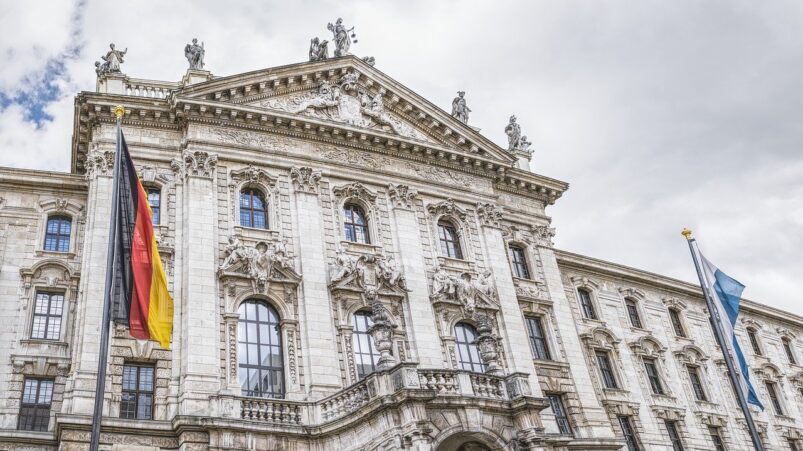
French and German judges rule against Covid-bans on public worship

In both Germany and France, judges have ruled that a ban on public worship in response to the pandemic is disproportionate and a violation of rights. The judges were aware of the need to protect public health, but believed this could be done without a total ban.

The German Federal Constitutional Court, on April 29th, ruled that the prohibition violated the religious freedom guaranteed by the Constitution.

The ban was introduced in mid-March as part of the first package of measures to slow the spread of Covid-19.

However, on April 15th, Chancellor Angela Merkel announced that shops and other venues were allowed to reopen but public religious services were not permitted.

As a response, the president of the Catholic Bishops’ Conference maintained that the ban was a major impediment to the freedom of worship and could not understand why it should remain in place if proper safety measures were introduced. On the other hand, a representative of the federation of Lutheran, Reformed and United churches expressed support for the Government’s measure.

Interestingly, it was a Muslim association that appealed against the ban and prompted the Federal Constitutional Court’s decision.

The Court ruled that exceptions could be granted when it is possible to enforce effectively protective measures. The size, the structure of the religious setting and the current risk level in the local region, all must be taken into consideration.

This means that in Germany public religious celebration have returned since the end of April.

In France, when Prime Minister Édouard Philippe announced the partial lifting of the lockdown, beginning May 11th, he said the ban on public worship should continue until at least June 2nd.

During previous consultations with the Government, the Bishops’ Conference had clearly stated that restarting public Masses was a priority for them and they presented some possible measures to arrange the churches and contain the risk of contagion.

The Bishops expressed bitter disappointment at the announcement. “They don’t trust us. Why can markets, little museums and mediatheques open up and churches can’t? That doesn’t make sense”, said the Archbishop of Paris.

On Monday (May 18th) the Council of State, which is the highest administrative court, lifted the ban and gave the Prime Minister eight days to introduce new measure that are “proportionate to the risk”.

The appeal was presented by a number of lay Catholic organizations.

Two reasons are behind the Council’s ruling. First, freedom of worship is a fundamental right which includes by its own nature “the right to collectively attend ceremonies in religious venues”, the court said. And also, if gatherings of less than 10 people are tolerated in other public venues, it should be possible to do the same safely in places of worship.

“The general and absolute prohibition is disproportionate to the purpose of preserving public health and therefore it constitutes, with regard to the essential nature of this component of freedom of worship, a serious and manifest illegal violation to the latter”, ruled the Council of State.

There is something in common in the German and French cases, with some similarities with what has happened in Italy too.

The different religious denominations have initially accepted and respected the necessary restrictions to public worship imposed by the government. After a period, some restrictions were lifted but they did not include the ban on public religious celebrations. Consequently, the Catholic Bishops’ Conference protested and offered a clear plan to address the legitimate concerns for public health and return to open the churches.

Then, in Italy a compromise was found and a date for reopening was announced, while in Germany and France some organisations of believers – not the official religious representatives- appealed against the ban and won their case.

In Ireland, the ban will last much longer than almost anywhere else: two more months. Will someone here decide to appeal to the courts and seek to have public worship restored?

mercoledì, settembre 25, 2019

An important voice in favour of fathers speaks out


The French parliament is debating a new law which will extend assisted reproduction to single women and lesbian couples as well. What is interesting is the fact that no less a body than the National Academy of Medicine has objected to the proposed reform on the ground that will be permit the deliberate creation of children who will be raised without a father.
Currently French law only permit couples experiencing infertility to access IVF and other forms of assisted human reproduction – PMA (procréation médicalement assistée) in French. Under the proposed new law, where a single woman or lesbian couples avail of PMA, the name of the father will not appear on the birth certificate even if the donor is known, and, in the case of female couples, both women will be recorded as “mothers”. This is clearly a falsification and vital information will be hidden from the child.
Single men and male couples are not included in the new legislation but many fear that this restriction is only temporary. The slippery slope is inexorable, and critics also believe that in time the new proposal will inevitably open up to surrogacy – currently banned in France – as men obviously need a woman to carry a baby for them. The current Government is already well disposed to the recognition of children born from surrogacy in a foreign country, which will make the domestic ban ineffective.
This proposal represents a substantial change as it means that some women will access PMA without suffering from infertility. (Same-sex couples and single women are not infertile per se).
The National Academy of Medicine (Académie Nationale de Médecine) has stated that “The deliberate conception of a child deprived of a father constitutes a major anthropological break, which is not without risks for the psychological development and the flourishing of the child.”
The desire for a child will become a right to a child by almost any means. And this new “right” will prevail over the legitimate right of a child to have a mother and a father, when possible.
The new proposal has been heavily criticised by many sectors of the French society, including members of Macron’s party. A national protest day will be held on October 6.
A survey found that 82% of respondents believe that a child has a right to a mother and a father. 77% believe that a father and a mother have different and complementary role, and 66% oppose that replacement of “mother” and “father” with “parent 1” and “parent 2” in school forms, which has already happened.
Minister Simon Harris has proposed legislation regulating human assisted reproduction that is much more extreme and liberal than even the proposed French reform and, still, no debate is taking place in Ireland. There is no real opposition to what the Government presents.  Under Irish law, the need for a mother, never mind a father, is not considered.
In the Bill proposed by Harris the desire of the commissioning adults who want a child is paramount. Having a mother and a father does not matter anymore.