Visualizzazione post con etichetta fecondazione artificiale. Mostra tutti i post

domenica, maggio 17, 2020

Mater semper certa. Perché l’essere umano non è una pera

Mater semper certa. Perché l’essere umano non è una

Uso l’espressione “utero in affitto” invece di “surrogazione di maternità” perché rende esplicita la transazione commerciale. Mi oppongo alla retorica del “dono d’amore” e tutte le espressioni liriche, rispettose, sentimentali, inventate e diffuse dalle lobby delle industrie biotecnologiche, mentre si tratta di affittare, vendere, comprare, fare profitto. Una sorta di pinkwashing del linguaggio che mira a rendere accettabile e persino etico cancellare la madre e ridurre il suo corpo e il suo neonato a merci. Questa mistificazione nasconde una realtà brutale: essere affittate capita principalmente alle donne povere e/o di paesi poveri, e a loro arriva ben poco denaro perché il vero guadagno va alle agenzie.

La Conferenza dell’Aia ha stimato che il 50 per cento delle surroganti è analfabeta e accetta inconsapevolmente o su pressione degli uomini di famiglia che vogliono quei soldi. Ammassate con altre in grandi locali per risparmiare su dottori e strumenti diagnostici, nutrite e medicalizzate come mai in vita loro, quando infine il neonato viene portato via talvolta impazziscono, come raccontano le ong per i diritti umani, e spesso non vengono più riammesse nei villaggi. Non è possibile tenere una creatura dentro, metterla al mondo e poi vedersela portare via per sempre senza soffrire. Non si tratta di ragioni culturali - si è sostenuta persino questa - ma umane: la chimica ormonale che favorisce l’attaccamento tra madre e bambino, e poi la montata lattea, ovvero la sopravvivenza della specie. È proprio questo legame, fondante della vita stessa, a essere negato. Tutti i contratti di surrogacy dettagliano al millimetro quello che le mamme non possono fare, pena una multa: toccarsi la pancia, per esempio. Mangiare come d’abitudine. Avere rapporti sessuali. Tenere in braccio gli altri figli. Giocare con il gatto. Scegliere come partorire. 


Continua qui.

venerdì, aprile 26, 2019

Time for a bigger spotlight on rogue fertility clinics


We hear a lot in the papers about ‘rogue’ pro-life counselling agencies. But what of rogue fertility clinics? The fertility business is huge and anxious couples pay a very great deal of money in their efforts to become pregnant, efforts that often result in failure. Sally Cheshire, chairman of the Human Fertilisation and Embryology Authority (HFEA) in the UK, has recently warned that older women in particular are being exploited by fertility clinics offering them services that are almost always unsuccessful.
“I would like our clinics to be honest about the success rates,” Mrs Chesire said in an interview with the Daily Telegraph. “They are catering to a bunch of vulnerable women.”
She also pointed out that they are sometimes charging not the recommended £5,000 per cycle, but up to £20,000, which is outrageous.
There are different ways to calculate the success rate of Assisted Human Reproduction (AHR). One is based on the number of treatment cycles and another on the number of implanted embryos. In any case, the desired outcome, which is the birth of a baby, is much rarer than people think.
For instance, in the UK between 2004 and 2017 only 25 of 2,406 embryos transferred in women over the age forty-four ended with a birth. This is the equivalent of a 1% success rate or a 99% failure rate.
Mrs Cheshire visited a fertility fair recently and was surprised by the aggressive tactics used by the industry. She was offered supposed promising services in spite of her age, which is 50.
“Some of the private sector clinics use very selective success rates in their sales tactics which we are also trying to stop. Because they need to be honest about their results by age group, by category of patient” she told the Daily Telegraph.
When a woman uses her own eggs, chances to give birth decrease with age as their quality and quantity declines.
Here is a breakdown by age of the success rate, according to the Human Fertilisation and Embryology Authority:
32.2% for women under 35
27.7% for women aged 35-37
20.8% for women aged 38-39
13.6% for women aged 40-42
5.0% for women aged 43-44
1.9% for women aged 45+
The percentage represents the number of live births per treatment cycle. In order to improve the success rates, older women often use eggs purchased from younger women, which of course cuts the tie to the natural mother.
In her interview, Sally Cheshire also complained that costs of treatments are being inflated by the growing use of “add-ons”. Many clients feel they must do everything possible to increase their chances of success but there is no conclusive evidence that what clinics are promoting as boosting fertility actually works.
The AHR industry is riddled with ethical problems including the huge wastage of human embryos, the potential for exploiting vulnerable people desperate for children and the deliberate cutting of the natural ties when third-party gametes are used.
How about those media who love to highlight ‘rogue’ pro-life counselling agencies give the same amount or more attention to the much bigger rogue fertility clinics currently charging people vast sums for a service that is often virtually guaranteed to fail?

giovedì, aprile 18, 2019

Ireland must have a debate about gene-editing


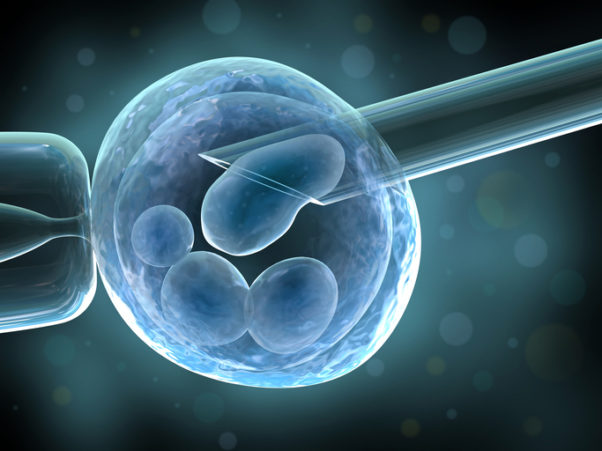
Ireland needs to have a debate about the use of ‘CRISPR’ technology, a gene-editing technique that can affect the DNA of future generations of human beings. A number of eminent scientists and bioethicists have recently called for a moratorium on techniques to make genetically modified children. They believe that a proper debate is urgent in society, before proceeding further.
The move came after a Chinese scientist named He Jiankui announced that he had created the world’s first gene-edited, designer babies—twin girls named Lulu and Nana. His intention was to modify their genes so they would not acquire HIV from their father.
Scientists reacted with horror because no-one had yet brought a baby to term that has been modified via CRISPR.
CRISPR, together with similar tools, has been used in laboratories with the purpose of correcting genetic defects before or just after conception. The technique and its possible consequences are extremely controversial from a moral point of view, even if the intent of preventing hereditary diseases might appear noble.
The above-mentioned scientists and bioethicists are only asking for “the establishment of an international framework in which nations, while retaining the right to make their own decisions, voluntarily commit to not approve any use of clinical germline editing unless certain conditions are met.” So, it is only temporary and voluntary. Also, they are not calling for a ban on such research tout court but only on its clinical use, i.e. the transfer of those embryos into a woman’s uterus. Research will continue but embryos will be destroyed rather than been implanted. This is hardly respectful of human life.
Still, it is significant that this request comes directly from those who are, or have been, engaged in such research. It is not the first time that the scientific community asks for a proper debate about the medical, societal, and moral issues associated to genetic editing, before being permitted. Similar appeals have been issued in the past by the US National Academies of Sciences, Engineering, and Medicine, for instance, and from the International Summit on Human Genome Editing.
The large majority of European countries ban germline modification. In Ireland we don’t have legislation covering those issues yet, but only guidelines prohibiting the production of embryos for research, and therefore gene modification for reproduction.
The General Scheme of the Assisted Human Reproduction Bill 2017, which is still a draft, does not allow the creation of an embryo specifically for use in research and it would not permit the transfer into the body of a woman of a gamete or an embryo that has been genetically modified. This means that genetic engineering would not be permitted.
A number of ethical issues arise with gene editing, particularly when it happens not at the gamete stage, which is before conception, but at the embryo stage, when a new human being already exists.
Besides the fact that the separation of human reproduction from sexual reproduction per se is ethically problematic, there are other moral concerns with regard to the production of human life in a laboratory as this inevitably implies the waste of a large number of human embryos artificially created.
Moreover, genetic engineering becomes eugenics (literally “good breeding”) when those who are ‘worthy’ of life are selected and implanted while those who are considered defective are discarded. The noble purpose of eradicating inherited disease can easily become the rationale for destroying those human beings who are carrying that same disease.  Unlike gametes (egg and sperm), embryos are human being and should be respected.
Regardless the possible eugenic usage of those techniques, there are ethical concerns deriving also from the risk of introducing unintended mutations in patients, while the long-term consequences of those procedures are still unknown.
The appeal should be welcomed, as a sign of an increasing self-awareness of the scientific community, but the bar should be set higher and not only clinical application but even research should be suspended before a proper debate takes place.

martedì, novembre 20, 2018

Silvana De Mari e il suo “no” all’anonimato dei venditori di sperma


fecondazione artificiale_paternità_anonimato_fecondazione eterologa_De-Mari

Forte e chiara si è levata, in questi giorni, la voce di Silvana De Mari che, dalle pagine del quotidiano La Verità ha lanciato, senza esitazione, la proposta di una moratoria internazionale perché sia vietato l’ anonimato dei “donatori”, o sarebbe meglio dire venditori, di sperma.
La questione della fecondazione in vitro, infatti, pone una serie di problematiche, oltre che di ordine etico anche di ordine biologico e di ereditarietà genetica. Ci riferiamo in modo particolare alla questione della “donazione” dello sperma perché, incredibile ma vero, persino nell’industria che fabbrica le persone, dove tutto sembra essere perfettamente studiato, pianificato, secondo una catena di montaggio implacabile (vendita di ovuli – vendita di sperma – utero in affitto) e dove ogni singolo, agghiacciante, passaggio viene giustificato alla luce di una mentalità buonista che trasforma un grave atto di crudeltà, come quello di mettere deliberatamente al mondo orfani di padre o di madre, in un atto d’amore, qualcosa può andare storto.

Continua su Notizie Provita.