Visualizzazione post con etichetta family solidarity. Mostra tutti i post

venerdì, dicembre 19, 2025

Why won’t the EU fund organisations with a traditional view of the family?


The Federation of Catholic Family Associations in Europe (FAFCE) has accused the European Union of ‘ideological discrimination’ after being excluded from EU funding.

In recent months, FAFCE applied for six EU-funded projects focusing on demographic decline, youth policy and child protection, areas that are among the organisation’s long-standing priorities. All six submitted projects were rejected. According to the Commission’s evaluations, the proposals raised concerns regarding equality measures and compliance with EU values.

FAFCE strongly disputes this assessment. In response, FAFCE commissioned an external consulting firm, Theoria, to carry out an independent and objective analysis of the Commission’s evaluations. Theoria examined the project documentation and the evaluators’ comments and concluded that there was nothing in the proposals that could “contradict equality requirements”, as the Commission had claimed.

Theoria’s report goes further, raising concerns about a broader pattern in how EU funding applications are assessed. “From our experience,” the report states, “after reading hundreds of project proposal evaluations, evaluators never question the definition or operational implementation of values, with one exception: when the values are proposed by Christian or pro-life organisations.” The report speaks explicitly of “evident bias in the evaluation”.

FAFCE is not the only organisation denouncing bias. The World Youth Alliance (WYA) also claim their EU funding was rejected because of their pro-life views.

The Commission evaluations cited vague shortcomings in the FAFCE’s projects, such as insufficient discussion of gender disparities, limited safeguards against discrimination, or a lack of clarity on how EU values were “made operational”. Yet, according to Theoria, these criticisms were not supported by concrete examples or specific deficiencies in the projects themselves. In some cases, anonymous evaluators deducted significant points despite acknowledging that proposals met the relevant criteria, a practice that had the practical effect of pushing scores below the approval threshold.

There is little doubt that organisations that have a Christian understanding of the family are being judged and penalised not on the quality of their work, but on the worldview they represent.

FAFCE’s president, Vincenzo Bassi, has rejected the implication that the organisation’s work is not inclusive. “We cannot be put on trial for our intentions,” he said. “Our approach includes everyone; we are against no one.” He has also warned that the funding decisions threaten the organisation’s viability, as FAFCE operates on a very modest annual budget.

Founded in 1997, FAFCE represents 33 family associations from 21 European countries. Inspired by Catholic social teaching, it works on issues such as family policy, demographic decline, work–life balance, child protection, human dignity and social cohesion. FAFCE occupies a distinctive position in Brussels: it is the only pro-family non-governmental organisation at EU level that includes the term “Catholic” in its official name, and it is the only organisation representing families accredited to the Council of Europe.

Support for FAFCE has come from several politicians and civil society figures, who argue that excluding pro-traditional-family organisations weakens Europe’s ability to address challenges such as falling birth rates, social fragmentation and the protection of minors. Critics of the Commission’s decision warn that EU funding risks becoming a tool for enforcing ideological conformity rather than supporting genuine pluralism within civil society.

martedì, luglio 04, 2023

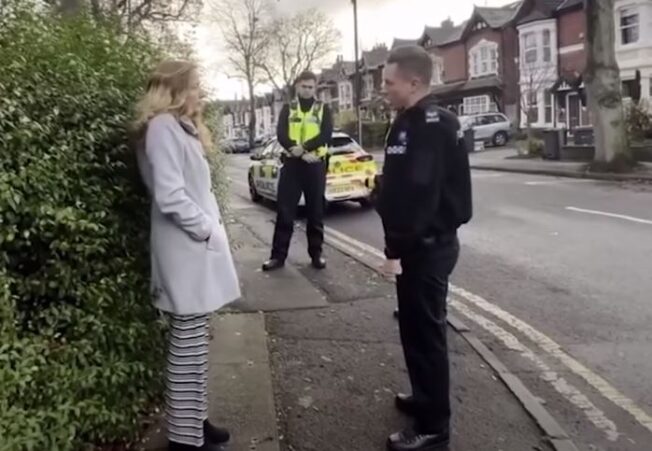
Pro-life activist tells meeting about being arrested praying near abortion clinic


A woman who was arrested while praying in silence outside an abortion clinic in the UK was in Dublin on Saturday for the Rally for Life and told a gathering before the march about her ordeal. Some local councils in Britain have introduced exclusion zones outside centres that provide abortions and the Irish government wants to introduce a similar prohibition here in Ireland, but on a national basis, which would make us an outlier internationally.

Isabel Vaughan-Spruce was arrested and charged in Birmingham on 6th December last year while praying in silence across the road from an abortion clinic.

“I didn’t have any leaflet on me, no poster, or pro-life t-shirt or anything like that. I wasn’t manifesting my prayer in any way. And clearly, the thoughts inside my head, that can’t be prohibited by any law, because that is just my private business”, she told the meeting in Dublin (which was organised by Family Solidarity).

She was accused of breaching a Public Space Protection Order (PSPO) issued by Birmingham City Council that prohibits any act of disapproval of abortion services, by any means, “including prayer or counselling”, in the vicinity of some abortion clinics.

I was asked [by police] if I was protesting, I made it clear I wasn’t protesting, but when I was asked if I was praying, I said I might be silently praying but not aloud, and I was arrested on that basis”, Isabel told the Saturday’s meeting. The video of this shocking incident went viral.

She was locked in a police cell for a few hours, and quizzed about her pro-life activities.

“The police particularly wanted to know what I was thinking about, what I have been praying for, and I stress that because some people say that it had nothing to do with your prayer, why you were arrested. It quite clearly was because this is what the police was quizzing me about when I was in the police station.”

Eventually, she was completely acquitted from all charges in February, together with a priest who was arrested, on a separate occasion, also for praying outside the same abortion clinic.

Two weeks after she was acquitted, Isabel Vaughan-Spruce went to pray in the same spot and was arrested again.

“Since I was completely acquitted, and vindicated of everything, I thought it is ok for me to go and do it right now. This time six police officers came with a van. The police officer told me: ‘your prayers are an offence’. When I said, I didn’t think prayers could be offensive, he just become more emphatic. ‘Your prayers are an offence’. And they took me away in a police van, I was in a cell for a while and eventually was released on bail.”

She has not been charged for this second arrest, but this might still happen.

It is astonishing that simple silent prayer is now illegal in some UK cities if it takes place close to an abortion clinic.

It is uncertain whether this could also happen in Ireland. A Bill approved by the Government only last week will make it a criminal offence to “engage in conduct directed at the public or a section of the public in a manner that is likely to influence the decision of a person in relation to availing of, or providing, termination of pregnancy services”. What does this mean?

The concept of conduct likely to “influence” a decision is so broad and vague that it could include almost anything, and even if it does not include praying silently, then almost certainly it does include praying in an audible way, never mind holding up a banner of some sort.

The introduction of “exclusion zones” around hospitals and GP clinics has been delayed for a number of years in Ireland as it might be unconstitutional and even the Garda Commissioner said that there was no need for such legislation as harassment is already a crime.

An attempt to impose exclusion zones in one part of Germany was recently found to be against the freedom of assembly by a federal court.
Isabel Vaughan-Spruce has been involved in pro-life activism for years. She recalled the hostile reactions she has experienced from time to time. She said: “we were sworn at, spat at, physically abused, we had our property stolen, we’d have cars driving down the street fast speed towards us, swerving off at the last minute, young women were told they’d be followed home, that things would happen to their families. The aggression was terrible. There was even one person who had to do ‘restorative justice’ because we caught on camera the physical abuses he was giving to our volunteers.”
 
At least that person was justifiably found guilty of something. Isabel Vaughan-Spruce has been arrested twice for behaviour that any liberal democracy should permit.