Visualizzazione post con etichetta Nigeria. Mostra tutti i post

mercoledì, luglio 24, 2024

New report highlights extent of anti-Christian persecution worldwide


More than half of the world’s population lives in countries where religious believers experience persecution, according to a new report by Aid to the Church in Need (ACN). Christians are the most persecuted religious group globally.

The ACN report sheds light on the dire situation faced by many religious believers.

The period under review (January 2021 – December 2022) was dominated by Covid-19 and it was “especially catastrophic for a number of religious minorities who were targeted with impunity while international attention was elsewhere”, according to the report editor, Marcela Szymanski.

The report found that in 61 countries, citizens faced severe violations of religious freedom. The two most populous countries in the world, China and India, are among the worst religious freedom violators.

Christians, partly because they are numerous and widespread, are the most persecuted religious group globally. In many countries, they face systematic oppression, violent attacks, and severe restrictions on their religious freedoms. This persecution is driven by various factors, including authoritarian regimes, extremist groups, and socio-political conflicts.

Reported aggressions against Jews also increased in the West in the period under review (2021-22).

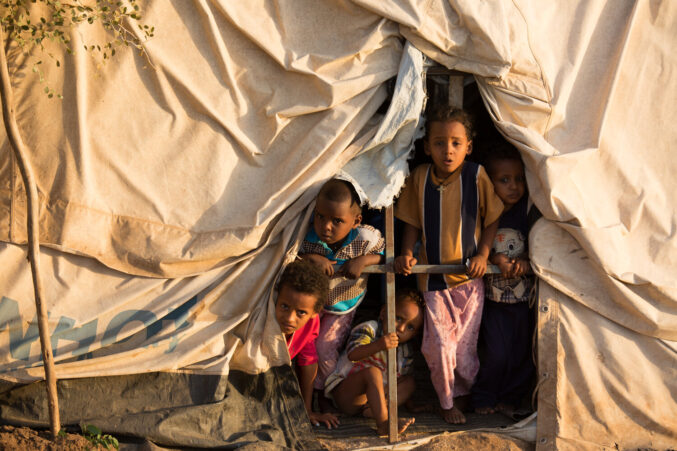
In the Middle East, Christians continue to suffer immensely. Iraq and Syria, once home to vibrant Christian communities, have seen dramatic declines in their Christian populations due to ongoing conflict and targeted attacks by extremist groups like ISIS. Many Christians in these regions are internally displaced or have fled to other countries as refugees.

Africa is another hotspot for anti-Christian violence. In large countries like Nigeria, Christians are frequently targeted by Boko Haram and other Islamist militant groups. The report highlights numerous incidents of churches being attacked, clergy being kidnapped or killed, and Christian communities living in constant fear.

In Asia, Christians face persecution in several countries, including China, India, and Pakistan. In China, the government’s stringent control over religious practices and crackdown on house churches have severely restricted Christians’ ability to worship freely. India has seen a rise in Hindu nationalist violence against Christians, with increasing reports of forced conversions, church demolitions, and physical assaults. In Pakistan, blasphemy laws continue to be a significant threat to Christians, with accusations often leading to mob violence and lengthy imprisonments.

“No Western nation can truthfully claim they do not know about the abuses occurring in the Arabian Peninsula, China, Pakistan and Nigeria,” the report says. “With the West looking the other way, often motivated by the need to guarantee the provision of natural and energy resources, the perpetrators become more assertive and make local legislation more restrictive. In this way, impunity is tacitly granted to perpetrators by the ‘international community’.”

Despite these challenges, the resilience of Christian communities is remarkable. Many continue to practice their faith courageously, even in the face of persecution. One example is Sr Gloria Cecilia Narváez Argoty, a Franciscan sister who wrote the Foreword of the ACN report. Sr Gloria worked specially with women in a Muslim-majority region in southern Mali and was kidnapped for almost five years. In the report, she gives a moving account of her experience.

The report calls for increased international attention and action to protect religious freedoms. It urges governments and international organisations to hold perpetrators accountable and to support initiatives that promote religious tolerance and coexistence.

ACN emphasises the importance of solidarity with persecuted Christians. It encourages advocacy efforts, humanitarian aid, and interfaith dialogue as crucial steps toward alleviating the plight of persecuted religious communities.

venerdì, gennaio 14, 2022

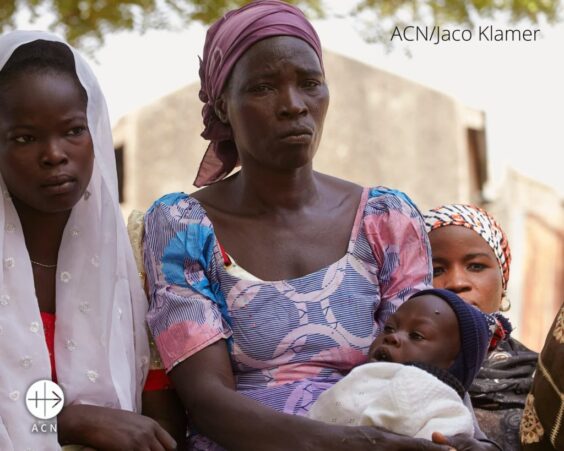
The female victims of anti-Christian persecution

In many countries, Christian women and girls suffer abduction, rape, forced conversion and forced marriage, according to a new report. But social stigma and fear of reprisal from perpetrators keep their stories mostly unheard.

The “Hear her cries: Kidnapping, forced conversion and sexual victimization of Christian women and girls” report addresses the appalling problem of women being targeted for sexual violence because of their religious belief.

The document has been produced by Aid to the Church in Need (ACN), a charity that helps persecuted Christians, and it offers some case studies from Egypt, Iraq, Syria, Mozambique, Nigeria and Pakistan.

In countries where they are already a minority, Christian women are coerced to convert so that their children are claimed for the new faith too. ISIS fighters, for instance, forced pregnancies and conversions to secure the next generation of jihadists in Syria.

In Nigeria, the Boko Haram group uses violence against women to trigger the mass movement of unwanted Christians from some areas of the country.

Research suggests that Christians make up 95pc of females held by Islamist extremists in Nigeria.

Cases involving women persecuted for religious reasons are chronically under-reported for fear of casting shame on the victims and their families, according to the ACN document

Besides social stigma, dread of reprisal from perpetrators is another key factor why those incidents are often kept quiet. Families, chilled by fear of more violence, tend not to speak about their sufferings.

Another reason for low reporting level is institutional resistance. In Pakistan, for instance, the police and the court system are frequently colluding with the perpetrators, according to the report.

One of the cases presented is about Farah Shaheen, a Christian girl who was abducted at the age of 12, forced into marriage and kept in chains as a slave. When her father reported the kidnap, the police refused to listen and to register the incident. Medical experts from the court claimed that the girl was old enough to legally marry, dismissing her birth certificate that showed she was 12 when abducted.

Research indicates that in Pakistan, Christians could comprise up to 70pc of women and girls forcibly converted and married.

“Perpetrators know their chances of punishment are reduced if they confine their attack to minority faith communities”, the report notes.

Institutions reflect the cultural and religious norms of the majority and even in countries with secular legislation, other codes of practice informed by the religious precept of the prevailing faith, trump the official law. The court and the judicial systems are biased against Christians.

“It is very difficult being a Christian girl in our country. So often our girls are abducted and the deprived things they suffer are too awful to imagine. It is so frightening. Who is there to help us?” says of the victims interviewed for the report, who asked to remain anonymous. Their stories need to be heard. We need to hear their cries.

 (The “Hear our cries” report can use downloaded here https://acnuk.org/hear-her-cries-report/ A printed version can be requested to Aid to the Church in Need Ireland Aid to the Church in Need Ireland | ACN Ireland )

martedì, agosto 10, 2021

Violent persecution of Christians continues unabated and underreported


The Covid pandemic has obscured almost all other news, but even before the outbreak one story garnered far less attention than it deserves, namely the violent persecution of Christians in many parts of the world, not least in countries like Nigeria, and increasingly in the Tigray region of Ethiopia where a war is raging.

Over the past 12 year, an estimated 43,000 Christians have been killed in Nigeria, often by Islamist militants, with 3,500 believed to have been murdered since the beginning of this year. Massacres of Christians are taking place also in the Tigray region of Ethiopia.

Aid to the Church in Need catalogues how bad the situation is.

Attack by radical Islamist groups, which usually associated with the North and the ‘Middle Belt’ of Nigeria, are now becoming more common in the South where the majority of the Christian population lives.

Nigeria has an estimated population of 210 million – making it Africa’s most populous country – and almost half of them, about 95 million, are Christians of different denominations, mainly protestant (75pc). The rest of the population is chiefly Muslim.

The United States Department of State has designated Nigeria as a Country of Particular Concern (CPC) for engaging or tolerating “systematic, ongoing, egregious violations of religious freedom,”

An estimated 2,000 Christian schools and 300 churches have been attacked this year, according to the International Society for Civil Liberties and Rule of Law (Intersociety), which is based in Nigeria.

Meanwhile, massacres of Christians are taking place in the Tigray region of Ethiopia, at the border of Eritrea and Sudan.

At the beginning of the year the killing of up to 750 people sheltering in the Orthodox cathedral of Axum was reported.

Ethiopia is one of the most ancient Christian countries in the world and in the 4th century Christianity was declared as the official religion of the Kingdom of Axum, in modern Tigray. The Orthodox cathedral of Axum reputedly houses the Ark of the Covenant.

At present, 90pc of the Tigray population is displaced, after the Ethiopian government has sent federal troops to fight the Tigray People’s Liberation Front, which is accused of holding ‘illegitimate elections’.

Aid to the Church in Need says that young people, particularly Tigrayan women, have been targeted by indiscriminate killing and widespread sexual violence, including the rape of nuns.

“This is clearly genocide against the people of Tigray. This is not just fighting, they are killing everybody – that is a sign of genocide.”, a source told ACN.

The organisation, which has worked in Ethiopia since 1993, has launched an appeal to support victims of the war.