Visualizzazione post con etichetta children. Mostra tutti i post

giovedì, luglio 09, 2026

Another report confirms a rise in unplanned childlessness


In many parts of the world today, people are having few children than they want. A new report from Canada confirms this phenomenon. A report from The Iona Institute last week predicts that one in four members of Gen Z will never have a child. An Amarach poll we commissioned finds that average person still wants two or three children and almost no-one wants none.

The Canadian report is from the pro-family think tank, Cardus.

Canada’s fertility rate has fallen to a historic low of 1.25 children per woman, even lower than Ireland’s rate of 1.5. But this is not simply the result of people freely choosing not to have children. When Canadian women are asked about their ideal family size, they say two children on average. Men desire slightly larger families again, with an ideal family size of 2.13 children. This means the fertility crisis is also a crisis of frustrated hopes.

Similarly, in the UK, a report by the Centre for Social Justice, Baby Bust, says that nine in ten young British women still hope to have children, but that the total childlessness rate could rise as high as 30 pc under current fertility patterns. England’s fertility rate is now below 1.5. Again, the issue is not simply that people no longer want children. It is that many are not achieving the family life they hoped for.

The Canadian report also shows significant differences by religion. Non-religious Canadian women tend to desire 1.55 children, while non-religious men desire 1.83. By contrast, Protestant Christian women desire 2.91 children, and Protestant men 2.96. Catholics and Orthodox Christians are also above the non-religious average, with women desiring 2.16 children and men 2.24. Those belonging to other religious traditions report above-average desired family sizes too: 2.28 children for women and 2.23 for men.

An Iona report from last year called ‘Shall the Religious Inherit Ireland?’ also notes that religious people in Ireland want more children than the non-religious. The figures are three children versus two.

Women with conservative views are also more likely to want larger families. Ethnic background matters as well. Canadians of East Asian ancestry have appreciably lower desired family sizes. By contrast, Canadians of African or Middle Eastern ancestry tend to desire more children than the average, at 2.76 and 2.63 children respectively.

Some of the findings challenge common assumptions. Better educated women tend to want more children, according to the survey. This is important because public debate often assumes that education naturally leads women to reject larger families. The reality is more complex.

The obstacles are also revealing. More than half of Canadian women under 35 who would ideally like a bigger family report some kind of financial barrier, but money is not the only issue. Men are more likely than women to identify financial worries, while women report a wider range of concerns connected with childcare, support, and the practical burden of raising children.

This points to a broader lesson. If countries such as Canada, Ireland and Britain want to address falling fertility, they must begin by taking seriously what people themselves say they want and why their desires to have a larger family are not fulfilled.


venerdì, giugno 27, 2025

People want to have ever fewer children


The number of children that young couples are planning to have has plunged in the last 10 years in the US, according to new research. The decline is particularly evident among young women. This will worsen the coming demographic crisis.

A Pew Research Center survey finds that adults aged 20 to 39 now expect to have an average of just 1.8 children, considerably below the replacement level of 2.1. In 2013, that figure was 2.3. In truth, given current fertility and marriage trends, the figure will probably end up lower than 1.8.

The decline is most pronounced among women aged 20 to 24. In contrast, there has been little to no change in the number of planned children among women over 35, but then they are approaching the age of completed fertility. Among men, the drop has been more consistent across all age groups. It is not just women who want fewer children.

Education is one influence to influence the desired number of children, but only among women. Women with a college degree plan to have fewer children on average (1.7) than those without a degree (2.2). Among men, education level makes no significant difference.

Another big trend is the shrinking share of young adults who want children at all. In 2012, 93pc of US women aged 20 to 24 had or expected to have at least one child. By 2023, that number had dropped to 66pc. That is a huge drop in a short time. Across all age groups in 2023, 76pc of men and 77pc of women reported having or planning to have at least one child, down from about nine in ten in 2012.

This downward trend has serious demographic implications. Historically, couples tend to have fewer children than they intend. If today’s intended number is already below replacement level, actual fertility will fall even further, accelerating population decline.

A similar trend can be noticed in Ireland. A recent survey by the Irish Examiner found that, when asked if they would like to start a family, 20pc of Irish women interviewed said “definitely not” and 16pc said “unlikely.” Only 51pc expressed a desire to have children.

Financial strain and fertility challenges are significant factors: 21pc reported fertility issues (a feature of leaving it so late to try and have children), while 35pc said they are not in a financial position to raise a child.

Moreover, according to the poll, half of mothers in Ireland would not want a second child.

Unfortunately, the Irish Examiner survey did not explore all the other reasons for the decision not to have children.

Another Pew Research Center survey, for instance, found that lifestyle choice is a predominant factor, especially among adults aged 18 to 49. Over half (57pc) of childless adults under 50 say they simply do not want to have kids. This figure is notably higher than among older adults (ages 50 and above), where only 31pc cite the same reason. This suggests a generational shift toward valuing personal autonomy and lifestyle preferences over traditional expectations of parenthood.

Across both the U.S. and Ireland, young adults are increasingly choosing smaller families, or none at all. While financial and fertility concerns play a role, many are also making a deliberate lifestyle decision to give up parenthood altogether. With intended family sizes already below replacement levels, and actual fertility often lower than plans, these patterns point to a long-term demographic transformation that extends beyond economics, reflecting evolving values, priorities, and definitions of a fulfilling life.

lunedì, gennaio 13, 2025

Demands of employers can’t dictate childcare policy


new survey from the Dublin Chamber of Commerce (DCC) finds that a lack of affordable childcare affects employers’ ability to attract new employees. Aebhric Mc Gibney of DCC was interviewed on Morning Ireland about the survey, and as usual no consideration was given to all the parents of young children, especially mothers, who would prefer to mind their children at home rather than put them in daycare. It is like the referendums of last March never happened.

The latest ‘Business Outlook Survey’ by the DCC found that childcare challenges impact almost nine-in-ten (88pc) businesses to some degree.

Childcare availability and costs affect workforce participation and productivity, as employees struggle to balance work commitments with parental responsibilities, says the DCC.

The DCC has asked the next Government to prioritise a public model of childcare. “Moving to a public model will be critical for ensuring a steady supply of affordable, quality childcare and building a more sustainable and diverse labour market,” said Mia Finnegan, Public Affairs Executive at Dublin Chamber.

Nonetheless, while employers’ concerns about childcare availability and costs are valid in their own narrow way, they should not be the sole determinant in shaping childcare policies.

survey commissioned by The Iona Institute last year, and conducted by Amarach Research, revealed that more than two-thirds (69pc) of mothers with children under 18 would prefer to stay at home with their children if financial circumstances allowed. Furthermore, 76pc of these mothers feel that women who work in the home are undervalued by society. These findings suggest a strong inclination among mothers towards full-time caregiving, provided economic conditions are favourable.

We can’t expect employers to care too much about this very large group. They want everyone out working, after all, because that helps their businesses. But it can’t be the only consideration for Government policy in this area.

According to the DCC survey, companies are trying to accommodate the needs of employees who are also parents in various ways. For example, 74pc offer remote work options and/or providing flexible working hours (70pc) arrangements.

Over a third (36pc) allow part-time work or reduced hours for parents with childcare needs, while 31pc offer paid parental leave or additional leave options.

While businesses may advocate for enhanced public daycare services to support working parents, it is also crucial to acknowledge and respect the desires of many mothers and fathers to prioritise home-based caregiving. Part-time work, reduced hours and additional leaves would allow those who want to continue to be employed to balance their work and parental responsibilities.

A public model of childcare would not suit every family. Childcare policies should strive to accommodate the diverse needs and preferences of parents, and to repeat, the demands of employers cannot be the decisive factor in the debate about childcare. A comprehensive strategy that considers the preferences and needs of parents, particularly mothers, is essential for creating a supportive environment for all families.

sabato, luglio 20, 2024

Future Ireland: few children, lots of retirees

Ireland’s population is getting older fast as fertility rates fall rapidly, with serious social consequences. The latest projections from the Central Statistics Office (CSO) highlight dramatic demographic transformations ahead.

These projections, covering the period from 2023 to 2057, provide insights into population growth, ageing trends, fertility rates, and migration patterns. They are based on three possible scenarios, depending on different proportions of immigration.

The most striking trend highlighted by the CSO data is the ageing population. The proportion of people aged 65 and over is set to rise hugely. In 2023, it represented 15pc of the overall population. By 2057, this age group is expected to constitute between 27.8 and 31.6 percent of the total, depending on the scenario used. This demographic shift is due to increased life expectancy, which is obviously something positive, and declining birth rates, which instead have serious negative social consequences.

To understand the significance of an ageing population, we need to consider the so-called “older dependency ratio.” This is a measure that compares the number of people aged 65 and over (typically retired) to the number of working-age people (aged 15-64). It indicates how many retirees there are for every 100 working-age individuals. A higher ratio means more retirees relying on fewer working individuals, which can impact economic and social systems.

According to the Central Statistics Office, Ireland’s older dependency ratio is rising dramatically. In 2022, there were approximately 23 retirees for every 100 working-age individuals. By 2057, this number is expected to increase significantly, with projections indicating that there will be about 56 retirees for every 100 working-age people in the worst-case scenario. Even in the best-case scenario, the prediction is still worrying, as there will be 47 pensioners per 100 individuals of working age.

With more people over 65 and fewer workers, there will be growing pressure on public finances. Pensions and healthcare costs are likely to rise, necessitating higher taxes or reallocation of resources. An ageing population will require more healthcare services, long-term care, and support systems, straining existing healthcare infrastructure.

Even the highest level of immigration projected by the CSO would not be sufficient to invert this worrying trend. Ireland’s problem is due to low fertility rates, which have been on a declining trajectory for too long. By 2047, in all possible scenarios envisaged by the CSO expert group, there will be more deaths than births in Ireland.

The Total Fertility Rate is projected to decrease from 1.55 in 2023 to 1.3 by 2038, stabilising at this lower level thereafter. Ideally, it should be above 2 to ensure a balance between births and deaths.

This decline reflects broader European trends. In Ireland, the average age of first-time mothers has increased to 31.7 years in 2021, up from 26 years in 1985. Not only are couples having children at a later age and having fewer children, but the number of women of childbearing age is also falling and it will continue inevitably in that direction, according to the CSO figures.

The projections presented this week by the CSO are extremely worrying but, significantly, there has been no reaction in the political arena. It is no surprise then that we have reached a point of no return.

lunedì, febbraio 05, 2024

A new report exposes the dubious claims made about daycare


If all mothers are out working, which is what the Government seems to want, and most young children are in daycare, shouldn’t we closely examine the benefits of this aim from the point of view of mothers, children and society? The question is particularly relevant in light of the carers’ referendum on March 8th.

Many claims are made by politicians and others about the benefits of putting young children into daycare. A big one is that it creates a more equal society by closing achievement gaps among children from different socio-economic backgrounds. However, a new study by the think tank Civitas challenges this and other claims made about daycare.

The report, called ‘Universal childcare: is it good for children?’, is based on a big review of international research about the supposed benefits of daycare and one conclusion it arrives at is that the evidence does not strongly support the claim that it leads to a more equal society by improving the academic performance of less advantaged children.

While high-quality childcare can benefit older children (above three years) from disadvantaged backgrounds in the short term, it is unclear if these benefits last into adulthood or lead to better job prospects and earnings. There is little research showing a link between daycare and life-long benefits.

Any money spent by the State must be justified. The State is pouring lots of money into subsidising daycare. The burden of proof is on the State to demonstrate the benefits of this. That evidence seems to be much weaker than most people suspect.

To cut a long story short, other influences on a child are far stronger than time spent in daycare, unless the child is from a very poor and dysfunctional family in which case target subsidised daycare at this group rather than providing universal subsidies.

The Civitas report says: “The research consistently finds that family characteristics, parenting and the home learning environment have a more significant influence on children’s development than childcare. These factors are also more important than family income. The quality of care a child receives in the home can be high or low, independent of the family’s socio-economic status. Formal childcare only offers development benefits for children if it replaces lower quality care. If a parent is able and willing to provide high quality care in the home, then long hours in formal childcare may be detrimental rather than beneficial for the child’s development”.

The reports also says that the effect of subsidised daycare on maternal employment is mixed and modest at best. Advocates says it increases employment rates among mothers, but even if this is a desirable outcome (it is only desirable if it is what mothers want), there is little evidence State-subsidised daycare has much effect on maternal employment rates either way.

Subsidised childcare may help mothers who avail of it financially, but it doesn’t necessarily empower all women, as it assumes all women prefer to work rather than care for their children at home. This overlooks the value many women place on raising their children themselves. This is a very relevant point in the context of the carers’ referendum.

The push to make it normal for children to be cared for by someone other than their mothers is based on a few assumptions: that moving childcare from homes won’t hurt children, parents, or society; that it’s more important for a mother to be involved in work than with her children and family; and that having a job is empowering and rewarding for women, while taking care of the home and children is not seen as valuable.

The report notes that “while these beliefs are influential in academic and political circles, evidence suggests that they are not representative of the values and beliefs of the general population.”

survey commissioned by the Iona Institute a few years ago found that only 17pc of respondents preferred to use day-care for their children under the age of five, while 49pc of respondents preferred to mind their offspring at home and a 27pc preferred a family member to do so.

The report by Civitas concludes that universal childcare has not shown the big benefits claimed by its advocates. The quality of daycare provided is critical, but it is hard to ensure that it surpasses the care provided by a loving family at home.

This being so, why is the Government so determined to have as many mothers as possible in the workplace and to end the Constitution’s commitment to try and protect mothers from being forced out of the home due to economic necessity?


Image by Esi Grünhagen from Pixabay

venerdì, agosto 19, 2022

Liberals still ignore the fact that family structure matters


In England in 2021, for the first time a majority of births took place outside marriage. In Ireland, the figure is now above 40pc.

Covid-19 might have contributed to those figures, as many couples have delayed their plans to marry during the pandemic while they continued to have children, but the trend is clear: the percentage of births outside of marriage has grown constantly since the 1970s. It was 11.8 in 1980, 28.3 in 1990 and 39.5 in 2000.

In Ireland, last year 41.4pc of all births were registered outside marriage. A substantial increase when compared to the year 2000 (31.5pc) or 1990 (14.6pc).

Some might say that this is a purely private matter, but it’s not true, because family structure is important and the evidence remains that children tend to fare best when raised by their own two, married parents.

According to new figures from the Office for National Statistics, in 2021, 51.3pc of births were to unmarried parents compared to 49pc in the previous year.

Covid-19 might have contributed to those figures, as many couples have delayed their plans to marry during the pandemic while they continued to have children, but the trend is clear: the percentage of births outside of marriage has grown constantly since the 1970s. It was 11.8 in 1980, 28.3 in 1990 and 39.5 in 2000.

In Ireland, last year 41.4pc of all births were registered outside marriage. A substantial increase when compared to the year 2000 (31.5pc) or 1990 (14.6pc).

Marriage is a social institution, with a specific role, and the family structure children are born in and raised should be everyone’s concern.

The main social purpose of marriage is to give children a mother and a father who are publicly committed to their family. Marriage is a child-centred institution and study after study show that children do best when they are raised by their married parents.

Marriage adds stability to the family, compared with cohabitation, and therefore it is good from the point of view of children welfare.

This much is borne out again by a recent study from the British-based Centre for Social Justice (CSJ)  called ‘Family Structure Still Matters’.

It refers to the British Millennium Cohort Study (MCS), which followed the lives of 19,000 young people in the UK. The study shows that children born to cohabiting parents were far less likely to be living with both their parents by the time they were 5 years old, compared with children born to married parents.

This has an effect on children. As the CSJ reports says: “Children of married parents displayed the lowest rates of cognitive delay; the highest rates were found in children of stepfamilies. MCS children who had experienced family structure change had lower cognitive assessment indicators and higher behaviour problems at age 5, compared to those who had not”.

It continues: “Children model behaviours they observe, and challenging conduct may correlate with experiencing disrupted attachment and regular conflict in the home.  …. Compared to children living with married parents, children who lived in other family types, including other stable families, were more likely to display externalising behavioural problems at age 5, even after adjustment for a range of socio-economic, demographic and health factors. Income, a common explanation for this difference, interestingly bore no correlation with behaviours.”

The issue of family structure is now completely neglected by liberals despite the evidence that it matters. Children born outside of marriage tend to perpetuate the family structure they have experienced themselves, and this has long-term consequence on society.

“Parents are children’s first role models. Their relationship is the template children will copy. Boys who grew up with a single parent or who experience multiple transitions have a substantially higher likelihood of becoming fathers early, are less likely to marry and are particularly likely to become non-resident fathers.”, says the Centre for Social Justice.

Liberals don’t want to confront the consequences of their overemphasis on adult autonomy despite the detrimental consequences this can have for children, but the growing number of children born outside marriage should be everyone’s concern. They prefer to ignore this inconvenient fact instead.


giovedì, maggio 14, 2020

venerdì, novembre 08, 2019

Mary McAleese’s deeply flawed view of baptism and child autonomy


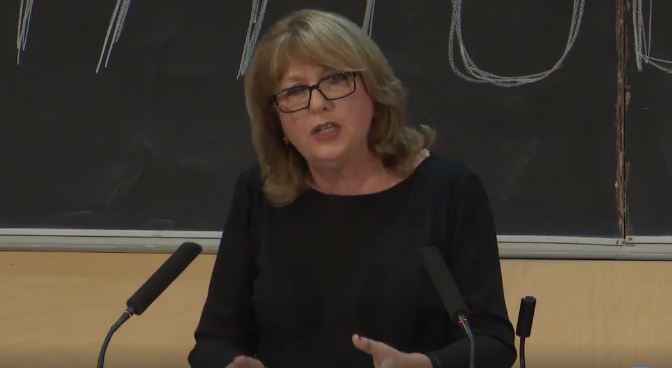
Former President and newly elected Chancellor of Trinity College Dublin, Mary McAleese, has trained her sights once again on infant baptism and the consequent rights and obligations of Christian parents to raise their baptised children as Christians. She did so while delivering the annual Edmund Burke lecture in Trinity the other night.

Dr McAleese advances a model of child autonomy that would curtail these rights and obligations and ‘free’ the child at an earlier age to accept or reject the religion of their family.

Crucially, what she doesn’t make clear is at what age a child should gain this right, and what should happen if the parents don’t accede to their child’s demands. Should the State intervene when the child is say 14, and no longer wants to attend religious service? If that is so, then she wants to make the State very powerful indeed. This would have Edmund Burke turning in his grave as he was hugely critical of the way the French Revolution made the State all-powerful in its drive to enforce its vision of society.

In her talk, Dr McAleese drew heavily on the UN Convention on the Rights of the Child (CRC). She said that parents in the past “had the right to baptise, raise and educate their children according to their own faith, convictions and rituals but now [under the CRC] they had an obligation to do so in a manner which respected and facilitated the child’s right to form its own independent and different views when capable of doing so … for their children are and must be free to choose for themselves when capable of doing so.”

She said that the Catholic Church (for some bizarre reasons she calls it the Latin Catholic Church) is refusing to undertake a review of its canon law and to be in full compliance with the CRC.

Dr McAleese claimed that she has no problem with infant baptism per se but she has issues with its consequences under Church (canon) law. Some of those consequences, she asserts, “are not consistent with the child’s right to freedom of conscience, thought and religion including the right to change religion. These rights are understood today differently and that changed understanding has yet to be reflected in canon law.” Unfortunately, she does elaborate on this last point so we don’t really know how canon law should be made more ‘respectful’ of children’s rights.

She focuses on the fact that canon law includes “the imposition of lifelong membership which can never be rescinded”. She compared baptism to a contract, saying that onerous contractual obligations might be rendered to be voidable by the child when he has the maturity to do so, with full knowledge and consent, while the Church offers no such option to adults or to children.
But we all know people who have left the Church, even at a young age, embracing another faith or no faith at all. They didn’t breach any contract and they have no obligations towards their former Church. This happens every day with no legal consequences of any sort.

Dr McAleese correctly states that canon law has a complex system of tribunals, trials, penalties and, in theory, even children between the age of 16 and 18 can be imposed some form of mitigated penalties. But, seriously, how many children does she know in Ireland that have been tried and found guilty of schism, heresy or apostasy?

Canonical trials generally only take place when the person has a specific public role in the Church. For instance, if someone is a priest, or lectures in theology, and publicly repudiates the Catholic faith.

It is not clear if McAleese is expecting canon law to facilitate the process of apostasy for children, maybe through some formal recognition, which would be an absurd demand. But, in any case, the Church has no means to stop someone from leaving and it would be against its teaching to force anyone not to follow their conscience.

Mary McAleese's attack is problematic in many respects. Firstly, one wonders if this constant criticism of the religious beliefs of a large part of the Irish population fits appropriately with the dignity and the responsibility of a former president of Ireland.

Moreover, her attack to Catholics can be easily extended to other religious faiths, as all of them educate their children according to beliefs of the parents. Is teaching the Koran and expecting young believers to follow the tenets of Islam a breach of the human rights of young Muslims?

Unless she is targeting only Catholics, what she writes about baptism and catechesis is true also for any other form of cultural initiation and education of children, including non-religious education.

Nonetheless, she presses on and states: “When canon law says an infant can be held to the fiction of [baptismal] promises it did not make and never had an opportunity to evaluate, validate or repudiate when capable of doing so, human rights law says ‘no’ it cannot. The current extensive catechesis of obligation whether at home or school or church is problematic as a result”.

Children do not choose to be baptised, of course, but what else do they choose at the beginning of their lives? Nothing significant. Later, as they become more mature, it is the role of their parents to make them more responsible and to involve them in decisions.

Claiming that canon law is ‘imposed’ on them is not different from saying that language, or citizenship, or legislation, or any other expression of a particular culture, are inevitably ‘imposed’ on them because of the choices made by their parents or their community. One day they will be able to reject or accept those choices but how this is a breach of human rights it is a mystery, and it is even more mysterious what Mary McAleese proposes as an alternative, other than giving the State far more powerful to interfere in the lives of religious families and communities.

giovedì, novembre 22, 2018

Further evidence the Government overestimate day-care demand


The Government is funnelling significant funding to creche facilities, with the hope that more mothers will enter the workforce. The policy ignores the fact that many parents don’t want to put their children into day-care and it also ignores a new study which shows that subsidising day-care might not have much impact on parental choices.
Career breaks have consequences on future employment and earnings so, what households are likely to be responsive to a change in childcare prices? A new study by Dr Helene Turon, a reader in Economics at the University of Bristol, shows that additional resources in childcare does not lead more women to work outside the house as there are many other motivations, besides cost, behind their choices. One of those motivations will be to stay at home with their children in the early years. In other words, they don’t want to go into paid work so why should cheap day-care induce them to?
The study relies on data coming from the British Households Panel Survey and covers the period 1991-2008.
The study concluded that “the only households who are really likely to be responsive to a change in childcare prices are those for whom the net cost/benefit of supplying labour is close to zero.” This means cases where a parent going out into low-paid work won’t make much difference to household income unless day-care is very affordable.
“All others will value their current choice much more than the alternatives and will not react to a change in the childcare policy”. That is, those who don’t wish to put children into day-care.
Dr Turon presented her research to the Economic and Social Research Institute (ESRI) claiming that other factors, rather than childcare prices, would encourage more mothers to go back to work. Such factors could be less peer pressure from other parents to avoid day-care, or the perception of an improvement of the quality of childcare. “We get a sense that many households are in fact very far from changing their mind and no amount of childcare policy is going to change their decision”, she said.
It this is the case, the government choice to subsidise childcare at the expense of other options is not only unjust but also inefficient, as it will not achieve what it aims at.
Repeated surveys have confirmed that only a minority of parents wish to put their children into daycare. An Amarach poll commissioned by the Iona Institute found that only 17% of parents with children under five pick day-care as their preferred option.
(A submission by The Iona Institute to the Joint Oireachtas Committee on Children concerning day-care can be found here.)