lunedì, novembre 28, 2022

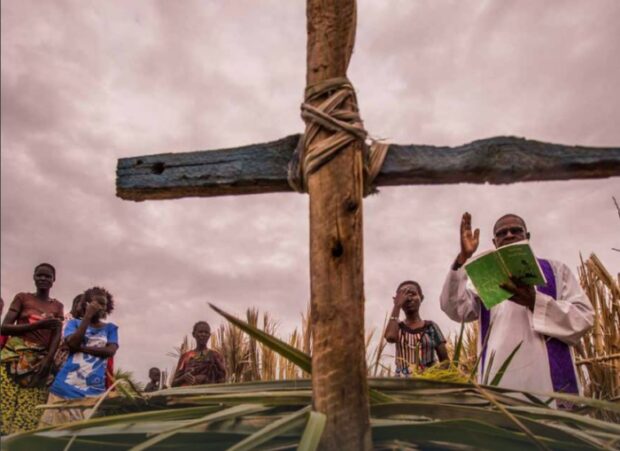
New report highlights worsening persecution of Christians


Numerically speaking, Christians are the most persecuted religious group in the world and a new report by Aid to the Church in Need (ACN), says things are getting worse.

The document, titled “Persecuted and Forgotten? A Report on Christians oppressed for their Faith 2020–22”, was presented last week on Red Wednesday, the annual day when ACN raises awareness of the plight of persecuted Christians.

The persecution comes in two forms. One is inflicted by Governments, and another is by local communities or organisations. Attacks vary from legal, to physical, to outright murder.

In almost all of the countries surveyed, levels of oppression have increased in the two years since the last report. Part of the problem, according to the ACN document, is a “cultural misperception in the West that continues to deny that Christians remain the most widely persecuted faith group.” Religious discrimination, which is widespread in many countries, is generally ignored.

For instance, Qatar is currently hosting the football World Cup and we have heard much criticism of their lack respect for women or minorities. But almost nothing is heard about the lack of religious freedom in that country.

The ACN report says: “Despite improvements, including removing some anti-Christian references in school text-books, there has been a sharp rise in reports of intolerance.”

Turning to Saudi Arabia, another country that has strong business connections with the Western world, it says, there are “ongoing bans on Christian places of worship and public display of crosses, Bibles, etc.”

Nigeria, the largest country in Africa, “teeters on the brink of becoming a failed state, with kidnappings, priests killed and deadly attacks on churches becoming increasingly regular”, says the report. This is due particularly to the presence of Jihadism in the region. Between January 2021 and June 2022, more than 7,600 Christians were killed in Nigeria.

If in Africa, oppression comes mostly from militant groups, often inspired by the jihadist ideology, in Asia it is often the State that restrains the freedom of Christians.

“In varying degrees, from tightening constraints in Vietnam to an almost total ban in North Korea, State authoritarianism restricts – or even strangulates – believers’ ability to worship freely in Asia”, the report comments.

Cardinal Zen’s arrest in Hong Kong is presented as a significant case. He was involved in an organisation that helps pro-democracy protesters. For this, the Cardinal has been unjustly accused of ‘colluding’ with foreign forces and threatening China’s national security. “In China and North Korea, totalitarian governments crush the faithful underfoot, monitoring their every move”, the document notes.

Christians are harassed in more countries that any other faith group. In the period covered by the report, October 2020 – September 2022, the situation has worsened in the 24 countries under scrutiny.

In the Middle East, the situation in territories that were under Daesh (ISIS) occupation has not improved since they were liberated. Iran is the only one of the seven Middle East countries reviewed that has seen some improvement.

ACN is active in Iraq with a comprehensive post-Daesh stabilisation programme that involves the rebuilding of Christian towns and villages, homes, schools, churches and other public facilities.

This is only one example of the many activities promoted by Aid to the Church in Need in support of Christians. They are present in 140 countries, particularly where believers are persecuted or oppressed. The Irish branch of ACN can be accessed here: https://www.acnireland.org

giovedì, novembre 24, 2022

An Ireland without Down Syndrome


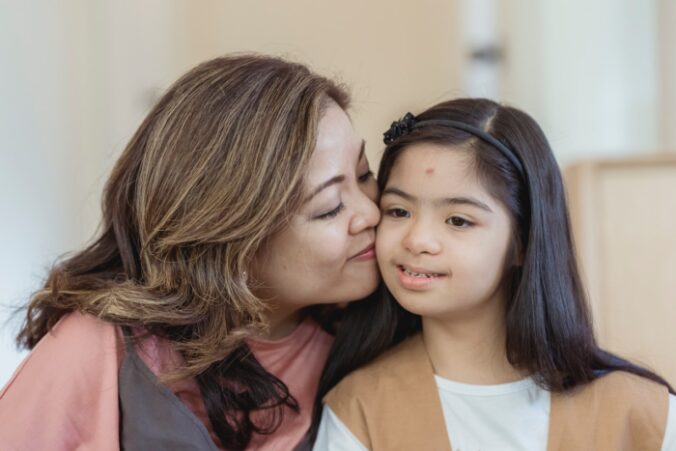
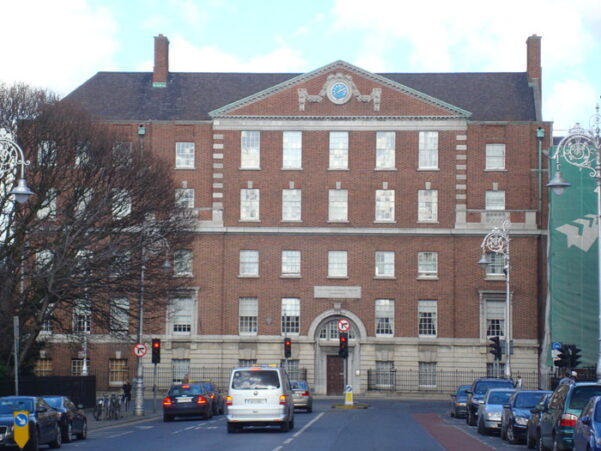
The Master of the Rotunda, Professor Fergal Malone, has revealed that up to 95pc of parents who are informed by the hospital that their unborn babies have Down Syndrome (DS) opt for abortion. This is a horrifying figure that appears to have soared since the abortion referendum even though the terminations in these instances are performed mostly in England.

What is happening is, of course, a modern-day version of eugenics. We are creating an Ireland without Down Syndrome and it is provoking almost no debate or reaction.

Professor Malone mentioned the figure of 95pc to the Irish Independent last week, but in the run-up to the 2018 referendum, he told RTE’s Liveline that the figure was 56pc. This is a massive increase in a short period.

Rather than being shocked at what is happening, pro-choice activists want the abortion law changed so that unborn babies with non-fatal abnormalities can be aborted for that reason specifically.

These figures refer to the Rotunda, one of the biggest maternity hospitals in the country, where Malone is the Master, but there are no reasons to suppose rates being substantially different in other hospitals. We don’t know for sure if a similar percentage of parents from other maternity hospitals abort these babies, but it would not be at all surprising if it was also very high. The latest figure for England is 88pc.

In 2018, Dr Rhona Mahony, who was then Master of the National Maternity Hospital on Holles Street, was asked whether there would be an increase in abortions of babies with Down Syndrome if the 8th amendment was repealed. She didn’t give a clear answer, but she said that in her hospital at the time about half of the women told their unborn baby had DS opted to go to England for a termination.

When, during the campaign to save the 8th amendment, the pro-life side highlighted the fact that in countries with liberal abortion laws a very high percentage of babies with DS are aborted, we were accused of using these children for political purposes.

Prominent pro-repeal advocates were in denial.

Simon Harris, who was then the Minister for Health, said: “I do not believe women in this country adopt that approach when they have a diagnosis of a child with a disability. … I think it is somewhat offensive to suggest women in Ireland are seeking abortions for that reason.”

Irish Times columnist, Fintan O’Toole, wrote: “It is not true that the increase in screening has wiped out the births of DS children. … Admittedly access to screening in Ireland is problematic, but even so the numbers of Irish women taking this option is strikingly small.”

He was wrong then, as I explained in this blog, and even more nowadays, as the figures from prof. Malone prove.

What has increased since the referendum is not only the percentage of DS diagnoses ending in terminations but obviously their absolute number as well. This is driven in part by the fact that it has become easier to detect chromosomal or genetic anomalies through earlier prenatal testing.

In the UK, the number of babies born with Down Syndrome has fallen by 30pc in NHS hospitals that have introduced early screening.

Prenatal tests are becoming more common and affordable. Their number in Holles Street maternity hospital went from 1,005 in 2012 to 2,515 in 2021.

Irish women still go to England when they want to abort a baby with a non-fatal abnormality, unless it detected before 12 weeks, when abortions can take place for any reason.

We don’t have absolute figures of abortions for non-fatal disabilities in Ireland, but Irish women generally go abroad because this kind of termination is permitted here only before the 12-week limit and most of diagnoses of foetal abnormality happen afterwards.

In 2021, 59 Irish babies with Down Syndrome were aborted in England, 24 more than the year before (35). This number continues to grow, as predicted by the prolife activists who were accused of scaremongering. The figures were 27 in 2019 and 17 in 2018.

Would Down Syndrome Ireland and other similar organisations have anything to say?

The current law in Ireland allows abortions at any gestational age when the baby has a condition that could cause its death within 28 days from birth, or earlier. Before 12 weeks, abortion is allowed for any reason.

Dr Aoife Mullally, who leads the HSE’s abortion services, wants a relaxation of the law and allow abortion for not life-threatening disabilities after 12 weeks. This is eugenics for disabled babies. It is not clear if she would accept any time limits.

Prof. Malone supports such relaxation but acknowledges that this can only happen by legislating for abortion on grounds of disability. He believes that if this was proposed before the 2018 referendum, as per the recommendation of the Citizens’ Assembly, the vote in favour of repeal would not have been so high.

Liberals will always ask for more relaxations. For them, abortion for disabilities is not a taboo anymore. They might not like the word, but this is pure eugenics, the selection of the fittest. 

venerdì, novembre 18, 2022

How Covid curbs on church-going harmed public health


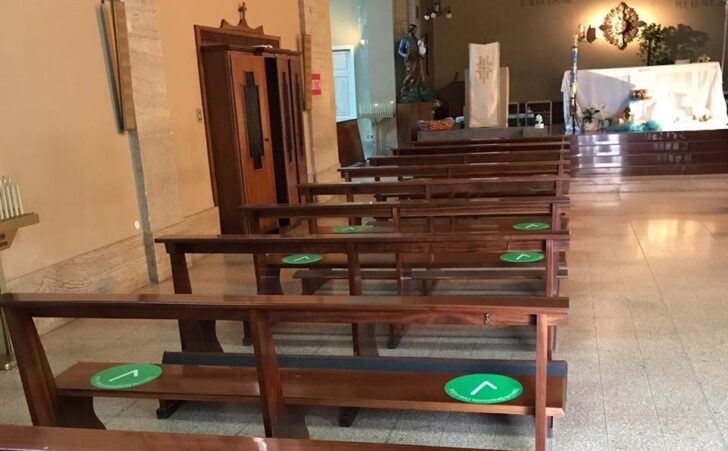
During the Covid-19 pandemic, people were barred in many countries from attending religious worship for long periods, and nowhere more so than in Ireland. When they were not barred, severe restrictions were put on the numbers who could attend. But strictly from a public health perspective, was it worth it? An important new study suggest it was not, and the restrictions may have done more public health harm than good.

The research, just published in the European Economic Review is based on a nationally representative sample of over 100,000 responses from 52,459 individuals in the United States. It was carried out during the period from March 2020 to May 2021, when most American States limited the number who could attend a house of worship.

A crucial finding of the study is that the severe restrictions on religious worship do not seem to have slowed the spread of the virus.

It says: “there is no statistically or economically significant association between restrictions on houses of worship and either COVID-19 infections or deaths regardless of how restrictions are measured”. (p. 12)

The article concludes that “there is almost no evidence that the restrictions had a positive effect on public health, consistent with a growing body of evidence that has evaluated the launch of State quarantine policies.” (p. 12)

But the restrictions or ban on public worship did harm the mental health of some worshippers.

The author focuses on two variables: current life satisfaction and self-isolation.

The study confirmed that religious people have higher level of current life satisfaction overall, compared to the rest of the population. This is partly achieved by being part of a religious community. Therefore, it is no surprise that is also found a “strong negative association between state restrictions and current life satisfaction, particularly for religious adherents.” (p. 6).

If one of the main sources of their wellbeing was removed, how could it be otherwise?

The author notes that going to a church, or attending any other religious venue, offers people the opportunity to forge relationships and grow stronger in their faith. The survey established that the restrictions had “a disproportionate impact on self-isolation among religious adherents.” (p. 7)

Self-isolation among religious people increased by more than among their non-religious counterparts. This is one of the reasons why their well-being suffered more as a result of the pandemic.

The decline in well-being was stronger in Catholic than in Protestant congregations, and non-existent among Mormons, who are concentrated in Utah where no significant restrictions were put into place.

The main result of the study is that “religious adherents experienced systematically lower levels of well-being and isolation following the adoption of such restrictions.” (p. 11)

The study focuses on the United States only. It would be interesting to see such research extended to other countries, particularly to Ireland that had the longest period of worship restrictions in Europe.

venerdì, novembre 11, 2022

Extreme pro-abortion measures passed in three US states

The US midterm elections took place on Tuesday. What has attracted little attention on this side of the Atlantic is the fact that voters in three US states backed extreme, pro-choice amendments to their constitutions. Pro-life proposals went before two other states, and they were rejected. Perhaps part of the reason is that the Democrats spent half a billion dollars on pro-abortion ads, a truly stunning amount.

The US Supreme Court overturned Roe vs Wade last summer in a ruling called Dobbs vs Jackson. The Roe vs Wade ruling in 1973 imposed a liberal abortion-law nationwide. The Dobbs decision handed the power to decide abortion laws back to the individual states, through legislation, court rulings, or ballots initiatives.

The Democrats are now pushing for laws which go even further than Roe vs Wade. 

In California they put a constitutional amendment before voters that allows abortion up to birth, without exceptions, even for minors. Sixty-five percent voted in favour. The current law already allowed abortion for any reason before viability but now access to terminations is explicitly protected in the state constitution.

Seventy-seven percent of voters in Vermont approved a constitutional change that recognises a “right to personal reproductive autonomy”. Among other things, this will exclude parental involvement when minors seek an abortion.

While the results in ultra-liberal California and Vermont were not surprising, the vote in more middle-of-the-road Michigan was a particular disappointment for the pro-life side.

Fifty-seven percent of Michigan voters opted to recognise an unlimited right to abortion, including for minors. The amendment has wide consequences, such as repealing the state’s ban on tax-funded abortions and removing parental consent not only for abortion but also for contraception and sterilisation. This radical change goes beyond the Roe v Wade abortion rights regime.

Kentucky rejected by a small margin (52pc vs 48pc) a pro-life amendment that would have declared: “nothing in this Constitution shall be construed to secure or protect a right to abortion or require the funding of abortion.”

The consequences of this vote are not as radical as the referendums in California or Michigan, because there is still no positive right to abortion in the Kentucky constitution and its regulation is a matter for the state General Assembly. The current law is quite restrictive as it allows abortion only when necessary to prevent possible death or risk or permanent injury to the mother. If passed, the amendment would have put an end to legal challenges to overturn the law in courts.

Montana rejected a law requiring health care providers to make reasonable efforts to save the life of a baby born alive after an abortion. A total of 52.6pc voted against the proposal. Unlike the other ballot initiatives, this law did not set limits to abortion and, in theory, could have been supported even by people with pro-choice views. Still, it was rejected.

AdImpact, an ad-tracking firm, has estimated that the Democrats have spent nearly half a billion dollars on ads mentioning abortion. Adimpact also found that abortion was mentioned in 654 ads of 3,295 total commercials run in races for governor, Senate and House. Inflation was mentioned in 575 of those total ads.

Not everything went badly on Tuesday from a pro-life point of view. In spite of the gigantic sums spent, abortion activists did poorly at state level.

In states that have enforced abortion limits since Roe vs Wade was overturned, no pro-choice governor or attorney general was elected.

Pro-life Governors were re-elected in four states with early gestational prohibitions (Georgia, Iowa, Ohio and Tennessee).

Governors that have signed moderately pro-life laws have been re-elected with significant margins also in Florida and Texas, where they were running against well-funded candidates.

In Nebraska, the pro-life side now has a strong majority in the state legislature, and they can easily pass legislation to protect unborn children.

In Ohio, pro-lifers have won three Supreme Court seats, giving them a majority in the court which bodes well for pro-life laws there.

mercoledì, novembre 09, 2022

Sagesse greche et paradoxe chretien

 «Il cristianesimo si è unito con l’ellenismo, con una, cioè, delle forme più perfette di umanesimo, in un indissolubile vincolo. All’ellenismo esso deve, in gran parte, il suo trionfo nel mondo antico. È impossibile capire taluni aspetti del dogma senza ricorrere ai concetti greco-romani, che hanno contribuito ad elaborarli. Questa unione del mondo cristiano e del mondo antico ha salvato la civiltà durante il Medio-Evo. Il cristianesimo non ha soppresso ciò che l’umanità aveva creato di più grande prima di esso, bensì l’ha battezzato. In esso, i valori umani prima vengono convertiti, poi coronati: stanno a segnare la via sacra per il “Trionfo” dell’“eroe antico” più perfetto, il Cristo. La Chiesa cattolica si è sempre sforzata di salvare il più possibile dell’“uomo vecchio”. Sempre essa ha pensato che essere un santo era anche essere un uomo, che l’umanesimo non si contrappone alla santità, ma in essa trova il suo coronamento [...]  L'età moderna, dopo aver suscitato nell'uomo una fiducia che sfiorava l'ingenuità, si risveglia in mezzo alle rovine. Tragicità della condizione umana, angoscia, abbandono, assurdità, nulla', ecco le parole consuete, più o meno, nell'anima dei nostri contemporanei. Il paradosso cristiano - senso del peccato, carattere sacro dell'uomo conseguito attraverso la sofferenza, morte trasfiguratrice - deve essere riaffermato».


Charles Moeller

Sagesse greche et paradoxe chretien

sabato, novembre 05, 2022

Il timore di Dio

 "Alla fede è legato il giusto timore di Dio. È una parola che non ci piace tanto. Ma non si tratta di un timore servile. Che è proprio quello dal quale il Signore ci ha liberati, nel farci suoi amici. 

È invece quel tipo di timore che è contenuto nell'amore; quel timore che si preoccupa di non perdere l'amore e di non ferire l'amato, e di essere invece degno della sua bontà. 
Questo timore davanti a Dio, davanti alla sua presenza, di non allontanarci da lui, questo timore è santo, è una parte dell'amore, ne abbiamo tanto bisogno. E ne facciamo esperienza nel nostro tempo, nel nostro mondo: dove Dio non è più temuto, gli uomini diventano tremendi, terribili l'uno per l'altro".

(Joseph Ratzinger - dall'Omelia pronunciata il 15 agosto 1999 nella St. Johannes Kirche e contenuta  nel libro "Le Omelie di Pentling")

venerdì, ottobre 28, 2022

Poor mental health among young people linked to decline of religion


The well-being of young adults aged 18-25 in America has significantly declined, compared to older age groups, according to new research from the Human Flourishing Programme at Harvard University. This is due to the lockdowns but also to a decline in religious practice. The same phenomenon has occurred in Ireland.

The study used data from a nationally representative sample of US adults to examine well-being scores by age group across numerous domains such as happiness, health, relationships, financial stability, etc.

Data were collected in January 2022, after almost two years of the Covid pandemic.

It emerged that well-being improves with age. In other words, the younger age groups tend to have worse mental health.

Similar research conducted about 20 years ago revealed instead that happiness and life satisfaction were higher among young adults than in the middle-aged cohort.

Commenting on the results, Jenet Erickson a Senior Fellow of the Institute for Family Studies, speculates that decline in mental health among young people is connected with the decline in religious practice among that age group and an overarching sense of meaning and purpose.

The positive contribution of religious practice to mental health and well-being has been shown in numerous studies. (The Iona Institute has also produced a paper authored by Prof. Patricia Casey on this topic.)

Other research from the Human Flourishing Programme found that, compared to adolescents and young adults who never attend religious services, those who practice at least once a week have “greater life satisfaction and positive affect, greater volunteering, greater sense of mission, more forgiveness, and lower probabilities of drug use and early sexual initiation” They also have “fewer depressive symptoms and lower probabilities of probable posttraumatic stress disorder, cigarette smoking, prescription drug misuse, history of STIs”.

Similar results were found in those who pray or meditate regularly.

Jenet Erickson, from the Institute for Family Studies, notes that religion shapes young people through the families in which they grew up and the religious practices of the parents is the strongest influences on the devotional behaviour of their children.

The passage of faith from one to the next generation is weakening. The decline of religious practice, which is a common occurrence in the Western world, has inevitable long-term consequences on the mental health of the younger generations.

But its ill effects have been amplified by the Covid pandemic when, in many countries, churches were closed and people could not to socialise.

The convergence of long-term religious decline and the short-term, but intense, Covid crisis explains why now we see young adults suffering more than others. 

giovedì, ottobre 27, 2022

Persecution of Christians denuonced at UN Human Rights Council meeting

The persecution of Christians in the world has been denounced at the meeting of the UN Human Rights Council.

The European Centre for Law and Justice (ECLJ) has presented some examples from Pakistan, India and Afghanistan during the 51th session of the Human Right Council that took place in Geneva at the beginning of October.

In Pakistan, Christians are often accused of blasphemy and attacked by Muslim mobs. “Every year, about 40-50 cases of blasphemy are registered, and the courts continue to make unjust decisions due to increasing social pressure from Islamists.”, said ECLJ research fellow, Louis-Marie Bonnea.

Allegations of blasphemy, which could lead to the death penalty, are often spurious.

The ECLJ representative called the Pakistani government to stop the abuse of blasphemy laws and to punish the violent attackers.

In India, Christians are persecuted by Hindu extremists and also by the Government. “Police frequently arrest Christians under false charges disguised as fraudulent or forcible conversion. The charges arise from the misuse of anti-conversion laws, which have been established to ensure that people from lower castes, most of whom are Christians, remain socially and economically low.”, the ECLJ told to the UN Human Rights Commission.

In Afghanistan, after the Taliban took back control of the country, Christians and other religious groups are at extreme risk. “Under the Taliban’s rule, converting from Islam to Christianity is against the law and punishable by death. The Taliban has been utilizing tactics to uncover Christians by confiscating suspected Christians’ phones and looking through messages and contacts. The Taliban has even used direct correspondence and social media to deliver threats of imprisonment and execution to every Christian in Afghanistan”, denounced Jordan Sekulow on behalf of the ECLJ.

The European Centre for Law and Justice has also published a report on the challenges faced by ex-Muslims who convert to Christianity in Europe. The publication is based on direct interviews and highlights how, even if there are no laws banning conversions in Europe, Muslims converts still face exclusion and also violent assault from their former communities.

venerdì, ottobre 21, 2022

HSE pushes for exclusion zones outside abortion facilities


In another sign of the very aggressive posture of the Irish State towards the pro-life movement, the HSE has backed calls for exclusion zones outside health centres in its submission on the matter to the Oireachtas Health Committee.

Last August, the Government published a General Scheme of a Bill that would ban pro-life activities, including silent prayers, from within 100 metres of hospitals and GP surgeries. The General Scheme is now under the legislative scrutiny of the Health Committee, before being presented to the Oireachtas.

In a submission to the Health Committee, the HSE has strongly supported such legislation, claiming that “It is hugely distressing for staff and personnel, who have committed to providing a safe, high-quality termination of pregnancy service to be exposed to intimidation whilst going about their work. Access to abortion care will remain vulnerable in an environment where providers are threatened, harassed or subjected to intimidating behaviours.”

The HSE said that pro-life activity outside maternity sites included “in some instances physical and verbal aggression”.  No concrete examples were given. Late last year there were claims of intimidation and harassment by pro-life activists outside University Maternity Hospital Limerick, but when the hospital was contacted, it said it has received no complaints from anyone about such behaviour.
There are already laws in place against intimidation and harassment.

The General Scheme presented by the Government would establish a 100-metre radius around not only hospitals and GP that are currently offering abortions but also around all healthcare premises in the country, including those where abortion is not performed.

Echoing the call by the HSE, Muiris O’Connor, Assistant Secretary in the Department of Health, told the Health Committee this week that, “Within those zones, conduct which is intended to, or may reasonably have the effect of, influencing the decision of a person in relation to availing of, or providing, services related to termination of pregnancy will be prohibited.”

This would include silent prayer or holding a placard with a religious image, if they are perceived to be having the effect of influencing someone else.

This piece of legislation was promised after the abortion referendum of 2018 but it has been delayed because, as the then Taoiseach Leo Varadkar said, “we do enter a difficult space in a democracy when you decide that certain opinions can’t be held, certain types of protests can’t happen.”

Some believe that such legislation breaches human and constitutional rights and it won’t pass a constitutional challenge in court.
The Committee is required to report by the 14th November and the Bill is expected to pass before the end of the year.