venerdì, settembre 01, 2023

New sex education programmes completely ignore long-term commitments and marriage


The new sex education programmes in Irish schools completely ignore long-term commitments and marriage. They promote the bare minimum, i.e. consent, rather than what is necessary for a goo relationship, i.e. commitment.

Sex education programmes are constantly updated at the different levels of the Irish education system. The Social, Personal and Health Education (SPHE) curriculum for junior cycle (age 12-15) has been recently changed and will start in September this year.

While contraception is explicitly mentioned in one of the learning outcomes it is extraordinary that a course about sexuality and relationships nowhere refers to pregnancy, birth, parenthood, or raising children, which are natural consequences of a sexual relationship.

The course specification also never mentions marriage and or long-term commitment. The emphasis is on the bare minimum, i.e. consent, rather than on what makes relationship lasting, i.e. commitment, long-term plans, mutual obligations, etc.

One of the eleven learning outcomes is about consent and says that students should “appreciate the importance of seeking, giving and receiving consent in sexual relationships, from the perspective of building caring relationships and from a legal perspective.”

While consent is a basic and necessary element of a sexual relationship, it is not sufficient.

The Senior Cycle sex education course is also currently being redeveloped. Consultation is ongoing and the new course will start in September 2024.

When assessing the review documentation generated by the NCCA up to this point in comparison to the curriculum framework that has been in effect since 2011, it becomes evident that the identical criticisms of the Junior Cycle review still hold true.

For instance, the 2011 framework has a section about parenting and one of its aims is to “discuss the role of commitment and relationship skills in marriage and other committed relationships, that help to support lasting relationships and family life”. (p. 28)

There is no mention of marriage or other committed relationships in the new draft specification. It has been deliberately removed.

Lasting relationships, family life, marriage, or commitment are all absent from the consultation report as well.

The background paper presents an analysis of international practice, focusing on New Zealand, Ontario and Canada. In the overview of key concepts and topics it mentions “long-term commitment and parenting” and one of the key ideas proposed to be discussed is “marriage and long-term commitments can be rewarding and challenging”. (p. 23)

This proposal, coming from a comparison with international practice, has found no place in the new draft specification by the Department of Education. As consultations are still ongoing, it is possible that a future draft will be amended to include marriage and long-term commitment but their removal from the current curriculum, should be noted.

This minimal-value approach which inspires the SPHE courses fails to promote proper relationship education. A good relationship is more than “healthy”, particularly when we consider the unhealthy psychological but also physical consequences of consensual promiscuity, casual sex, etc.

Consent education is not enough without commitment education.

martedì, agosto 15, 2023

Why men and women stay at home to mind their children


26% of mothers and 7% of fathers in the US are stay-at-home parents, according to a new research. Over the past 30 years, the share of fathers who were not working has increased while the share of unemployed mothers has slightly decreased. However, men and women stay at home for different reasons. While one every five mothers said they stay at home because they wanted to take care of their family, only one every sixty fathers claimed to same.

The Pew Research Center conducted an analysis to examine the employment status of parents in the United States and to understand the differences between stay-at-home parents and those who work for pay. The study used data from Current Population Survey (CPS), conducted by the U.S. Census Bureau and the Bureau of Labor Statistics. The CPS is a monthly survey of around 70,000 households and serves as the official source of unemployment statistics.

For this analysis, parents were defined as individuals aged 18 to 69 who lived with at least one of their own children under the age of 18. Stay-at-home parents were those who had not been employed for pay in the year leading up to the survey.

The study found that the proportion of parents in the U.S. who were not employed remained relatively stable over the past five years, with 18% of parents not working for pay in 2021, a figure consistent with 2016. However, there was a significant gender disparity in the prevalence of stay-at-home parents, with 26% of mothers and only 7% of fathers falling into this category.

The analysis revealed somewhat shifting trends over the past three decades. The percentage of mothers not employed decreased slightly from 28% in 1989 to 26% in 2021, while the corresponding figure for fathers increased from 4% to 7%. Consequently, dads now represent 18% of stay-at-home parents, up from 11% in 1989.

The reasons cited for not working differed substantially between stay-at-home mothers and fathers. A significant majority of stay-at-home mothers (79%) reported taking care of home or family as their reason for not working, whereas around one-in-ten cited illness, disability, being students, inability to find work, or retirement. On the other hand, stay-at-home fathers had a more diverse range of reasons, with 23% staying home for family care, 34% due to illness or disability (noticeably down from 56% in 1989), 13% retired, 13% unable to find work, and 8% attending school.

This means that one out of five of all mothers mentioned the care for their family as their reason to stay at home, while only one out 60 of all fathers did the same.

Demographically, stay-at-home fathers differed from those in paid work. They were less likely to have completed a bachelor's degree (22% compared to 42% of working dads) and were more likely to live in poverty (40% compared to 5% of working fathers). Stay-at-home fathers tended to be older, with 46% aged 45 or older compared to 35% of working fathers. Employed fathers are more likely to be married (85%) than those who stay at home (68%).

Dads who mentioned taking care of their family as the main reason to stay at home show distinct difference compared to those who stay for other reasons (illness, disability, unemployment, etc.) They are better educated, tend to be older, and 73% of them are married, whereas 66% of those with varied reasons share the same marital status.

In conclusion, the Pew Research Center's analysis of U.S. Census Bureau data highlighted the changes in the proportion of parents who are not employed, but also underscored the gender differences in stay-at-home parenting.

---


Photo by Kelli McClintock on Unsplash

venerdì, agosto 11, 2023

More Americans are unhappy because fewer are married


Happiness levels are declining in the United States, according to a new study, and one big factor seems to explain this, namely falling marriage rates. Conversely, married people are significantly happier than the unmarried. 

Sam Peltzman, professor of Economics at the University of Chicago, has studied trends and differences in happiness among the US population based on the General Social Survey (GSS) which has been collecting data about US adults since 1972.

Overall happiness levels are markedly down today compared with 50 years ago and the decline has been particularly steep since the early 2000s.

What is more, happiness levels differ by sex. Women were considerably happier than men in the 1970s after which point their happiness went into decline and declined more sharply than among men. The happiness level of both sexes is now about equal, but the question is, why were women happier in the early 1970s than today? Feminism should have had the opposite effect, surely?

According to the study, marriage stands out as the foremost indicator of happiness. The data collected since the 1970s reveal a consistent trend: the married population has been regularly 30 points happier than those who are unmarried. Notably, this pattern holds true for both men and women.

Among the unmarried categories including widowed, divorced, separated, and never married individuals, all of them exhibit significantly lower levels of happiness compared to the married population. Among these groups, separated individuals appear to be the least happy of all.

It is important to note that the study’s findings should not be simplistically interpreted as implying a direct cause-and-effect relationship, such as the notion that marriage inherently leads to happiness. It is plausible that individuals who are already unhappy might encounter challenges in finding a partner or maintaining a harmonious coexistence.

Nonetheless, the author of the research suggests that marriage and happiness share some common sources and the decline of marriage is linked to the trends in people’s contentment more than any other factor.

Marriage rates have fallen sharply in the US. In 1972, there were 10.9 new marriages per 1,000 adults, but this had plunged to just 6.5 in 2018. If marriage increases overall happiness levels (notwithstanding high divorce rates in the US), then it stands to reason that if marriage rates are falling, then so will average happiness.

Prof Peltzman comments: “The happiness landslide comes entirely from the married. Low happiness characterizes all types of non-married. No subsequent population categorization will yield so large a difference in happiness across so many people”.

Other socio-demographic characteristics are also significant but not to the same extent as marital status.

Income emerges as the second most important factor. As expected, the rich are happier than the poor. However, the richest band in US society is not happier than 50 years ago, even though it is wealthier. (This is because affluent people get used to their class status and do not appreciate marginal improvements.)

With regards to age, in the past happiness used to be higher for the over 45 group, with no significant difference between men and women, but this gap is disappearing. White people are happier than black, but the distance between them is narrowing. College graduates and those resident in the Northeast of the US are happier than the rest of the population. Conservatives are 10 point more satisfied than liberals but slightly less than politically moderates.

It is a pity that this study does not consider the role of religion. Other surveys have shown that religious faith and practice are positively associated with life satisfaction.

Prof. Sam Peltzman concludes that “any general analysis of happiness that ignores marital status is unlikely to be satisfactory.” He believes that research has focused too much on socio-demographic characteristics such as age, sex and education but this approach is unlikely to say much about significant trends within a society. Research and policies should concentrate instead on the positive role of marriage for individuals and for society.

mercoledì, agosto 02, 2023

Relationship breakdown is the main reason for families becoming homeless


Relationship breakdowns and family circumstances, rather than evictions, are the most common reasons for families entering emergency accommodation.

The number of people homeless has reached a new record high, according to recent data from the Department of Housing. As a response, politicians and activists are asking the Government to provide new social and affordable housing but the problem cannot be solved ignoring a major factor, i.e. family breakdown.

According to the Homeless Quarterly Progress Report, between April and June this year, the most common reason for family households seeking emergency accommodation is breakdown in relationships or changes in family circumstances.

Surprisingly, evictions or financial problems did not top the list of family cases leading to homelessness.

Family breakdown and change in circumstances, instead, were the leading reasons for homelessness in family households, accounting for 282 instances out of 972 total cases. These findings underscore the critical importance of addressing underlying family issues to prevent homelessness in the first place.

As local authorities now report the reasons for presentation in emergency accommodation, the true extent of the crisis has become more apparent, revealing a 24.5% increase in family presentations and a 32.5% surge in new families entering emergency accommodation.

While the report does not provide historical comparisons, it is clear that family-related issues play a significant role in driving people to homelessness.

In April this year, the ban on eviction came to an end, affecting both single and family households. The notice of termination has emerged as the leading reason for homelessness among single households. However, for family households, it is the second most cited reason. This suggests that the lifting of the eviction ban has disproportionately impacted individuals living alone, potentially pushing them into homelessness at a higher rate.

The figures presented in the report also underscore the crucial role of functional families in preventing homelessness, after eviction. When families remain intact and supportive, they act as a vital safety net for their members during difficult circumstances. Functional families provide emotional support, financial assistance, and even alternative accommodation options, reducing the likelihood of their members falling into homelessness.

Contrary to common beliefs, the report reveals that insufficient funds, affordability, or no income are not the most significant factors leading to homelessness among families. While financial issues undoubtedly contribute to homelessness, it is clear that relationship breakdowns and family circumstances play a more prominent role in pushing families into emergency accommodation.

A staggering 56% of families entering emergency accommodation are single-parent families, according to the report. This statistic highlights the vulnerability of single parents in the face of housing instability and homelessness.

Moreover, even if not the most significant factor, family breakdown still contributes to an increased demand for accommodation and put pressure on the system.

The latest data on family homelessness in Ireland unequivocally points to the urgent need for comprehensive solutions. Addressing the root causes, such as relationship breakdowns, family crises, together with the lack of affordable housing, is essential to prevent families from slipping into home emergencies.

The figures provided in the report call for a reevaluation of the homelessness debate. Family breakdowns should be given more prominent attention as a key factor contributing to homelessness. Policies and interventions aimed at preventing and addressing homelessness must consider the complex dynamics of family units and provide adequate support to families facing crises.

domenica, luglio 30, 2023

Anziani e qualità della vita


Atessa, 1996


Mi presento qui, come profano, in una cerchia di qualificati maestri ai quali mi sento legato da rapporti di amicizia e cordialità. Purtroppo, però, non si verifica ciò che ci si potrebbe augurare da un simile vicinato. A questo proposito mi richiamo a Socrate che fu invitato ad una festa in onore di un poeta tragico, un certo Agatone. A questa cena Socrate siede tra Agatone e il celebre commediografo Aristofane e afferma: “Sarebbe una bella cosa se la sapienza potesse scorrere come l’acqua che passa da un vaso all’altro attraverso un filo di lana. In tal modo potrei apprendere molto dai miei amici.” Come già Socrate ha rilevato, purtroppo questo non accade, per cui nonostante i rapporti di buon vicinato, io mi trovo in imbarazzo. In imbarazzo per il timore di proiettare, sull’argomento che tratterò, le mie paure personali. In imbarazzo perché ho poco da dire a chi come voi ha grande esperienza sugli anziani, ha ascoltato le loro storie, le loro domande, quelle vere, che abbiamo spesso soffocato con l’idea di riproporcele quando anche noi saremo vecchi, quando avremo il tempo di porre a noi stessi le stesse domande.

Prima di parlarvi su “Anziani e qualità della vita” mi piace ringraziare il sindaco di Atessa, nella persona dell’Ass. Dott. Nicoletta Fini che ha voluto ospitarci in questo splendido teatro. Gesto di attenzione speciale per tutti noi, ma soprattutto grande considerazione per gli anziani di questa Città, di questa regione ai cui valori, alla cui solidarietà, egli da sempre rivolge il suo impegno generoso. So che questa Amministrazione intende promuovere una più efficace tutela delle persone deboli. So che da tempo ha avviato una riflessione sistematica sulle politiche sociali. So che i risultati, le esperienze di questa cultura solidale, costituiscono ormai una risorsa preziosa e accessibile anche per operatori, educatori e volontari di altri Comuni e altre Regioni. E questo è per l’Amministrazione e per noi, motivo di orgoglio ma anche stimolo a portare avanti una cultura della solidarietà e dell’accoglienza.

Al Direttore Generale ing. Domenico Recchione che ha voluto dare il patrocinio della USL a questo convegno, dico grazie per la sua partecipazione e della partecipazione del direttore amministrativo Dott. Lanci. Mi rendo conto che noi parliamo dell’anziano e lui è ancora così giovane da poter esorcizzare tale età della vita, ma tra gioventù e vecchiaia non c’è soluzione di continuità e quest’ultima non è un periodo facoltativo della nostra esistenza ma una sicura realtà. Realtà che presuppone servizi sempre più efficienti ed integrati, in grado di soddisfare i bisogni delle persone avanti in età e anche delle rispettive famiglie. Questo significa che il problema anziani costituirà sempre più un problema sanitario e sociale di rilievo. Sono certo che anche dopo questo convegno la USL orienterà ancora di più il suo impegno verso la promozione dell’uomo in età avanzata. Io mi auguro che a seguito delle iniziative della USL ogni anziano sia debitore di un grande arricchimento fisico e spirituale e possa sperimentare una esperienza nuova esaltante, forse irripetibile.

Anziani: una società amareggiata e delusa. Una società che non crede più in se stessa. Una società che non crede nella patria, nella nazione. Che non crede nel futuro, non crede nemmeno nella religione tradizionale. Una società senza l’uragano delle illusioni, dove anche i giovani si sentono vecchi. Anziani: molte parole e pochi fatti. In Italia la percentuale degli ultrasessantenni all’inizio del secolo era del 6,5%. Attualmente è del 16% e nel 2000 sarà del 20%. Ciò significa che le cosiddette terza e quarta età costituiscono un popolo di 12 milioni di persone e per la prima volta, l’anziano esercita una sua forza politica, non solo, ma ha una aspettativa di vita senza precedenti nella storia. Ciò comporta in primo luogo la necessità di garantire assistenza ad un numero maggiore di anziani; di decidere i criteri perché ad un anziano spetti o meno un’assistenza di alto livello tecnologico, che sarà sempre più preziosa (parlo di trapianti di organo, di organi artificiali, ecc.). Da definire in base a quali criteri si utilizzeranno i sofisticati attrezzi artificiali di supporto alla vita.

Vi è oggi una forte spinta alla manipolabilità del corpo umano secondo il desiderio e le possibilità tecniche. Ciò apre di fatto la strada a distinzioni e a nuove emarginazioni, quando non addirittura a selezioni tra le persone in base alle loro condizioni fisiche. Si presenta forte allora, il rischio di smarrire i principi fondamentali sui quali si è fondata finora la nostra civiltà: quelli legati alla intangibilità assoluta dell’essere umano che è sempre anche intangibilità della sua realtà corporea. Il potere di intervenire sulla vita e sulla morte si è enormemente accresciuto, con strumenti diagnostici e terapeutici, sia nell’utilizzo di farmaci sempre più specifici, sia del mantenimento artificiale in vita e dell’uso dei trapianti. E ciò ha messo in crisi gli antichi valori (valore della sofferenza per la religione cristiana, senso della morte come passaggio, significato della vita, ecc.) che servivano come guida per il comportamento dei popoli. Ma anche se la vita si getta verso il nulla e sembra riempirla delle sue creazioni, questa longevità già misurabile e sicuramente prevedibile, può crescere oltre che in quantità, in qualità?

“Spensi all’uomo la vista della morte... Poi lo feci partecipe del fuoco” così il Prometeo di Eschilo descrive i due doni che egli ha offerto all’uomo: l’oblio dell’ora della morte dovuto a quel farmaco che è la speranza, che non vede e il fuoco che rappresenta il sapere tecnico che permetterà di sopravvivere e diventare il signore del pianeta. La vecchiaia: distillato di quanto di meglio esiste nella natura; compagna seducente e nemica affascinante. Ecco il cuore delle angosce e delle speranze, ecco il dialogo eterno della vita e della morte. “Come è caritatevole la natura!” dice Joseph Roth ne La cripta dei Cappuccini. “I malanni che essa regala sono una grazia. Oblio ci regala, sordità e occhi deboli.” Ma Cicerone non è d’accordo! “Nella vecchiezza questo io vedo di miserrimo, sentirsi in quella età di fastidio agli altri”. Dopo tante promesse di solidarietà: la solitudine delle relazioni umane, la limitazione delle risorse, la malattia, la povertà. In tale condizione, anche in questa terra che si compiace dei suoi primati industriali e turistici, l’anziano è straniero; fuori tempo e fuori posto e passa dalla anzianità alla inabilità, dalla inidoneità alla emarginazione.

Ma l’uomo non è mai solo. Se questo calvario di privazioni e di povertà ci indigna, se la ricerca vergognosa del profitto spinge fino all’egoismo secessionista di questi giorni, di converso, schiere di uomini e donne ad ogni età rispondono all’invito evangelico: “Chi spende, chi consuma la propria vita per gli altri, la ritrova moltiplicata per sé”. Ci sono esseri umani che amano fare del bene, che sanno venire in aiuto, occuparsi del decadimento fisico, che sanno trasformare gesti di aggressione in gesti del cuore. Uomini che di fronte all’angoscia degli altri hanno imparato ad accogliere ed amare.

Un giorno, nella quotidiana esercitazione al letto del malato, l’allieva infermiera che saluto insieme alla direttrice della scuola Suor Lorenza, fu invitata a incurvare braccia rigide e tese, quasi a formare un nido in modo che un po’ di tenerezza passasse nei gesti, e il calore del cuore arrivasse alle mani. Di lì a qualche tempo disse: “non sapevo che qui avrei scoperto la mia stessa umanità; che con il contatto della mano qualcuno mi sarebbe venuto incontro anche se non ci diciamo niente, siamo insieme. Ora so quanto ricevo, e tutto quello che imparo, da coloro che non possono fare più niente, tranne esserci. Ora so che è una vita intera ad essere in una stanza e non soltanto un corpo malato.”

E la nave va! E quest’uomo, ogni uomo, è stupito di ritrovarsi personaggio del film di Fellini e pare rivolga una domanda al grande Regista: “E tu hai avuto paura della morte?” La risposta arriva semplice ed enigmatica: “Lì ho incontrato sia la domanda, sia la risposta.” La parola e il silenzio. Il dolore e la gioia. È questa io credo la ricchezza più vera degli operatori sanitari e di quanti sono chiamati a rispondere alle domande che vengono da una società che invecchia: nei cronicari, negli ospedali e ovunque c’è un debito di salute, un debito di amicizia. Non c’è nella vita cosa più importante da fare che chinarsi perché un altro cingendoti il collo, possa rialzarsi. Chi ha un gesto spontaneo di compassione non sa quanto bene fa all’altro.

Giovanni Papini vecchio e provato dalla cecità dettò un pensiero che suona come un comandamento: “Quando ero giovane, un uomo di cinquanta anni mi sembrava vecchio, uno di sessanta addirittura decrepito. Ora che ne ho più di settanta mi accorgo che a questa età si può ancora amare, imparare, creare, insomma vivere.” E proprio negli stadi avanzati dell’esistenza la persona umana consegue la migliore realizzazione delle sue capacità potenziali. Un poeta francese con molta efficacia diceva “ottanta anni, più occhi, più orecchi, più gambe, più fiato”. È incredibile come si arrivi a sorpassarli.

Bisogna allora dare un significato al sogno antico della umanità: longevità nella salute e nella efficienza. Le nascite, i matrimoni, i compleanni, le festività sacre e profane, e le magie, in ogni epoca e luogo, hanno cantato l’auspicio alla vita, alla “lunga vita”. E noi siamo qui a ripeterlo per tutti. A tutte le persone anziane che si sentono inutili e dimenticate vorrei gridare: la vostra vita è degna di significato, assaporatene ogni istante. Fermatevi ad ascoltarne il fruscio. Dispiegate tutte le risorse che dormono nei sotterranei dell’essere: la felicità arriva senza avvertire e la meraviglia è nell’istante. Molte cose possono ancora essere vissute. Al di là di noi stessi, al di là delle nostre certezze, al di là delle nostre menzogne c’è la vita, c’è la pienezza del destino compiuto. Perché ogni essere umano non si limita a ciò che vediamo o crediamo di vedere: è sempre infinitamente più grande di quanto lo si giudichi con i nostri criteri inadeguati; sempre in divenire, potenzialmente capace di realizzarsi, di trasformarsi attraverso le crisi e le tribolazioni.

E dagli archivi dell’essere cerco un nome: madre Teresa di Calcutta. Segni particolari: lineamenti, volto olivastro tagliato dalle rughe. L’anagrafe dice che è nata a Skopje in Macedonia nel 1910, ma sono molti a credere che una volta tanto le certificazioni ufficiali abbiano torto, perché forse viene da più lontano. Forse viene direttamente dalla Palestina e chissà ha accompagnato Cristo sulle viene della Galilea. Questa vecchia di 86 anni, per lo stato, per qualunque stato già in pensione, improduttiva a quella veneranda età, ancora oggi dà alla umanità una testimonianza d’amore per la creatura umana, per ogni debole, per ogni povero, per ogni persona nella solitudine. Ecco tutto quello di cui l’umanità ha bisogno. Qui, gli occhi, le mani, la vita stessa non sono considerate come proprietà personale da usare per se stessi, ma sono strumenti di amore e di donazione. Questo “perdere” un poco di se stessi, è un trovare. Qui la retorica si smorza, la verità si libera di ogni incrostazione e si svela nella sua luminosa essenzialità. Sin dai primi interventi di questo meeting si è percepito che la prima risorsa dell’uomo è l’uomo stesso e che il problema vero dell’anziano sta qui: non nelle tessere con lo sconto o nelle protesi, pure utili, ma nel bisogno di significato, trovato il quale sa anche accettare una vita più povera. Che fare allora?

“Bisogna vivere. Ed egli mi insegnò a vivere. Egli mi insegnò a sentire la vita, a sommergermi nell’anima della montagna, nell’anima del lago, nell’anima della gente del villaggio, a perderci in essa per restare in essa.” Così scrive il poeta spagnolo Miguel de Unamuno interpretando in termini di interiorità e solitudine la sua terra basca. Così scrivono con la loro vita, ogni giorno, i nostri anziani, quelli dei villaggi che circondano questa città, quelli del lago, quelli della montagna in un esistenzialismo quasi metafisico che non accetta il limite della morte e che dà significato al mondo. Il senso della vita è questo perdersi nella vita della gente, da parte di chi si sente uno con la natura e con le sue armonie. Il senso della vita è perdersi nella cultura dell’amore contro tutte le alienazioni della società contemporanea. Il senso della vita è capire che l’anziano ha nel suo cuore un progetto mirabile. il senso della vita è capire che davanti a lui, l’aurora e il tramonto si sono toccati e tutti gli uomini sono fratelli.

Signore e signori, vi chiedo scusa se ho abusato della vostra pazienza. Da qualche tempo ho imparato la scienza degli addii, ma oggi mi ha ingannato quella forma volatile e inafferrabile che i dotti considerano il sublime dell’artificio e forse è l’anima del mondo: la poesia.

“Ognuno sta solo nel cuore della terra trafitto da un raggio di sole: ed è subito sera.“

Così Montale con un linguaggio che evoca la purezza dei graffiti. Ma è possibile seminare ancora un sogno, una luce tra questi versi, queste pietre che ha artigliano in profondità il senso della vita? Sul sentiero di ognuno giunge l’autunno e ogni albero lascia cadere lievemente la sua lluvia de alas, la sua “pioggia di ali” mentre continua a vivere nella gioia della profezia e dell’imprevedibile. Anche io avanzo nella notte della vita come Abramo, guidato da quella dolce figlia dell’ignoranza che ha nome speranza.


Vittorio Giuseppe Bottone

giovedì, luglio 27, 2023

Review

My latest publication. A review of Do Markets Corrupt our Morals? by Virgil Henry Storr and Ginny Seung Choi.

mercoledì, luglio 26, 2023

Committee hears ‘assisted dying’ should be available to the mentally ill


The hearing of the Oireachtas committee on the legalisation of euthanasia and assisted suicide (EAS) in Ireland has probably revealed a lot more of the agenda of some of its proponents than they intended.

For example, at one of the sessions, Senator Lynn Ruane suggested that so called “assisted dying” should be offered to those who have a severe mental illness as well as those who have a terminal physical illness. Canada is currently in the process of making precisely this extension to its already expansive law.

Senator Ruane said: “I feel we also need to weigh mental suffering in the same way as we weigh physical suffering. The thinking is based on terminal rights.”

“Terminal”, she explained “means that a person is likely to die or that is the trajectory of the illness over whatever period of time, or that the illness is likely to cause death. The argument could potentially be made that when it comes to decades of suffering with a chronic mental health illness that has not responded to treatment, and in spite of various types of treatment interventions, life has not improved. A person could say that he or she intends to end his or her life in the next six months. When do we say that terminal illness is only related to physical illness?”, she said.

Video Player
00:00
00:37

In reply to this suggestion, Dr Louise Campbell, a lecturer in medical ethics responded that this is something to be seriously considered and it would be a form of discrimination not to include such patients.

She told the committee: “If we have a duty to one category of person in that situation, do we not have an equivalent duty to another category of person, provided that he or she meets the capacity and voluntariness requirements and provided that there are additional safeguards in place to ensure that those capacity and voluntariness requirements are met in the case of mental illness? I agree that it could be seen as discriminatory not to allow it. I could see that it would pose problems from a disability rights point of view, but it has been argued that it could be discriminatory to distinguish between suffering based entirely on physical illness and an equivalent degree of suffering based entirely on mental illness. It is something to seriously consider”, she said.

Video Player
00:00
00:52

Currently, in Belgium and the Netherlands euthanasia and assisted suicide (EAS) is offered to people whose only condition is psychological suffering. They do not need to be physically ill. In Canada, this will be possible from March 2024.

In the Netherlands, EAS can be requested for any “unbearable suffering without prospect of improvement” and this includes psychological suffering of people with intellectual disabilities or autism spectrum disorders.

A recent study found that 77pc of Dutch patients with intellectual disabilities or autism who requested EAS “described being lonely or socially isolated as a major cause of suffering. This often stemmed from feeling rejected and different from others. For patients with autism spectrum disorders in particular, their difficulty in making or coping with social contacts was a major factor.”

More than half (56pc) of survey respondents mentioned lack of resilience or coping strategies as the reason for their request for EAS. In one-third of cases, physicians noted there was ‘no prospect of improvement’ as autism spectrum disorders and intellectual disability are not treatable.

Following the logic of Senator Ruane, if these patients believe they are suffering unbearably and there is no prospect of improvement, maybe they should eventually be offered “assisted death” in Ireland as well?

It was notable that other proponents of legalising assisted suicide for the terminally ill in Ireland, and who are also members of the committee, did not criticise either Senator Ruane or Dr Campbell for going too far.

We can already see the direction of travel on this issue. It will be introduced for the terminally ill, and then other groups will be allowed to avail of it.

As Professor David Jones of the Anscombe Centre told the same committee: “If one crosses the Rubicon, as it were, it is very difficult to have lesser barriers which will be as effective. If we have abandoned this historically very well-established and very deeply rooted rule against euthanasia and assisted suicide, how long could we maintain a much more arbitrary rule such as it being available for people with six months to live but not for those with seven months to live? That is obviously not as fundamental a principle. How long could we maintain a rule that it should be permitted for those with this diagnosis but not for that diagnosis? If we look at what happens in these different jurisdictions, and this is something common to the different jurisdictions, numbers go up in every one, categories tend to expand and restrictions tend to drop away.”

Video Player
00:00
00:55

Photo by Danie Franco on Unsplash

martedì, luglio 04, 2023

Pro-life activist tells meeting about being arrested praying near abortion clinic


A woman who was arrested while praying in silence outside an abortion clinic in the UK was in Dublin on Saturday for the Rally for Life and told a gathering before the march about her ordeal. Some local councils in Britain have introduced exclusion zones outside centres that provide abortions and the Irish government wants to introduce a similar prohibition here in Ireland, but on a national basis, which would make us an outlier internationally.

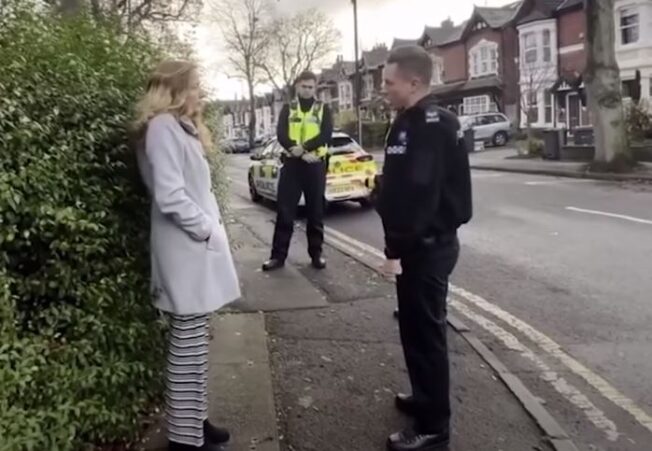
Isabel Vaughan-Spruce was arrested and charged in Birmingham on 6th December last year while praying in silence across the road from an abortion clinic.

“I didn’t have any leaflet on me, no poster, or pro-life t-shirt or anything like that. I wasn’t manifesting my prayer in any way. And clearly, the thoughts inside my head, that can’t be prohibited by any law, because that is just my private business”, she told the meeting in Dublin (which was organised by Family Solidarity).

She was accused of breaching a Public Space Protection Order (PSPO) issued by Birmingham City Council that prohibits any act of disapproval of abortion services, by any means, “including prayer or counselling”, in the vicinity of some abortion clinics.

“I was asked [by police] if I was protesting, I made it clear I wasn’t protesting, but when I was asked if I was praying, I said I might be silently praying but not aloud, and I was arrested on that basis”, Isabel told the Saturday’s meeting. The video of this shocking incident went viral.

She was locked in a police cell for a few hours, and quizzed about her pro-life activities.

“The police particularly wanted to know what I was thinking about, what I have been praying for, and I stress that because some people say that it had nothing to do with your prayer, why you were arrested. It quite clearly was because this is what the police was quizzing me about when I was in the police station.”

Eventually, she was completely acquitted from all charges in February, together with a priest who was arrested, on a separate occasion, also for praying outside the same abortion clinic.

Two weeks after she was acquitted, Isabel Vaughan-Spruce went to pray in the same spot and was arrested again.

“Since I was completely acquitted, and vindicated of everything, I thought it is ok for me to go and do it right now. This time six police officers came with a van. The police officer told me: ‘your prayers are an offence’. When I said, I didn’t think prayers could be offensive, he just become more emphatic. ‘Your prayers are an offence’. And they took me away in a police van, I was in a cell for a while and eventually was released on bail.”

She has not been charged for this second arrest, but this might still happen.

It is astonishing that simple silent prayer is now illegal in some UK cities if it takes place close to an abortion clinic.

It is uncertain whether this could also happen in Ireland. A Bill approved by the Government only last week will make it a criminal offence to “engage in conduct directed at the public or a section of the public in a manner that is likely to influence the decision of a person in relation to availing of, or providing, termination of pregnancy services”. What does this mean?

The concept of conduct likely to “influence” a decision is so broad and vague that it could include almost anything, and even if it does not include praying silently, then almost certainly it does include praying in an audible way, never mind holding up a banner of some sort.

The introduction of “exclusion zones” around hospitals and GP clinics has been delayed for a number of years in Ireland as it might be unconstitutional and even the Garda Commissioner said that there was no need for such legislation as harassment is already a crime.

An attempt to impose exclusion zones in one part of Germany was recently found to be against the freedom of assembly by a federal court.
Isabel Vaughan-Spruce has been involved in pro-life activism for years. She recalled the hostile reactions she has experienced from time to time. She said: “we were sworn at, spat at, physically abused, we had our property stolen, we’d have cars driving down the street fast speed towards us, swerving off at the last minute, young women were told they’d be followed home, that things would happen to their families. The aggression was terrible. There was even one person who had to do ‘restorative justice’ because we caught on camera the physical abuses he was giving to our volunteers.”
 
At least that person was justifiably found guilty of something. Isabel Vaughan-Spruce has been arrested twice for behaviour that any liberal democracy should permit. 

lunedì, luglio 03, 2023

Vittorio Giuseppe Bottone - Discorsi


Oggi mio padre avrebbe compiuto novanta anni. Per ricordarlo, ho raccolto in un volume diversi suoi discorsi, presentati in varie occasioni, che si può scaricare a questo indirizzo:

https://odysee.com/@InItaliano:0/VittorioGiuseppeBottone-Discorsi:e