giovedì, dicembre 17, 2015

The Yale Problem Begins in High School. Walking on eggshells, demanding orthodoxy.

A month before the Yale Halloween meltdown, I had a bizarre and illuminating experience at an elite private high school on the West Coast. I’ll call it Centerville High. I gave a version of a talk that you can see here, on Coddle U. vs. Strengthen U. (In an amazing coincidence, I first gave that talk at Yale a few weeks earlier). The entire student body — around 450 students, from grades 9-12 — were in the auditorium. There was plenty of laughter at all the right spots, and a lot of applause at the end, so I thought the talk was well received.
But then the discussion began, and it was the most unremittingly hostile questioning I’ve ever had. I don’t mind when people ask hard or critical questions, but I was surprised that I had misread the audience so thoroughly. My talk had little to do with gender, but the second question was “So you think rape is OK?” Like most of the questions, it was backed up by a sea of finger snaps — the sort you can hear in the infamous Yale video, where a student screams at Prof. Christakis to “be quiet” and tells him that he is “disgusting.” I had never heard the snapping before. When it happens in a large auditorium it is disconcerting. It makes you feel that you are facing an angry and unified mob — a feeling I have never had in 25 years of teaching and public speaking.
After the first dozen questions I noticed that not a single questioner was male. I began to search the sea of hands asking to be called on and I did find one boy, who asked a question that indicated that he too was critical of my talk. But other than him, the 200 or so boys in the audience sat silently.
After the Q&A, I got a half-standing ovation: almost all of the boys in the room stood up to cheer. And after the crowd broke up, a line of boys came up to me to thank me and shake my hand. Not a single girl came up to me afterward.
After my main lecture, the next session involved 60 students who had signed up for further discussion with me. We moved to a large classroom. The last thing I wanted to do was to continue the same fruitless arguing for another 75 minutes, so I decided to take control of the session and reframe the discussion. Here is what happened next:

More here: The Yale Problem Begins in High School. Walking on eggshells, demanding orthodoxy. http://heterodoxacademy.org/?p=606

mercoledì, dicembre 16, 2015

The African Who Brought Chesterton to Sierra Leone

In October of 2002, Sierra Leone was an extremely poor African country worn out by eleven years of civil war. The war left 50,000 dead, two and a half million homeless, and 10,000 missing a hand or an arm, mutilated by machete blows. John Kanu was a willful 30-year-old man from Sierra Leone who, after heroic efforts, was able to obtain admittance to Oxford and managed to earn a master of applied Social Science. The story of how he convinced his family to send him to school (the only child in his village to do this), and how he continued his studies after the death of his father, and how he managed to obtain a visa and a scholarship to study at an English university, could in itself have been the subject of a whole book.
Of the six Oxford graduate students at Oxford from Sierra Leone, five headed for the United States or Canada or stayed in the United Kingdom. Only one, despite a job offer on English soil, decided to return to his devastated homeland—the same John Kanu. Was it nostalgia for his home, regardless of its derelict condition? Political ties? Not at all. You will never guess. “I had discovered Gilbert Keith Chesterton,” says Kanu, “and I wanted to apply his ideas about man and economics to my country”.
Except for those who are passionate about this English Catholic writer, there are only a few who know that Chesterton, together with Hilaire Belloc and Vincent McNabb, is considered the main proponent of Distributism, the economic philosophy that is an interpretation of the social Christian doctrine contained in Rerum Novarum by Pope Leo XIII, and offered as a third way between Socialism and Capitalism.
Among the Oxford professors, Kanu found Stratford Caldecott, director of the Chesterton Institute for Faith and Culture. They became friends, and the Englishman introduced Kanu to Chesterton’s thought. “Three themes struck me in particular: the need for, as much as possible, the wider distribution of property among all members of society; the importance of the local economy and the artisans who live by the work of their hands; and the vision of the family as the main unit of society and consequently the base of a more extended multi-generational family. I told myself, ‘This is the best of the traditional African culture, reflected in the economic philosophy of a Catholic writer born at the end of the 19th century. And we are about to lose him.’ I started to think that, when I returned to my homeland, I would found a Chesterton Society in Sierra Leone”.


More here:  The African Who Brought Chesterton to Sierra Leone

martedì, dicembre 15, 2015

And indeed there will be time
For the yellow smoke that slides along the street,
Rubbing its back upon the window-panes;
There will be time, there will be time
To prepare a face to meet the faces that you meet;
There will be time to murder and create,
And time for all the works and days of hands
That lift and drop a question on your plate;
Time for you and time for me,
And time yet for a hundred indecisions,
And for a hundred visions and revisions,
Before the taking of a toast and tea.

lunedì, dicembre 14, 2015

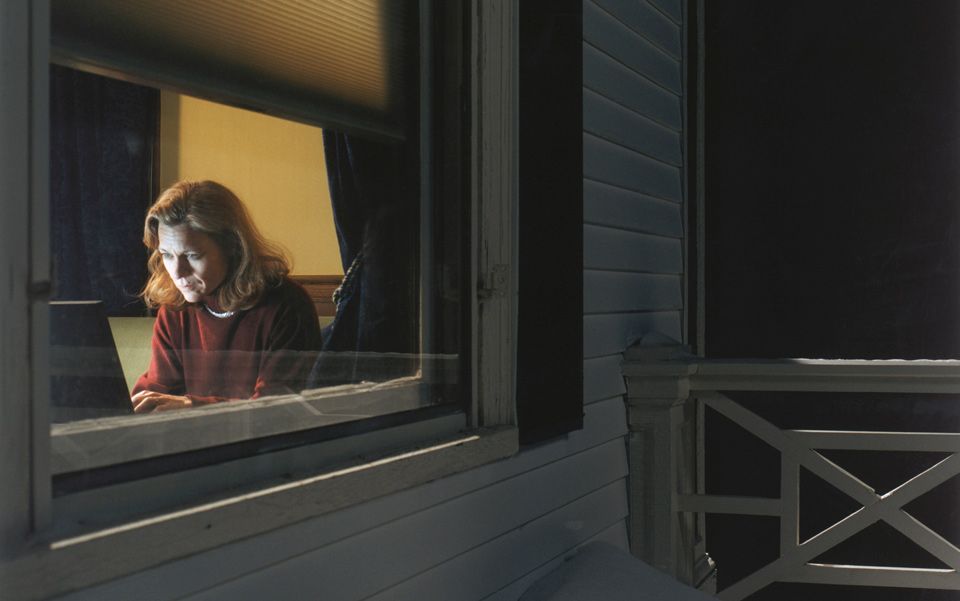
Why broken sleep is a golden time for creativity


It is 4.18am. In the fireplace, where logs burned, there are now orange lumps that will soon be ash. Orion the Hunter is above the hill. Taurus, a sparkling V, is directly overhead, pointing to the Seven Sisters. Sirius, one of Orion’s heel dogs, is pumping red-blue-violet, like a galactic disco ball. As the night moves on, the old dog will set into the hill.
It is 4.18am and I am awake. Such early waking is often viewed as a disorder, a glitch in the body’s natural rhythm – a sign of depression or anxiety. It is true that when I wake at 4am I have a whirring mind. And, even though I am a happy person, if I lie in the dark my thoughts veer towards worry. I have found it better to get up than to lie in bed teetering on the edge of nocturnal lunacy.
If I write in these small hours, black thoughts become clear and colourful. They form themselves into words and sentences, hook one to the next – like elephants walking trunk to tail. My brain works differently at this time of night; I can only write, I cannot edit. I can only add, I cannot take away. I need my day-brain for finesse. I will work for several hours and then go back to bed.
More here.


sabato, dicembre 12, 2015

Miracolo alla fermata dell’autobus

Arrivo alla fermata dell’autobus per andare a scuola, il freddo mi intorpidisce e sono anche un po’ di malumore (la scuola è occupata) e mentre sto per chiudermi definitivamente al resto del mondo, inserendo anche il secondo auricolare della cuffia del mio Iphone qualcosa, anzi qualcuno attira la mia attenzione: due bambini stanno lì, girellando intorno al palo della fermata e schiamazzano, già ora, alle sette del mattino. Sono evidentemente due fratellini, devono avere 7 ed 8 al massimo, uno, il più piccolo, gioca con il suo smartphone mentre l’altro canticchia e gira tenendosi con una mano al palo. Ecco che da lontano, si vede il bus che sta curvando per dirigersi a prenderci; “Urrà!” grida il più grande e aggiunge: “Un miracolo! Un miracolo di Gesù!”. Mentre grida al miracolo saltella alzando le mani in senso di giubilo. Il fratello più piccolo si incammina verso l’autobus che sta frenando e aprendo le porte e gli dice con un pizzico di stizza: “Io lo sapevo, già lo sapevo…” e gli mostra il suo smartphone: non ci stava giocando, ma indagando sull’App dell’Atac le notizie relative all’arrivo degli autobus di quella fermata. Ne L’uomo che fu Giovedì Chesterton aveva ricamato una bel gioco di parole partendo dalla famosa Victoria Station, per cui è davvero una “vittoria” l’arrivo di ogni treno: “Tutte le volte che un treno arriva alla stazione, io ho il senso che si sia aperta la strada sotto il fuoco di innumerevoli batterie, e che l’uomo abbia vinto il caos […] Tenete per voi il vostro Byron che commemora le disfatte degli uomini. Io verserò lacrime d’orgoglio leggendo l’orario delle ferrovie”. Dallo humour inglese all’ironia romana: subito penso che in effetti quando arriva l’autobus a Roma c’è proprio da esultare e gridare al miracolo, ma a volte è meglio girare disarmati e deporre lo scudo dell’ironia, è proprio la gioia di questi ragazzi a costringermi al disarmo. Guardo questi due fratelli, il più alto e grosso che ancora salta di gioia, l’altro più scaltro e tecnologico e mi viene in mente il famoso aforisma di Einstein: “Ci sono due modi di vivere la tua vita. Una è pensare che niente è un miracolo. L’altra è pensare che ogni cosa è un miracolo”. La scena che ho davanti agli occhi è impossibile da catturare con le parole: come racchiudere in linguaggio verbale quel saltello giubilante del bambino? Penso alla verità racchiusa in un’altra frase di Chesterton: “La misura di ogni felicità è la riconoscenza. Tutte le mie convinzioni sono rappresentate da un indovinello che mi colpì fin da bambino, L’indovinello dice: che disse il primo ranocchio? La risposta è questa: “Signore, come mi fai saltare bene”. In succinto c’è tutto quello che sto dicendo io. Dio fa saltare il ranocchio e il ranocchio è contento di saltellare”. Quel bambino che grida al miracolo è davvero un ranocchio e può saltellare perchè è un anfibio: vive in due mondi, uno soltanto è lo stesso in cui vivo anch’io, qui, vicino alla stessa fermata dove ogni mattina aspetto ansiosamente l’autobus. 

Andrea Monda

 https://andreamonda.it/?p=1645

martedì, dicembre 01, 2015

NUMM’O PIAC’ ‘O PRESEPIO
Ho sempre amato Eduardo e il suo teatro; adoro Napoli e la sua parlata. Ma non avrei mai pensato di dover assumere un giorno a mio motto, a mia divisa, una battuta di Natale in casa Cupiello che personalmente disapprovavo. Ebbene, invece ora sì, sono d’accordo: non in assoluto, ma finché questo tempo di matti non sia passato. E fino ad allora, lo proclamo con dolorosa fermezza: “Numm’o piac’ ‘o presepio”. E mi spiego meglio.
All’indomani del tragico 13 novembre parigino, assieme alle reazioni inconsulte del presidente-bombardiere Hollande in cerca di vendetta e ovviamente di quella popolarità che progressivamente è andata calando attorno a lui, nonché ai successivi tentativi di porre riparo alla sua ennesima sciocchezza che hanno condotto allo spettacolo del duplice schieramento degli “alleati-rivali” formalmente nemici dell’IS ma in pratica ben decisi a scavalcarsi e a silurarsi a vicenda – da una parte la NATO cui si era rivolta la Turchia con la benevola attenzione di Arabia Saudita e Israele, come si è visto al “vertice” fiorentino del 26 novembre; dall’altra Hollande che, dopo aver tentato di coinvolgere l’Unione Europea strappandole la legittimazione del suo raid solitario su Raqqa, si volgeva alla Russia e quindi alla sua alleanza siriano-curdo-irakeno-iraniana, facendo intravedere a Putin la possibilità di una maggior apertura a proposito del domani di Assad –, abbiamo assistito anche alle reazioni dell’opinione pubblica: dalla commovente elaborazione del lutto nazionale da parte dei francesi fino al dibattito ampio e articolato nei giorni successivi dal quale è tuttavia emersa una netta avanzata delle tesi indirizzate ad addossare le responsabilità dell’accaduto all’Islam nel suo complesso, nonostante le molte e importanti prese di posizione di organizzazioni musulmane che con decisione e senza ambiguità condannavano il terrorismo (“Not in my name”), fino a un’allarmante crescita dell’islamofobia più bécera e volgare, con punte di autentico delirio psicotico. La parata dell’imbecillità ha raggiunto livelli che il più pessimista degli osservatori avrebbe giudicato impossibili a conseguirsi. Continue reading →